The Dream vs. Reality
Instead of a two-hour journey through winding mountain roads, imagine being whisked from Hokkaido’s main city Sapporo to the world-famous ski resort Niseko in just 25 minutes. Such convenience, surely a dream for the legions of Singaporeans and other travellers who treat Niseko as their winter playground, ought to have been a reality by 2030. Yet this vision of seamless connectivity now faces an extended timeline, highlighting broader challenges facing Japan’s high-speed rail ambitions both domestically and internationally.
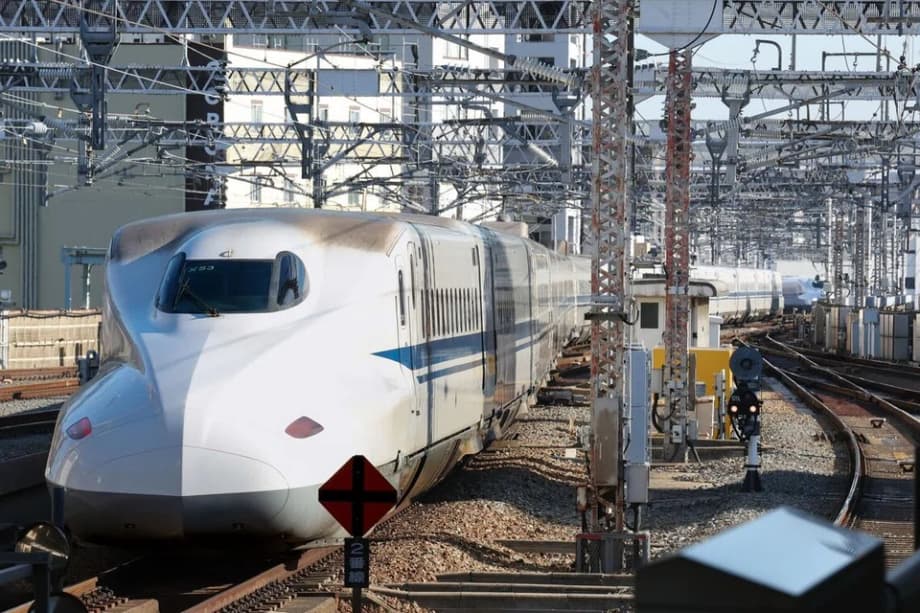
The Shinkansen network, colloquially known as the bullet train, has long been a symbol of Japanese technological prowess. Since its debut in 1964 with the Tokaido line connecting Tokyo and Osaka, the system has expanded to become one of the world’s most extensive and efficient railway networks. However, recent delays and setbacks suggest that maintaining this legacy in an increasingly competitive global market is proving more difficult than expected.
Domestic Project Delays Ripple Through Communities
The most visible setback affects northern Japan, where the Hokkaido Shinkansen extension to Sapporo has been pushed back eight years to 2038. Originally scheduled for completion by fiscal year 2030, this delay has sent shockwaves through communities banking on the economic revitalization promised by high-speed rail connectivity.
Local leaders are voicing their frustration. Governor Naomichi Suzuki has called the delay unacceptable and plans an urgent government request to address the impact. The ripple effects are already being felt in towns along the route, where businesses and property developers had aligned their plans with the original timeline. A hotel and commercial project near Hokuto’s station stalled last autumn, and Hotel Monterey Sapporo closed in 2022, scrapping planned renovations.
“Predicting effects on our population and economy proves tough,” notes a worker from Hokuto, emphasizing how a six-year versus 14-year wait fundamentally changes development calculus.
Geological challenges and budget constraints have emerged as primary culprits behind the delays. The extension requires approximately 76% tunneling through mountainous terrain, including major tunnels such as Toshima (~32.675 km), Oshima (~26.5 km), Teine (~26.5 km) and Shiribeshi (~18 km). These technical hurdles have proven more expensive and time-consuming than originally projected.
Similar challenges plague the maglev Chuo Shinkansen project, which aims to connect Tokyo to Nagoya and eventually Osaka. Originally slated to begin commercial service between Tokyo and Nagoya in 2027, Central Japan Railway Co President Shunsuke Niwa announced in 2024 that this timeline was no longer feasible, pushing the opening to at least 2034. The project involves constructing approximately 86% of the 286 km route through tunnels, adding complexity and cost to an already ambitious undertaking.
The Cost of Ambition
High-speed rail construction has always been expensive, but the scale of current projects raises questions about economic viability. The original Tokaido Shinkansen was estimated at nearly 200 billion yen but ultimately cost about 380 billion yen. Today’s projects face similar escalation, with the additional complication of operating in less densely populated areas where passenger demand may not justify the investment.
When Japan National Railways (JNR) expanded the network in the 1970s to less populated regions, the assumption of massive debt contributed to its eventual privatization in 1987. The privatized JR companies have continued expansion but with more flexibility to spin off unprofitable lines. Yet the fundamental economic challenge remains: building high-speed rail to areas with limited population density requires massive public investment with uncertain returns.
International Competition Intensifies
While Japan struggles with domestic timelines, the international market for high-speed rail has become increasingly competitive. China has emerged as a formidable rival, aggressively expanding its railway network across Asia under its Belt and Road Initiative. Chinese companies have already begun construction connecting Kunming with cities such as Vientiane and Bangkok, while Japan’s projects in the region have stalled.
The competition plays out most visibly in Southeast Asia, where multiple countries are evaluating high-speed rail options. Indonesia’s Jakarta-Bandung high-speed railway became a symbolic battleground between Chinese and Japanese interests. Japan lost the bid in 2015, partly due to its insistence on government loan guarantees that Indonesia rejected. China’s offer required no financial contribution from the Indonesian government, though the project subsequently faced delays and cost overruns from $5.5 billion to $6 billion.
Despite these setbacks, China continues moving forward with projects in Laos and Thailand. This aggressive expansion has raised concerns among some regional players about becoming dependent on Chinese influence. Vietnam, wary of Chinese dominance, has expressed interest in Japanese technology for its proposed north-south high-speed line, though funding remains uncertain.
Former Prime Minister Shigeru Ishiba recently highlighted this dynamic at an International High-speed Rail Association forum, noting that high-speed rail will likely serve as a driver for growth in emerging economies where demand for fast mass transit is strong. He emphasized that the Japanese shinkansen system was an essential component in Japan’s rapid economic growth during the 1970s and 1980s.
Strategic Positioning in a Competitive Market
Keiichi Kagayama, a corporate officer at Central Japan Railway Co. (JR Tokai) responsible for international projects, acknowledged the challenges of overseas expansion in an interview with The Asahi Shimbun. Despite operating one of the world’s most sophisticated high-speed rail technologies for 60 years, Japan has made limited headway in international markets.
“Because we must pay attention not only to areas surrounding stations but also to areas along the line, I think it is a politically difficult project,” Kagayama said, explaining the complexities of exporting Japanese rail systems.
Taiwan remains Japan’s most successful overseas project to date. The Taiwan High Speed Rail network opened in 2007 based on JR Tokai’s N700 series train design. Initially planned to adopt European standards, Taiwan shifted to the Japanese proposal after a powerful earthquake struck in 1999, demonstrating Japan’s expertise in seismic-resistant technology. JR Tokai has provided ongoing support for facility updates, rail extensions, and new stations.
The American Dream Remains Elusive
The United States presents perhaps the most challenging market for Japanese high-speed rail ambitions. The Texas Central project, which would connect Houston and Dallas using Shinkansen technology, has struggled for more than a decade to secure funding and overcome political opposition.
The project plans to use technology similar to the Japanese Tokaido Shinkansen system operated by Central Japan Railway Co. In 2018, the Japan Bank for International Cooperation and Japanese Overseas Infrastructure Investment Corporation extended a loan of up to $300 million to the project. However, financial backing has proved insufficient to move the massive undertaking forward.
The situation worsened in November 2024 when the Japan Overseas Infrastructure Investment Corporation for Transport & Urban Development (JOIN) withdrew support after posting a loss of about 40 billion yen ($254.24 million). JR Tokai has announced it will continue providing technological consultations, but the project lacks the capital needed for construction.
Regulatory hurdles compound the financial challenges. In April 2025, the Texas House Subcommittee on Transportation Funding discussed House Bill 1402, which would prevent the use of state or local funding to alter roadways for high-speed rail construction. The bill targets Texas Central specifically, with opponents arguing that public funds should not support a private project that faces significant opposition from rural landowners.
Andy Gent, representing Texas Central CEO John Kleinheinz, defended the project before the subcommittee, noting that approximately 500 single-family homes would be impacted by the alignment compared to 1,100 displaced by recent Houston highway projects. However, he admitted the project was not fully funded and that only 25% of the required right-of-way had been acquired.
Learning from Setbacks
Stephen Mattingly, a civil engineering professor at the University of Texas at Arlington, explains that high-speed rail faces unique challenges in the United States. The country lacks the population density and intercity travel patterns that make such systems viable elsewhere. Additionally, existing land use patterns and property rights create significant obstacles for acquiring the continuous rights-of-way needed for true high-speed rail.
The experience in Texas offers lessons for Japanese companies seeking to export their technology. While the technology itself is world-class, the business model must adapt to local conditions, including regulatory environments, funding mechanisms, and public acceptance.
New Opportunities Emerge Amid Challenges
Despite these setbacks, new opportunities continue to emerge. In the Philippines, lawmakers have revived the push for the “Bicol Express” high-speed rail project, proposing to transform the historic Manila-Bicol railway into a modern, standard-gauge line spanning over 500 kilometers. The project would reduce travel time from Metro Manila to Albay or Sorsogon from 12 hours to approximately four hours.
A 2015 study by the Japan International Cooperation Agency (JICA) indicated a viable transport market that could support long-term investment in high-capacity rail systems along the corridor. Reports confirm that the Japanese government has expressed interest in funding the feasibility study for the project, signaling renewed momentum following the lapse of an earlier China-backed rail plan.
India represents another potential market, though not without complications. Japan agreed to provide Shinkansen technology for a high-speed rail link connecting Mumbai to Ahmedabad, funded primarily through Japanese soft loans. Originally expected to cost up to $18.6 billion and be operational by 2024, the project has been delayed by several years with rising costs. India issued a tender for 24 modified E5 train sets in 2023 but did not accept the resulting offers, now desiring E10 sets for delivery in the 2030s.
The Japanese government has agreed to gift one end-of-life E3 and E5 train sets to India in 2025, with delivery expected in 2026. This gesture demonstrates continued commitment to the partnership despite the delays and changing requirements.
The Environmental Imperative
High-speed rail advocates increasingly emphasize environmental benefits as a key justification for continued investment. Traveling by the Tokaido Shinkansen from Tokyo to Osaka produces only around 16% of the carbon dioxide emissions of an equivalent journey by car, saving approximately 15,000 tons of CO2 annually. This environmental advantage has become more salient as countries worldwide seek decarbonization strategies.
At the International High-speed Rail Association forum, politicians and rail executives emphasized that high-speed rail, despite being expensive and time-consuming to build, represents one of the keys to the future. The building of these lines will generate growth in the developing world while helping with decarbonization efforts.
The Shinkansen system itself has demonstrated remarkable environmental credentials throughout its history. Beyond reduced emissions, the network’s high efficiency and capacity have helped reduce congestion in Japan’s densely populated urban areas while minimizing land use compared to alternatives like highways or expanded airports.
Technological Innovation Continues
Japan continues pushing technological boundaries despite project delays. Test runs of maglev trains have reached speeds of 603 km/h (375 mph), setting world records. The planned Chuo Shinkansen maglev line aims to operate at 500 km/h, reducing travel time between Tokyo and Osaka to just 67 minutes compared to the current two hours and 19 minutes.
Researchers are also working to address technical challenges such as noise pollution, which has made increasing conventional speeds more difficult. In Japan’s high-density population areas, strong protests against Shinkansen noise have limited operations to less than 70 dB in residential areas. Ongoing research focuses on reducing operational noise, particularly the tunnel boom phenomenon caused when trains transit tunnels at high speed.
Reliability remains a hallmark of the Japanese system. In 2016, JR Central reported that the Shinkansen’s average delay from schedule per train was just 24 seconds, including delays due to uncontrollable causes such as natural disasters. The system has maintained an exemplary safety record over 60-plus years, carrying over 10 billion passengers with no fatalities due to derailments or collisions.
The Path Forward
Japan’s high-speed rail ambitions face a complex landscape of technical, economic, and political challenges. Domestic projects must balance the need for regional development against financial realities, while international ventures require adaptation to diverse market conditions and competitive pressures from China.
Keiichi Kagayama emphasized that overseas expansion remains essential for the industry’s future. “Through overseas expansion, we want to make Shinkansen trains running in Japan even better,” he explained. “If we can create a new market, it will serve as an incentive for train manufacturers that support Shinkansen operations to work on technological developments.”
The coming decade will test whether Japan can leverage its technological excellence and operational experience to overcome these obstacles. Success will require not just engineering prowess but also innovative financing models, diplomatic skill in navigating geopolitical tensions, and flexibility in adapting to diverse international markets.
For communities in Hokkaido and elsewhere counting on high-speed rail to revitalize their economies, the delays represent more than just inconvenience. They impact housing development, business investment, and population retention patterns. Yet the determination to overcome these obstacles remains strong among stakeholders who view rail connectivity as essential for future prosperity.
The Bottom Line
- The Hokkaido Shinkansen extension to Sapporo has been delayed from 2030 to 2038, affecting local economic development plans.
- The maglev Chuo Shinkansen project faces similar delays, with Tokyo-Nagoya service pushed back from 2027 to at least 2034.
- China has emerged as a major competitor in high-speed rail, aggressively expanding across Asia under its Belt and Road Initiative.
- Japan’s overseas projects face challenges including financing, regulatory hurdles, and competition from Chinese alternatives.
- The Texas Central project using Shinkansen technology continues to struggle with funding and political opposition.
- New opportunities are emerging in the Philippines, where Japan has expressed interest in funding feasibility for the “Bicol Express” project.
- Environmental benefits, including significantly lower carbon emissions compared to car travel, remain a key argument for high-speed rail investment.
- Japan continues technological innovation, with maglev test runs reaching 603 km/h and plans for 500 km/h commercial operation.
- The Shinkansen maintains world-leading reliability and safety records despite expansion challenges.
- Industry leaders view overseas expansion as essential for driving domestic technological improvements and manufacturer incentives.