A Living Legacy of Smoke and Spice
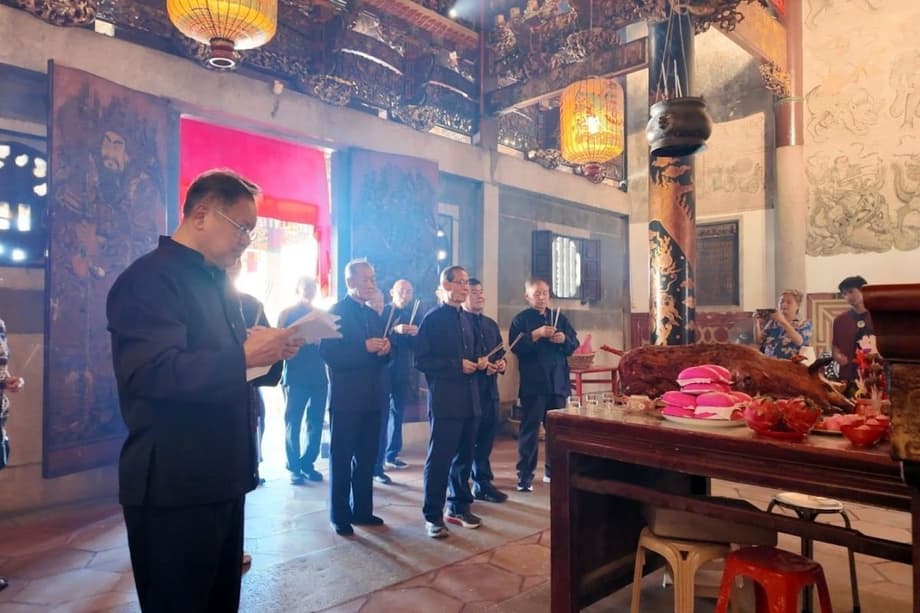
Inside the ornate prayer halls of the Leong San Tong Khoo Kongsi in George Town, Penang, the air fills with the scent of burning sandalwood. Elders of the Khoo clan, dressed in somber dark blue suits, step forward one by one during the annual Tung Chen ceremony. This winter solstice ritual sees them clutching joss sticks, bowing three times before wooden ancestral tablets inscribed with the names of forebears who have long since passed. Khoo Kay Hock, a senior trustee of the clan, captures the deep historical roots of this gathering succinctly.
“We were here even before the British,”
he told This Week in Asia, referring to the colonial arrival in Penang in 1786. His seafaring ancestors are believed to have established roots on the island as early as 1752. This ceremony is not merely a religious observance but a profound declaration of presence and persistence. It gestures toward a much wider narrative of a community that originated in China, took shape through migration and intermarriage across Southeast Asia’s bustling port cities, and became one of the region’s most influential Chinese diasporas.
The Peranakan Chinese, often known as Baba-Nyonya, represent a unique ethnic group defined by their descent from the first waves of Southern Chinese settlers who arrived in maritime Southeast Asia, or Nanyang, between the 14th and 17th centuries. Unlike later waves of immigrants who maintained stronger ties to their homeland, these early settlers established permanent roots in places like Malacca, Penang, and Singapore. The word Peranakan itself is derived from the Malay and Indonesian word for child or offspring, specifically meaning “locally born” or “descendant of.”
History suggests that the majority of these early immigrants were men who married local women from the Malay, Javanese, Batak, or Balinese communities. This intermarriage created a distinctive hybrid culture that blended ancient Chinese traditions with the local customs of the Nusantara region. While popular myths sometimes cite a royal marriage between a Chinese princess and the Sultan of Malacca in the 15th century as the origin story, modern historians and genetic data point toward a more gradual and complex process of integration.
The Science of Ancestry
For years, the extent of this admixture was a subject of debate within the community and among scholars. However, recent genomic studies have provided scientific clarity on these historical interactions. A groundbreaking analysis by the Genome Institute of Singapore, which examined the DNA of 177 Peranakan individuals, confirmed a distinct genetic signature that sets them apart from other Chinese populations.
The study revealed that Peranakan Chinese possess approximately 5.62% Malay ancestry, a figure significantly higher than that found in general Singaporean, southern, or northern Chinese populations. Perhaps most tellingly, the genetic markers indicate that this Malay ancestry was primarily contributed by females.
“Genomes are like books that contain clues about our past, like the ethnicities of our ancestors. By genomic analysis, we have pieced together some clues to reconstruct the pictures of our ancestors.”
said Professor Roger Foo of the Agency for Science, Technology and Research. These findings corroborate oral histories of Chinese traders marrying local women due to the scarcity of Chinese women in the region during those early centuries. The research also identified a more recent admixture event occurring approximately 190 years ago, coinciding with the founding of Singapore and the height of regional migration.
Baba Colin Chee, President of The Peranakan Association Singapore, noted that these findings validate the community’s belief in their mixed heritage.
“The findings have, for the very first time, given scientific credence to our belief that the Peranakans descended from the mixed unions of early traders from China, India and Europe with Southeast Asia’s Malay women.”
A Tapestry of Cultural Synthesis
The cultural identity of the Peranakan community is a vibrant example of syncretism, evident in their language, cuisine, fashion, and religious practices. Their language, Baba Malay, is a creole patois that fuses Malay grammar with a significant vocabulary of Hokkien words. Historically, this served as a lingua franca for the community and a marker of their distinct identity.
In the culinary world, Peranakan cuisine stands out as one of Southeast Asia’s original fusion foods. Developed largely by the Nyonya women in their home kitchens, dishes like babi pongteh (braised pork with fermented soybean paste) and ayam buah keluak (chicken stew with black nuts) showcase a masterful combination of Chinese cooking techniques with the aromatic spices and ingredients of the Malay archipelago. The preparation is notoriously labor-intensive, requiring the hand-pounding of spice pastes known as rempah and the meticulous handling of local ingredients like tamarind, galangal, and coconut milk.
Elizabeth Ng, a Nyonya raised in Malacca, recalls that learning these recipes was a rite of passage for girls in her family.
“It was always mothers,”
she said, describing the transmission of culinary secrets from grandmother to granddaughter. Today, this cuisine is celebrated globally, with Peranakan restaurants earning accolades and home cooks seeking to preserve these labor-intensive traditions.
Visual Identity and Material Culture
The visual aesthetics of the Peranakan community further reflect their multicultural influences. The traditional attire for Nyonya women is the kebaya, a sheer, intricately embroidered blouse worn with a batik sarong. Unlike the looser Malay versions, the Nyonya kebaya is form-fitting and often adorned with sulam embroidery featuring European floral motifs like roses or peonies, secured with a kerosang, a set of chained brooches. Paired with hand-beaded slippers called kasut manek, the ensemble is a striking statement of hybrid identity.
Wealthy Peranakan families in the 19th and early 20th centuries were avid collectors and global consumers. Their homes featured porcelain from China, enamelware from Europe, and tiles from England, all arranged in the distinctive shophouses that line the streets of Singapore and Penang. This appreciation for beauty and craftsmanship earned them a reputation as sophisticated connoisseurs, with some modern observers referring to them as the “original crazy rich Asians” due to their opulent lifestyles during the colonial era.
Beyond the Straits: Regional Variations
While the Peranakan communities of Singapore, Malacca, and Penang are the most widely documented, similar groups evolved throughout Southeast Asia under different colonial and national influences. In Southern Thailand, particularly in Phuket and Ranong, the Peranakan communities developed a distinct dialect known as Thai Baba, which blends Hokkien, Thai, and Malay.
Research on Thai Peranakans highlights a complex negotiation of identity that defies simple assimilation narratives. Unlike the dominant historical view that Chinese immigrants in Thailand seamlessly assimilated into Thai society, Thai Peranakans maintain a “translocal” identity. They navigate their lives by code-switching between standard Thai for public or “frontstage” interactions and using their mixed dialect in private or “backstage” family settings. This fluidity allows them to honor their Chinese roots while embracing their Thai citizenship.
In Indonesia, Peranakan communities faced aggressive assimilation policies following independence, which restricted Chinese language education and cultural expression. Despite these challenges, groups like the Cina Benteng in Tangerang continue to uphold traditions, though their numbers face pressures from urban development and eviction. Similarly, in East Malaysia and Borneo, descendants of early Chinese traders, sometimes referred to as Sino-Natives, maintain their unique blend of local and Chinese customs.
Modern Challenges and Cultural Renaissance
The 20th century brought significant challenges to Peranakan culture. The rise of nationalism in post-colonial Southeast Asia often pressured ethnic minorities to assimilate. In Singapore, the government’s “Mother Tongue Policy” classifies Peranakans as ethnically Chinese, mandating the study of Mandarin rather than Baba Malay in schools. In Malaysia and Indonesia, various national policies similarly diluted the use of Peranakan dialects and customs.
By the 1960s and 1970s, the culture appeared endangered. Urban renewal projects replaced historic shophouses with high-rise apartments, and younger generations gravitated toward modern lifestyles, leaving traditional crafts and languages behind. However, a remarkable revival began in the 1980s, driven by preservationists, community leaders, and a renewed sense of heritage pride.
In Singapore, the conservation of historic districts like Katong and Joo Chiat preserved the architectural legacy of the community. The establishment of the Peranakan Museum and institutions like the NUS Baba House provided platforms for education and cultural transmission. Popular media also played a crucial role; the television drama “The Little Nyonya” captivated audiences across the region, sparking a widespread interest in Peranakan history and aesthetics.
Today, the culture is experiencing a renaissance. Younger designers are reinterpreting traditional kebaya for modern wear, while chefs are elevating Nyonya cuisine to fine-dining status. The community is increasingly recognized not just for its historical significance but for its model of cultural fluidity—demonstrating how identity can be both rooted in ancestry and adaptive to contemporary global realities.
Key Points
- The Peranakan Chinese are descendants of early Southern Chinese settlers who arrived in maritime Southeast Asia between the 14th and 17th centuries.
- Genetic studies confirm approximately 5% to 10% Malay ancestry within the community, primarily through maternal lines, validating historical accounts of intermarriage.
- Peranakan culture is a hybrid of Chinese, Malay, and European influences, distinct in its language (Baba Malay), cuisine, and fashion.
- The Tung Chen ceremony at the Leong San Tong Khoo Kongsi is a vital ritual connecting the community to ancestors who arrived before British colonization.
- Culinary traditions, developed largely by Nyonya women, are labor-intensive and represent a sophisticated fusion of cooking styles.
- Regional variations exist, with Thai Peranakans exhibiting a unique “translocal” identity that blends Thai, Malay, and Hokkien influences.
- Cultural revival efforts since the 1980s, including museum preservation and media representation, have saved Peranakan heritage from extinction.
- Modern challenges include assimilation policies and language loss, but a renewed interest in arts and cuisine sustains the community.
- Identity is increasingly viewed as cultural rather than strictly ethnic, welcoming those who embrace the traditions regardless of genetic purity.