The Shadow of Latency
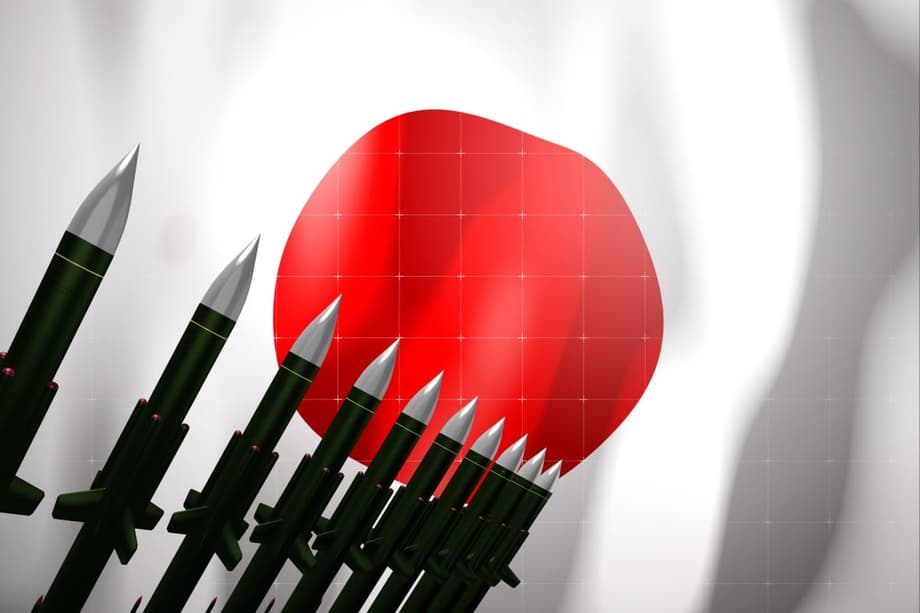
Japanese political discourse has recently brushed against the red line of nuclear armament, sparking intense debate and concern across East Asia. Statements from senior officials within Prime Minister Sanae Takaichi’s office, suggesting that Japan should possess nuclear weapons due to a deteriorating security environment, have drawn swift rebukes from neighboring China and reignited global scrutiny of Japan’s technical capabilities. While the government officially reaffirms its commitment to non-proliferation, experts warn that the nation already possesses the industrial and scientific infrastructure to construct a nuclear arsenal in under three years.
The concept of a “bomb in the basement” is often used to describe this condition. Japan does not currently possess nuclear weapons, yet it maintains a sophisticated civilian nuclear program and massive stockpiles of plutonium. This status allows Tokyo to enjoy the security benefits of nuclear latency—the ability to weaponize quickly—without the diplomatic fallout or violation of treaties that would come from actual deployment. As regional security pressures mount from China, North Korea, and Russia, this latent capability is becoming a focal point of strategic anxiety.
This unique position is the result of decades of technological investment driven by energy needs rather than military ambition. Japan lacks significant domestic fossil fuel resources, necessitating a heavy reliance on nuclear power to ensure energy security. To reduce dependence on foreign fuel, the government pursued a closed nuclear fuel cycle, including uranium enrichment and plutonium reprocessing. These are the exact same technologies required to manufacture nuclear fissile material for weapons.
A Rapid Path to Weaponization
Chinese nuclear experts recently estimated that Japan could develop nuclear weapons in less than three years, a timeline that aligns with, or even improves upon, late American statesman Henry Kissinger’s prediction of a five-year window. This assessment is grounded in the sheer scale of Japan’s existing nuclear infrastructure. The country currently possesses approximately 45 tons of plutonium, a byproduct of its energy reactors. While much of this is reactor-grade rather than weapons-grade, experts confirm that reactor-grade plutonium can still be used in a nuclear explosive device.
Furthermore, Japan has the technical mastery required to process this material. It operates the Rokkasho reprocessing plant, a facility designed to separate plutonium from spent fuel, and has a history of advanced nuclear engineering research. Jeffrey Lewis, director of the East Asia Non-Proliferation Program at the Monterey Institute of International Studies, has noted that Japan has held the technical capability to build weapons since the 1980s.
“Japan already has the technical capability, and has had it since the 1980s,” said a senior Japanese government official involved in the country’s nuclear energy program. “He said that once Japan had more than five to 10 kilograms of plutonium, the amount needed for a single weapon, it had ‘already gone over the threshold,’ and had a nuclear deterrent.”
The delivery mechanisms are also largely within reach. Japan’s space program has developed solid-fuel rocket technologies that could be adapted for ballistic missiles. Additionally, the country is acquiring long-range “counterstrike” missiles, such as Tomahawk cruise missiles from the United States and upgraded Type-12 surface-to-ship missiles. While these are intended for conventional use, they demonstrate the aerospace proficiency necessary to deliver a nuclear payload.
Estimates for the timeline vary based on political will and secrecy. Some experts suggest a crash program could yield a device in six months, while others, accounting for the complexities of miniaturizing a warhead for delivery, posit a timeline of one to three years. The Federation of American Scientists has stated that Japan could possibly produce functional nuclear weapons in as little as a year’s time given its stockpiles and industrial base.
Historical and Constitutional Constraints
Despite this latent power, Japan has maintained a strict pacifist posture since World War II. The trauma of the atomic bombings of Hiroshima and Nagasaki created a profound societal aversion to nuclear weapons. This sentiment was codified into national policy with the “Three Non-Nuclear Principles” adopted in 1967, which dictate that Japan shall not possess, produce, or permit the introduction of nuclear weapons into its territory. Prime Minister Eisaku Sato was awarded the Nobel Peace Prize for this commitment.
Legally, the Japanese Constitution, specifically Article 9, renounces war as a sovereign right and the threat or use of force as a means of settling international disputes. While possession of nuclear weapons is not explicitly forbidden by the text of the constitution itself, the interpretation has generally held that they are incompatible with the spirit of the pacifist clause. Furthermore, the Basic Atomic Energy Law of 1956 strictly limits nuclear research and development to peaceful uses.
Japan is also a signatory to the Nuclear Non-Proliferation Treaty (NPT), having ratified it in 1976. As a non-nuclear weapon state, it is legally obligated not to develop or acquire nuclear weapons. The government has consistently supported international non-proliferation efforts and maintains close cooperation with the International Atomic Energy Agency (IAEA) to ensure its nuclear materials are safeguarded.
However, critics and analysts often point to the “nuclear hedging” strategy employed by Tokyo. By maintaining the technical capability to go nuclear while publicly adhering to pacifist principles, Japan creates strategic ambiguity. Conservative politicians have occasionally floated the idea of nuclear armament to signal strength to adversaries or to test the commitment of the United States to the security alliance. This ambiguity keeps neighbors like China and North Korea guessing, effectively acting as a deterrent without crossing the threshold.
Regional Reactions and Geopolitical Tensions
The recent comments from Japanese officials have elicited sharp condemnation from Beijing. The Chinese Foreign Ministry described the remarks as a “blatant challenge to the postwar international order” and a “serious threat to regional and international peace and stability.” China has long viewed Japan’s plutonium stockpiles with suspicion, arguing that a non-nuclear state has no need for such vast quantities of fissile material. Chinese defense white papers have frequently cited the Japanese plutonium stockpile as a security threat.
This tension is exacerbated by the broader geopolitical context. China is currently undergoing a rapid and massive expansion of its own nuclear arsenal, adding an estimated 100 warheads per year. Meanwhile, North Korea continues to test ballistic missiles and refine its nuclear capabilities. The perception of an encirclement by nuclear-armed powers creates a powerful incentive for Japan to reconsider its defense posture.
The regional security dynamic is further complicated by the United States. Japan has relied on the “US nuclear umbrella”—the security guarantee that Washington would use its own nuclear arsenal to defend its allies—for protection. The credibility of this extended deterrence is crucial to Japan’s calculus. However, shifts in US foreign policy have caused anxiety in Tokyo.
The Trump Factor
The return of Donald Trump to the US presidency has significantly altered the strategic landscape in East Asia. President Trump’s “America First” platform, characterized by skepticism of multinational alliances and transactional approach to international relations, has rattled allies. His public questioning of the US commitment to NATO and imposition of tariffs on even close allies like Japan have raised doubts about the reliability of American security guarantees.
Former Deputy Defense Minister Rui Matsukawa expressed these concerns starkly. At a conference in London, she observed that Europe had “awakened” to the fact it could no longer rely solely on America. She realized this applied to Japan as well.
“You can’t really take the U.S. presence for granted,” said Matsukawa, a member of the ruling Liberal Democratic Party’s influential national security policy council. “Trump is so unpredictable, which is his strength maybe, but I think we have to always think about Plan B. Plan B is maybe go independent, and then go nukes.”
This sentiment is echoed by other lawmakers and former military officials who are beginning to “think the unthinkable.” Surveys indicate a growing willingness among the Japanese public to reconsider the non-nuclear principles. A poll in March found that 41% of respondents supported revising the principles, up from just 20% three years prior. Even among younger generations, including descendants of atomic bomb survivors, there is a shift toward viewing nuclear deterrence as a necessary evil for national survival.
The Domino Effect and Global Implications
The prospect of Japan going nuclear is not just a bilateral concern; it threatens to trigger a regional domino effect. South Korea, which faces an existential threat from North Korea, already hosts a large US contingent but has also seen a surge in public support for independent nuclear armament. Polls show up to 75% of South Koreans favor building their own bomb. If Japan were to break the taboo, South Korea would likely follow suit to maintain its strategic balance.
Such a proliferation cascade would fundamentally undermine the global non-proliferation regime established after World War II. It could lead to a renewed arms race in East Asia, increasing the risk of miscalculation and conflict. The United States has historically opposed proliferation among its allies, fearing it would reduce Washington’s control over escalation dynamics and increase the likelihood of nuclear war. While Trump has previously mused that Japan and South Korea might need nuclear weapons, his administration officially maintains opposition to the spread of such arms.
China has warned that any move by Japan or South Korea to acquire nuclear weapons would be met with a firm response. Beijing views such developments not just as a military threat but as a challenge to its regional dominance. A nuclear-armed Japan, in particular, would be seen through the lens of historical animosity and remilitarization.
Internal Obstacles and the Path Ahead
Despite the technical feasibility and shifting political winds, significant obstacles remain before Japan could actually build a nuclear weapon. Bureaucratically, the government is structured with multiple “veto players”—officials in various ministries who would likely resist or leak information about a clandestine program. The post-Fukushima regulatory environment has increased the number of these oversight bodies, making a secret crash program difficult to execute without detection.
Practically, Japan lacks a suitable location for nuclear testing. As a densely populated archipelago, an underground test would be difficult to conceal and could cause severe domestic and international backlash. Furthermore, proceeding with weaponization would almost certainly result in sanctions from the United Nations and the severing of nuclear cooperation agreements, crippling Japan’s civilian energy sector which relies on imported fuel and technology.
The government of Prime Minister Sanae Takaichi faces a delicate balancing act. On one hand, it must manage the legitimate security concerns of a population surrounded by hostile nuclear powers. On the other, it must uphold the pacifist ideals that have defined the nation’s identity for eight decades and maintain the trust of its international partners.
For now, Japan remains committed to its official non-nuclear stance. Chief Cabinet Secretary Minoru Kihara recently reaffirmed that the country’s nuclear policy had not changed. The focus remains on strengthening the alliance with the United States and enhancing conventional deterrence capabilities, such as the acquisition of counterstrike missiles. Yet, the conversation has undeniably shifted. The window for nuclear latency is being viewed not just as a deterrent, but as a viable option if the world order continues to fracture.
Key Points
- Chinese experts estimate Japan has the technical capacity to build nuclear weapons in less than three years, backed by massive plutonium stockpiles and advanced reprocessing technology.
- Japan maintains a “bomb in the basement” posture, technically capable of weaponization while officially adhering to the Three Non-Nuclear Principles and the NPT.
- Recent statements by Japanese officials about reconsidering nuclear armament have drawn condemnation from China and sparked debate over the erosion of the country’s pacifist post-war identity.
- Doubts about the reliability of the US nuclear umbrella, particularly under the Trump administration, are driving a shift in Japanese public and political opinion toward favoring a more independent nuclear deterrent.
- A decision by Japan to pursue nuclear weapons would likely trigger a similar move by South Korea, leading to a dangerous proliferation cascade in East Asia.