A Daily Journey Through Exhaustion
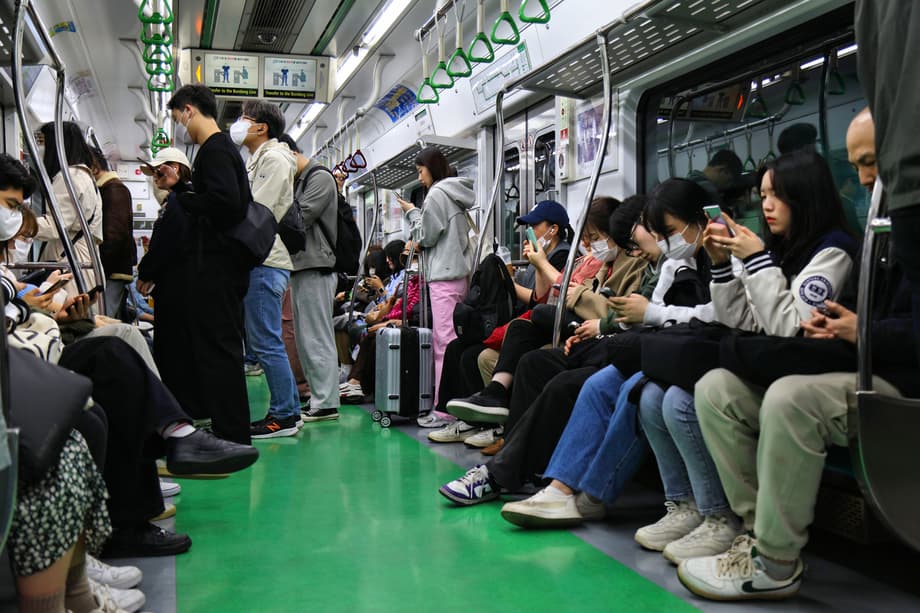
Lee Han-soo, 34, spends nearly two and a half hours each day traveling between his home near Namhansanseong Station on Subway Line No. 8 and his job at an IT firm near Hongik University Station on Subway Line No. 2 in Seoul. The routine has become second nature, yet it takes a heavy toll. “Although I’m used to it now, I’m completely drained by the time I get home,” he said. “I just grab something to eat and go straight to bed.”
For many South Koreans, Lee’s experience is far from unusual. It may actually be typical. A recent study published in Environmental Research Letters found that South Korea recorded the longest average daily travel time among 43 countries surveyed, at 1 hour and 48 minutes. The global average was just 1 hour and 8 minutes, meaning South Koreans, on average, spend an additional 40 minutes of their daily life commuting compared to the rest of the world.
The study, led by researchers at the Universitat Autonoma de Barcelona’s Institute of Environmental Science and Technology and McGill University, examined personal and work-related travel patterns in countries representing more than half of the world’s population. South Korea’s commute times far exceeded those of other developed nations—the United States averaged 81 minutes, the United Kingdom 87 minutes, and Japan 77 minutes. Morocco had the shortest average commute at just 48 minutes.
This massive investment of time is not merely an inconvenience. Local medical experts warn that the country’s long-commute culture is taking a significant psychological toll on its workforce. A comprehensive study released in September by researchers at Kangbuk Samsung Hospital, based on the 2023 Seoul Survey of more than 24,000 office workers, found disturbing links between commuting length and mental well-being.
The Loneliness Connection
The Kangbuk Samsung Hospital study revealed that workers whose one-way commute exceeded 60 minutes were significantly more likely to experience loneliness across all aspects of their lives. Compared with those who commuted 30 minutes or less, long-distance commuters faced a 49 percent higher risk of feeling lonely within family relationships and a 36 percent higher risk of loneliness in broader social relationships.
The findings become even more nuanced when examining how people travel to work. The effect was strongest among commuters who drive private vehicles. Workers who take public transit, walk or bike did not show a statistically significant increase in loneliness. This suggests that the social isolation of driving alone in heavy traffic, combined with the inability to use that time productively or interact with others, compounds the psychological burden.
Dr. Eric Galbraith, the corresponding author of the global commute study, explained the broader implications: “Commuting time affects an individual’s time for meals, movement, and rest, and is closely linked to health.” When hours are lost to transit, something else must give. For many South Koreans, that something is social connection, family time, and personal well-being.
The research team warned that Korea’s current average commuting time “can accelerate social isolation,” and urged policymakers to consider solutions that also address mental well-being. The study used data from the 2023 Seoul survey, collected through face-to-face interviews by the Seoul city government. Commute time was categorized into three groups: 30 minutes or less, 31 to 60 minutes, and more than 60 minutes.
Logistic regression analysis controlled for sociodemographic factors, occupation, commute mode, and living arrangements. The associations between long commutes and loneliness persisted even after adjusting for these variables. Perhaps most concerning was that commuters living alone were particularly vulnerable to loneliness when commute times exceeded 60 minutes—a finding that takes on special significance given that more than a third of Seoul’s population now lives alone.
The Vulnerable: Young Workers and Solo Dwellers
The intersection of long commutes and living arrangements creates a perfect storm for isolation. Young workers in Seoul face particular challenges. A study published in Frontiers in Public Health examined loneliness, work environment, and depressive symptoms among young workers aged 18 to 35 in Seoul. The research found that loneliness was a significant predictor of depressive symptoms, with a clear dose-response relationship.
Those classified as “very lonely” had a 94 percent higher likelihood of experiencing depressive symptoms compared to those with normal loneliness levels. Job satisfaction showed a strong protective effect, but workplace bullying increased depressive symptoms. The study used data from the Seoul Young Adult Panel Study, involving 3,219 employed respondents.
While this particular study found that commute time itself was not a significant predictor of depressive symptoms when examined in isolation, the broader research landscape suggests otherwise when combined with other factors. The Kangbuk Samsung Hospital study specifically identified the threshold of one hour as significant for loneliness, which can then lead to depression and other mental health issues.
The demographic reality makes this especially concerning. According to the Seoul Metropolitan Government, young people account for 64 percent of single-person households in the city, up from 51.3 percent a decade ago. A survey of 3,000 single-person households by The Seoul Institute found that 62.1 percent of respondents experienced persistent loneliness, and another 13.6 percent were identified as socially isolated.
Beyond Mental Health: The Physical Toll
The consequences of marathon commutes extend beyond psychological well-being. Cho Soo-hyun, a family medicine professor at Chung-Ang University Hospital, explained that sitting for too long on trains or buses reduces physical activity, encourages late dinners, and disrupts sleep. These factors can cause weight gain, reduced exercise capacity and hypertension.
Research from around the world supports these concerns. A study by Northeast Agricultural University in Harbin, China, analyzed the health impact of long commutes on more than 30,000 people and found that the longer the commuting time—particularly more than six hours per week—the more physical and mental health declined.
Even more alarmingly, a 14-year study by Umea University in Sweden found that women with long commutes had a 54 percent higher risk of death than those with shorter travel distances. While the study focused on Swedish women, the biological mechanisms—increased stress, reduced time for health-promoting activities, disrupted circadian rhythms—would likely apply universally.
For commuters who must navigate these long distances daily, experts recommend maintaining proper posture as a health management strategy. Reclining the seat excessively or bending the neck and back to use a smartphone while using public transportation or a car puts strain on spinal joints. Simple stretching exercises before boarding, including rotating the waist and neck, can help mitigate some physical strain.
Choosing routes rich in natural elements can also help. According to the Barcelona Institute for Global Health, people who commute through environments with trees, grass, and other natural features experience lower stress levels and greater emotional stability. However, in dense urban environments like Seoul, such routes may not always be available.
The Cultural Context: Relationship Poverty
South Korea’s commuting crisis exists within a broader context of what experts call “relationship poverty”—a phenomenon where people live stable lives materially but become increasingly isolated and disconnected. Even as economic hardship has eased in South Korea, with the relative poverty rate falling from 18.5 percent in 2011 to 15.3 percent last year, relationship poverty has been growing.
A 2025 social survey by the Ministry of Data and Statistics found that 21.2 percent of respondents in Korea said they had no one to talk to when feeling depressed or discouraged. That figure is up 3.6 percentage points from 17.6 percent in 2015. People living alone were the highest at 26.5 percent, but the rate for three-person households wasn’t much lower at 19.2 percent.
Cultural factors make this isolation particularly acute. In many cultures, loneliness is seen as a feeling that happens when relationships are not fulfilling. In Korea, however, people say they feel very lonely when they feel they’re not worthy enough or lack purpose. An Soo-jung, a psychology professor at Myongji University, explained this distinction: “In Korea, people say they feel very lonely when they feel they’re not worthy enough or lack purpose.”
Koreans may have a thriving social life and close connections to others, but they may still feel lonely “when they compare themselves to others and question whether they are useful, contributing enough to society, or falling behind.” This reflects a cultural emphasis on relational orientation—people defining themselves in relation to others around them.
The competitive “achievement-oriented” culture drives feelings of loneliness among those falling short of their own goals. “When we all pursue the same values excessively, we end up losing ourselves,” An said. “Our society demands highly collective social living but often fails to respect the individual—meaning people struggle to deal with solitude or the feeling of failure.”
The Extreme Cost: Lonely Deaths
The most tragic manifestation of this crisis is the phenomenon known as “lonely deaths” or godoksa in Korean. Every year, thousands of South Koreans—mostly middle-aged men—die quietly and alone, cut off from their family and friends. It sometimes takes days or even weeks before their bodies are found.
The problem has gained national attention over the past decade as the number of lonely deaths has risen. Figures from the Ministry of Health and Welfare show 3,661 lonely deaths last year, up from 3,559 in 2022 and 3,378 in 2021. More than 84 percent of the lonely deaths recorded last year were male, more than five times the number of female deaths. Men in their 50s and 60s made up more than half the total group.
The demographic crisis compounds the problem. An aging population and declining birthrate mean there have been consistently more deaths than births in recent years. South Korea’s overall death rate is rising, and that includes lonely deaths. The broader culture of overwork, long commutes, and isolation feeds directly into this tragedy.
The problem extends beyond extreme cases. The Data Ministry’s first-ever survey on loneliness found that 38.2 percent of people aged 13 or older said they feel lonely in daily life. Nearly half of those living alone—48.9 percent—said they feel lonely. So did 34.9 percent of people living in households with four or more members. Income made little difference. Among households earning over 6 million won per month, 33 percent said they felt lonely, compared to 57.6 percent of those earning under 1 million won.
Escaping the City: The Don’t Worry Village
Faced with these crushing pressures, some young Koreans are choosing radical alternatives. Kim Ji-ung was 32 and single when he lived in Seoul, working as a salesman. “I pondered about dying during my morning commute,” he told Al Jazeera. “The most difficult thing was that I had no one to talk to. After work, I would be at home scrolling through TV channels or playing video games.”
When a close friend collapsed at their workplace and died, Kim reached his breaking point. “That’s when I really started to ask myself, ‘Will I be next?'” He made the decision to leave Seoul, a city of 9.6 million people that had offered him career opportunities but little else.
Kim found his way to “Don’t Worry Village” in Mokpo, a city of 210,000 people in the southwestern corner of the country. The village was started by Hong Dong-woo, another Seoul defector who had been destined for corporate success but chose a different path. “The blueprint for our village was to make a hometown that would act as a community—something that so many people in our country lack in their lives,” Hong explained.
The contrast with Seoul was immediate. “Because the city is quite small, it’s likely that you’ll meet other young people through one way or another,” Kim said. “People ask favours to each other, and you make friends here by just saying ‘hi’ to them.” In Seoul, “people do not have time to greet each other and do not want to become involved in other people’s businesses.”
Kim started an interior design company in Mokpo and found something he hadn’t experienced in Seoul: leisure time. “On random nights, I’ll just go down to the ferry terminal and get on a midnight boat to Jeju Island,” he said. “I’ll just stay there for the morning, but it’s the small things like this that tell me that I’m having a good time here.”
Other residents made similar choices. Park Myung-ho, 38, worked for one of South Korea’s biggest arms manufacturers while his wife Kim Min-jee, 35, was an employee at the country’s largest advertising company. They married after meeting in Don’t Worry Village. “There’s just too much competition in Seoul,” Park said. “It seemed like only people who possessed a lot of capital succeeded in starting a business.”
Kim gave birth to a son more than a year ago. “Working for a major company meant nearly no time at home and weekends spent in the office,” she explained. “It’s almost impossible to raise kids in Seoul without the help of parents or childcare services, and finding an affordable housing arrangement is even harder.”
Government Responses and Policy Solutions
Recognizing the severity of the crisis, the South Korean government has begun implementing various initiatives. In Seoul, city authorities announced they would spend 451.3 billion won (nearly $327 million) over the next five years to “create a city where no-one is lonely.” Their new initiatives include loneliness counselors available on a 24/7 hotline and an online platform for counseling.
“Loneliness and isolation are not just individual problems, but tasks that society must solve together,” Seoul mayor Oh Se-hoon said. The city will “mobilize all of our municipal capacity” to help lonely people heal and “return to society.” Plans include expanded psychological services, green spaces, nutritional meal plans for middle-aged and elderly residents, a dedicated “search system” to identify isolated residents, and activities to encourage connection such as gardening, sports, and book clubs.
National authorities have launched similar efforts. The Lonely Death Prevention and Management Act ordered the government to compile a comprehensive preventative plan. In 2023, the government passed an amendment making some reclusive youth eligible for financial support, including up to 650,000 won ($475) per month for living expenses, to help them “re-enter society.”
South Korea is not alone in fighting this battle. Japan, where the hikikomori trend (extreme social withdrawal) was first recognized, appointed a Minister of Loneliness and Isolation in 2021. The following year, the government released an intensive plan of countermeasures including a 24/7 consultation service. The United Kingdom has similarly appointed ministers of loneliness, and the United States Surgeon General warned of an “epidemic of loneliness and isolation” in a 2023 advisory.
However, experts caution that policy solutions alone cannot fully address the problem. An Soo-jung expressed “doubts about whether simply expanding physical connections will fundamentally solve the problem of loneliness. It’s not something that can be easily changed by a single policy.” Because there are complex, culturally-specific factors at play, a larger shift may be needed so individuals can “develop the strength to be alone and face themselves.”
“We need to cultivate the ability to care for both ourselves and others,” An said. “But our life in society is so tough, so it feels like we lack the time to even care for ourselves.”
For commuters specifically, experts suggest that urban planning and policies should aim to reduce commute times and encourage social participation. To alleviate long commute times, policies such as remote work and flexible working arrangements could be implemented. Some companies have already begun experimenting with these approaches, though widespread adoption remains limited in Korea’s competitive corporate culture.
The Challenge of Change
Don’t Worry Village has become a prototype for more than 50 youth-centered communities around the country that the government has created in recent years. Yet the reality for young adults moving away from Seoul remains difficult. Workplaces, jobs and key infrastructure are still concentrated in the capital region.
Despite hosting more than 21 workshops for people considering moving to Don’t Worry Village and attracting more than 2,000 visitors, only 20 people have remained there. The Ministry of Interior and Safety reported that about 10,000 people have participated in workshops at youth-centered communities across the country, but only about 900 ended up moving to them.
For many South Korean youth, the alternative isn’t rural communities but leaving the country entirely. Brianna Lee is one of the tens of thousands of young adults who apply every year for working holiday visas to live and work abroad. “Life in South Korea is just too intensive,” the 30-year-old nurse said. “You’re expected to get a job, get married, buy a house and have an amount of money at a certain age. And you’re judged for literally everything.”
After facing burnout from 11-hour shifts and discrimination in Korean hospitals, Lee worked in Canada and is now preparing to move to the United States. “Most importantly, people aren’t nosy,” she said. “I think people care less about what you do for work and how you choose to live your life there.”
The Path Forward
The challenges South Korea faces with long commute times and rising loneliness are interconnected symptoms of broader societal structures. The concentration of economic opportunity in Seoul, the competitive work culture, the housing affordability crisis, and the breakdown of traditional communities all contribute to a perfect storm of isolation.
Experts like Chey Jean-yung, a professor of psychology at Seoul National University, note that relational poverty often emerges in industrialized countries, but Korea’s development happened at an unusually fast pace. “In the process, local communities collapsed, and social inclusivity declined—deepening relational poverty,” he said.
Solutions proposed by experts include creating more public parks to encourage people to leave their homes, expanding cultural programs like pottery and craft workshops at local libraries, and increasing door-to-door community services. “We need to focus on loneliness and isolation as early-stage symptoms before solitary deaths occur,” said Chung Soon-dool, a professor of social welfare at Ewha Womans University.
For individual commuters, managing the physical and mental toll of long journeys becomes essential. Maintaining proper posture, choosing routes with natural elements when possible, managing eating habits to avoid late, heavy meals, and using commute time for relaxation rather than work can help mitigate some negative effects.
The research team from Kangbuk Samsung Hospital emphasized that commuting time is not just a matter of daily inconvenience—it can accelerate social isolation. As South Korea grapples with this challenge, the response will require both structural changes to reduce commute times and cultural shifts to address the loneliness epidemic that has been silently growing for decades.
The stories of individuals like Lee Han-soo, Kim Ji-ung, and countless others illustrate the human cost of statistics about world-leading commute times. Their experiences reveal that behind the impressive economic achievements and technological prowess of modern South Korea lies a struggle for connection, purpose, and balance in daily life.
The Essentials
- South Korea has the world’s longest average daily commute time at 1 hour and 48 minutes, 40 minutes longer than the global average of 1 hour and 8 minutes
- Workers commuting more than 60 minutes one-way face a 49 percent higher risk of loneliness in family relationships and 36 percent higher risk in broader social relationships
- The negative effects of long commutes are strongest among drivers, while public transit users, walkers, and cyclists showed no statistically significant increase in loneliness
- People living alone are particularly vulnerable to loneliness when commute times exceed 60 minutes
- Physical health consequences include reduced physical activity, weight gain, hypertension, disrupted sleep, and reduced exercise capacity
- A 14-year Swedish study found women with long commutes had a 54 percent higher risk of death than those with shorter travel distances
- More than a third of Seoul’s population lives alone, with young people accounting for 64 percent of single-person households
- 62.1 percent of single-person households in Seoul experience persistent loneliness
- “Lonely deaths” reached 3,661 cases in 2023, with more than 84 percent being male
- Seoul is spending 451.3 billion won over five years on initiatives to combat loneliness
- Some young Koreans are leaving Seoul for rural communities or moving abroad to escape the pressure and isolation