A Botanical Rediscovery Ignites a Cultural Firestorm
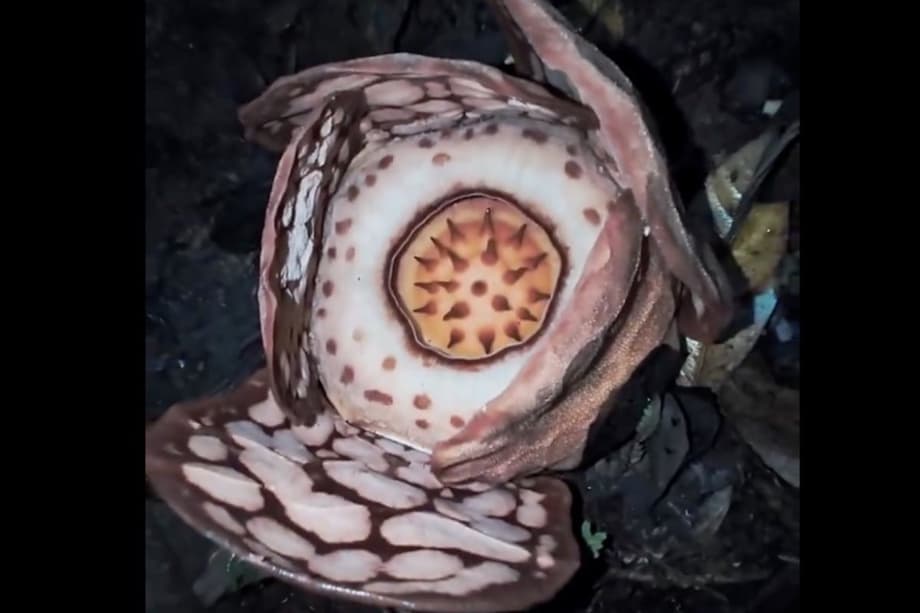
The rediscovery of a rare Rafflesia hasseltii flower in the forests of West Sumatra has become more than just a botanical triumph. It has fueled an intensifying debate across Southeast Asia about scientific heritage, colonial legacies, and the power of names. While biologists celebrated the sighting of this giant, foul-smelling bloom, often dubbed the corpse flower, researchers and activists saw an opportunity to challenge the history embedded within its taxonomy. The central question is whether the genus Rafflesia, named after Sir Thomas Stamford Raffles, the British colonial administrator, should be renamed to shed associations with a controversial historical figure and better honor indigenous knowledge.
The Historical Context of a Giant Bloom
To understand the current controversy, one must look back to 1818. This was when the Rafflesia first entered Western scientific records. A local guide led British naturalist Joseph Arnold to the plant in what was then the British colony of Bencoolen, now known as Bengkulu on the west coast of Sumatra. The honor of naming this discovery went to the man in charge, Lieutenant Governor Sir Thomas Stamford Raffles. The genus was named Rafflesia to honor him, while the specific species, Rafflesia arnoldii, was named after Arnold. Recently rediscovered in West Sumatra, the Rafflesia hasseltii bears the name of yet another European figure, Dutch botanist Arend Ludolf van Hasselt.
Raffles is widely credited with founding colonial Singapore and is a significant figure in British imperial history. However, modern scholars and campaigners criticize him for violence and coercion during Britain’s rule in parts of Southeast Asia. This duality has placed the flower’s name at the heart of a decolonization movement gaining traction in the region.
Political Calls for Decolonization
The debate recently moved from academic circles into the political arena in Malaysia. In August 2025, Wan Ahmad Fayhsal Wan Ahmad Kamal, a Member of Parliament for Machang, proposed renaming the flower during a parliamentary debate. He argued that keeping the name of a colonizer on such an iconic natural symbol was inappropriate for a nation that had been independent for 68 years.
“The name was taken from Stamford Raffles, our coloniser, a man without morals or ethics. Yet, we gave such a beautiful name to our flower,” said Mr Wan Ahmad Fayhsal.
The MP urged the government to use its powers to rename the flower, suggesting it could even be named after Prime Minister Anwar Ibrahim, joking that it would be acceptable “as long as it is better”. His proposal was rooted in a desire to view history beyond a colonial framework and to break free from the shadows of the past.
The Argument for Indigenous Names
Supporters of the renaming campaign point out that the Rafflesia never had just one name. Long before European botanists arrived, indigenous communities across the archipelago had their own names for the plant. Joko Witono, a botanist at Indonesia’s National Research and Innovation Agency (BRIN), explained that the flower is known by various local names depending on the region.
In Indonesia, it is commonly called the padma, pakma or ambai-ambai. The specific species found in West Sumatra, the hasseltii, is known locally as cendawan muka rimau. Environmental historian Luthfi Adam noted that local names often carry specific knowledge about the species, which scientific naming conventions can sometimes obscure.
Lennard Gillman, a professor of ecology and biogeography at Auckland University of Technology in New Zealand, has been a vocal supporter of the change. He argued that Raffles committed atrocities against local people during the colonial era. Gillman believes that honoring such figures in scientific nomenclature is wrong and that indigenous names, which reflect centuries-old relationships between communities and their environment, should be restored.
Scientific Resistance and Practical Challenges
Not everyone agrees with the push to rename the genus. The proposal has faced strong resistance from the scientific community, who argue that it overlooks the fundamental principles of taxonomy. Ghazally Ismail, a former deputy vice-chancellor at Universiti Malaysia Sarawak, was instrumental in establishing a Rafflesia forest reserve in Sabah. He criticized the parliamentary proposal as an embarrassment born of ignorance.
“Rafflesia is not a brand. It is not a street name. It is the scientific name of a genus of parasitic flowering plants found right here in South-east Asia,” said Professor Ghazally.
He argued that changing the name would not decolonize anything but would rather announce to the world a lack of understanding regarding scientific classification. The scientific name serves as a universal tool to organize data, allowing researchers globally to communicate about the species without ambiguity.
The Stability of Nomenclature
Scientists emphasize that the binomial naming system, or binomial nomenclature, provides stability. Associate Professor Dr Zulhazman Hamzah, Dean of the Faculty of Earth Sciences at Universiti Malaysia Kelantan, clarified that while the flower was named after Raffles and Arnold, its formal classification by botanist Robert Brown in 1821 followed standard practices. He stated there is no link to colonialism in the scientific classification itself, as names are often based on discoverers, location, or morphology.
Opponents warn that changing a genus name used internationally for over two centuries could cause significant confusion. It would require updating textbooks, research papers, databases, and signage. Furthermore, Zulhazman noted that Malaysia’s multiethnic makeup complicates the selection of a single local name. Choosing one could inadvertently alienate other communities who have their own distinct names for the flower, such as the Kelantanese pokma, the Temiar bunga malang, or the Kadazan-Dusun bunga patma.
A Middle Ground and Broader Implications
Despite the strong arguments on both sides, the conversation reflects a broader global trend of re-evaluating historical monuments and scientific terms. While completely erasing the name Rafflesia poses practical difficulties, some experts suggest a compromise. Zulhazman proposed a dual-name approach, such as “Rafflesia (Bunga Pakma)”, for official and educational use. This would maintain scientific clarity while acknowledging local heritage.
The debate also highlights that scientific names do change, albeit rarely and usually after rigorous debate. In 2024, for instance, the International Botanical Congress in Madrid voted to eliminate names containing the derogatory term “caffra” for over 200 species, replacing it with “affra”. This shows that the scientific community is willing to make adjustments when issues of ethics and sensitivity arise.
Joko Witono of BRIN echoed a pragmatic sentiment often held by taxonomists. He noted that if new taxonomic evidence emerges, names can change because that is how science works. He emphasized that accurate data matters more than the name itself.
Conservation Amidst the Controversy
Amidst the heated discussions over nomenclature, the biological reality of the Rafflesia remains precarious. The plant is a parasite, devoid of leaves, stems, or roots, relying entirely on a host vine, specifically Tetrastigma species. It produces the largest single flower on Earth, measuring up to a meter in diameter. Its signature rotting flesh smell mimics carrion to attract flies for pollination.
This bizarre life cycle makes the Rafflesia incredibly difficult to cultivate or study. It is found only in the tropical rainforests of Borneo, Indonesia, Peninsular Malaysia, Thailand, and the Philippines. Habitat loss due to deforestation remains the primary threat to its survival. The recent rediscovery of the Rafflesia hasseltii in West Sumatra was a rare win for conservationists, offering a chance to study and protect a species that had vanished from scientific records for years.
Zulhazman Hamzah urged that regardless of the naming outcome, the priority should be research, education, and conservation. He believes that by focusing on protecting the unique biodiversity of the region, nations like Malaysia and Indonesia can emerge as global leaders in environmental stewardship.
The Bottom Line
- The rediscovery of the Rafflesia hasseltii in West Sumatra has sparked a renewed campaign to rename the Rafflesia genus to remove its association with British colonial figure Stamford Raffles.
- Proponents, including Malaysian lawmakers and international academics, argue the current name honors a problematic historical figure and erases indigenous knowledge.
- Opponents, including prominent botanists, argue that changing the scientific name would cause global confusion and misunderstand the purpose of binomial nomenclature.
- The flower has numerous local names across Southeast Asia, such as padma, pokma, and bunga patma, reflecting the region’s cultural diversity.
- While scientific names can and do change, the process is complex and usually reserved for significant taxonomic revisions or ethical corrections.
- Conservationists stress that regardless of the name, protecting the endangered Rafflesia habitat remains the most urgent priority.