A Rapid Decline in Traditional Practice
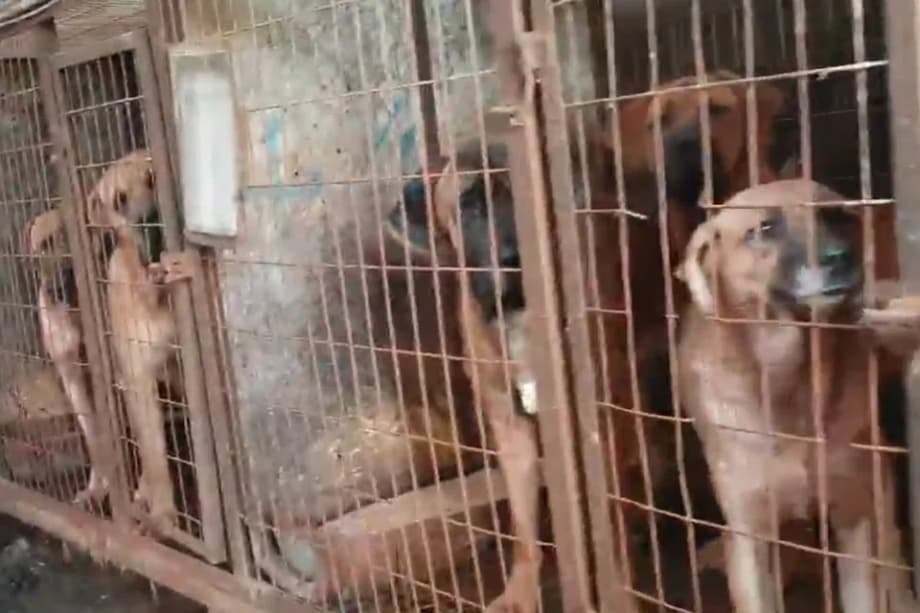
Nearly eight out of 10 dog meat farms in South Korea have shut down in recent months, marking a dramatic shift in a country once known for its controversial dog meat industry. Government data from December 2025 reveals that 1,204 out of 1,537 registered dog meat farms had ceased operations as of December 21. This represents approximately 78% of all registered facilities, signaling that South Korea is on track to meet its goal of completely eliminating dog meat consumption by February 2027.
The accelerated closure rate comes after the implementation of a special law banning dog meat consumption, which took effect in August 2024. What makes this decline particularly striking is that over half of the farms originally scheduled to close in 2026 and 2027 opted to shut down earlier than planned. This acceleration suggests a fundamental change in societal attitudes toward the practice, once considered a traditional part of Korean culture.
Officials from the Ministry of Agriculture, Food and Rural Affairs attribute the rapid closures to several factors. These include growing public support for the ban, financial incentives offered to farmers who shut down early, and active encouragement from local governments. The current pace indicates that the government will likely achieve its goal of phasing out dog meat farming before the law’s full implementation date.
A spokesperson from the Agriculture Ministry emphasized the government’s commitment to this transition, stating, “We call on the remaining farms to actively cooperate with the government’s efforts and contribute to Korea’s transformation into an animal welfare-conscious nation.”
The ministry is coordinating with local governments to provide assistance to farmers who are transitioning to other forms of livestock production. This support includes financing for facility upgrades and advisory services to help farmers adapt their businesses. Additionally, regulators have intensified inspections to prevent any resumption of dog farming activities.
The Human Cost of the Ban
While the statistics show progress in ending the dog meat industry, behind the numbers lies a complex human story of economic hardship and uncertainty. For many farmers, this trade provided not just income but a way of life for generations. Reverend Joo Yeong-bong, a 60-year-old dog farmer and president of the Korean Association of Edible Dogs, exemplifies the struggles facing those in the industry.
When he isn’t preaching as a minister, Joo raises dogs for slaughter. However, his business has been declining steadily. “Since last summer we’ve been trying to sell our dogs, but the traders just keep hesitating,” he told the BBC. “Not a single one has shown up.” This inability to sell his animals has created a desperate situation for farmers who invested their life savings into operations that are now becoming illegal.
The economic impact extends beyond just farmers. For 40 years, Shin Seung-cheol ran a dog meat distribution company that once recorded annual sales of 5 billion won ($3.8 million) and employed six people. Today, he sells vegetables at local markets just to survive. The stress of losing his business led to a cancer diagnosis, and his family now struggles with what remains of their operation.
Younger farmers face particular challenges in this transition. Chan-woo, a 33-year-old meat farmer who requested anonymity due to fear of backlash, has 18 months to dispose of 600 dogs or face a penalty of up to two years in prison. “Realistically, even just on my farm, I can’t process the number of dogs I have in that time,” he explained. “At this point I’ve invested all of my assets [into the farm] – and yet they are not even taking the dogs.”
The psychological toll weighs heavily on those in the industry. “People are suffering,” says Joo. “We’re drowning in debt, can’t pay it off, and some can’t even… find new work. It’s a hopeless situation.” Many farmers express concern about the younger generation in the industry, noting that “young people in this industry are really facing a bleak reality. Since they can’t sell the dogs, they can’t shut down quickly either. They’re stuck, with no way forward or back.”
Compensation Disputes and Legal Challenges
The controversy extends beyond the immediate economic challenges to questions about fairness and government responsibility. The Agriculture Ministry announced a compensation plan that offers farmers between 225,000 won ($170) and 600,000 won ($450) per dog if they shut down their businesses early. However, the Korean Dog Meat Farmers Association rejected this offer as inadequate, having initially demanded 2 million won ($1,505) per animal.
This compensation dispute has led to legal action. The National Dog Meat Association announced plans to file administrative lawsuits against more than 50 local governments, with approximately 400 participants representing about 10% of the country’s 4,140 relevant businesses. Park Myung-jin, head of the group, emphasized that “this is about the livelihoods of hundreds of thousands of small-business owners.”
Industry members point to what they perceive as unequal treatment. While the agriculture ministry allocated more than 70 billion won this year for dog farm closures and facility restructuring, the food safety ministry budgeted only 3.9 billion won for related small-business support. Restaurant owners and distributors receive mainly non-cash support, such as consulting for business closure and partial support for signage changes, which they consider insufficient.
The government maintains that it is operating within existing laws and approved master plans. Officials note that further compensation would require inter-ministerial decision-making and may not be feasible under current regulations. This has left many business owners feeling betrayed by a society that once supported their work.
The Fate of Half a Million Dogs
Perhaps the most pressing concern surrounding the ban is the fate of the estimated 466,000 to 520,000 dogs currently being raised for food across South Korea. This massive population of animals presents logistical and ethical challenges that the government and animal welfare groups are still working to address.
Lee Sangkyung, a campaign manager at Humane World for Animals Korea (Hwak), highlighted the complexity of the situation. “Although the dog meat ban has passed, both the government and civic groups are still grappling with how to rescue the remaining dogs,” he explained. “One area that still feels lacking is the discussion around the dogs that have been left behind.”
The government has stated that if farm owners surrender their dogs, local governments will assume ownership and manage them in shelters. However, rehoming these animals presents significant challenges. The dog meat industry traditionally favored larger breeds because weight equals profit, but in South Korea’s urban society, where many people live in apartments, potential pet owners typically want smaller dogs.
Additional complications include social stigma associated with dogs from meat farms, due to concerns about disease and trauma. Many dogs raised for meat are either pure or mixed Tosa-inu, a breed classified as “dangerous” in South Korea that requires government approval to keep as a pet. These factors, combined with already overcrowded rescue shelters, create what animal welfare advocates describe as a “perfect storm of obstacles.”
The grim reality of this situation has led to uncomfortable discussions about euthanasia. Cho Hee-kyung, head of the Korean Animal Welfare Association, acknowledged in September 2024 that while rights groups would try to rescue as many animals as possible, there would “be dogs left over.” She stated, “If remaining dogs become ‘lost and abandoned animals’ then it’s heartbreaking but they will be euthanised.”
Chun Myung-Sun, an associate professor of Veterinary Humanities and Social Science at Seoul National University, argued that difficult conversations need to happen. “There needs to be a concrete discussion about how to ‘dispose’ of the dogs,” she said. “Both adoption and euthanasia should be on the table. But if we’ve gone to the effort of rescuing dogs from cruel slaughter only to euthanise them, it’s understandable that people would feel heartbroken and angry.”
The government has sought to address these concerns by investing approximately 6 billion Korean won ($4.3 million) annually to expand animal shelters and support private facilities. Officials maintain that euthanising animals is “certainly” not part of their plan and are exploring various options for rehoming the animals.
International Adoption Efforts
Some organizations have looked beyond South Korea’s borders for solutions, sending animals overseas to more willing adopters in countries like Canada, the United Kingdom, and the United States. In 2023, a team from Hwak rescued about 200 dogs from a farm in Asan city, all of which were subsequently sent to Canada and the United States.
Yang Jong-tae, the 74-year-old former owner of that farm, experienced a profound transformation watching the rescue operation. “When I saw how they handled the animals – like they were handling people, so gently and lovingly – it really moved me,” he recalled. “We don’t treat them like that. For us, raising dogs was just a way to make a living. But those people from the animal group treated the dogs like they were individuals with dignity, and that really touched my heart.”
Despite this emotional moment, Yang still questioned the logic of the ban. “If dog meat is banned because dogs are animals, then why is it okay to eat other animals like cows, pigs or chicken?” he asked. “It’s the same thing. These things exist in nature for people to live on.”
While these international adoption efforts provide hope for some animals, they barely scratch the surface of the problem. Hwak has rehomed almost 2,800 dogs from South Korean meat farms since 2015, but animal welfare charities argue they shouldn’t be expected to absorb the huge number of dogs that have proliferated over the years.
Cultural Shifts and Changing Attitudes
The rapid decline of the dog meat industry reflects a broader transformation in South Korean society. For decades, dog meat consumption was a contentious practice that divided the nation. For some, it represented resistance against cultural imperialism, particularly when Western criticisms intensified before international events like the 1988 Seoul Olympics, 2002 FIFA World Cup, and 2018 Winter Olympics.
The South Korean government temporarily banned the sale of dog meat before these events to avoid offending foreigners, decisions that were widely criticized by parts of civil society who saw them as forms of cultural imperialism reminiscent of colonial times. These episodes aroused feelings of national pride and protection toward the consumption of dog meat, with influential public figures taking stances in favor of it as a national cultural symbol.
However, attitudes have shifted dramatically in recent years. Government polls show that only 8% of respondents reported trying dog meat in the previous 12 months as of 2024, down from 27% in 2015. Approximately 7% said they would keep eating it until February 2027, while only about 3.3% indicated they would continue after the ban takes full effect. A 2023 Gallup Korea poll found that consumption had declined similarly, reflecting a profound generational and cultural change.
This shift stems from several factors. The rise of “pet culture” has influenced younger generations to view dogs primarily as companions rather than food. The COVID-19 pandemic may have also played a role, as concerns about disease transmission from live animal markets prompted municipal authorities to dialogue with dog retailers about demolishing slaughtering facilities. Research suggests the pandemic facilitated discussions about ending the practice to keep urban spaces free from zoonotic disease risks.
First Lady Kim Keon Hee also significantly boosted the anti-dog meat campaign by repeatedly expressing support for a prohibition. Her advocacy drew intense criticism and crude insults during demonstrations by farmers, but her visibility helped elevate the issue in public discourse.
Despite these changing attitudes, about one in three South Koreans still opposes the ban, illustrating that the practice retains some cultural significance. Resistance has manifested in protests and threats of drastic action, including the remarkable threat from dog farmers in December 2023 to release two million dogs near lawmakers’ homes and government landmarks in Seoul.
Legal Framework and International Context
The legal basis for the ban stems from legislation passed by the National Assembly on January 9, 2024, which makes the slaughter of dogs and the sale of dog meat for human consumption illegal. However, notably, the actual consumption of dog meat remains legal under the new law, creating a unique legal situation where supply is criminalized but demand is not.
Those who violate the law by raising and butchering dogs face a maximum three-year prison term or a fine of up to 30 million won ($22,768). Those distributing dog meat can face up to two years behind bars or a maximum fine of 20 million won. The legislation provided a three-year grace period before full enforcement, allowing time for the transition that is now underway.
South Korea’s approach differs from other countries where dog meat is consumed, such as China, Vietnam, Indonesia, Laos, Myanmar, parts of northeastern India, and several African nations. However, South Korea received particular international attention because of its status as a cultural and economic powerhouse and because it was the only nation with industrial-scale dog farms.
Historical context reveals that dog meat consumption has never been a key part of the Korean diet, though it has existed for thousands of years. Archaeological evidence suggests dogs have been eaten since at least the Neolithic age (roughly 6000BC to 2000BC). However, during the Silla (57 BCE to 935 CE) and Goryeo (918 to 1392 CE) periods, the practice was uncommon as Buddhism advocated vegetarianism.
During the Joseon Dynasty (1392 to 1897), some government officials argued that dogs were human companions and advocated a ban on their consumption. However, dog meat was sometimes seen as a delicacy reserved for special occasions, particularly the three hottest days of summer according to the Korean calendar (Sambok), when bosintang (dog meat soup) was consumed for its perceived medicinal properties.
The legal status of dog meat has been complex and often disputed. Between 1975 and 1978, dogs had full legal status as livestock animals in South Korea, but this changed. Currently, the Animal Protection Act does not explicitly prohibit the slaughter of dogs for food but “prohibits killing animals in a brutal way” and forbids killing dogs in open areas such as streets or in front of other animals of the same species.
Dog meat is excluded from the list of livestock under the Livestock Processing Act of 1962, which is the principal statute governing hygienic slaughtering of livestock and processing of meat. As a result, dog meat farming has been under-regulated compared to other stock animals, with no regulations requiring humane slaughter methods.
Looking Ahead to 2027 and Beyond
As the February 2027 deadline approaches, stakeholders across the spectrum are preparing for significant changes. The Agriculture Ministry remains optimistic, noting that the current pace of closures suggests the government will complete the phaseout of dog meat farming by the law’s full implementation date. Vice Agriculture Minister Park Beomsu stated that officials would try to convince farmers to voluntarily phase out dog breeding ahead of the ban.
After the ban comes into force, the government plans to facilitate adoptions for remaining dogs or move them to care facilities rather than euthanize them. The agriculture ministry indicated that butchers would also be compensated, while local authorities would be responsible for dismantling dog farms and slaughterhouses. Former farmers and butchers would receive low-interest loans if they pivot to other agricultural businesses, and authorities would offer financial assistance to traders and restaurant owners to shut down their businesses and find new jobs.
However, significant challenges remain. Farmers like Chan-woo hope the grace period might be extended to allow for a more gradual process. “All we’re hoping for now is that the grace period can be extended so that the process [of dealing with the remaining dogs] can happen more gradually,” he said. Many others share this hope, though extension seems unlikely given the government’s current stance.
Reverend Joo expressed concern about what might happen if the transition isn’t handled carefully. “Right now, people are still holding on, hoping something might change – maybe the grace period will be extended,” he said. “But by 2027, I truly believe something terrible will happen. There are so many people whose lives have completely unravelled.”
Animal rights groups continue to pressure the government for clearer plans regarding the dogs. Hwak has lobbied the ministry “hard” to include a clear rescue component in its phase-out plan. They also point out that while they’ve rehomed thousands of dogs since 2015, animal welfare charities shouldn’t be expected to solve the massive problem created by decades of industrial dog farming.
The broader implications extend beyond just South Korea. As the country successfully transitions away from dog meat consumption, it may serve as a model for other nations facing similar debates. The balancing act between respecting cultural traditions, protecting animal welfare, and addressing human livelihoods remains complex, but South Korea’s approach offers insights into how such transitions might be managed elsewhere.
Ultimately, the decline of South Korea’s dog meat industry represents more than just an agricultural change. It reflects a fundamental shift in how society views the relationship between humans and animals, particularly dogs, and how nations navigate the tension between tradition and evolving ethical standards. As 2027 approaches, all eyes will be on South Korea to see how this challenging transition concludes for both the people and animals involved.
The Bottom Line
- 78% of South Korea’s registered dog meat farms (1,204 out of 1,537) had shut down as of December 21, 2025
- A law banning dog meat consumption took effect in August 2024, with full enforcement scheduled for February 2027
- The government offers between $170 to $450 per dog as compensation for early farm closure, but farmers demand significantly more
- Approximately 466,000 to 520,000 dogs currently raised for meat face uncertain futures amid shelter overcrowding
- Dog meat consumption has dropped dramatically, with only 8% of South Koreans trying it in the past year
- Restaurant owners and distributors are suing local governments over inadequate compensation compared to farmers
- Violators of the ban could face up to three years in prison or fines of up to $22,768
- The ban criminalizes breeding, slaughtering, and selling dog meat, but consumption itself remains legal
- International adoption efforts have relocated some dogs, but capacity remains limited
- The transition reflects broader cultural shifts in South Korea’s view of dogs from food to companions