A Nation Transformed by Demographic Reality
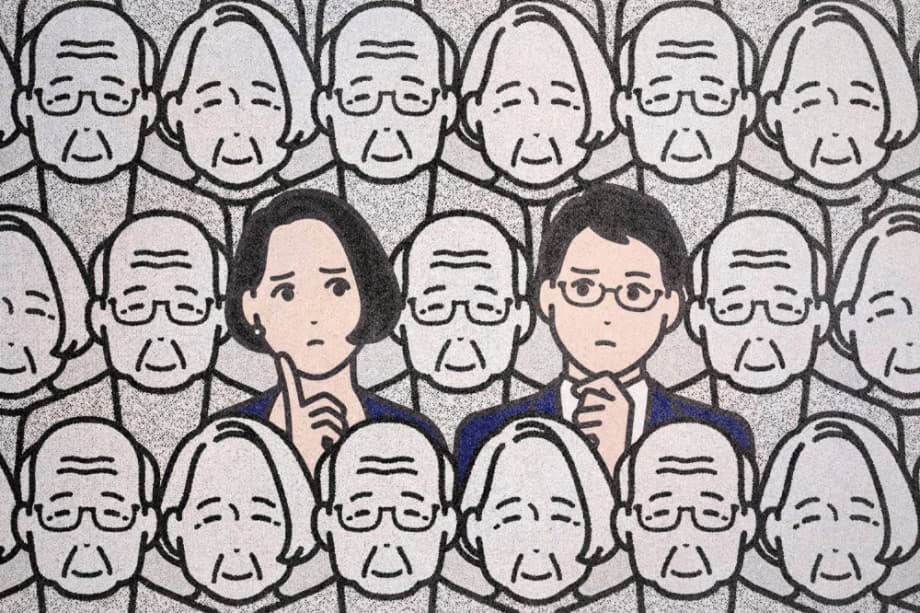
For 19-year-old Keiichi Yasunaga, the year 2050 exists somewhere beyond the visible horizon—more a hazy concept than a concrete point in time. It represents the era of his parents’ retirement, his own middle age, a period his generation tends to defer thinking about, something to address later. Yet as the first quarter of the 21st century draws to a close, demographic shifts already in motion are beginning to define the next 25 years. By midcentury, today’s teenagers will inherit a country transformed: a Japan with millions fewer people, an unprecedented share of older residents and a generational balance tilted in ways no society has experienced before.
- A Nation Transformed by Demographic Reality
- The Statistical Reality of Japan’s Decline
- Rural Communities on the Frontlines
- Urban Transformation and Changing Household Structures
- Labor Market Challenges and Potential Solutions
- The Birthrate Challenge and Social Evolution
- Technology and Innovation as Responses
- Global Context and Japan as a Bellwether
- An Alternative Perspective: Opportunity in Decline?
- Education and Knowledge Ecosystems
- Young Japanese Perspectives on 2050
- The Road Forward
- Key Points
Yasunaga, a high school senior planning to enroll at Tokyo’s Waseda University next spring, embodies both the uncertainty and adaptability of his generation.
“It’s hard for me to imagine what it will be like by 2050,” says Yasunaga. “I think AI will be at the center of our daily lives. I also think pensions will eventually disappear, and the retirement age will keep getting pushed back—to 80, or maybe even 90 in the worst case.”
His perspective highlights how young Japanese are already anticipating fundamental changes to social systems that have been stable for generations.
Predicting the future is never easy, with geopolitical upheavals, technological shifts, climate change and policy choices capable of upending even the most careful forecasts. Population projections, however, stand out as an exception, offering some of the clearest glimpses of what lies ahead. These demographic forecasts present Japan with both unprecedented challenges and potential opportunities for reinvention.
The Statistical Reality of Japan’s Decline
The National Institute of Population and Social Security Research estimates that Japan’s population will fall to roughly 100 million by 2050, more than 20 million fewer than today. This represents a decline of approximately 17% in just three decades. The United Nations offers similarly sobering projections, suggesting Japan’s total population could plummet to 104.9 million by 2050, possibly even as low as 87 million by 2060. This makes Japan one of the most rapidly shrinking countries among developed nations.
More dramatic than the overall population decline is the aging of Japan’s citizenry. The share of residents aged 65 and over, which stood at 29.4% as of September 2025, is expected to reach 37.1% by 2050. Japan already holds the world’s second-highest median age (after Monaco) at 49 years, and has the world’s highest life expectancy—87 years for women and 81 years for men. By 2060, 39.9% of the population is projected to be aged 65 and older, signifying an increase of 10 million elderly citizens.
These statistics manifest in striking ways. Japan’s centenarian population reached an unprecedented 99,763 individuals in September 2025, marking the 55th consecutive annual increase. Women comprise about 88% of this group, with the oldest living person in Japan being a 117-year-old woman. Projections suggest that by 2050, Japan’s over-100 cohort could exceed 200,000.
The dependency ratio—the number of children and older adults supported by every 100 people of working age—is projected to rise from 68.0 to 89.0 by 2050. This means each working-age person will effectively support one dependent. The old-age dependency ratio, specifically measuring retired people relative to the working-age population, is already the highest in the world at 48.6 seniors for every 100 working adults, projected to surge to 79 per 100 in 2050.
McKinsey Global Institute research places these Japanese trends within a global context. Worldwide, two-thirds of humanity lives in countries with fertility below the replacement rate of 2.1 children per family. By 2100, populations in some major economies will fall by 20 to 50 percent, based on UN projections. In first-wave countries already experiencing demographic shifts—primarily advanced economies and China—the share of people of working age will fall to 59 percent in 2050 from 67 percent today. Japan stands at the forefront of this global transformation, serving as a potential bellwether for other aging societies.
The Economic Implications
The economic consequences of Japan’s demographic shift are profound and multifaceted. As the population ages and shrinks, the traditional relationship between workers and dependents becomes increasingly strained. OECD projections indicate Japan’s labor force could drop by 25% from 67 million to 51 million by 2050, assuming constant labor market entry and exit rates. This represents a significant reduction in human capital at a time when technological innovation and productivity gains become increasingly critical.
Public finances face mounting pressure. Public social spending in Japan doubled from 11% of GDP in 1991 to 22% in 2018, surpassing the OECD average. Twenty-seven consecutive years of budget deficits have driven up gross public debt from 60% of GDP to 226%, the highest ever recorded in the OECD area. Population aging is projected to raise social spending by another 4.7% of GDP over the period 2020-2060. Without significant adjustments, these fiscal pressures could become unsustainable, threatening the nation’s economic stability and intergenerational equity.
McKinsey’s analysis suggests that in first-wave countries like Japan, GDP per capita growth could slow by 0.4 percent annually on average from 2023 to 2050 due solely to demographic shifts. The current calculus of economies cannot support existing income and retirement norms—something must give. To offset these headwinds, Japan would need productivity growth to increase by two to four times or people to work one to five hours more per week. Without such adjustments, retirement systems might need to channel as much as 50 percent of labor income to fund a 1.5-time increase in the gap between the aggregate consumption and income of seniors.
The consumption landscape will transform dramatically as demographics shift. McKinsey research indicates that seniors will account for one-quarter of global consumption by 2050, double their share in 1997. In Japan specifically, residents aged 65 and older accounted for 21% of direct consumption in 2023, a share projected to increase to 31% by 2050. In Advanced Asia, the share of direct consumption by older people could rise from 26% today to 39% over that period, meaning $4 of every $10 of direct spending may come from seniors. This shift demands fundamental changes in how businesses design products, services, and marketing strategies.
Rural Communities on the Frontlines
While demographic challenges affect all of Japan, rural communities face the most immediate and severe impacts. Akita prefecture in northern Japan offers a stark preview of what other regions may experience. Its population stood at roughly 878,000 as of November 1, 2025, down 1.93% from a year earlier—the steepest decline of any prefecture in the nation. The share of residents 65 and older exceeds 40%, making it the only prefecture to cross that threshold. By 2050, Akita’s population is projected to fall to around 560,000, little more than 60% of its current size.
Daiki Nakada, a 24-year-old entrepreneur who graduated from Akita International University, chose not to pursue a career in Tokyo despite numerous opportunities. Instead, he joined a tourism-related startup in Semboku, a city in Akita prefecture.
“Akita is often described as a front-line case of Japan’s aging and depopulation challenge,” says Nakada, who hails from Okinawa. “But it also has a unique culture and charm, and I wanted to see what I could do here to help revive the local economy.”
His choice represents a countervailing trend against the overwhelming flow of young people to urban centers.
Nakada organizes customized tours and farmstays through an outfit called Inaka Travel Akita and runs a fully funded, one-year overseas study-abroad program for high school students in the prefecture. His own startup, Kakunodate Alliance, launched in 2025, has taken over operations of a bar near Kakunodate Station, aiming to give visitors a reason to linger in town. These initiatives represent grassroots efforts to create economic opportunities and reasons for young people to remain in or return to declining regions.
Takuya Hoshino, a chief economist at the Dai-ichi Life Research Institute, points to several major shifts likely to define Japan’s landscape by 2050. Among the most pressing topics is rural depopulation.
“Population concentration, especially in Tokyo, has been a long-standing trend, with people continuing to flow into urban areas,” Hoshino says. “As a result, rural regions struggle to attract young people, which in turn makes it harder for families to form and children to be born. That dynamic is turning into a downward spiral, accelerating depopulation in the countryside.”
Many municipalities face an increasingly stark reality. Keeping basic public services running will grow more difficult as tax bases shrink. Closures of hospitals, care facilities and schools could erode quality of life, while labor shortages and aging staff threaten local governance itself. Community ties may fray, infrastructure may deteriorate and disaster readiness could suffer. Municipal mergers and compact-city strategies are likely to become unavoidable, but rising costs and resistance to relocation underscore how difficult managing decline will be. Tomoya Mori, a professor at Kyoto University, has simulated that by 2120, half of Japan’s cities could disappear as the population—in a worst-case scenario—plunges to less than a third of its current size.
Urban Transformation and Changing Household Structures
While rural communities face existential threats, urban areas are not immune to demographic pressures. Government projections show a sharp rise in elderly single-person households, increasing from 13.2% of all households in 2020 to 20.6% by 2050. Women are expected to account for about 60% of these units, with the number of older women living alone nearly matching the number of elderly couple-only homes, both at just over 6.3 million.
This shift represents a fundamental reimagining of family structures and living arrangements in Japan. The traditional multigenerational household, once a cornerstone of Japanese society, is giving way to new configurations. These changes carry profound implications for housing markets, healthcare delivery, social services, and urban planning. Cities will need to adapt infrastructure and services to accommodate a population where single elderly households become increasingly common, requiring innovations in transportation, healthcare access, and community support systems.
The demographic transformation also alters the balance between urban and rural areas. As populations shrink, cities may actually gain relative prominence, but they will face their own aging-related challenges. Urban areas are already seeing an increase in older residents, including seniors who move to cities for convenience and access to services. This creates new demands on urban infrastructure while potentially exacerbating rural decline through continued brain drain.
Labor Market Challenges and Potential Solutions
Japan’s tightening labor force represents one of the most immediate economic challenges of demographic decline. The working-age population (15-64 years old) diminished by 296,000 to 74.2 million in 2022, constituting 59.4% of the total population, with a projection to decrease further to 47.95 million by 2060. This represents a dramatic reduction in human capital just as technological advances make certain skills increasingly valuable.
While the working-age population has been falling since the mid-1990s, labor force participation has so far been propped up by rising employment among women and older adults. This buffer, however, is nearing its limits, according to economists like Hoshino. The years ahead are likely to bring intensifying labor shortages and accelerating shifts toward automation, productivity gains and, potentially, greater reliance on non-Japanese workers—developments that will introduce their own institutional and social challenges.
Potential solutions to address labor shortages include raising the retirement age, including elderly in the workforce through voluntary part-time opportunities, enhancing female participation in the workforce through improved childcare and work-life balance policies, and expanding immigration. Japan already has the highest number of seniors working past the retirement age in the world after South Korea: more than half (50.4%) of individuals aged 65-69 are still employed, while nearly 40% of Japanese companies hire people over 70.
Shinichiro Umeya, a fellow at the Nomura Research Institute’s Center for Strategic Management and Innovation, suggests redefining what constitutes “old age.” In many countries, including Japan, people 65 and older are commonly classified as “elderly,” a standard often traced back to a 1956 United Nations report when average life expectancy in Japan was around 65. Since then, life expectancy has risen to more than 80 and health in later life has improved. Japanese academic societies argue there is no longer a clear medical or biological basis for defining old age at 65.
Umeya and his team recalculated the dependency ratio by extending the definition of the working-age population from 15 to 64 to 15 to 69. Under this revised measure, the ratio falls to 67.8 in 2050—virtually unchanged from the 68.0 level seen in 2020.
“In other words, if the working-age population could effectively be extended by five years, the dependency burden in 2050 would be roughly on par with that of today,” Umeya explains.
This approach would require major life events—marriage, childbirth, retirement—to shift later in life, along with urgent restructuring of pension systems and development of technologies that support age-related declines in physical and cognitive ability.
The Birthrate Challenge and Social Evolution
Japan’s declining birthrate represents perhaps the most fundamental driver of its demographic challenges. After peaking at 2.46 million in 1970 during the first postwar baby boom, the number of young people reaching adulthood briefly rebounded to 2.07 million in 1994 before resuming a steady decline, hitting record lows in recent years at a little over 1 million people. This demographic trajectory creates a self-reinforcing cycle: fewer young people today means even fewer potential parents in the future.
A survey by the health ministry found that around 319,000 babies were born in the first half of 2025, more than 10,000 fewer than a year earlier—a pace that could put the total for the year at a record low. Japan’s total fertility rate—the average number of children a woman is likely to have over her childbearing years—fell in 2024 for the ninth consecutive year, declining to 1.15 from 1.2 the year before. This rate remains far below the replacement level of 2.1 children per woman needed to maintain population stability.
Rising living costs, economic uncertainty and the high expense of fertility treatment are often cited as reasons having children can feel risky or out of reach in Japan. While many explanations are offered for falling birthrates, there is broad agreement on several underlying factors: dramatic reductions in infant mortality due to advances in medicine; economic development that has reduced child labor and shifted expectations toward education rather than household work; and women’s greater participation in society, which has eased social pressure to give birth.
Saya Tamaki, a second-year student at Tokyo’s Meiji University studying sociology, offers a nuanced perspective on these trends. Tamaki, who identifies as aromantic asexual and heads a student organization called Empower Meiji, has spent time thinking about the role women play in society, as well as about childbirth.
“There’s a common argument that as more women enter the workforce, more choose not to have children and instead focus on their careers,” Tamaki says. “But I think framing women’s workforce participation as a single, nationwide trend behind the phenomenon is an overgeneralization.”
Tamaki argues that rather than the government simply urging people to “have more children”—including those who do not want them—support should be directed toward those who do.
“That could mean financial assistance,” she says, “or, in the case of LGBTQ couples who want children, expanding options by improving the safety and accessibility of assisted reproductive technologies. I hope for a society where people who want to have children are better able to do so.”
This perspective shifts the focus from pro-natalist policies targeting all women to more targeted support for those who genuinely desire parenthood.
The Japanese government has unveiled natalist policies under the Children’s Future Strategy Policy, aiming to stabilize the population at around 100 million by 2060. Prime Minister Fumio Kishida earmarked 3.5 trillion yen (approximately US$23.7 billion) annually for three to five years, which would double childcare spending by early 2030. The plan consists of three pillars: monetary assistance through higher child allowances and childbirth grants; expanded childcare services; and cultural reforms urging companies to improve work-life balance. However, these initiatives have largely failed due to the absence of needed cultural changes, with unwritten social rules pressuring employees—particularly fathers—not to take parental leave.
Technology and Innovation as Responses
Japan’s demographic challenges are spurring technological innovation across multiple sectors. The government has allocated approximately US$440 million from 2020-2025 for further development of the robotics industry, with 62 commercially available types of humanoid robots already in use. New digital technologies such as AI could increase productivity per worker, particularly in sectors facing severe labor shortages. The healthcare and elderly care sectors represent priority areas for automation and technological assistance.
Companies are already responding to the changing demographics with innovative products and services. Nestlé Health Science closed a baby food manufacturing facility in Ireland due to declining birth rates in China, redirecting resources toward supplements and nutritional products aimed at seniors. Vayyar in Israel developed sensor technology to help detect falls and reduced mobility among older adults using radar systems rather than cameras to maintain privacy. In Canada, Silverts offers innovative, fashionable, adaptive clothing and shoes for older adults with fewer small buttons and hooks to allow them to remain independent longer.
In the Netherlands, Jumbo Supermarket created “chat checkout” lanes allowing for a slower checkout process aimed at providing older adults an opportunity to converse with cashiers to combat increasing loneliness among seniors. These examples illustrate how businesses worldwide are adapting to demographic shifts that Japan experiences most acutely.
Prime Minister Sanae Takaichi, addressing her ministers during the first meeting of the Population Strategy Headquarters on November 18, 2025, stated that
“based on the recognition that Japan’s greatest challenge is population decline, the aim is to build a society in which everyone—including young people and women—can continue to live in the communities they themselves choose.”
This approach emphasizes local initiative and community-based solutions over top-down mandates.
Global Context and Japan as a Bellwether
Japan’s demographic challenges, while severe, are not unique. The country finds itself at the forefront of a global trend that will eventually affect most nations. Earth.org research indicates that populations in over 55—mostly high-income—countries are expected to fall by 2050. Two-thirds of the global population is living in a country where the fertility rate is below the 2.1 threshold necessary to maintain population stability. Around 2100, fertility rates are expected to dip below 2.1 in all countries around the world, except twelve.
Pew Research projections show that the global population of people aged 65 and older is projected to triple by mid-century, from 531 million in 2010 to 1.5 billion in 2050. The world is aging faster than previously expected, with the global median age, eight years less than in the United States in 2010, projected to be only five years less by 2050. By 2050, the majority of people in Japan, South Korea and Germany are expected to be older than 50. Some Latin American countries, currently younger than the United States, will likely be older than the U.S. by 2050.
Most countries, including the United States, are projected to see the share of their population that is 65 and older surpass the share that is younger than 15 by mid-century. This represents a fundamental shift in human demographics, with profound implications for societies worldwide. Japan’s experience serves as an early warning system and potential model for how other nations might navigate similar transitions.
Lowy Institute research suggests the global population may start to decline by the 2050s, with 63 countries having already passed peak population. The UN’s 2024 projections ascribe an 80 percent probability to global population peaking this century, from a 30 percent estimate a decade ago. These trends are already visible in countries like Germany, where deaths have exceeded births since 1972, and the population is only rising because of migration. The balance of evidence suggests negative population growth will reduce inflation, according to a study of 22 countries from 1870 to 2016 that found a “significant positive association between population growth and inflation.”
An Alternative Perspective: Opportunity in Decline?
While demographic decline is typically framed as a crisis, some analysts suggest it could present opportunities for creating a more sustainable and stable economy. Economic growth is not solely dependent on population growth but on a combination of factors including technological advancement, education, innovation, and efficient resource utilization. As long as governments and businesses invest significantly in these other factors, economic growth can potentially continue even with a shrinking population.
Scarcity of human resources naturally incentivizes companies to innovate and automate to increase productivity and efficiency. Countries like Finland and Sweden, both experiencing declining populations, have managed to maintain strong economies by prioritizing education, research & development, and innovation. China’s economy, the world’s second-largest, is projected to grow by 5.2% in 2023 and 4.5% in 2024 despite experiencing a population decline in 2022. Even Japan’s economy is still expected to slightly grow in coming years despite its rapidly declining and aging population.
Earth.org analysis argues that while economic growth might be smaller with a declining population, it could be more stable and sustainable compared to economic growth caused by rapid population growth. This requires redefining the concept of economic growth beyond traditional GDP metrics to include happiness, health, and sustainability measures. A shrinking population does not necessarily spell doom for economic advancement—the quality of human contributions rather than quantity drives sustained economic progress.
Investing in education, R&D, and innovation, while allowing more elderly, women, migrants, and even robots in the workforce, represents viable and sustainable solutions that can mitigate adverse effects commonly associated with an imbalanced old-age dependency ratio. From this perspective, declining populations in developed countries should be seen as inevitable, temporary demographic transitions that incentivize nations to update traditional socio-economic systems to modern models long overdue. Rather than an economic crisis, demographic decline could represent an opportunity for reinvention.
Education and Knowledge Ecosystems
Japan’s demographic decline presents particular challenges for its higher education system. The declining youth population threatens universities across the country, with projections indicating significant reductions in enrollment by 2050. This trend is particularly worrisome for Japan, where long-term aging has already caused significant socioeconomic damage. In 2022, two people aged 15-65 had to support one person over 65, and the ratio will worsen to 3:2 by 2045.
Japan’s higher education sector has struggled with underperformance in academic excellence initiatives. Despite progress in internationalization and management reforms, the government’s 2013 initiatives aimed at promoting world-class universities have fallen short of their goal of placing 10 Japanese universities among the world’s top 100 by 2023. According to the Academic Ranking of World Universities, by 2022, only two Japanese universities reached the top 100, down from five in 2003 and three in 2013.
The Japanese government is now trying to develop two ecosystems to help Japanese society adapt to the global knowledge economy: a knowledge ecosystem that aims to generate knowledge values through science, technology, and innovation, and a human resource development ecosystem that aims to cultivate highly skilled knowledge workers capable of integrating into globalized talent pools. The government has launched a national fund based on approximately USD 70 billion to support a very limited number of top universities over 25 years. These universities are expected to develop their own endowments and achieve financial autonomy.
For human resources development, the government aims to increase international students from 300,000 in 2019 to 400,000 by 2033, and Japanese students studying abroad from 222,000 to 500,000 over the same period. These initiatives recognize that Japan must compete globally for talent even as its domestic pool shrinks. The government is actively supporting expansion of STEM-related programs such as information science and green technology, especially to enroll more female students.
Young Japanese Perspectives on 2050
Despite the many uncertainties that lie ahead, today’s young adults show little sign of retreating from the future. Ahead of 2026’s Coming of Age Day, advertising giant Hakuhodo surveyed 800 men and women ages 18 to 89 on what happiness means to new adults in an era of 100-year lifespans. Only about 30% of respondents overall said they wanted to live to 100. Among newly minted adults, however, more than half did. What set them apart was not optimism about the systems awaiting them, but an attitude toward life itself: a desire to keep moving forward, to try “many different things” and to continue “finding enjoyment over a long life.”
Hizuki Tanaka, a 20-year-old from Sado Island in Niigata Prefecture, studies illustration and art while supporting himself by working at bars and restaurants in Tokyo. Looking ahead to 2050, he expresses concern about the role of human creativity in an increasingly automated world.
“I really hope that even in 2050, there will still be a place for people who create wonderful things by hand—and that they’ll be able to work with energy and pride,” Tanaka says.
This perspective highlights concerns about human dignity and meaning-making in an economy increasingly driven by technology.
For a generation raised amid a demographic crisis yet living overall healthier lifestyles, longevity is no longer an anomaly but increasingly a given—something to be navigated by making the right choices. The future they face is not guaranteed to be comfortable or secure. But then again, it never has been. Tanaka, who turns 21 in January, articulates a simple yet profound aspiration:
“I want to be a 45-year-old who faces things honestly and kindly. Someone who values human connections and engages with the world in a straightforward, sincere way.”
These perspectives from young Japanese suggest resilience rather than resignation in the face of demographic challenges. Rather than seeing decline as inevitable disaster, many appear to view it as a transformation requiring adaptation and reimagining of what constitutes a good life and a good society. This generational optimism may prove Japan’s most valuable resource as it navigates unprecedented demographic change.
The Road Forward
Japan faces a demographic future without historical precedent. The convergence of population decline, rapid aging, and low birthrates presents challenges that touch every aspect of society—from economics and governance to family life and community cohesion. How Japan responds to these challenges will offer lessons for every aging society navigating a similar future. The country finds itself at the forefront of a global transformation that will eventually affect most nations worldwide.
Responses to Japan’s demographic challenge require multi-faceted approaches. Economic policies must boost productivity through innovation, automation, and more efficient use of human capital. Labor markets need reforms to enable full participation from women, older adults, and potentially foreign workers. Social security systems require restructuring to ensure fiscal sustainability while protecting vulnerable populations. Healthcare systems must adapt to serve an aging population with changing needs and expectations. Education institutions need to prepare smaller student cohorts for a rapidly changing global economy.
Perhaps most importantly, Japan faces the task of reimagining its social contract and cultural narratives. Traditional assumptions about work, family, community, and the purpose of economic activity require reexamination. The country’s response will depend not just on policy choices but on collective imagination and willingness to embrace new possibilities rather than clinging to familiar patterns that no longer serve current realities.
Despite the daunting challenges, perspectives from young Japanese suggest a reservoir of resilience and adaptability. The demographic transformation Japan experiences represents not just crisis but opportunity—the chance to build a society that values quality over quantity, sustainability over growth, and human dignity across the entire lifespan rather than just during productive years. Japan’s 2050 will look dramatically different from its 2025, but through intentional choices and collective will, it could become a model for how societies thrive amid demographic change rather than despite it.
Key Points
- Japan’s population is projected to decline from approximately 123 million today to roughly 100 million by 2050, representing a loss of more than 20 million residents.
- The share of residents aged 65 and older is expected to rise from 29.4% today to 37.1% by 2050, with centenarians projected to exceed 200,000 by mid-century.
- The dependency ratio—the number of children and older adults supported by every 100 working-age people—is projected to increase from 68.0 to 89.0 by 2050.
- Rural areas face the most immediate impacts, with Akita prefecture projected to lose 40% of its population by 2050 and potentially half of Japan’s cities disappearing by 2120.
- Japan’s working-age population could drop by 25% from 67 million to 51 million by 2050, while public debt already stands at 226% of GDP.
- Potential solutions include raising the retirement age, increasing female and elderly workforce participation, expanding immigration, and boosting productivity through technology and innovation.
- Japan’s total fertility rate fell to 1.15 in 2024, far below the replacement rate of 2.1 children per woman needed to maintain population stability.
- The government has allocated significant funding for robotics development and other technologies to address labor shortages, particularly in elderly care.
- Young Japanese perspectives show resilience and adaptability, with many expressing hope for meaningful lives amid demographic transformation rather than viewing it solely as crisis.
- Japan’s experience serves as a bellwether for global demographic trends, with two-thirds of humanity already living in countries with fertility below replacement rate.