A record shaped by tariffs, supply chains and pricing power
China’s goods trade surplus surged past the 1 trillion dollar mark for the first time, reflecting the strength of its export machine even under higher US tariffs. Through November, the accumulated surplus reached about 1.08 trillion dollars, surpassing last year’s full year record. November exports rose 5.9 percent compared with a year earlier while imports edged up 1.9 percent, producing a monthly surplus of 111.68 billion dollars. The rebound in exports came despite a sharp contraction in shipments to the United States. Strong sales to Europe, Africa and Southeast Asia filled the gap.
Shipments to the United States fell roughly 29 percent in November compared with a year earlier, extending a double digit decline so far this year. Exports to the European Union moved the other way, rising about 14.8 percent in November. Product groups with continued momentum include ships, semiconductors and autos. Exports of rare earth products jumped 26.5 percent month over month in November, the first full month after Presidents Xi Jinping and Donald Trump discussed speeding shipments of critical minerals. On the import side, soybean purchases are on track for a record year as Chinese buyers stepped up orders from both American and Latin American suppliers.
Lynn Song, chief economist for Greater China at ING, said the downturn in US bound shipments and the timing of tariff changes are still working through the figures.
November exports to the US were down 28.6 percent year over year, bringing the growth so far this year to minus 18.9 percent. It is likely that November exports have yet to fully reflect the tariff cut, which should feed through in the coming months. Also, the frontloading effect as US importers ramped up purchases ahead of tariffs will act as a headwind on trade in the coming months.
That split between weak US demand and strength elsewhere explains how a historic surplus emerged in the face of sweeping tariffs. China still sells roughly three times as much to the United States as it buys, and it also reduced purchases of American goods as tariffs climbed. Diversified markets, a competitive currency and softer prices for many manufactured goods reinforced the export recovery.
How tariffs reshaped the map of global trade
Tariffs rose dramatically in April during a package widely known as Liberation Day tariffs. A universal 10 percent duty went on most imports, with sector specific and China focused measures layered on top. Headline rates spiked in the weeks that followed, then eased after negotiated pauses. By late year, average US tariffs on goods from China stood near 47.5 percent with full coverage of trade, based on widely followed policy tallies. China’s average tariffs on US goods were near 31.9 percent with complete coverage. US tariffs on imports from many other countries also rose compared with prior years, reaching about 18.5 percent by early November because of sector actions and temporary measures.
The tariff waves changed trade routes more than they reduced total flows. The US goods deficit with China fell from about 418 billion dollars in 2018 to roughly 279 billion dollars in 2023, while US deficits with Mexico and Vietnam widened as production shifted. Tariffs are a tax, so the cost lands on importers, consumers or foreign sellers depending on contracts and bargaining power. Collections since 2018 total about 257 billion dollars, a small sum next to federal deficits that approach 2 trillion dollars a year. A universal 10 percent tariff could raise around 1.7 trillion dollars over 10 years, according to independent estimates, but retaliation and slower growth would reduce the net fiscal gain.
Price effects have looked like one time increases on targeted goods, not a persistent rise in the broader inflation rate. The deeper effect is on supply chains and margins. Steel and aluminum enjoyed early protection, yet higher input costs and uneven demand later weighed on plants in several regions. The same tension, protection for some sectors but higher costs for others, now shapes the new tariff era.
Where Chinese exports found new demand
Chinese exporters expanded in markets open to low cost and mid range manufactured goods. In November, shipments to the European Union grew almost 15 percent. Exports to Africa rose by nearly 28 percent, and sales to Southeast Asia climbed more than 8 percent. Demand centered on cars, solar panels and consumer electronics. Scale, dense supplier networks and aggressive pricing helped producers displace rivals. That momentum has drawn political scrutiny in Europe, where manufacturers are losing share in key categories.
French President Emmanuel Macron has warned Beijing that Europe may act if the trade imbalance does not narrow. He framed the choice bluntly in recent remarks on China policy.
I told them that if they do not react, we Europeans will be forced to take strong measures in the coming months.
Chinese competitiveness rests on several pillars. Consumer prices have been soft this year, which reinforced the real effective exchange rate advantage and made goods cheaper in buyers’ currencies. Firms also rely on regional production networks. A company can assemble in Vietnam, Thailand or Malaysia to manage tariff exposure, while still sourcing many parts and materials from Chinese suppliers. The result is that China can lose share in one market and still maintain its presence through neighbors in the final export mix.
What the numbers say about China at home
Sluggish import growth underscores weak domestic demand. Imports rose only 1.9 percent in November. The property downturn, job insecurity and cautious households continue to weigh on consumption. Leaders have pledged to expand domestic demand and support confidence. Net exports, the difference between exports and imports, have made a large contribution to growth this year. That supports GDP now, but it increases reliance on decisions made in destination markets.
Auto sales capture the strain. Retail vehicle sales fell about 8 percent in November. Sales of gasoline powered models slid around 22 percent, while new energy vehicle sales edged up a little over 4 percent. Earlier subsidies and promotions had lifted expectations for a strong finish. Instead, the expiry of a trade in subsidy and consumer caution kept buyers on the sidelines.
Cui Dongshu, secretary general of the China Passenger Car Association, described the pullback as unusual for the time of year.
Usually the trend at the end of the year is that the car market should get stronger and stronger from October. But the retail sales in November compared to previous years is unusual.
The contrast is striking. Export engines are running hard, yet many households remain cautious. That imbalance pushes firms to lean even more on foreign orders, which brings rewards in the short run and policy risk over time.
Products powering the surge
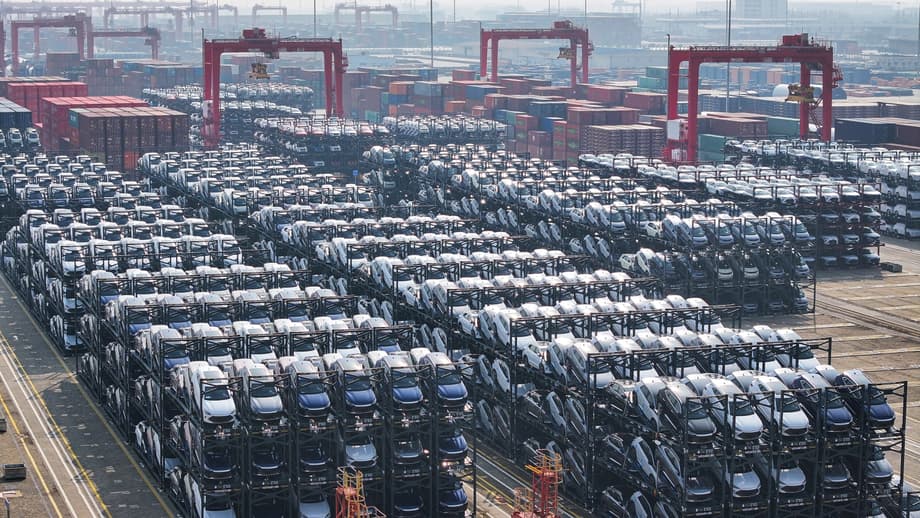
Three categories did much of the heavy lifting. Ship exports rose about 26.8 percent in November compared with a year earlier, supported by order backlogs in container ships and bulk carriers. Semiconductor shipments increased about 24.7 percent as factories boosted output of mature chips used in appliances and autos. Auto exports climbed around 16.7 percent with battery electric models carving out share in Europe, the Middle East and Latin America.
Rare earth exports rose 26.5 percent month over month in November after leaders discussed faster shipments of critical minerals. Rare earths are a cluster of elements used in magnets for electric motors, wind turbines and defense systems. China dominates refining in this supply chain, which gives it leverage and heightens buyer concerns about concentration risk.
Food imports also show a clear pattern. Soybean purchases are set to hit a record this year. Chinese buyers increased orders from the United States late in the year while continuing heavy purchases from Brazil and Argentina. The need to secure animal feed and edible oils outweighed earlier tensions that had reduced purchases from US farmers.
Trade with Russia has softened on the export side. In yuan terms, shipments to Russia fell for an eighth consecutive month in November, down just over 5 percent from a year earlier after a sharper decline in October. Imports from Russia rose modestly. Currency moves, demand shifts and compliance with sanctions likely played roles.
Risks that could cap the surplus
Europe is considering new trade actions in sectors such as electric vehicles, machinery and green technology products viewed as underpriced. Any broad move by the European Union would matter for China because sales to Europe have become a larger support for exporters this year. Policymakers in Europe are balancing industrial competitiveness with climate goals and consumer prices, which makes the outcome uncertain but the risk clear.
The United States remains a large variable. Tariff policy could tighten again. Export controls on advanced chips and manufacturing tools are already in place and could expand. China can reroute some goods and build more capacity at home, yet loss of access to the US market at scale cannot be replaced quickly.
Financing frictions are another headwind in the background. Tariff spikes led many US importers to frontload orders early in the year, then to negotiate longer payment terms and seek extra working capital once inventories thinned. Banks report rising demand for trade finance tools that monetize receivables, payables and inventory. If credit conditions tighten, that could filter into order books for Chinese exporters.
Winners and losers beyond China
Low prices from Chinese producers have pressured manufacturers in traditional export powers. Companies in Germany, Japan and South Korea report more lost bids in autos, solar and consumer electronics. Lower prices and weaker demand have cut capacity use for some plants. Some firms have paused expansion plans while they reassess market share and pricing trends.
Factories in several developing economies have also felt strain. Producers in countries such as Indonesia and South Africa have struggled to match Chinese prices and some have cut production or closed. At the same time, neighbors that attract assembly linked to supply chain diversification have gained orders and investment.
Vietnam, Thailand and Indonesia increased shipments to the United States this year as production lines shifted. Container volumes to the United States are up by more than 20 percent for Vietnam, close to 10 percent for Thailand and about 5 percent for Indonesia. Much of the value in those exports still comes from Chinese parts and materials, which means China participates in the growth even when the final goods are shipped from another port.
Key Points
- China’s goods trade surplus reached about 1.08 trillion dollars through November, a record level.
- November exports grew 5.9 percent year over year and imports rose 1.9 percent, yielding a 111.68 billion dollar monthly surplus.
- Shipments to the United States fell around 29 percent in November, while exports to the European Union rose about 14.8 percent.
- Top growth products included ships, semiconductors and autos, with rare earth exports up 26.5 percent month over month.
- Soybean imports are set for a record year as buyers sourced from both American and Latin American growers.
- Average US tariffs on Chinese goods stand near 47.5 percent with full coverage, while China’s average tariff on US goods is near 31.9 percent.
- Europe signaled potential trade action, and French President Emmanuel Macron warned of strong measures if imbalances persist.
- Domestic demand in China remains soft, with car sales down in November and gasoline model sales off by about 22 percent.
- Supply chains continue to diversify, with Vietnam, Thailand and Indonesia sending more goods to the United States, often using Chinese parts.
- Policy and financing risks could limit further gains, including new tariffs, export controls and tighter trade finance.