Unexpected Flexibility at Johor Pumps
Singaporean motorists crossing into Johor Bahru on April 1 anticipated a chaotic transition to cash-only transactions at Malaysian petrol stations. The widespread expectation involved payment headaches, longer queues at counters, and significant inconvenience for the thousands who regularly make the trip north for cheaper fuel. Instead, many discovered that their foreign-issued credit and debit cards continued to function normally at fuel dispensers, provided they selected RON97 rather than the subsidised RON95 grade. The first day of Malaysia’s phased enforcement of foreign card restrictions revealed a nuanced implementation that allows international visitors to maintain their preferred payment methods while tightening controls on subsidised fuel access.
- Unexpected Flexibility at Johor Pumps
- Automated Enforcement Mechanisms
- Massive Enforcement Deployment Across Border States
- Global Oil Crisis Drives Domestic Urgency
- Legal Evolution from Operator to Driver Liability
- Operational Realities for Cross Border Motorists
- Industry Perspectives on Subsidy Rationalization
- Key Points
Investigations by reporters at multiple stations across Johor Bahru, including Petronas, Shell, Caltex and Petron outlets, confirmed that Singapore-registered cards processed successfully for RON97 purchases at self-service terminals. Motorists who encountered declined transactions retained the option to pay at station counters using the same cards or cash, preserving the convenience that has long marked by cross-border refueling trips. This operational reality contrasted sharply with expectations of a complete cashless ban, revealing that the technical restrictions target specific fuel grades rather than imposing blanket prohibitions on foreign payment instruments.
The distinction between RON95 and RON97 has become central to understanding Malaysia’s new enforcement framework. RON95, which retails at a subsidised rate of RM1.99 per litre for eligible Malaysians under the BUDI95 programme, is now technically inaccessible to foreign registered vehicles and foreign payment methods at automated pumps. RON97, priced at RM5.15 per litre, remains available to international visitors using foreign cards at both terminals and counters. This dual system attempts to balance enforcement needs with the practical realities of border commerce and tourism.
Automated Enforcement Mechanisms
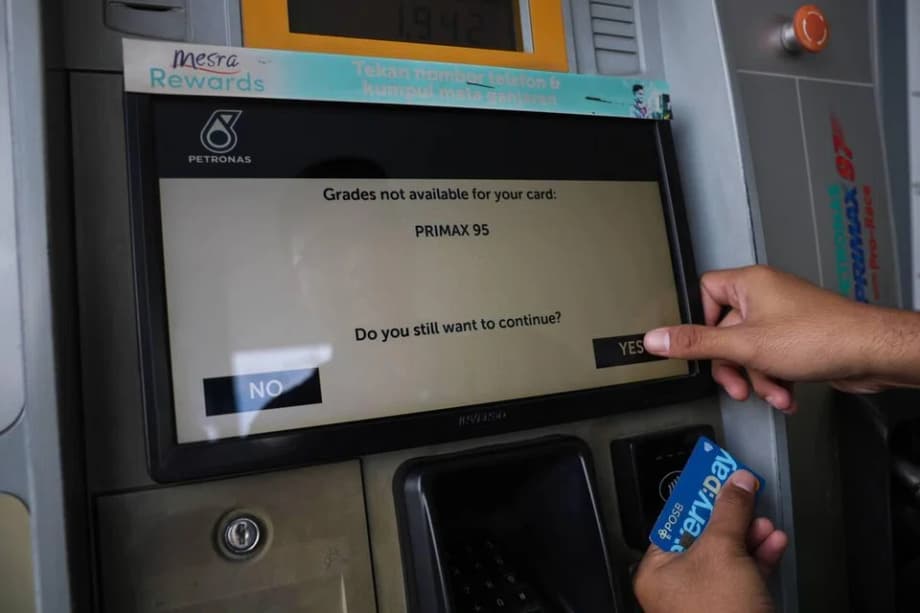
The Domestic Trade and Cost of Living Ministry (KPDN) initiated a nationwide phased enforcement on April 1 targeting the intersection of payment systems and fuel subsidies. The mechanism operates through payment terminal filters that automatically reject foreign-issued cards when RON95 is selected at self-service pumps, while permitting the same cards for RON97 transactions. This technical approach aims to reduce manual monitoring burdens on station operators while maintaining 24-hour automated enforcement.
Datuk Azman Adam, KPDN Enforcement director-general, explained the technical implementation and rationale behind the new system.
After April 1, the system will automatically filter transactions. This measure is intended to facilitate monitoring by petrol station operators and enforcement authorities, while ensuring compliance with existing regulations.
Users wishing to pay with foreign cards for RON95 may still do so at station counters, though this requires staff intervention and prevents the direct pump-side convenience that many motorists prefer. The approach specifically targets self-service terminals where automated transactions previously allowed subsidised fuel to reach ineligible users without staff oversight. Several oil companies reported full preparedness for the new mechanism, having updated their payment systems to recognize card origin and fuel grade combinations.
Petrol station supervisors near the Sultan Iskandar Customs, Immigration and Quarantine Complex reported that ministry officials conducted morning inspections to verify compliance. One supervisor noted that stations communicated operational realities to inspectors, explaining that completely blocking foreign cards at pumps would create congestion as drivers queued at counters.
We told them if we stopped people from paying using their foreign cards at the pump, this station would be congested because people would need to queue at the counter and wait for their turn to pay. So foreigners can still pay for fuel at the dispenser using their foreign cards. It’s the system we’ve had for years already.
Massive Enforcement Deployment Across Border States
Malaysian authorities mobilized significant resources to monitor compliance across multiple states. In Johor alone, 180 enforcement officers intensified inspections at all 639 petrol stations, with particular attention to 31 locations near the Singapore border identified as high-risk for fuel leakage. State KPDN director Lilis Saslinda Pornomo confirmed that daily patrols include outreach efforts to educate foreign vehicle owners about the updated regulations.
The enforcement scope extends far beyond Johor. In Sarawak, Datuk Azman Adam visited a station in Tasik Biru, Bau, approximately 25 kilometres from Kuching, to monitor implementation at 283 stations statewide. Kedah deployed 180 officers working with the Border Control and Protection Agency and police through Ops Tiris 4.0. Perlis intensified daily inspections at 40 stations, focusing on 10 border locations with an advocacy centered approach focusing on education over immediate penalties.
State directors emphasized that operators received advance notification through major oil companies, with engagement sessions ensuring dealers understood compliance requirements. Follow-up inspections verify that stations display clear notices regarding restrictions, ensuring foreign drivers encounter visible warnings before attempting transactions. In Kelantan, station managers reported briefing all staff on enforcement measures and welcoming the initiative to ensure RON95 remains available to local residents.
Global Oil Crisis Drives Domestic Urgency
Global oil markets provided the urgent context for these enforcement enhancements. The ongoing conflict in the Middle East, which led to the closure of the Strait of Hormuz and significant supply disruptions, has pushed crude prices above US$100 per barrel, representing a 40 percent increase. These international pressures created immediate domestic urgency for Malaysia to protect its subsidy framework from external exploitation.
The price differentials illustrate why Singaporeans continue crossing despite restrictions. RON95 in Singapore currently costs approximately S$3.40 per litre, nearly double the RM5.15 rate for RON97 in Johor. Even Malaysia’s unsubsidised RON97 undercuts Singapore’s lowest grade RON92, priced at S$3.38 per litre. This persistent gap ensures that fuel tourism remains economically rational for Singaporean motorists despite the new procedural obstacles.
Prime Minister Datuk Seri Anwar Ibrahim recently announced temporary adjustments to the Budi MADANI RON95 programme, reducing monthly quotas from 300 litres to 200 litres effective April 1, while maintaining the subsidised RM1.99 price point. The government has assured that petroleum supplies remain sufficient through at least May 2026, though the quota reduction signals fiscal pressures from sustained global price elevations.
Legal Evolution from Operator to Driver Liability
Malaysia’s legal approach to fuel subsidy enforcement underwent substantial revision earlier this year. Historically, the 2010 Control of Supplies Act penalized only petrol station operators for selling subsidised RON95 to foreign registered vehicles. New regulations drafted in early 2026 extended legal liability directly to drivers and vehicle owners, creating personal accountability for subsidy misuse.
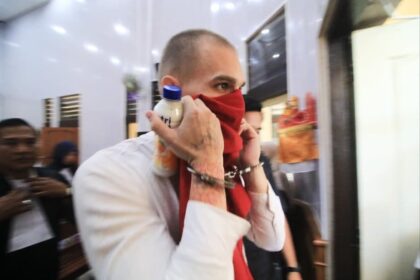
This legislative shift produced visible consequences on January 14, when a Singapore permanent resident faced a RM9,000 fine in Kulai’s magistrate court. The individual was filmed pumping subsidised RON95 into a Singapore-registered vehicle with a partially obscured registration plate, demonstrating the specific abuse patterns the new framework targets. The prosecution established that both Malaysians driving foreign registered cars and foreign nationals remain barred from RON95 access regardless of payment method.
Domestic enforcement has proven equally stringent. Following a viral video from March 21 showing a woman filling a large container in her car boot with over 71 litres of RON95 at a Skudai station, authorities identified the individuals as Malaysian citizens. Both the purchaser and vehicle owner received immediate bans from subsidised fuel purchases, with their MyKad cards blocked from future RON95 transactions under the BUDI95 programme. The Finance Ministry stressed that such misuse undermines transparency in subsidy management.
Operational Realities for Cross Border Motorists
Singaporean motorists report adapting to the new landscape with varying degrees of success. Some drivers, like a Volkswagen Touran operator identified only as Mr Chen, encountered no payment obstacles when using Singapore-issued debit cards at RON97 pumps, remaining unaware of the technical ban’s existence.
I don’t pump in Johor often, and I didn’t know there is a ban.
Others, such as Singapore nurse Syafiq Mohamed, chose counter payment for RON97 out of habit, with staff activating pumps manually to allow precise payment for exact fuel amounts.
When I reached the petrol station, the staff gave me the option of paying directly at the dispenser or at the counter. Because I’m used to paying at the counter, the staff helped to activate the pump so I can pay exactly for the fuel amount I bought at the counter.
However, some Singaporeans expressed frustration about losing cashback benefits tied to Singapore-issued credit cards, which often provide rebates on overseas spending with competitive exchange rates and no foreign transaction fees. Paying at counters rather than terminals may complicate these reward structures, adding hidden costs to cross border refueling.
Singapore’s own regulations create additional complexity for fuel tourists. Under city state law, vehicles exiting Singapore must maintain fuel tanks at least three quarters full, with violators facing S$500 fines and mandatory return trips to refuel before departure. Regular Johor visitors navigate these dual regulatory frameworks carefully to maximize savings while avoiding penalties on both sides of the border.
Industry Perspectives on Subsidy Rationalization
The Petrol Dealers Association of Malaysia (PDAM) has broadly supported the automated restrictions. President Datuk Khairul Annuar Abdul Aziz described the measure as a practical step to ease monitoring burdens while improving productivity through automated controls. He noted that physical monitoring must continue since some foreign vehicle owners might access RON95 using locally issued bank cards, indicating that technological solutions alone cannot eliminate all leakage.
Consumer organizations have interpreted the restrictions as signaling broader subsidy reforms. Pertubuhan Mesra Pengguna Malaysia deputy president Azlin Othman warned that while the payment restriction system proves harder to manipulate than conventional methods, loopholes including the use of local representatives for transactions may persist. She characterized the move as evidence that the current subsidy system requires restructuring.
This is not just about plugging leakages, but a clear indication that the current subsidy system is no longer relevant and must be restructured towards a more targeted approach.
Federation of Malaysian Consumers Associations president Datuk Dr N. Marimuthu suggested the measure could represent early steps toward comprehensive subsidy rationalization, stressing the need for transparency in policy implementation. This sentiment reflects growing consensus that global price pressures necessitate tighter domestic controls regardless of political preferences for universal subsidies.
Key Points
- Malaysia implemented a phased ban on foreign credit and debit cards at self-service terminals for RON95 petrol purchases starting April 1, 2026, though counter transactions remain permitted
- Singaporean motorists can continue using foreign cards to purchase RON97 petrol at automated pumps, with the higher-grade fuel priced at RM5.15 (S$1.64) per litre compared to Singapore’s RON95 at S$3.40
- Johor deployed 180 enforcement officers to monitor 639 petrol stations, focusing on 31 border locations, while other states including Sarawak, Kedah and Perlis initiated similar monitoring programs
- New regulations extend legal liability to drivers and owners of foreign registered vehicles, not just station operators, with recent prosecutions including a Singapore permanent resident fined RM9,000 in January
- The BUDI95 subsidy programme reduced monthly quotas from 300 litres to 200 litres effective April 1 while maintaining the RM1.99 price point amid global oil prices exceeding US$100 per barrel
- Malaysians also face enforcement actions for subsidy abuse, with two individuals banned after a viral video showed them filling containers with over 71 litres of RON95 at a Johor station