Borneo’s Hidden Jewel Emerges from the Jungle
Deep within the rainforests of Malaysian Borneo, a crimson treasure has captivated indigenous communities for generations. The Durian Merah, or red durian, long remained a secret shared only among the Sungai people of northern Sabah and adventurous foragers willing to trek through dense jungle. Now, this wild fruit stands poised to transform the state’s agricultural landscape and tourism industry, offering a unique proposition in the global durian market valued at over $9 billion annually.
- Borneo’s Hidden Jewel Emerges from the Jungle
- A Lawmaker’s Vision for Agricultural Transformation
- Distinctive Characteristics Set It Apart
- Culinary Heritage and Market Potential
- Health Appeal in an Indulgent Market
- Agro-Tourism Infrastructure Ready for Expansion
- Conservation Challenges and Sustainable Futures
- Key Points
Kuamut state assemblyman Datuk Masiung Banah recently ignited excitement across the Malaysian state by proposing that this rare fruit could become Sabah’s next major agro-tourism attraction and commercial crop. His vision calls for scientific research, modern cultivation techniques, and strategic marketing to transition the red durian from a seasonal wild harvest to a sustainable agricultural commodity that could draw visitors from across Asia and beyond. The initiative comes as Sabah prepares for Visit Malaysia Year 2026, with state authorities seeking to differentiate their tourism offerings through authentic agricultural experiences.
A Lawmaker’s Vision for Agricultural Transformation
Masiung has formally urged Sabah’s Agriculture Department to conduct comprehensive studies into the nutritional value and commercial viability of Durian Merah, known locally among east coast communities as Maraang. He specifically requested that the Ministry of Agriculture, Fisheries and Food Industry (Maffi) investigate modern agronomic technologies to develop high-quality seedlings capable of supporting large-scale cultivation across the state’s diverse agricultural zones.
The assemblyman emphasized that developing improved hybrids represents the critical first step toward commercialization. Current wild varieties grow into towering forest giants that present significant harvesting challenges and safety risks for collectors. Masiung suggested research focus on creating shorter, more shaded trees through grafting techniques that would allow easier harvesting while maintaining the fruit’s distinctive crimson coloration and unique flavor profile.
The unique thing is that the Durian Merah fruit will not fall even when ripe. The big and tall trees must be climbed to pick the fruit.
Masiung expressed particular confidence in Maffi Minister Datuk Jamawi Jaafar, noting that the minister’s extensive background in durian farming provides the necessary expertise to guide the red durian’s development as both a traditional heritage crop and a modern commercial product capable of penetrating regional Asian markets.
Distinctive Characteristics Set It Apart
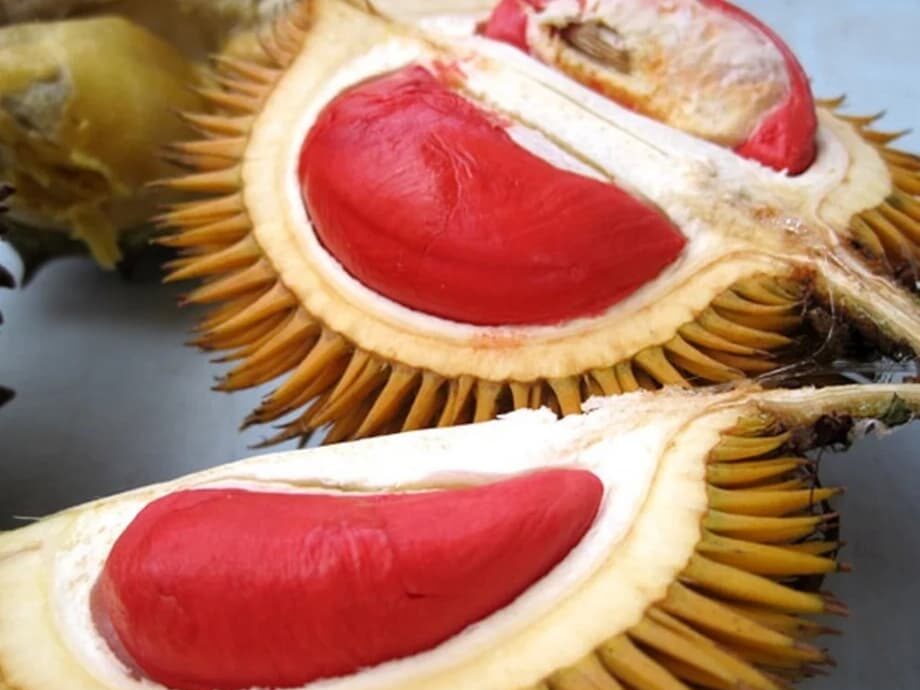
Unlike the common yellow-fleshed durians that dominate international markets, the red durian presents a striking visual profile with flesh ranging from deep crimson to bright orange and pink marbling. Botanists identify these as Durio graveolens, locally known as dalit or maraang, with the red-fleshed variation representing one of Borneo’s most intriguing endemic species and a symbol of the island’s remarkable biodiversity.
The sensory experience differs dramatically from commercial varieties like Thailand’s Monthong or Malaysia’s famous Musang King. The red durian offers a less pungent aroma that avoids the overwhelming sulfuric notes that often repel first-time tasters and lead to bans in hotels and public transport across Southeast Asia. Its texture tends toward drier and more fibrous rather than the custard-like creaminess of premium commercial varieties, while the flavor profile remains less sweet but complex, carrying subtle nutty and slightly alcoholic undertones that connoisseurs prize.
Duane Evans, chairman of the Sabah Durian and Tropical Fruit Planters Association, describes the dalit family of durians as nature’s surprise package where visual appearance offers little hint of the taste experience.
The colours and the (flavours of dalit) – it’s like a box of chocolates, you never know what you are going to taste.
Culinary Heritage and Market Potential
For the Sungai community residing in the districts of Tongod, Kinabatangan, Telupid and Beluran in northern Sabah, the red durian represents far more than an exotic curiosity or tourist novelty. It serves as a traditional food staple with deep cultural significance woven into the social fabric of these riverine communities. Rather than consuming it fresh as most durian enthusiasts do, locals often sauté the flesh with spices to create a distinctive sambal, a chili-based sauce that accompanies rice dishes and provides a savory counterpoint to the fruit’s natural flavors.
This culinary application suggests broader market opportunities beyond fresh fruit consumption. The cooked preparation, popular throughout northern Sabah, could potentially appeal to wider Asian markets familiar with savory fruit applications, particularly in Indonesia and the Philippines where similar preparations exist. The fruit’s utility in both raw and cooked forms provides versatility that single-use exotic fruits often lack, potentially supporting value-added product lines ranging from processed sambal bases to dried fruit products.
Research indicates that each tree can yield up to 200 seeds per harvest, offering substantial production potential once domesticated varieties become available. The fruit’s seasonal nature, typically fruiting in December and January during the cooler months, could complement Sabah’s existing durian tourism calendar which peaks between June and August, effectively extending the state’s durian season and tourism appeal throughout the year.
Health Appeal in an Indulgent Market
As global consumers increasingly prioritize health-conscious eating and diabetes prevention becomes a growing concern across Asia, the red durian possesses a significant competitive advantage over its commercial cousins. Agricultural data reveals the variety contains notably lower sugar content than premium durians like Musang King or Black Thorn, which are often criticized for their extreme sweetness and high caloric density.
Durian farmer Chee Vun Keong, who operates an orchard in Beaufort with approximately 50 red durian trees, highlights this health differentiation when marketing to tourists concerned about the fruit’s reputation for causing heatiness and blood pressure spikes.
(The red durians) are not heaty (and) they are lower in sugar – unlike the premium durians that could cause hypertension if you eat too much.
The species also demonstrates remarkable climate resilience, thriving in extremely hot weather conditions that characterize Sabah’s interior regions. This hardiness suggests lower agricultural risk compared to more delicate commercial hybrids that require careful management, irrigation systems, and are susceptible to disease. The trees naturally resist many pests and fungi that plague monoculture plantations, potentially reducing the need for chemical interventions.
Agro-Tourism Infrastructure Ready for Expansion
Sabah has spent years developing the infrastructure necessary to support durian-centered tourism, creating a solid foundation upon which the red durian initiative can build. The state recently launched the second edition of its Sabah Agro Tourism brochure, highlighting 30 registered durian farms offering experiences ranging from half-day tours to immersive farm-based homestays where visitors participate in harvesting and preparation.
The 2025 Durian Tourism Bazaar at Segama Waterfront demonstrated the sector’s commercial viability, attracting over 20 local producers and thousands of visitors seeking authentic farm-to-table experiences. These events have proven particularly successful in attracting Chinese tourists seeking authentic, unique fruit experiences unavailable in their home country or in Peninsular Malaysia’s more commercialized growing regions.
Tracy Liew, chairman of De Green Farm, notes the specific demand for red-fleshed varieties like the Tenom Beauty, which features similar crimson flesh.
Many tourists from China are looking for Sabah durians, especially the Tenom Beauty, because it’s very authentic and unique to Sabah.
With Visit Malaysia Year 2026 approaching, Sabah’s government views agro-tourism as a strategic differentiator from other destinations. The combination of wild biodiversity and community-based tourism offers experiences impossible to replicate elsewhere, potentially establishing Sabah as the premier hub for “wild” durian tourism where visitors can sample rare species in their natural rainforest setting.
Conservation Challenges and Sustainable Futures
Despite the enthusiasm surrounding commercialization, environmental experts warn that wild red durian populations face mounting threats that could eliminate the genetic source material before domestication succeeds. Fewer than 100 hectares of these native trees remain in Sabah’s wild forests today, with deforestation for palm oil and rapid development eroding their natural habitat. Unlike commercial durian plantations that rely on monoculture cultivation, wild durian species support complex forest ecosystems including the fruit bats that pollinate them and the endangered mammals that disperse their seeds.
Dayang Nur Fashareena Datu Md Noor, a research officer at the Department of Agriculture Sabah, notes that excessive rainfall patterns associated with climate change and habitat destruction pose existential risks to wild populations.
Too much rain is not good for durians. Deforestation (and) rapid development will also destroy the natural habitat of the durian.
Experts suggest that successful commercialization must proceed alongside rigorous conservation efforts. Farmers are encouraged to register for geographical identification to protect native species from exploitation and misrepresentation, while researchers stress the importance of maintaining genetic diversity through the preservation of heirloom varieties alongside new hybrid development. The Indonesian example of the Songgon Durian Forest Garden Collective in Banyuwangi, where eight farmers maintain an organic, community-run agro-tourism center with trees aged 20 to 70 years, offers a model for Sabah to consider as it develops its own red durian industry.
Key Points
- Sabah’s rare red durian (Durian Merah/Durio graveolens) could become a major agro-tourism attraction and commercial crop following proposals by state assemblyman Datuk Masiung Banah
- The fruit features bright red flesh, lower sugar content, less pungent aroma, and drier texture compared to commercial durian varieties, appealing to health-conscious consumers
- Currently harvested from tall wild trees that must be climbed by skilled pickers, as the fruit does not fall when ripe, creating safety challenges for commercialization
- Research is needed to develop shorter, more manageable hybrid varieties suitable for commercial cultivation through modern grafting techniques
- Traditional food of the Sungai community in Tongod, Kinabatangan, Telupid and Beluran, often sautéed into sambal rather than eaten fresh, suggesting culinary versatility
- Each tree can yield up to 200 seeds per harvest, with potential to attract health-conscious tourists and penetrate Asian regional markets
- Sabah’s existing durian tourism infrastructure, including 30 registered farms and annual bazaars, provides foundation for expansion ahead of Visit Malaysia Year 2026
- Environmental concerns remain as wild populations face threats from deforestation and climate change, requiring conservation alongside commercial development