From Energy Drinks to EV Batteries: The New Face of Hong Kong Listings
The Hong Kong Stock Exchange is witnessing an unusual pairing this February. Eastroc Beverage, one of China’s largest energy drink manufacturers, raised $1.3 billion in a secondary listing on February 3rd. Within days, Muyuan Foodstuff, the world’s leading pork producer, is set to raise $1.4 billion through a similar transaction. These consecutive deals, spanning vastly different sectors, signal a broader transformation sweeping through Asia’s financial markets.
- From Energy Drinks to EV Batteries: The New Face of Hong Kong Listings
- Record Breaking Numbers Mark a Historic Turnaround
- The Geopolitical Pivot: Why Chinese Firms Are Coming Home
- Understanding the A plus H Strategy
- Beyond Tech Giants: The Hard Tech Revolution
- Regulatory Tailwinds: Beijing and Hong Kong Align
- The Mega Deals on the Horizon
- A Shifting Investor Base: From West to Middle East
- Valuation Gaps and Market Mechanics
- Key Points
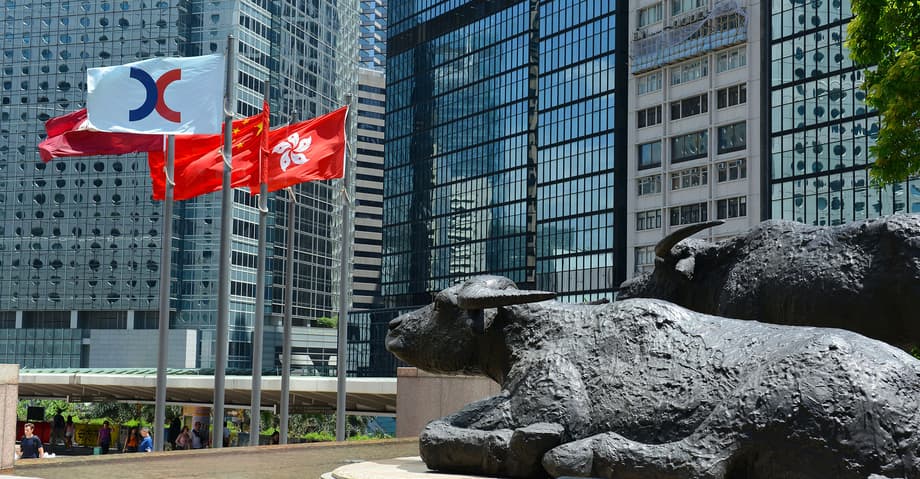
These listings represent more than isolated corporate decisions. They mark the return of Hong Kong’s financial prominence after years of diminished activity. The exchange, which struggled through a prolonged downturn following political unrest and the pandemic, is experiencing its most active period for initial public offerings in nearly half a decade. This revival is being driven by a wave of mainland Chinese companies seeking dual listings, shifting away from American markets amid intensifying geopolitical friction.
The scale of this resurgence became undeniable in June 2025, when Contemporary Amperex Technology Co. Ltd. (CATL), the world’s largest electric vehicle battery manufacturer, completed a blockbuster $4.6 billion offering. The deal, which saw shares surge 16% on debut, represented the largest initial public offering globally in the first half of the year and the biggest Hong Kong listing in four years. Unlike previous eras dominated by internet platforms, today’s pipeline features industrial champions from energy storage to agricultural processing.
Record Breaking Numbers Mark a Historic Turnaround
The statistics tell a story of remarkable recovery. During the first half of 2025, the Hong Kong Stock Exchange hosted 42 main board IPOs, raising a total of HK$107 billion ($13.69 billion). This figure surpasses the entire annual total for 2024 and represents a nearly 700% increase compared to the same period last year. According to data compiled by PwC, Hong Kong ranked first globally in terms of IPO fundraising for the first time since 2019, reclaiming a position it held for seven consecutive years between 2009 and 2021.
The momentum extended beyond traditional share sales. Overall equity capital market issuance, including additional share sales and convertible bonds, reached $45.5 billion in the first six months of the year, marking a 152% increase from the previous year. January alone saw companies raise approximately $5 billion through new listings, the highest total ever recorded for that month according to Bloomberg data.
This acceleration follows years of declining activity. Between 2022 and 2024, Hong Kong slipped out of the top five global IPO venues, battered by China’s technology sector crackdown, geopolitical tensions, and weak investor sentiment. The 2025 surge has propelled the exchange to fourth place in the annual rankings last year, with 71 new listings raising $11.2 billion, an 88.9% annual increase. Current projections suggest total proceeds could exceed HK$200 billion ($25 billion) for the full year, potentially reaching levels not seen since 2019.
The Geopolitical Pivot: Why Chinese Firms Are Coming Home
Behind the numerical recovery lies a fundamental shift in where Chinese companies choose to raise capital. Rising tensions between Washington and Beijing have made American exchanges increasingly problematic for mainland firms. The threat of delisting, regulatory scrutiny under the Holding Foreign Companies Accountable Act, and broader decoupling trends have pushed companies to seek alternatives closer to home.
Hong Kong has emerged as the primary beneficiary of this realignment. More than 40 A share listed companies are currently considering secondary listings in the city, according to Bonnie Chan, chief executive of Hong Kong Exchanges and Clearing. These firms view the territory as a crucial offshore platform that provides access to international capital while avoiding the political risks associated with American markets.
Xin Yao Ng, Investment Director on the Asian equities team at ABRDN, notes that global interest in China remains below pre-pandemic levels due to structural geopolitical risks. However, for companies seeking to expand internationally, Hong Kong offers a unique value proposition. CATL, for instance, allocated 90% of its $4.6 billion raise to fund its Hungarian manufacturing plant, using the listing to support European expansion while circumventing potential trade barriers.
While the IPOs have generally been successful, most are coming at deep discounts, which makes valuations highly attractive for investors despite lingering concerns.
Understanding the A plus H Strategy
The dominant trend driving Hong Kong’s recovery is the dual listing structure involving A shares and H shares. Companies already listed on mainland China’s domestic markets, such as those trading in Shanghai or Shenzhen, are adding Hong Kong listings to diversify their investor base and funding sources. In the first half of 2025, eight such firms raised over HK$78 billion ($10 billion), accounting for roughly 72% of total IPO proceeds during the period.
This strategy offers several advantages. The Southbound Stock Connect program allows mainland Chinese investors to purchase Hong Kong listed shares using their existing domestic brokerage accounts, creating a natural demand base. Simultaneously, the Hong Kong listing provides access to international institutional investors and facilitates currency diversification. The structure has become particularly attractive as price differences between A share and H share classes create potential returns for sophisticated investors.
The pipeline includes diverse industrial players. Wuxi Lead Intelligent Equipment, an industrial automation equipment maker, is seeking up to $549 million to fund global expansion of its battery and solar cell manufacturing systems. Seres Group, the electric vehicle manufacturer backed by Huawei Technologies, is preparing a $1.5 billion to $2 billion offering. Even entertainment platforms like iQiyi, the Netflix style streaming service owned by Baidu, are exploring $300 million secondary listings to reduce dependence on American capital markets.
Beyond Tech Giants: The Hard Tech Revolution
The composition of Hong Kong’s IPO market has undergone a sectoral transformation. While the 2018 to 2019 boom featured internet platforms and consumer technology, the current wave emphasizes what Chinese policymakers call new productive forces. These include electric vehicle batteries, semiconductors, advanced manufacturing, healthcare innovation, and clean energy technologies.
In the first half of 2025, the industrials sector led all others in total IPO proceeds, followed closely by healthcare and technology. Healthcare equity capital market issuance reached $5.8 billion, the highest level since 2021, supported by Hong Kong’s Chapter 18A framework that allows biotech companies not yet generating revenue to list. The technology, media, and telecom sector raised $13.7 billion, driven by interest in generative artificial intelligence, robotics, and deep technology applications.
Edward Tse, founder and CEO of Gao Feng Advisory Company, observes that the current recovery differs qualitatively from previous cycles. The companies coming to market now are typically in strategic sectors aligned with national policy priorities. They include established industrial champions rather than speculative startups, suggesting a maturation of the market. This shift reflects Beijing’s strategic agenda while providing Hong Kong with a more sustainable foundation for capital market activity.
Regulatory Tailwinds: Beijing and Hong Kong Align
Policy makers on both sides of the border have implemented reforms to facilitate this capital flow. In early 2024, the China Securities Regulatory Commission unveiled measures aimed at streamlining cross border listing procedures and accelerating approvals for companies in priority sectors. These moves signaled a return to regulatory pragmatism after years of stringent oversight that had dampened market enthusiasm.
Hong Kong regulators responded with complementary adjustments. The exchange finalized enhancements to its biotech listing regime under Chapter 18A and launched new initiatives under Chapter 18C to attract specialist technology companies. Processing timelines have improved, with the exchange promising to complete reviews for large mainland listed firms within 30 days.
Further changes took effect in August 2025. The exchange lowered the minimum public float requirement for mainland Chinese companies seeking secondary listings from 15% to 10% of total shares, with a consultation underway to potentially reduce this to 5% after listing. Additionally, the maximum allocation to retail investors in hot IPOs dropped from 50% to 35%, a move designed to reduce price volatility and ensure institutional investors receive adequate allocations for accurate price discovery.
Dilin Wu, Research Strategist at broker Pepperstone, notes that these coordinated efforts reflect a deliberate strategy to position Hong Kong as the key offshore fundraising hub for China’s strategic sectors. The alignment between mainland and Hong Kong regulators has helped restore confidence among issuers who had previously delayed listing plans due to market uncertainty.
The Mega Deals on the Horizon
The current activity may represent only the beginning of a larger wave. Syngenta Group, the Swiss agrichemicals and seeds conglomerate owned by Chinese state supported Sinochem, is preparing a Hong Kong listing that could raise between $5 billion and $10 billion. If completed at the upper end of that range, the deal would rank as the third largest globally in the last five years, following Rivian Automotive in 2021 and LG Energy Solution in 2022.
The Syngenta deal carries particular significance beyond its size. The company, formed from the merger of Novartis and AstraZeneca agribusinesses and later acquired by ChemChina for $43 billion, competes with American giant Corteva and German firms BASF and Bayer. Listing in Hong Kong rather than New York or London reflects both strategic positioning and the desire to reduce geopolitical exposure. The offering would use Regulation S, meaning shares would not be registered with the US Securities and Exchange Commission, effectively prohibiting sales to American citizens while avoiding SEC oversight.
Other significant transactions are advancing through the pipeline. JD Industrials, the supply chain technology unit of e-commerce giant JD.com, revived its application after previous attempts lapsed in 2023 and 2024 due to unfavorable market conditions. The company could raise between $500 million and $1 billion. Unisound AI Technology, another firm that previously withdrew its application, has also returned to the queue, betting on renewed optimism in the artificial intelligence sector following breakthroughs by Chinese startup DeepSeek.
A Shifting Investor Base: From West to Middle East
While the volume of deals has surged, the profile of investors supporting these transactions has evolved notably. Traditional American and European asset managers have approached the Hong Kong market with caution, citing concerns about the National Security Law implemented in 2020, data security issues, and broader questions about the territory’s autonomy and legal reliability.
However, reduced Western participation has been offset by growing interest from elsewhere. Middle Eastern sovereign wealth funds, including Saudi Arabia’s Public Investment Fund and Abu Dhabi Investment Authority, have signed cooperation agreements with Hong Kong financial institutions. The Saudi PIF has committed up to $1 billion to a joint Hong Kong Saudi fund targeting companies with cross border Asia Middle East operations. These funds have taken anchor positions in major listings, including CATL and insurer FWD Group.
Southeast Asian participation has also increased. Temasek Holdings and GIC, Singapore’s sovereign wealth funds, have become more active in Hong Kong IPOs. Thai coconut water company IFBH chose Hong Kong over the Singapore Exchange specifically because of its stronger investor base in Greater China. Malaysian budget airline Capital A is reportedly preparing a 2026 listing in the city. As of mid 2025, over 200 companies had filed applications with the exchange, up from fewer than 100 the previous year, with an increasing proportion originating outside mainland China.
Valuation Gaps and Market Mechanics
Despite the enthusiastic reception for new listings, challenges remain. Many offerings have priced at significant discounts to their mainland A share valuations, creating attractive entry points for investors but raising questions about long term pricing power. Hong Kong listed Chinese companies currently trade at approximately 11 times estimated earnings, roughly half the valuation multiple of the S&P 500.
Market participants have also raised concerns about liquidity. With a large scale influx of newly listed companies arriving without a corresponding increase in market funds, some analysts warn of potential oversupply. Lawrence Lau, Greater China Financial Accounting Advisory Services Leader at Ernst & Young, has pointed out that insufficient trading activity for some stocks could impact company valuations and share price performance if the pace of listings outstrips capital inflows.
The recent regulatory changes regarding retail allocations reflect these concerns. The reduction in maximum retail allocation from 50% to 35%, along with the cap on margin loans implemented after the frenzied debut of Mixue Group, aims to prevent the overpricing and subsequent price declines that have marked some hot IPOs. These measures prioritize institutional price discovery over retail enthusiasm, potentially creating a more stable market environment but reducing the lottery like gains that once attracted individual investors to new listings.
Key Points
- Hong Kong raised $13.69 billion through 42 IPOs in the first half of 2025, marking a 700% annual increase and ranking the city first globally for IPO fundraising.
- Contemporary Amperex Technology Co. (CATL) completed the world’s largest IPO in 2025, raising $4.6 billion for its Hong Kong secondary listing to fund European expansion.
- Over 40 mainland Chinese A share companies are considering dual listings in Hong Kong, driven by American and Chinese geopolitical tensions and the risk of American delistings.
- The exchange lowered minimum public float requirements from 15% to 10% for mainland listed firms and reduced retail investor allocation caps from 50% to 35% to improve price stability.
- Syngenta Group is preparing a potential $10 billion IPO, which would be among the largest globally in recent years, while Seres Group and JD Industrials are advancing multi billion dollar listings.
- Middle Eastern sovereign wealth funds and Southeast Asian institutional investors are increasingly replacing Western capital as anchor investors in major Hong Kong deals.
- Sectors have shifted from internet platforms to hard technology, including electric vehicle batteries, semiconductors, advanced manufacturing, and healthcare, aligning with China’s strategic industrial priorities.