Xi Issues Stark Warning Over Taiwan in High-Stakes Phone Call
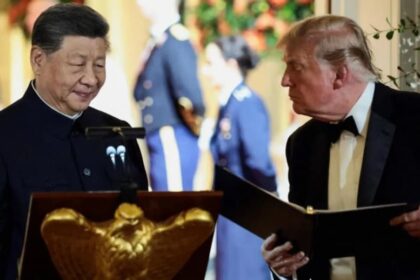
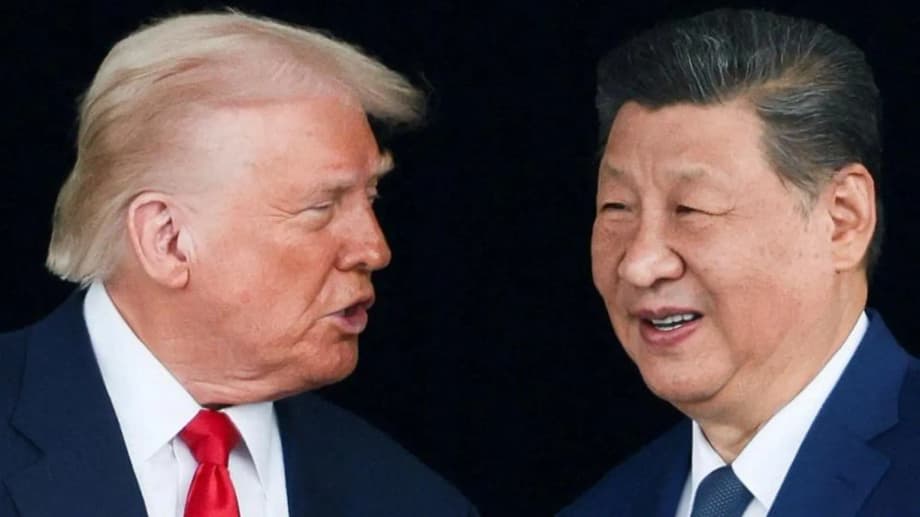
Chinese President Xi Jinping has issued an unequivocal warning to U.S. President Donald Trump regarding American military support for Taiwan, declaring the self-governing island “the most important issue” in bilateral relations during a phone call that signals both nations are attempting to navigate a complex web of trade negotiations and security tensions. The conversation, which Trump described as “excellent” and “long and thorough,” took place against a backdrop of escalating military posturing in the Taiwan Strait and delicate diplomatic maneuvering ahead of Trump’s planned visit to Beijing in April.
- Xi Issues Stark Warning Over Taiwan in High-Stakes Phone Call
- The Arms Sales Dispute: An $11 Billion Flashpoint
- Contrasting Visions: Trade Deals Versus Territorial Integrity
- Taiwan’s Diplomatic Response and Domestic Challenges
- The Regional Context: Japan, Russia, and Shifting Alliances
- What to Expect from the April Summit
- The Bottom Line
According to Chinese state media, Xi stressed that Washington must exercise extreme caution in supplying weapons to Taipei, asserting that Beijing “will never allow Taiwan to be separated from China.” The call represents the first direct communication between the two leaders since November and comes at a critical juncture when the United States is weighing a massive $11 billion arms package for Taiwan while simultaneously seeking China’s cooperation on trade, Ukraine, and Middle East stability.
The diplomatic exchange occurred mere hours after Xi held a virtual summit with Russian President Vladimir Putin, a sequencing that analysts suggest was designed to project Beijing’s strategic partnerships while simultaneously engaging Washington. Trump, for his part, emphasized the commercial dimensions of the relationship, announcing that China would consider purchasing 20 million tons of American soybeans, an increase from the previous 12 million tons, alongside discussions about oil, gas, and aircraft engine deliveries.
The contrasting priorities revealed in the respective accounts of the call highlight the divergent strategic calculations driving the world’s two largest economies. While Beijing seeks to establish clear red lines regarding Taiwan’s status, Washington appears focused on extracting concrete economic concessions as Trump prepares for his first state visit to China since returning to office. The conversation also touched upon the war in Ukraine, the volatile situation in Iran, and regional security concerns, though official statements from both capitals offered varying levels of detail regarding these sensitive topics.
The Arms Sales Dispute: An $11 Billion Flashpoint
At the center of the diplomatic friction lies a massive arms sales package that the Trump administration announced in December, valued at approximately $11.1 billion and comprising advanced rocket launchers, self-propelled howitzers, missiles, and fighter jet components. The proposed transfer represents one of the largest single military assistance programs for Taiwan in recent history and has triggered severe backlash from Beijing, which responded with two days of military drills around the island involving air, naval, and missile units.
Xi Jinping’s direct intervention with Trump regarding this specific issue underscores the existential importance Beijing attaches to preventing Taiwan’s acquisition of advanced defensive capabilities. Chinese state media reported that Xi told Trump the United States must handle arms sales with prudence.
The United States must handle the issue of arms sales to Taiwan with prudence, so that the fringe separatists bent on “Taiwan independence” will not be able to drag China and America into the dangerous terrain of confrontation and even conflict.
The language reflects Beijing’s long-standing position that Taiwan is an inseparable part of Chinese territory under its “One-China Principle,” a stance that stands in contrast to Washington’s “One-China Policy” which acknowledges Beijing’s position without explicitly endorsing it.
Complicating the matter further, reports emerged in September that the Trump administration had briefly paused $400 million in weapons aid to Taiwan, including lethal munitions and autonomous drones, potentially as a temporary measure in broader trade negotiations with China. While the pause was subsequently lifted or modified, the incident fueled concerns among Taipei officials that Taiwan might become a bargaining chip in Trump’s approach to foreign policy. William Yang, senior analyst for the Crisis Group, noted that while Trump likely views any concessions on Taiwan as temporary tactical adjustments, Beijing could exploit these gaps to create “a new reality” regarding the island’s defense capabilities.
Contrasting Visions: Trade Deals Versus Territorial Integrity
The divergent emphases in the official accounts of the Trump-Xi conversation reveal fundamentally different frameworks for understanding the bilateral relationship. Trump’s description on Truth Social focused heavily on economic deliverables, celebrating the potential soybean purchases as a victory for American farmers and highlighting cooperation on energy exports, fentanyl control, and the social media platform TikTok.
Trump offered a contrasting characterization of the conversation on his Truth Social platform.
The relationship with China, and my personal relationship with President Xi, is an extremely good one, and we both realize how important it is to keep it that way.
Conversely, Beijing’s readout centered on sovereignty and territorial integrity, with Taiwan occupying the primary position in the narrative. Xi stressed that while both nations have legitimate concerns, solutions could be found only through “equality, respect and mutual benefit.” The Chinese president also framed the Taiwan issue within historical context, describing the island’s return to mainland control as “an integral part of the post-war international order” and invoking World War II antifascist cooperation between the United States and China as a basis for contemporary stability.
This disconnect between economic transaction and security guarantee has characterized Trump’s second term, during which he has questioned the value of American protection for Taiwan while simultaneously approving major arms sales. On the campaign trail, Trump suggested Taiwan should pay for U.S. defense support, comparing American security commitments to insurance policies. He also accused Taiwan of taking the American semiconductor business, despite the island’s critical role in supplying advanced chips to U.S. technology firms. These statements have created uncertainty in Taipei about the reliability of American support, even as concrete military cooperation continues.
Taiwan’s Diplomatic Response and Domestic Challenges
Hours after the Trump-Xi call concluded, Taiwanese President Lai Ching-te moved quickly to reassure domestic audiences and international observers that the island’s relationship with Washington remained unaffected by the high-level dialogue.
The Taiwan-U.S. relationship is rock solid, and all cooperation projects will continue uninterrupted.
Taiwanese Deputy Foreign Minister Chen Ming-chi offered a more nuanced assessment, telling reporters that Taipei welcomed the communication between Washington and Beijing as a stabilizing factor for regional security. “We do not worry too much about this whole telephone communication,” Chen said, noting that direct dialogue reduces the risk of miscalculation. “In fact, we believe that it will contribute to stabilise the situation, especially given the fact that China keeps on escalating the tension in the Taiwan Strait.”
However, Chen acknowledged significant domestic obstacles to Taiwan’s defense preparations, particularly the opposition-controlled legislature’s blocking of a $40 billion special defense budget proposed by Lai’s administration. This parliamentary gridlock threatens to delay funding for the very arms purchases that triggered Beijing’s ire, including the $11 billion package. The Kuomintang (KMT) opposition party has resisted dramatic increases in military spending, proposing more modest budgets than the administration’s target of reaching 5% of GDP by 2030. This internal political dynamic creates vulnerabilities that external powers could exploit, regardless of American intentions.
The Regional Context: Japan, Russia, and Shifting Alliances
The timing of the Trump-Xi conversation carried particular significance given recent statements by Japanese Prime Minister Sanae Takaichi, who suggested that Japan’s military could become involved if China were to take action against Taiwan. Japan, a crucial U.S. ally hosting American military bases, has historically maintained ambiguity regarding direct intervention in Taiwan contingencies, making Takaichi’s remarks a notable escalation in regional rhetoric. Beijing immediately denounced the comments as crossing a “red line,” causing China-Japan relations to plunge to new lows.
Xi’s invocation of World War II history during his call with Trump appeared specifically calibrated to counter Japanese strategic positioning, emphasizing that the United States and China had previously fought together against fascism and militarism and should jointly safeguard the postwar international order. This historical framing serves Beijing’s contemporary interests by implicitly challenging Japan’s expanding military role while appealing to American sentiments regarding the Pacific War.
The same day Xi spoke with Trump, he also held a video conference with Russian President Vladimir Putin, during which both leaders pledged to strengthen ties amid a “turbulent” international environment. Russian media reported that Putin accepted an invitation to visit China during the first half of the year, reinforcing the strategic partnership that has deepened since Moscow’s invasion of Ukraine. The back-to-back conversations with the leaders of the United States and Russia allowed Beijing to project itself as a global mediator while maintaining its authoritarian alliances, a diplomatic balancing act that Chinese state media characterized as evidence of Beijing acting as a stabilising force against confrontation and unilateralism.
What to Expect from the April Summit
Trump’s anticipated visit to China in April represents the first state visit of his current term and follows his meeting with Xi in Busan, South Korea, last October, where the two leaders established a yearlong trade truce. Preparations for the summit have already influenced bilateral negotiations, with reports suggesting that Boeing may finalize deals for up to 500 aircraft deliveries to coincide with the presidential visit. Analysts expect that Trump will seek to remove remaining fentanyl-related tariffs on Chinese exports during or shortly after the meeting, potentially exchanging these concessions for continued Chinese cooperation on soybeans and energy purchases.
The Taiwan question will likely dominate the security agenda during the April discussions, particularly given Xi’s explicit warning in the recent phone call. While Trump has maintained strategic ambiguity regarding whether American forces would defend Taiwan in the event of a Chinese invasion, his administration has consistently approved arms sales designed to help Taipei deter such aggression. The challenge for negotiators will be reconciling Beijing’s demands for an end to military support for Taiwan with Washington’s legal obligations under the Taiwan Relations Act, which requires the United States to provide Taiwan with sufficient defensive capabilities.
Lev Nachman, a political scientist at National Taiwan University, observed that Taiwan needs to prepare for increased rhetorical attention from both Washington and Beijing throughout 2026.
I think Trump is keenly aware of how important Taiwan is to the United States’ current economic growth, and I do not think he would do anything to put that in jeopardy.
Nevertheless, the nature of Trump’s diplomacy leaves room for scenarios where security guarantees could be traded for economic benefits, a possibility that keeps Taiwanese officials vigilant as the April summit approaches.
The Bottom Line
- Xi Jinping explicitly warned Donald Trump that Taiwan is “the most important issue” in China-U.S. relations, demanding “prudence” regarding American arms sales to the self-governing island.
- Trump characterized the phone call as “excellent” and emphasized trade benefits, including potential Chinese purchases of 20 million tons of U.S. soybeans and cooperation on energy exports.
- Taiwanese President Lai Ching-te affirmed that “rock solid” ties with Washington continue, while Deputy Foreign Minister Chen Ming-chi welcomed the U.S.-China dialogue as a stabilizing factor for regional security.
- The conversation occurred hours after Xi spoke with Russian President Vladimir Putin, highlighting Beijing’s strategy of maintaining parallel relationships with Washington and Moscow.
- Trump is scheduled to visit China in April for his first state visit of the current term, with expectations for major trade announcements including potential aircraft deals and tariff adjustments.
- A proposed $11.1 billion U.S. arms package for Taiwan remains pending congressional approval, while Taiwan’s opposition parliament has blocked $40 billion in special defense funding requested by the Lai administration.
- Japanese Prime Minister Sanae Takaichi recently suggested Japanese military involvement in a Taiwan contingency, prompting Beijing to accuse Tokyo of crossing a “red line.”