A Strategic Asset at the Center of Geopolitical Tension
The Australian government is navigating a complex diplomatic challenge as it attempts to reclaim the strategically vital Port of Darwin from Chinese ownership, with Beijing warning of potential retaliation that could damage bilateral trade relations worth billions of dollars. Prime Minister Anthony Albanese has reaffirmed his commitment to return the port to Australian control, describing the move as essential to national interest. However, China’s ambassador to Australia, Xiao Qian, has issued stern warnings that Beijing will “take measures” to protect Chinese commercial interests if the lease is forcibly terminated, raising the specter of a renewed trade conflict between the two nations.
The dispute centers on a 99-year lease signed in 2015 between the Northern Territory government and Landbridge Group, a Chinese-owned infrastructure conglomerate based in Shandong province. The agreement, valued at A$506 million (approximately US$354 million), granted Landbridge 100% operational control of the port and 80% ownership of the Darwin Port land, including the East Arm wharf and Fort Hill wharf. At the time, the deal was intended to revitalize the territory’s economy and fund critical infrastructure projects, but it has since become a focal point for national security concerns and geopolitical rivalry between the United States and China.
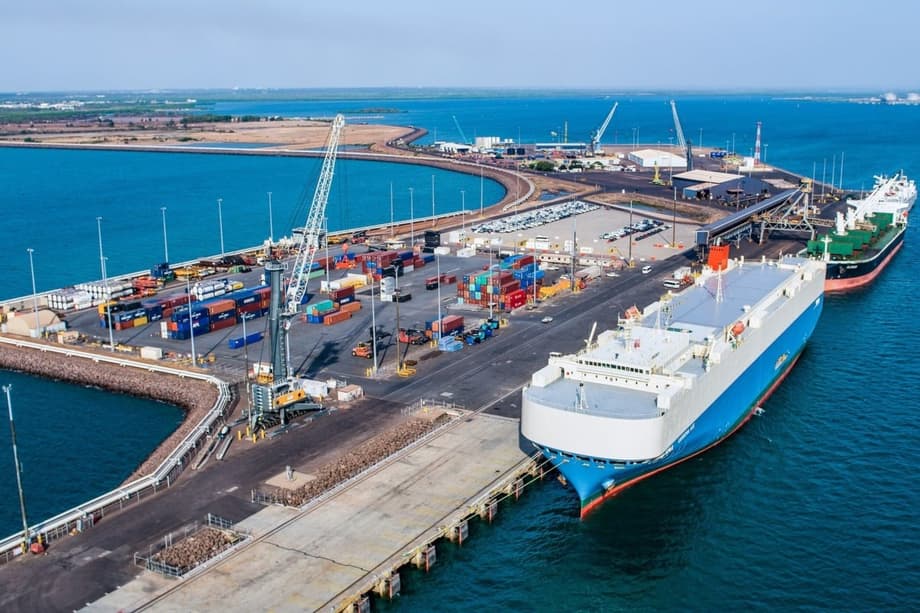
Located just south of the Indonesian border, Darwin Port serves as Australia’s northernmost maritime facility and a critical link in regional supply chains. The facility handles approximately 25,500 container units and 4 million metric tons of cargo annually, including live cattle exports, petroleum products, and minerals. Its strategic position makes it invaluable not only for commercial trade but also for military logistics, given its proximity to Australian Defence Force installations and the rotating presence of US Marines.
The Origins of a Controversial Deal
When the Northern Territory government awarded the lease to Landbridge a decade ago, the decision was driven by pressing economic imperatives. The territory faced significant debt burdens, and the federal government had declined to fund necessary port infrastructure upgrades. The competitive tender process appeared to offer a solution: foreign investment would transform the port into a thriving commercial hub while providing immediate fiscal relief to the regional government.
The timing of the agreement, however, proved politically sensitive. The lease was signed just a few years after the United States established its military presence in Darwin, with rotating deployments of US Marines beginning in 2012. Former US President Barack Obama reportedly expressed concerns to then-Australian Prime Minister Malcolm Turnbull about the lack of advance warning regarding the Chinese acquisition, particularly given the port’s proximity to military installations. The facility sits directly opposite the Larrakeyah Defence Precinct and near Royal Australian Air Force Base Darwin, where approximately 2,000 US personnel rotate annually, with plans to expand this presence to host US bombers and fighter jets.
Despite these strategic sensitivities, the 2015 transaction did not require approval from Australia’s Foreign Investment Review Board under legislation then in force. The Foreign Acquisitions and Takeovers Act 1975 contained exemptions for acquisitions of urban land directly from state and territory governments, a loophole that was later closed through amendments in 2020. At the time, federal Trade Minister Andrew Robb hailed the agreement as a “powerful sign” of the enhanced commercial relationship between Australia and China flowing from the bilateral free trade agreement.
Security Assessments and Political Pressures
Successive Australian governments have grappled with the security implications of Chinese control over this northern maritime gateway. Despite the proximity to defense facilities, multiple comprehensive reviews have consistently found no evidence that the lease poses a direct national security threat. A 2021 security assessment concluded that cancellation was unnecessary, while a second review conducted in 2023 by the Albanese government determined that existing monitoring mechanisms were sufficient to safeguard Australian interests.
These findings have not quelled political momentum for reclaiming the asset. During the 2025 federal election campaign, both major political parties made bipartisan commitments to return the port to Australian ownership, framing the issue within broader concerns about foreign control of critical infrastructure. The Albanese government has indicated it aims to complete the transition by the end of 2026, though specific mechanisms and timelines remain under negotiation.
The strategic environment has shifted markedly since 2015. Australia’s Defence Strategic Review, released in 2023, identified China as undertaking the largest military buildup of any country since World War II. This assessment, combined with increased US-Australia defense cooperation under the AUKUS security pact, has heightened sensitivities regarding Chinese presence near military installations. The port serves as a major export hub for live cattle, petroleum products, and minerals, handling approximately 25,500 container units and 4 million metric tons of cargo annually, making it economically significant as well as strategically positioned.
Legal Complexities and International Arbitration Risks
The Australian government faces significant legal obstacles in any attempt to forcibly terminate the lease. Landbridge Group has invested substantially in port infrastructure over the past decade, transforming the facility from an unprofitable operation into a profitable enterprise with a net profit of approximately A$6.7 million in the 2024-25 financial year. Any forced divestment would likely trigger complex legal proceedings under international investment treaties.
Most notably, Australia risks facing investor-state dispute settlement (ISDS) arbitration under the China-Australia Bilateral Investment Treaty (CABIT) and the China-Australia Free Trade Agreement (ChAFTA). These agreements provide mechanisms for Chinese investors to challenge Australian government measures that constitute expropriation or violate national treatment obligations. Legal analysts note that a forced divestment order could be challenged as violating Article 8 of CABIT, which requires compensation for expropriation and mandates that such actions be non-discriminatory.
The legal landscape is complicated by Australia’s own legislative framework. The 2020 amendments to the Foreign Acquisitions and Takeovers Act and 2022 updates to the Security of Critical Infrastructure Act 2018 provide grounds for forced divestment on national security grounds. However, invoking these powers against Landbridge could prove problematic under international law. The bilateral investment treaty limits ISDS arbitrability to disputes over compensation amounts, but tribunals have historically interpreted such clauses broadly. Additionally, ChAFTA Article 9.5 promises Chinese investors equal treatment to Australian investors, meaning Canberra’s efforts to find domestic buyers could be construed as differential treatment favoring Australian entities.
Compensation represents another significant hurdle. Under international investment law, any expropriation requires payment reflecting the fair market value of the asset. Given the port’s improved financial position and strategic location, the cost to Australian taxpayers could reach hundreds of millions of dollars. The Northern Territory government retains a 20% stake in the port land for the first five years of the lease, adding further complexity to valuation and transfer negotiations.
Beijing’s Diplomatic Offensive
Chinese officials have adopted an increasingly assertive stance regarding the Darwin Port dispute. Ambassador Xiao Qian has characterized the proposed buyback as “ethically questionable” and contrary to business ethics, noting that Australia seeks to reclaim the asset now that it has become profitable after years of losses. “When you’re losing money, you lease it to a foreign company, and when it’s making money, you want to take it back? That’s not the way to do business,” Xiao stated during a press briefing in January 2026.
“We respect the decision of the Landbridge company either to continue or to take a different approach, but the Chinese government has an obligation to protect the interests, the legitimate interests of Chinese companies overseas. So if anything happens like the port will be taken back by force or forceful measures, then we have an obligation to take measures to protect the Chinese company’s interest. This is our position.”
Xiao warned that Beijing would be “watching very closely” and declared, “We will see when it’s time for us to say something, do something, to reflect the Chinese government’s position.” While the ambassador declined to specify potential retaliatory measures, the implications are clear given China’s position as Australia’s largest trading partner. Bilateral trade totaled approximately $218 billion in 2024-25, with China purchasing the bulk of Australia’s iron ore exports and serving as a major market for agricultural products.
The warning echoes previous trade disputes between the nations. During the COVID-19 pandemic, China imposed sanctions on Australian barley, wine, coal, cotton, timber, hay, copper, and red meat exports, costing the Australian economy an estimated $20 billion annually. These measures followed former Prime Minister Scott Morrison’s call for an independent inquiry into the origins of the coronavirus. The recent lifting of these trade restrictions marked a tentative rapprochement that the Darwin Port dispute now threatens to undermine.
Negotiations and Potential Outcomes
Behind the diplomatic rhetoric, practical negotiations are advancing. The Albanese government is working with the Northern Territory government to identify suitable Australian buyers for the lease. Several domestic entities have expressed interest, including a joint bid between freight giant Toll Group and US private equity firm Cerberus Capital Management, which maintains connections to the Trump administration. Australian superannuation funds have also been approached regarding potential investment in the strategic asset.
For the first time, Landbridge has indicated openness to a negotiated sale, though the company continues to defend its record of investment and operational management. Terry O’Connor, Landbridge’s non-executive director for Australia, has dismissed allegations of links to China’s People’s Liberation Army as “myths and mistruths,” insisting the company operates purely as a commercial enterprise in accordance with Australian law. The company has not received formal government engagement regarding a buyback, according to recent statements, but acknowledges that “in everybody’s mind, there is a right price.”
The Australian government faces a narrow path between satisfying domestic political demands for the port’s return and avoiding a costly international legal dispute or trade war with China. A negotiated commercial transfer would minimize legal risks and compensation costs while achieving the stated objective of returning the port to Australian control. However, if voluntary agreement proves impossible, the government has indicated readiness to pursue compulsory acquisition, accepting the associated financial and diplomatic costs.
The situation draws inevitable comparisons to Panama’s recent decision to nullify a contract held by CK Hutchison Holdings, a Hong Kong-based conglomerate, to operate ports on the Panama Canal. While Panama’s Supreme Court ruled against the contract on legal grounds, the case was widely interpreted through a national security lens amid US pressure. Australian analysts note that their country’s judicial system and international treaty obligations differ significantly from Panama’s, making direct replication of that approach legally problematic.
The Bottom Line
- The Australian government has committed to reclaiming the Port of Darwin from Chinese company Landbridge Group by the end of 2026, fulfilling a bipartisan election pledge.
- China’s ambassador has warned Beijing will “take measures” to protect Chinese commercial interests if the lease is forcibly terminated, raising the risk of trade retaliation.
- The 99-year lease was signed in 2015 for A$506 million and has become profitable after years of losses, complicating compensation calculations.
- Multiple security reviews found no direct threat from the Chinese lease, but strategic concerns persist due to the port’s proximity to US and Australian military facilities.
- Forced divestment could trigger international arbitration under China-Australia investment treaties, potentially costing taxpayers hundreds of millions in compensation.
- Negotiations are ongoing with potential Australian buyers including Toll Group, Cerberus Capital Management, and domestic superannuation funds.
- China remains Australia’s largest trading partner, meaning any escalation could impact exports of iron ore, agricultural products, and other commodities.