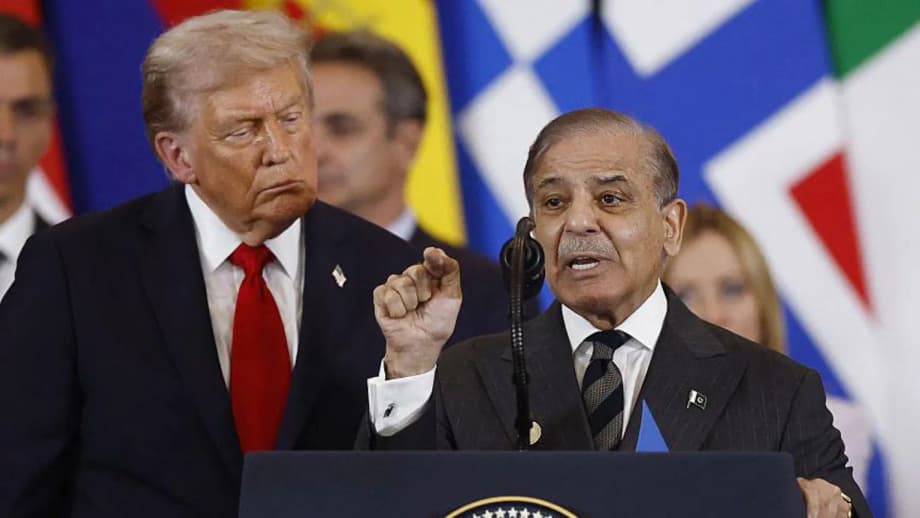
The Unlikely Mediator
Pakistan’s sudden emergence as the primary intermediary between the United States and Iran has caught many international observers off guard. Yet beneath the surface of this South Asian nation’s diplomatic offensive lies a carefully cultivated web of relationships that position Islamabad as perhaps the only capital capable of speaking to both Washington and Tehran with any measure of trust. Field Marshal Asim Munir, the head of Pakistan’s armed forces, has developed an unusually close rapport with President Donald Trump, who has publicly referred to the military chief as his “favorite Field Marshal” and praised his knowledge of Iran. This personal connection, combined with Pakistan’s geographic position as Iran’s neighbor and its status as a fellow Muslim-majority nation with deep cultural ties to the Islamic Republic, has created an opening that traditional Gulf mediators cannot match. Unlike Qatar or Oman, which host American military bases and have come under Iranian fire during the current conflict, Pakistan maintains a delicate equilibrium. It shares a 900-kilometer border with Iran and hosts the world’s second-largest Shiite Muslim population after Iran itself, giving it unique cultural capital in dealing with Tehran. At the same time, Islamabad has spent the past year repairing long-fraught relations with Washington through strategic economic deals and public diplomacy. The result is a rare alignment where Pakistan finds itself positioned as the potential host for talks that could end a war that has killed thousands and disrupted global energy markets. Prime Minister Shehbaz Sharif has publicly offered Islamabad as a venue for “meaningful and conclusive talks,” while Foreign Minister Ishaq Dar has engaged in what officials describe as intensive “telephone diplomacy,” speaking with over 20 world leaders in recent days as part of a quadrilateral effort alongside Saudi Arabia, Egypt, and Turkey.
Cultivating Washington’s Favor
The foundation for Pakistan’s current diplomatic moment was laid over months of careful relationship-building with the Trump administration. In June 2025, Munir visited the White House for an unprecedented lunch meeting with Trump, marking the first time an American president hosted a Pakistani military chief who was not simultaneously head of state. The encounter, which lasted more than two hours, covered rising Israel-Iran tensions and established a personal bond that Trump has repeatedly referenced. Pakistan has since joined Trump’s Board of Peace, which aims to ensure stability in Gaza, despite domestic opposition from Islamist groups. The relationship extends beyond ceremonial gestures into concrete economic cooperation. Islamabad struck a deal with a cryptocurrency business linked to Trump’s family to use its USD1 stablecoin for cross-border payments, while White House envoy Steve Witkoff helped broker an agreement to redevelop New York’s Roosevelt Hotel, which is owned by Pakistan’s national airline. These moves have positioned Pakistan as a willing participant in unconventional diplomatic games. The effort stands in contrast to India’s more reserved approach to the Trump administration. Maleeha Lodhi, former Pakistani ambassador to the United States, noted that Islamabad gave Trump two early wins, referring to the country’s nomination of Trump for the Nobel Peace Prize following his intervention in the 2025 Pakistan-India crisis and the Afghan Taliban’s handover of a bombing suspect to American authorities.
“That got the relationship off the ground and brought about this new warmth.”
This diplomatic investment has created a channel through which the White House feels comfortable communicating with Tehran, even as direct negotiations remain politically impossible for both sides.
The Mechanics of Mediation
Behind the public offers to host talks lies an intensive backchannel operation that has already shuttled multiple proposals between the warring parties. Pakistani officials confirm they have conveyed at least half a dozen messages between Washington and Tehran over the past month, including a detailed 15-point ceasefire plan delivered by the United States. According to reports confirmed by multiple sources, the American proposal includes a 30-day ceasefire to allow negotiations, the dismantling of Iran’s nuclear enrichment facilities at Natanz, Isfahan and Fordow, and the handover of existing enriched uranium stocks to international monitors. The plan also demands limits on Iranian missile ranges and quantities, an end to support for regional proxy groups, and the reopening of the Strait of Hormuz to international shipping. In exchange, Washington offers comprehensive sanctions relief, support for civilian nuclear power generation at Iran’s Bushehr plant, and the termination of the UN mechanism that allows sanctions to snap back into place. Iranian officials, however, have publicly rejected the proposal while simultaneously submitting their own counter-demands through the same Pakistani channels. Tehran’s conditions include firm guarantees against future American or Israeli aggression, full reparations for war damages, the closure of all US military bases in the Gulf region, and formal recognition of Iranian sovereignty over the Strait of Hormuz. The Islamic Republic has also insisted that any settlement must extend to all “resistance groups” across the region that have participated in the conflict, not just the Iranian state itself. This wide gap between the American demand for complete denuclearization and Iranian insistence on sovereignty guarantees has left Pakistan and its fellow mediators, Turkey and Egypt, struggling to find common ground.
Michael Kugelman, a senior fellow for South Asia at the Atlantic Council, warned that the odds of a deal are not high given the deep mistrust between the Americans and the Iranians.
“Pakistan, I’d argue, more than almost any other country outside of the Middle East has a lot of skin in the game here. It has a really compelling interest to do what it can to contribute to de-escalation efforts.”
Iran’s Resistance and Domestic Pressures
Despite Pakistan’s efforts to position itself as an honest broker, Tehran has maintained a public posture of defiance while engaging privately through backchannels. Iranian Foreign Ministry spokesperson Esmaeil Baghaei confirmed that messages had arrived via “friendly countries” including Pakistan, conveying American requests for negotiations, but emphasized that responses were formulated according to Iran’s “principled positions.” This diplomatic two-step reflects both structural constraints within the Iranian system and genuine outrage over the war’s opening salvo. On February 28, US and Israeli strikes killed Supreme Leader Ayatollah Ali Khamenei, a figure of religious significance to Shiite Muslims worldwide, including Pakistan’s substantial minority population. The assassination triggered violent protests across Pakistan, with demonstrators storming the US consulate in Karachi, resulting in at least 12 deaths and over 120 injuries nationwide. These domestic pressures create a complex backdrop for Islamabad’s mediation efforts.
Maleeha Lodhi, who served as Pakistan’s ambassador to the US, UK and UN, explained the domestic constraints facing Islamabad’s diplomats.
“Public sentiment in Pakistan is overwhelmingly pro-Iran. I’m sure that Pakistan’s decision makers have been very sensitive to that.”
The religious dimension extends to practical diplomatic considerations. When Iran allowed 20 oil tankers to pass through the Strait of Hormuz in late March, Pakistani-flagged vessels were among the beneficiaries, a gesture that underscores the cultural ties Islamabad seeks to employ. Yet Iran’s new Supreme Leader, Mojtaba Khamenei, faces pressure from hardliners within the Islamic Revolutionary Guard Corps who view the conflict as existential and oppose any negotiation that might be perceived as capitulation. Iranian President Masoud Pezeshkian has shown some flexibility, reportedly telling Pakistani counterparts that Iran seeks only “peaceful use of nuclear technology” with necessary guarantees, but the IRGC leadership remains committed to fighting until deterrence is established. This internal Iranian divide complicates Pakistan’s role, as Islamabad cannot be certain that any interlocutor speaking for Tehran has the authority to deliver on commitments.
Islamabad’s Economic and Strategic Vulnerabilities
Pakistan’s mediation push stems not merely from diplomatic ambition but from urgent economic and security needs that make a prolonged war intolerable for Islamabad. The country relies heavily on imported petroleum, with much of its supply passing through the Strait of Hormuz, which Iran has effectively closed to most shipping since the war began. The resulting energy crisis has forced the government to raise petrol and diesel prices by approximately 20% and implement a four-day work week for government employees to conserve fuel. Beyond energy security, Pakistan faces a strategic dilemma posed by its defense pact with Saudi Arabia, signed in September 2025. The agreement stipulates that any aggression against either country shall be considered an aggression against both, potentially dragging Pakistan into the conflict if Riyadh invokes the pact following Iranian strikes on Gulf infrastructure. So far, Islamabad has refused to interpret Iranian attacks on Saudi Arabia as triggering the mutual defense clause, but the balancing act grows more precarious as the war expands. Pakistan is already engaged in what officials describe as “all-out war” with Afghanistan, accusing the Taliban of harboring militant groups that attack Pakistani targets. Opening a second front on its western border with Iran would stretch military resources to the breaking point. Farhan Siddiqi, a professor of political science at Karachi’s Institute of Business Administration, warned that if Pakistan is asked to join the war on the Saudi side, its entire Western border will be largely insecure. This precarious position explains Pakistan’s frantic diplomatic activity, including Deputy Prime Minister Dar’s recent trip to China to seek Beijing’s support for de-escalation, despite medical advice to rest following a shoulder injury.
The Regional and Great Power Context
Pakistan does not operate alone in its mediation efforts, working instead within a broader coalition that includes Turkey and Egypt, while seeking to coordinate with China as a potential guarantor or economic backstop. The quadrilateral meeting hosted by Islamabad on March 30 brought together the foreign ministers of Saudi Arabia, Turkey and Egypt to establish a unified framework for negotiations, producing five principles that include an immediate ceasefire, protection of civilians, and adherence to the United Nations Charter. This Muslim-majority coalition approach offers Tehran a face-saving mechanism to engage without appearing to bow directly to American pressure. Meanwhile, Dar’s subsequent visit to Beijing aimed to secure Chinese backing for the mediation process. China imports roughly 1.4 million barrels of Iranian oil daily and has significant investments in the region through its Belt and Road Initiative, giving Beijing a vested interest in stability. However, analysts caution that China is unlikely to serve as a formal guarantor for any deal. Ishtiaq Ahmad, a professor at Quaid-e-Azam University in Islamabad, argued that the assumption that Beijing would step in as a guarantor for Tehran is analytically weak. Guarantees are extended by strong, stable actors seeking to preserve order, not by powers aligning themselves with a regime whose position is visibly eroding. Nevertheless, China has endorsed Pakistan’s efforts and may provide economic pressure to encourage Iranian flexibility. The role of Israel, however, remains the central obstacle. While the US and Gulf Cooperation Council states want the war to end quickly, Israeli Prime Minister Benjamin Netanyahu has made clear that strikes on Iran will continue regardless of negotiations, and Israeli officials privately worry that Trump might compromise on the 15-point plan to secure a quick deal. Lodhi warned that Israel can play the spoiler even if the US and Iran reach an understanding to pause the fighting. This triangular dynamic, involving American, Iranian and Israeli interests, creates a minefield for Pakistani diplomats attempting to bridge irreconcilable positions.
The Impasse and Military Escalation
Despite the flurry of diplomatic activity, the fundamental obstacles to peace remain formidable, with both sides preparing for the possibility that talks will collapse completely. The Trump administration has simultaneously pursued diplomacy and military escalation, deploying an additional 3,500 sailors and Marines to the region while the 82nd Airborne Division prepares for potential ground operations. The Pentagon has reportedly drawn up plans to seize Kharg Island, which handles 90% of Iran’s crude exports, and to secure Tehran’s enriched uranium stockpiles by force. Trump initially issued a 48-hour ultimatum for Iran to reopen the Strait of Hormuz, then postponed strikes for five days citing diplomatic progress, only to threaten again that military options remain on the table. This erratic approach has led Iranian officials to dismiss American overtures as insincere.
Ebrahim Zolfaqari, spokesperson for Iran’s joint military command, mocked the American president’s contradictory statements.
“Has the level of your inner struggle reached the stage of you negotiating with yourself?”
For Pakistan, the risk is that its mediation efforts will be perceived as naive if the talks fail and both sides resume fighting with even greater intensity. Kugelman cautioned that Pakistan could be susceptible to allegations that it was naive, and that it was brought into an effort to try to negotiate while both sides were trying to create some breathing space to think about their next steps toward escalation. The alternative, however, may be worse. If mediation fails and the war expands to include Saudi Arabia, Islamabad could face an impossible choice between honoring its defense pact and avoiding entanglement in a regional conflagration. As the five-day pause in strikes expires and negotiations remain stalled over the 15-point plan, Pakistan finds itself walking an increasingly narrow tightrope, with the success or failure of its diplomatic gamble likely to determine not only the trajectory of the US-Iran conflict but also Islamabad’s own security and economic stability for years to come.
What to Know
- Pakistan has offered to host direct talks between the US and Iran in Islamabad, using Field Marshal Asim Munir’s close relationship with President Trump and Islamabad’s cultural ties to Tehran as diplomatic capital.
- Washington transmitted a 15-point ceasefire plan via Pakistan calling for a 30-day truce, dismantling of Iranian nuclear facilities, and sanctions relief, but Iran has rejected key elements while demanding reparations and security guarantees.
- Tehran has publicly denied holding negotiations while privately engaging through backchannels, creating a contradictory stance that complicates mediation efforts.
- Pakistan faces severe economic pressure from the war, including 20% fuel price hikes and potential oil shortages, while its defense pact with Saudi Arabia risks dragging Islamabad into the conflict if Riyadh is attacked.
- Turkey, Egypt and China are coordinating with Pakistan on mediation efforts, though Israel remains opposed to any deal that might limit its military options against Iran.
- The success of Pakistan’s diplomatic gamble remains uncertain, with both Washington and Tehran preparing for expanded military operations even as backchannel communications continue.