The Unraveling of American Auto Dominance
The American automotive industry stands at a crossroads that veteran executives describe as unprecedented in its potential for disruption. Stellantis, the European-American conglomerate that owns Chrysler, Jeep, and Fiat, sent shockwaves through global markets when it disclosed a $26 billion charge related to a major business overhaul that includes pulling back from electric vehicle investments. The announcement triggered a more than 20% plunge in the company’s stock value, with CEO Antonio Filosa blaming the massive writedown on overestimating the pace of the energy transition.
This financial earthquake represents merely the latest symptom of a broader crisis facing Detroit’s automakers. While legacy manufacturers pivot back toward gasoline-powered trucks and SUVs, Chinese competitors are surging ahead with affordable, technologically advanced electric vehicles that threaten to reshape the global automotive landscape. The contrast between these divergent strategies has prompted industry leaders to warn of an existential threat to the U.S. auto sector, which contributes approximately 5% to the nation’s gross domestic product and supports millions of jobs across the industrial heartland.
“The Chinese auto industry presents an existential threat to the traditional [automakers],” said Terry Woychowski, a former General Motors executive who now serves as president of automotive at engineering consulting firm Caresoft Global. His assessment echoes across boardrooms in Detroit, where executives increasingly view China’s vertically integrated supply chains and government-backed expansion as a challenge that could determine which companies survive the next decade.
The Scale of China’s Automotive Surge
China’s transformation from a closed domestic market to the world’s largest vehicle exporter represents one of the most rapid shifts in industrial history. Since 2023, Chinese manufacturers have claimed the top spot in global vehicle exports, driven largely by an explosive expansion in electric vehicle production that has seen global sales increase by nearly 800% since 2020. According to data from S&P Global Mobility, Chinese brands have captured market share growth of nearly 70% over the past five years, rising from relative obscurity to command significant presence across Europe, South America, and Asia.
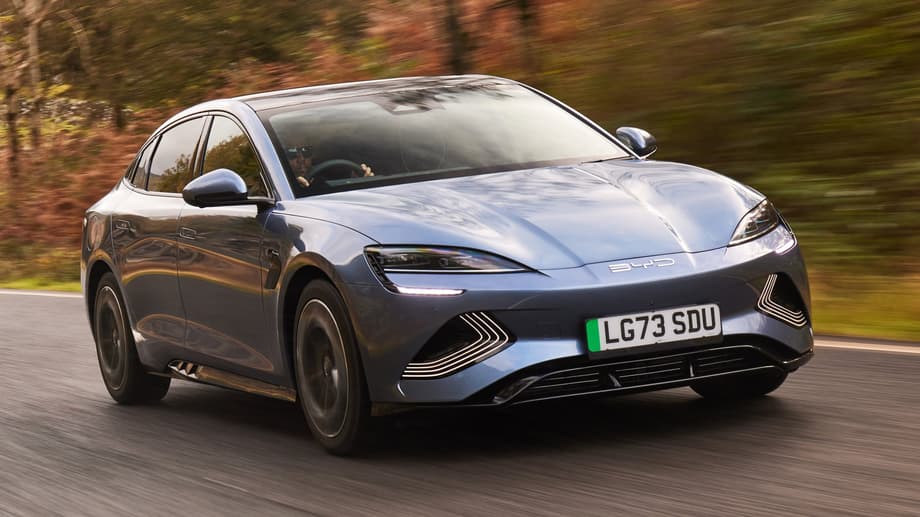
The most striking example of this ascent comes from BYD, the Chinese conglomerate whose name stands for “Build Your Dreams.” The company surpassed Tesla in 2024 to become the world’s largest seller of electric vehicles, dethroning the American pioneer that had dominated the sector for more than a decade. BYD’s success stems from a combination of government subsidies estimated at over $130 billion since 2009, vertical integration that includes in-house battery production, and development cycles that shrink the typical four-to-five-year American timeline down to as little as 14 months.
“The existential risk to the U.S. auto industry isn’t Chinese EVs alone, it’s the combination of sustained government support, vertically integrated supply chains and speed,” said Elizabeth Krear, CEO of the Center for Automotive Research. “Those advantages lower costs and accelerate execution. Concurrently, saturation in China’s domestic market is driving automakers to expand aggressively into global markets.”
This saturation has created desperate pressures for Chinese companies to export. Domestic market conditions have deteriorated to the point where automakers engage in practices such as selling vehicles to dealerships that register them as “sold” despite having no actual customers, then offloading these zero-mileage “used” cars at heavy discounts. The Chinese Communist Party’s official newspaper, The People’s Daily, recently criticized this tactic for disrupting normal market order, yet the practice continues as manufacturers struggle to maintain production volumes at underutilized plants.
The Mexican Backdoor and Trade Loopholes
While the United States has erected 100% tariffs on Chinese electric vehicles to protect domestic manufacturing, a significant vulnerability exists in the North American trade architecture that Chinese automakers are actively exploring. The U.S.-Mexico-Canada Agreement (USMCA), which governs trade across the continent, creates potential pathways for Chinese vehicles to enter the American market while bypassing the full weight of punitive duties.
Under current trade rules, vehicles assembled in Mexico from Chinese components may enter the United States paying only a 2.5% tariff, compared to the 102.5% duty applied to direct imports from China. This discrepancy has prompted BYD and other Chinese manufacturers to scout plant locations across Mexico, with the company establishing six dealerships and planning expansion to 50 locations covering all 32 Mexican states. The BYD Dolphin Mini, a compact hatchback priced at approximately $21,000 in Mexico, illustrates the price advantage that could overwhelm American competitors if these vehicles gain widespread access to U.S. consumers.
“Time and again, we have seen the Chinese government dump highly subsidized goods into markets for the purpose of undermining domestic manufacturing,” wrote Senator Sherrod Brown of Ohio in a letter to President Biden calling for an outright ban on Chinese electric vehicles. The Alliance for American Manufacturing has gone further, warning that low-priced Chinese EVs could constitute an “extinction-level event” for America’s auto sector.
The national security implications extend beyond economic concerns. Modern electric vehicles contain cameras, sensors, and connected technologies that could potentially collect sensitive data from drivers and their surroundings. President Biden previously ordered the Commerce Department to investigate the technology in Chinese “smart cars,” citing fears that such vehicles could be remotely accessed or disabled. Trade experts suggest that blocking Chinese EVs on national security grounds may prove the most effective legal mechanism to prevent their entry, regardless of assembly location.
Detroit’s Strategic Retreat From Electrification
American automakers have responded to slowing domestic demand for electric vehicles by retreating from their previous commitments to electrification, a shift accelerated by the Trump administration’s dismantling of federal EV incentives and fuel economy standards. General Motors and Ford have collectively announced more than $27 billion in write-downs related to canceled or delayed EV programs, including scrapped models and reduced production targets for existing vehicles.
GM CFO Paul Jacobson acknowledged that the company is “right-sizing to natural demand instead of attempting to appease regulators,” while maintaining that GM can “hold our own” against Chinese competition if operating on a level playing field. Ford has taken a different approach, with CEO Jim Farley creating a secretive “skunkworks” team in California to design a new generation of smaller, affordable electric vehicles specifically engineered to compete with Chinese offerings. Farley has described this initiative as a “Model T moment” for the company, recognizing that the competitive set for Ford’s next generation of EVs consists not of traditional global automakers but of Chinese companies like Geely and BYD.
However, the immediate reality finds Detroit’s “Big Three” — GM, Ford, and Stellantis — collectively retreating toward their most profitable products: large gasoline-powered pickups and SUVs. This strategic pivot has been enabled by regulatory changes that eliminated penalties for failing to meet federal fuel-economy standards and removed California’s authority to set stricter tailpipe emissions requirements. While these moves boost short-term profitability, they risk ceding the technological future to competitors who continue advancing battery and electric drivetrain capabilities.
The Teardown Revelations
Perhaps nothing has shaken American auto executives more than the physical evidence revealed when engineers dismantle Chinese electric vehicles to study their construction. Ford’s Jim Farley described the experience as “shocking” and “humbling” when his team compared competitor vehicles against Ford’s own Mustang Mach-E. The analysis revealed that Ford’s vehicle contained approximately 1.6 kilometers of additional wiring compared to a Tesla Model 3, representing excess cost, weight, and complexity that Chinese manufacturers have engineered out of their designs.
Caresoft Global, the engineering consultancy led by former GM executive Terry Woychowski, conducted a detailed teardown of the BYD Seagull, a compact electric vehicle that sells for approximately $12,000 in China and $21,000 in Latin American markets. The analysis revealed a vehicle that Woychowski described as “an exercise in efficiency,” featuring simplified designs such as a single windshield wiper that eliminates one motor and mounting arm, reducing weight, cost, and assembly labor. Despite the low price point, the Seagull offers solid build quality, synthetic leather seats with color-matched stitching, and a driving range of 252 miles per charge.
“Things will have to change in some radical ways in order to be able to compete,” Woychowski said after the analysis. “Any car company that’s not paying attention to them as a competitor is going to be lost when they hit their market. BYD’s entry into the U.S. market isn’t an if. It’s a when.”
The speed of Chinese development cycles compounds these cost advantages. While American vehicles traditionally require four to five years from design to market, Chinese companies have compressed this timeline to 24 months or less through aggressive use of virtual simulations for testing and willingness to take risks that Western manufacturers might avoid. Ford’s Farley has noted that Chinese automakers “move at astonishing speed” and make decisions more quickly than their American counterparts.
Canada’s Policy Shift Creates New Pressures
Recent policy changes in Canada have added another dimension to the competitive threat facing American automakers. In January, Canadian Prime Minister Mark Carney reversed years of protectionist policy by slashing tariffs on Chinese electric vehicles to 6% and allowing 49,000 Chinese EVs to enter the country annually, with plans to increase that quota to 70,000 vehicles over five years. This decision, driven partly by trade disputes with the Trump administration and a desire to diversify from American dependence, creates a potential beachhead for Chinese brands to familiarize themselves with North American consumer preferences.
Three Chinese companies — BYD, Chery Automobile, and Geely Holding — are preparing to sell vehicles in Canada as early as this year. The geographical proximity of major Canadian auto hubs like Windsor to Detroit means that American consumers will likely encounter these vehicles through cross-border traffic, ride-sharing services, or tourism, potentially accelerating brand recognition and demand despite official unavailability in the United States.
“Whether it’s 2027 or 2037, we can expect to see more Chinese automakers coming to the U.S. market,” said Stephanie Brinley, an automotive analyst at S&P Global Mobility. “That’s the trajectory.”
The Global Race for Automotive Supremacy
The divergence in strategies between American and Chinese automakers reflects broader geopolitical competition for control of a transportation sector undergoing fundamental transformation. While the United States produced approximately 1 million battery electric vehicles in 2024, representing less than 10% of global production, China manufactured over 70% of the world’s EVs. This disparity threatens to lock American manufacturers into a regional niche of gasoline-powered trucks while ceding the global market for advanced electric transportation to Chinese competitors.
Industry experts note that the technology gap extends beyond simple electrification to include software, autonomous driving capabilities, and battery chemistry. Chinese companies have established dominance in lithium iron phosphate battery technology, which offers lower costs than the lithium-ion batteries favored by many Western manufacturers, albeit with some trade-offs in range. The integration of these technologies with sophisticated software systems has positioned Chinese vehicles as attractive options even in developed markets where consumers previously favored established Western brands.
Ford’s Farley has been among the most vocal American executives warning about these trends. After observing the BYD Shark pickup truck in Australia, he described the vehicle as a “different animal” compared to Ford’s Ranger, noting that while it might not handle heavy commercial loads as effectively, it offers compelling value for consumers seeking electrification. “I have no idea how they make money when we tear it apart,” Farley admitted, highlighting the cost advantages that Chinese manufacturing efficiency creates.
The Essentials
- Chinese automakers have become the world’s largest vehicle exporters since 2023, with BYD surpassing Tesla as the top global EV seller
- Stellantis announced a $26 billion charge related to retreating from EV investments, while GM and Ford have written down over $27 billion in EV-related assets
- Trade loopholes under USMCA could allow Chinese vehicles assembled in Mexico to enter the U.S. paying only 2.5% tariffs rather than the 100% duty on direct imports
- The BYD Seagull and Dolphin Mini offer prices between $12,000 and $21,000, roughly half to one-third the cost of comparable American EVs
- Canada recently removed 100% tariffs on Chinese EVs, allowing 49,000 vehicles annually and creating a potential entry point to familiarize North American consumers with Chinese brands
- Chinese automakers can develop new vehicles in 14-24 months compared to 4-5 years for U.S. manufacturers, aided by virtual testing and vertical integration
- The U.S. auto industry risks becoming isolated as a producer of gasoline-powered trucks while China dominates the global electric vehicle market