A Chokepoint Closure Shakes Global Markets
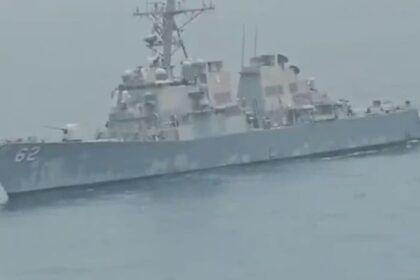
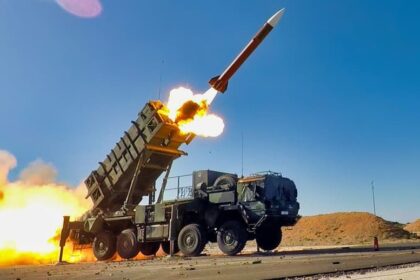
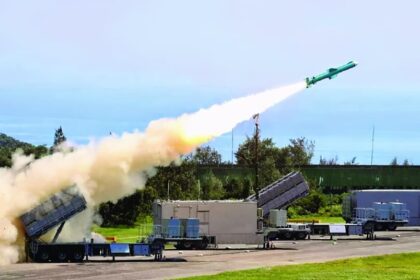
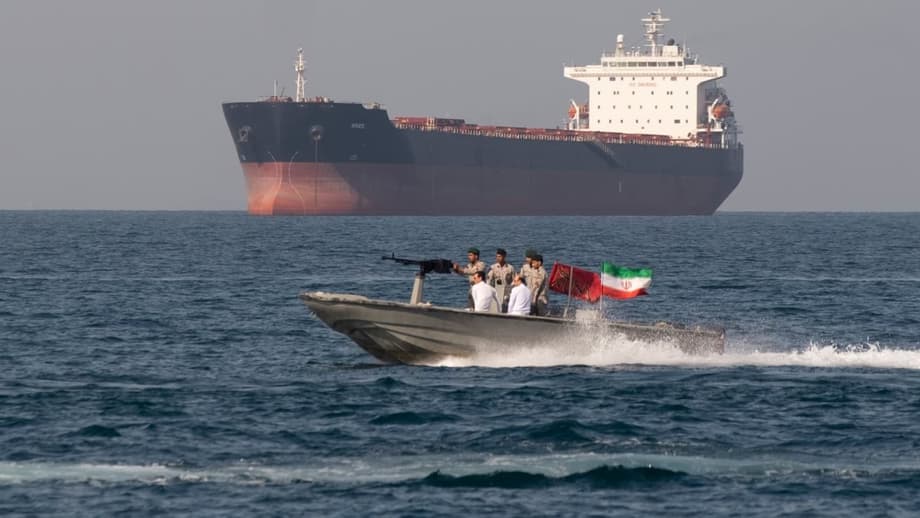
The Strait of Hormuz, a narrow waterway separating the Arabian Peninsula and Iran, has effectively become a no-go zone for the world’s oil tankers. Following military strikes by the United States and Israel against Iran beginning February 28, 2026, Tehran moved to halt maritime traffic through this critical passage. The immediate result has been one of the most severe disruptions to global energy supply in decades, with benchmark Brent crude surging past $100 per barrel and reaching highs of $119 in volatile trading sessions.
- A Chokepoint Closure Shakes Global Markets
- Asia Bears the Brunt of Supply Disruption
- Pipeline Bypasses Offer Limited Relief
- Why Infrastructure Remains Inadequate
- India’s Emergency Diversification Efforts
- Natural Gas Markets Face Parallel Crisis
- Economic Consequences Spread Globally
- Trans Pacific Alternatives Emerge
- What to Know
This maritime bottleneck, merely 33 kilometers wide at its narrowest point, handles approximately 20 million barrels of oil daily. That volume represents one fifth of global petroleum consumption and one quarter of all seaborne oil trade. When the waterway closed, roughly 150 oil and liquefied natural gas tankers chose to anchor rather than risk transit through hostile waters, triggering a supply shock that extends far beyond the Middle East.
Asia Bears the Brunt of Supply Disruption
The geography of global oil flows dictates that Asia stands as the most vulnerable region to this crisis. According to data from the International Energy Agency and the U.S. Energy Information Administration, approximately 84% of crude oil and 83% of liquefied natural gas transiting Hormuz heads to Asian markets. China and India alone account for 44% of all Hormuz crude flows, receiving a combined 8.2 million barrels daily before the crisis.
Japan and South Korea, though smaller in absolute volume, display even greater dependence relative to their domestic production capabilities. These nations possess virtually no indigenous crude oil production, rendering their economies entirely hostage to import stability. Taiwan faces similar exposure, with energy security analysts noting that any prolonged disruption threatens industrial production across these manufacturing powerhouses.
Even China, which produces roughly 4.3 million barrels daily domestically and maintains strategic petroleum reserves estimated at 1.2 billion barrels, cannot fully insulate itself from the fallout. While Beijing has pursued aggressive vehicle electrification and renewable energy expansion, its economy still requires massive petroleum imports to function. The current crisis tests the limits of these preparatory measures.
Pipeline Bypasses Offer Limited Relief
Saudi Arabia and the United Arab Emirates maintain the only operational infrastructure capable of circumventing the Strait of Hormuz. The Saudi East West Pipeline, commonly known as Petroline, stretches 1,200 kilometers from the Abqaiq processing center near the Persian Gulf to the Red Sea port of Yanbu. The UAE operates the Abu Dhabi Crude Oil Pipeline, running 360 kilometers from Habshan to Fujairah on the Gulf of Oman.
However, the capacity of these alternative routes falls dramatically short of Hormuz volumes. Saudi Aramco CEO Amin Nasser confirmed that the East West pipeline has reached full operational capacity of approximately 7 million barrels per day. Yet roughly 2 million barrels serve domestic refineries along the western coast, leaving only 5 million barrels available for export. The UAE pipeline can transport between 1.5 and 1.8 million barrels daily, though operational constraints and recent security incidents have limited actual throughput.
Combined, these bypass pipelines can handle roughly 6 to 7 million barrels per day, representing at most 30% of normal Hormuz traffic. The U.S. Energy Information Administration notes that these pipelines do not typically operate at full capacity under normal conditions, and estimates suggest only 2.6 million barrels per day of truly spare capacity existed before the crisis. Even with maximum utilization, the gap remains staggering.
Security Vulnerabilities Persist
These alternative routes introduce new risk vectors rather than eliminating them. Saudi crude exported via Yanbu must still transit the Bab el Mandeb strait at the southern end of the Red Sea, a waterway previously threatened by Houthi forces in Yemen. The Fujairah terminal, while technically outside Hormuz, lies close enough to Iranian missile and drone range that loading operations were suspended following attacks on March 16. Storage facilities at Fujairah have taken hits, forcing tankers to load partially before departing.
Why Infrastructure Remains Inadequate
The current crisis exposes decades of strategic neglect regarding alternative export routes. Despite recognition since the 1980s that Hormuz represented a critical vulnerability, Gulf producers prioritized efficiency over redundancy. Saudi Arabia constructed the East West pipeline during the Iran Iraq war specifically to avoid maritime attacks, yet subsequent upgrades focused on incremental expansion rather than building true parallel systems.
Political and economic hurdles have prevented additional infrastructure development. Building pipelines across neighboring countries requires navigating complex sovereignty issues and security concerns. Iraq, Kuwait, Qatar, and Bahrain lack any bypass options whatsoever, leaving them entirely dependent on Hormuz transit. The Trans Arabian Pipeline, which once connected Saudi Arabia to Lebanon’s Mediterranean coast, ceased operations in 1990 and now exists only as a derelict heritage site.
Daniel Yergin, energy historian and vice chairman at S&P Global, observed that the nightmare scenario seemed unlikely to policymakers focused on immediate commercial concerns. The prevailing assumption held that consumer nations would provide military protection sufficient to keep the strait open, reducing the economic incentive for expensive bypass infrastructure.
There always has been the nightmare scenario, but it seemed to be a scenario that was not very likely. The diversification or security came from the fact that the consumers would be there to protect the oil.
India’s Emergency Diversification Efforts
India illustrates both the possibilities and limitations of rapid supply chain adjustment. Prior to the crisis, approximately 40% of Indian crude imports transited Hormuz, representing 2.5 to 2.7 million barrels daily. The Indian Petroleum Ministry reports that domestic refiners have now diversified to source 70% of supplies from non Hormuz routes, yet a significant supply gap persists.
Indian refiners have aggressively pivoted toward the Saudi Yanbu terminal and the UAE Fujairah port. Data from commodity analytics firm Kpler shows Saudi crude loadings to India from Yanbu surged to 8.8 million barrels in March 2026, compared to zero in previous months. Additional volumes arrive via the Fujairah pipeline, though tracking remains difficult as some vessels disable transponders to obscure movements near conflict zones.
New Delhi has also secured 20 very large gas carriers carrying approximately 1 million tonnes of supply from the United States, routed through the Red Sea and Gulf of Oman alternatives. Government sources confirm these emergency shipments are arriving, but acknowledge they cannot fully replace lost Middle Eastern volumes.
Natural Gas Markets Face Parallel Crisis
While crude oil dominates headlines, the LNG market faces equally severe constraints. Qatar, the world’s second largest LNG exporter, ships virtually all of its production through Hormuz. The UAE similarly depends on the strait for gas exports. Together, these nations account for nearly 20% of global LNG trade, supplying primarily Asian markets.
Unlike crude oil, no pipeline alternatives exist for LNG. Once liquefaction facilities shut down or cannot load tankers, the gas simply cannot reach markets. Qatar Energy declared force majeure shortly after the conflict began, halting production at facilities that normally process over 112 billion cubic meters annually.
The impact falls disproportionately on nations like Bangladesh, India, and Pakistan, which import nearly two thirds of their LNG via Hormuz and rely heavily on gas fired electricity generation. Pakistan derives 50% of its power from natural gas, while Bangladesh depends on gas for 25% of electricity. Price spikes of 39% in single trading sessions have forced these governments to implement rolling blackouts and mandate energy conservation measures, including shutting universities.
Economic Consequences Spread Globally
The supply disruption has triggered immediate inflationary pressures worldwide. Beyond crude oil, prices for gasoline, diesel, jet fuel, petrochemicals, fertilizers, and basic foodstuffs have risen sharply. Farmers in the Northern Hemisphere, currently entering planting season, face higher input costs that threaten food prices months from now.
Asian governments have implemented emergency measures ranging from fuel export bans to price controls. China has ordered refiners to halt fuel exports to preserve domestic supply. South Korea announced fuel price caps for the first time in three decades. Japan, benefiting from robust strategic reserves covering nearly 150 days, has avoided immediate shortages but faces sustained price pressure.
The International Energy Agency plans to recommend releasing 400 million barrels from strategic petroleum reserves, which would constitute the largest coordinated stock release in the organization’s history. Yet even this massive intervention cannot replace sustained flows of 20 million barrels daily indefinitely.
Trans Pacific Alternatives Emerge
As Middle Eastern supplies remain constrained, Asian buyers increasingly look across the Pacific to North America. Canadian Pacific energy infrastructure, specifically the LNG Canada project in Kitimat, British Columbia, and the expanded Trans Mountain Pipeline serving Vancouver, offers routes that bypass not only Hormuz but other chokepoints like the Strait of Malacca and South China Sea.
The LNG Canada terminal, operational since June 2025, ships cargoes directly into the North Pacific, reaching Northeast Asian terminals in 10 to 11 days. This compares favorably to the 24 days required for U.S. Gulf Coast LNG to transit the Panama Canal. Canadian crude from Alberta, moving via the Trans Mountain Expansion pipeline with capacity of 890,000 barrels per day, similarly avoids Middle Eastern chokepoints entirely.
However, these alternatives require years to scale. LNG Canada Phase 2, under consideration for final investment decision in late 2026 or early 2027, would add 14 million tonnes per annum of capacity. The proposed Alaska LNG project, supported by the Trump administration, lacks binding contracts and would not commence exports before 2031 at the earliest.
What to Know
- The Strait of Hormuz normally transports 20 million barrels of oil daily, representing 20% of global consumption and 25% of seaborne trade.
- Asia receives 84% of crude oil and 83% of LNG transiting Hormuz, with China and India accounting for 44% of crude flows combined.
- Saudi Arabia’s East West Pipeline and the UAE Habshan Fujairah Pipeline can collectively bypass only 6 to 7 million barrels daily, covering roughly 30% of normal Hormuz volumes.
- India has rerouted imports to achieve 70% non Hormuz supply, but gaps persist requiring emergency shipments from the United States and West Africa.
- Qatar and the UAE account for nearly 20% of global LNG exports, all transiting Hormuz, with no pipeline alternatives available for natural gas.
- Brent crude prices have surged past $100 per barrel, reaching highs of $119, while LNG benchmarks jumped 39% in single sessions.
- The International Energy Agency plans a historic 400 million barrel strategic reserve release to mitigate supply shortages.
- Canadian Pacific energy infrastructure offers geopolitically stable alternatives, though scaling these supplies requires years of development.