Unexpected Demand Surge for Indonesian Fertilizer
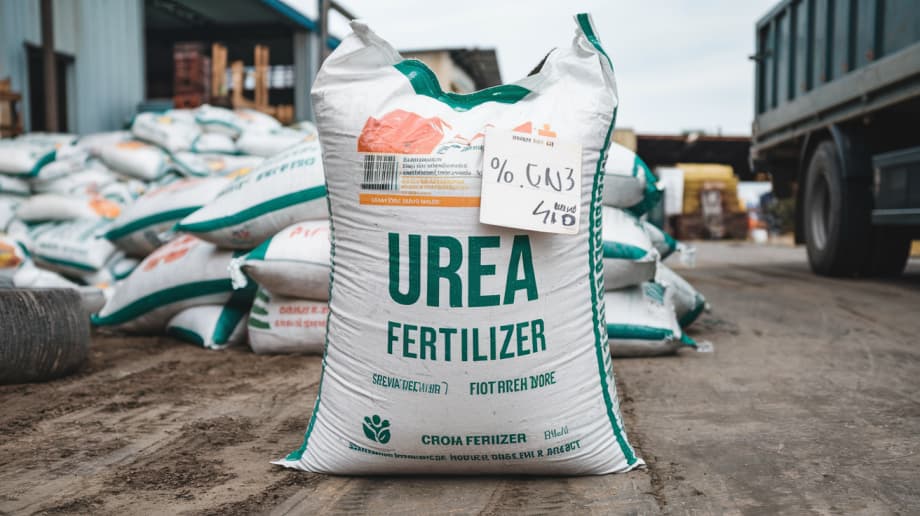
Indonesia is experiencing an unprecedented surge in international demand for urea fertilizer as the closure of the Strait of Hormuz sends shockwaves through global agricultural supply chains. Deputy Agriculture Minister Sudaryono confirmed that multiple countries have approached the Southeast Asian nation seeking large-scale imports, with buyers willing to pay premium prices to secure supplies disrupted by the escalating conflict between Iran and the United States.
- Unexpected Demand Surge for Indonesian Fertilizer
- Production Capacity and Strategic Reserves
- Revitalizing Aging Infrastructure
- Global Market Disruption and Price Volatility
- Navigating Export Logistics and Diplomatic Challenges
- Domestic Economic Risks and Trade-offs
- Food Security Implications Across Asia
- Structural Vulnerabilities in Global Agriculture
- What Lies Ahead for Indonesian Exports
- Key Points
“Because of this war, many countries are looking for urea. They want to import it from Indonesia and are asking us to export large quantities, regardless of the price,” Sudaryono stated in Jakarta on Thursday. The diplomatic crisis, which has effectively blocked the strategic waterway connecting the Persian Gulf to the open ocean, has created a sudden vacuum in global nitrogen fertilizer supplies that Indonesia is now positioned to fill.
The Strait of Hormuz serves as the primary maritime corridor for approximately one-third of global fertilizer trade, with Qatar, Saudi Arabia, Oman, and Iran ranking among the world’s largest suppliers of urea and phosphate-based agricultural inputs. The prolonged disruption threatens to trigger severe shortages of nitrogen-based fertilizers just as farmers across the Northern Hemisphere prepare for spring planting seasons.
Production Capacity and Strategic Reserves
State-owned fertilizer giant Pupuk Indonesia has moved quickly to reassure both domestic and international markets that it possesses sufficient capacity to meet rising demand without compromising local agricultural needs. Corporate Secretary Yehezkiel Adiperwira confirmed that the Pupuk Indonesia Group currently maintains total fertilizer production capacity of 14.5 million tons annually.
The company’s urea production capacity alone exceeds Indonesia’s domestic requirements, providing a substantial buffer for export opportunities. Unlike many importing nations, Indonesia benefits from domestic natural gas reserves, the essential feedstock for nitrogen fertilizer production through the energy-intensive Haber-Bosch process. This energy independence insulates Indonesian production from the volatile natural gas markets that have forced European and other producers to curtail operations.
“National urea production is essentially self-reliant since its key raw material, natural gas, is available locally and its supply and pricing are controlled by the government,” Adiperwira explained. “Therefore, despite the escalation of the conflict in the Strait of Hormuz, this situation will not directly impact the national urea fertilizer supply.”
Revitalizing Aging Infrastructure
The surge in international demand has created an unexpected reprieve for several aging fertilizer plants previously scheduled for gradual decommissioning due to operational inefficiencies and high maintenance costs. Sudaryono indicated that the spike in global prices and desperate demand from importing nations could temporarily extend the operational lifespan of these facilities.
“This has become an opportunity. Plants that we initially planned to replace can temporarily continue operating because many countries are requesting urea,” the Deputy Minister explained. “In the midst of this crisis, our fertilizer industry is gaining new momentum.”
Pupuk Indonesia currently ranks as the largest urea producer across the Asia-Pacific, Middle East, and North Africa regions, a positioning that gives the state-owned enterprise significant leverage in stabilizing regional fertilizer supplies while global markets adjust to the Hormuz blockade.
Global Market Disruption and Price Volatility
The closure of the Strait of Hormuz has triggered dramatic price increases across international fertilizer markets. Urea prices have jumped approximately 25 to 35 percent since the conflict began, with futures contracts rising 35 percent in just two weeks. In the Middle East specifically, urea prices surged 19 percent within a single week of the blockade.
The disruption extends beyond shipping logistics. Qatar Energy was forced to halt production at the world’s largest single-site urea plant after losing natural gas feedstock supplies following attacks on liquefied natural gas facilities. The shutdown removed millions of tons of annual production capacity precisely when global agricultural markets face peak seasonal demand.
India, which purchases more than 40 percent of its urea and phosphatic fertilizers from Middle Eastern suppliers, has already seen three domestic plants reduce output due to declining LNG imports from Qatar. Facing potential shortfalls during the critical kharif sowing season beginning in June, New Delhi has accelerated diversification efforts to include Indonesia, Russia, Morocco, Jordan, Belarus, and China.
According to trade data, Indonesia’s urea exports to India exploded from just $10.9 million in 2024 to $342.8 million in 2025, illustrating the rapid market reorientation triggered by the Hormuz crisis.
Navigating Export Logistics and Diplomatic Challenges
Despite the robust production capacity, actually delivering Indonesian fertilizer to international buyers presents significant logistical hurdles. The Indonesian Ministry of Foreign Affairs has intensified diplomatic engagement with Iranian authorities to secure safe passage for Indonesian vessels through the contested strait.
Foreign Ministry spokesperson Yvonne Mewengkang confirmed that Indonesia’s ambassador in Tehran maintains continuous communication with Iranian officials regarding maritime security. “We will continue to push for intensified diplomatic approaches regarding this issue because it is crucial for us,” Mewengkang stated during a recent briefing.
The diplomatic efforts reflect the complex balancing act Indonesia faces: capitalizing on export opportunities while ensuring the security of its own shipping lanes and energy imports. The ministry has indicated hopes that the recent transition in Iran’s leadership might create openings for de-escalation, though regional tensions remain acute.
The UN Security Council adopted Resolution 2817 condemning Iranian attacks on neighboring countries and civilian infrastructure, though Tehran rejected the measure, arguing it failed to acknowledge Israeli and American aggression that killed hundreds of Iranian civilians including schoolgirls.
Domestic Economic Risks and Trade-offs
While the fertilizer export boom presents clear economic opportunities, Indonesian officials have warned that the broader Hormuz crisis poses substantial risks to the domestic economy. Trade Minister Budi Santoso cautioned that escalating energy costs could ripple through manufacturing sectors, potentially undermining Indonesia’s export competitiveness.
“The manufacturing sector is among the most vulnerable,” Santoso noted. “Energy-dependent production processes in Indonesia could face higher operational costs. Rising production costs may reduce business margins or trigger increases in consumer goods prices.”
Indonesia maintains only approximately 20 days of oil reserves, making it susceptible to supply shocks despite being a net fertilizer exporter. The 2026 state budget assumed an Indonesian crude price of $70 per barrel; every dollar increase above that threshold adds trillions of rupiah in subsidy costs while returning significantly less in revenue.
The minister emphasized strategies to safeguard domestic trade through consumption stimulus and private sector collaboration, treating domestic demand as a buffer against global volatility. The government plans to strengthen domestic market protections while diversifying export destinations to reduce dependence on any single trade corridor.
Food Security Implications Across Asia
The fertilizer supply disruption threatens to cascade into broader food security crises across Asia and beyond. Agricultural economists warn that prolonged shortages could force farmers to reduce fertilizer application rates, potentially lowering crop yields during a growing season already stressed by climate variability.
Australia, which imports more than half its urea from the United Arab Emirates, Qatar, and Saudi Arabia, faces particular vulnerability given its negligible domestic production capacity after the 2022 closure of Incitec Pivot’s Brisbane facility. Australian farmers typically absorb increased input costs rather than reduce production, but sustained high prices could eventually affect consumer food prices.
In South Asia, Bangladesh has imposed fuel rationing and closed universities to conserve energy, while Nepal announced cooking gas rationing. Thailand implemented a four-day work week for government offices and urged citizens to limit air conditioning to 24 degrees Celsius to reduce national energy consumption.
China, which maintains strategic petroleum reserves of approximately 1.4 billion barrels, has reportedly negotiated passage for its vessels through the strait despite the general blockade, potentially securing preferential access to Middle Eastern energy and petrochemical supplies while other nations scramble for alternatives.
Structural Vulnerabilities in Global Agriculture
The current crisis exposes deep structural vulnerabilities in global food production systems. Nearly half the world’s population depends on food produced using synthetic fertilizers, yet production remains concentrated in geopolitically volatile regions dependent on fossil fuel feedstocks.
The Haber-Bosch process, invented over a century ago, remains the foundation of modern fertilizer production. This energy-intensive method uses natural gas to synthesize ammonia, which is then processed into urea. The geographic concentration of cheap natural gas in the Middle East, Russia, and North America has created dangerous supply chain chokepoints.
Prior to the Hormuz closure, China had already restricted fertilizer exports to ensure domestic food security, contributing to shortages that triggered protests in India. Russia’s invasion of Ukraine in 2022 similarly disrupted fertilizer markets, driving 22.3 million additional people into hunger and exposing the fragility of concentrated production networks.
Researchers note that decentralized “green fertilizer” production using renewable energy could reduce such vulnerabilities, but current infrastructure investments lag behind immediate market needs. Several Asian nations, including India and Brazil, have accelerated policies to develop domestic renewable-powered fertilizer production following recent supply shocks.
What Lies Ahead for Indonesian Exports
Industry analysts suggest that Indonesia’s window for expanded fertilizer exports depends heavily on the duration of the Hormuz closure. If the conflict resolves quickly, Middle Eastern producers will resume operations and prices will normalize. However, a prolonged disruption could structurally alter global fertilizer trade patterns, potentially establishing Indonesia as a permanent alternative supplier for security-conscious importers.
The immediate outlook remains uncertain. While Qatar has declared force majeure on gas contracts and Bahrain reported refinery damage from missile strikes, diplomatic efforts continue seeking de-escalation. For Indonesian producers, the current environment offers both profitable export opportunities and the challenge of scaling operations while maintaining domestic food security commitments.
Pupuk Indonesia’s position as the largest regional producer provides Indonesia with significant diplomatic leverage during the crisis. As nations compete for limited fertilizer supplies, Indonesia’s ability to maintain production while larger suppliers remain offline reinforces its emerging role as a critical node in global agricultural supply chains.
Key Points
- Indonesia is experiencing unprecedented international demand for urea fertilizer following the closure of the Strait of Hormuz due to Iran-US tensions
- State-owned Pupuk Indonesia maintains 14.5 million tons annual production capacity, sufficient to cover domestic needs while expanding exports
- Global urea prices have surged 25 to 35 percent since the blockade began, with some markets seeing 19 percent weekly increases
- Aging Indonesian fertilizer plants scheduled for replacement may continue operating to meet international demand spikes
- India has increased Indonesian urea imports from $10.9 million in 2024 to $342.8 million in 2025 as it diversifies away from Middle Eastern suppliers
- Indonesia’s domestic natural gas reserves provide production security unavailable to European or other import-dependent manufacturers
- The Indonesian Foreign Ministry is conducting intensive diplomatic talks with Iran to ensure safe passage for fertilizer export vessels
- Trade officials warn that rising global energy costs could simultaneously threaten Indonesia’s manufacturing competitiveness despite fertilizer export gains