A Defensive Milestone on the Horizon
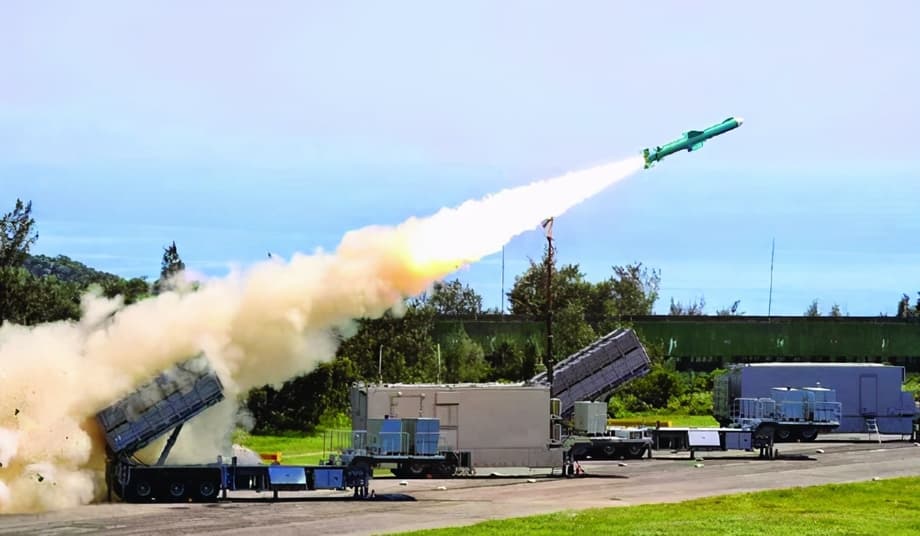
By December 2026, Taiwan expects to achieve a historic benchmark in coastal defense capabilities. The island nation will field more than 1,400 anti-ship missiles, creating what defense officials describe as the densest network of shore-based maritime strike weapons anywhere in the world. This arsenal combines domestically manufactured Hsiung Feng cruise missiles with American Harpoon systems, representing a transformation of Taiwan’s ability to deny sea access to potential aggressors.
- A Defensive Milestone on the Horizon
- The Indigenous Arsenal: Hsiung Feng Production Surges
- American Hardware Bolsters Coastal Defenses
- The Porcupine Strategy Takes Shape
- Allied Militaries Converge on Asymmetric Tactics
- Confronting Electronic Warfare Challenges
- Command Integration for Unified Operations
- The Essentials
The achievement marks the culmination of the Sea Air Combat Power Improvement Plan, a special budget initiative designed to accelerate asymmetric warfare capabilities. According to defense officials familiar with the production schedules, the National Chung-Shan Institute of Science and Technology will complete mass production of 1,000 Hsiung Feng II and III missiles by year’s end, meeting targets ahead of schedule. When combined with 400 land-based Harpoon missiles purchased from the United States, the total inventory will exceed any other coastal defense density globally.
The density calculation considers both the number of weapons and the limited geographical area of Taiwan. Spread across an island roughly 245 miles long and 90 miles wide at its widest point, this concentration of firepower creates overlapping fields of coverage extending into the Taiwan Strait and the Philippine Sea. No other coastal region maintains comparable numbers of dedicated anti-ship weapons per square mile of territory.
The Indigenous Arsenal: Hsiung Feng Production Surges
The backbone of Taiwan’s missile defense rests on two decades of indigenous development at the National Chung-Shan Institute of Science and Technology. Under current production schedules, the institute manufactures approximately 131 Hsiung Feng II and extended-range Hsiung Feng II missiles annually, while producing roughly 70 Hsiung Feng III and extended-range Hsiung Feng III missiles each year. These production lines have operated under the special budget framework since 2020.
The Hsiung Feng II represents a subsonic cruise missile optimized for coastal defense, flying at lower altitudes to avoid radar detection while carrying a substantial warhead. In contrast, the Hsiung Feng III serves as Taiwan’s premier supersonic anti-ship weapon, capable of striking targets at speeds exceeding Mach 2. This velocity compresses enemy response times, forcing defending vessels to complete their detection, tracking, and interception sequences within a drastically shortened window.
The extended-range variants of both systems allow strike planners to engage naval targets further from shore, complicating any attempt to stage amphibious forces beyond the reach of land-based weapons. These versions push the engagement envelope outward, requiring Chinese naval commanders to consider threats well beyond visual range of the coastline.
Following the completion of mass production this year, defense planners intend to shift focus toward upgrading existing missile stocks. Officials estimate a requirement for 232 upgraded systems featuring improved chipsets and guidance electronics. These enhancements will sharpen targeting precision while hardening the weapons against electronic interference, a critical consideration given recent demonstrations of Chinese naval jamming capabilities near Taiwanese waters.
American Hardware Bolsters Coastal Defenses
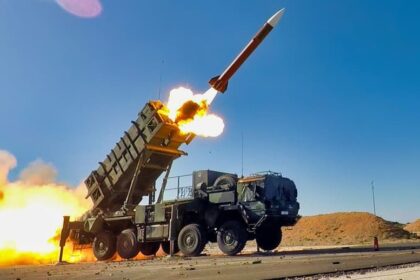
Complementing the domestic production surge, Taiwan has begun receiving the first batches of a substantial American arms package finalized in 2020. The Harpoon Coastal Defense Systems contract, valued at approximately $2.37 billion, includes 100 launcher systems and 400 RGM-84L-4 Harpoon Block II missiles. The first batch of 100 missiles and associated launch vehicles and radar trucks arrived in late 2024, with full delivery of all 400 missiles scheduled for completion by 2028.
The Harpoon Block II provides a proven, subsonic sea-skimming capability that offers different flight characteristics compared to Taiwan’s supersonic Hsiung Feng III. Military planners refer to this combination as a “high-low mix,” creating layered defense architecture. The slower Harpoons fly at extremely low altitudes to evade radar, hugging the wave tops while approaching targets from unpredictable angles. Meanwhile, the faster Hsiung Feng III missiles arrive on target at supersonic speeds, creating a temporal compression that overwhelms sequential defense systems.
This variation forces defending naval forces to confront multiple threat profiles simultaneously, complicating their defensive calculations. Enemy ships must simultaneously track high-altitude supersonic threats and low-flying subsonic missiles, dividing sensor attention and defensive missile allocations. The combination reduces the probability that any single defense system can intercept all incoming threats.
Beyond the missiles themselves, the deal includes mobile launch vehicles and radar trucks that enhance survivability through dispersion. Unlike fixed coastal batteries, these mobile systems can relocate across Taiwan’s rugged terrain, moving between pre-surveyed firing positions to avoid detection and targeting. This mobility ensures that preemptive strikes cannot easily neutralize the defense network, as batteries can scatter before conflict begins or relocate after firing to avoid retaliatory attacks.
The Porcupine Strategy Takes Shape
Taiwan’s missile buildup forms the sharp quills of what military strategists call the “porcupine” approach to national defense. This asymmetric warfare doctrine acknowledges the practical impossibility of matching China’s massive naval and air forces through conventional means. Taiwan cannot build a fleet large enough to challenge the People’s Liberation Army Navy in open combat, nor can it maintain air superiority against the mainland’s numerical advantages.
Instead, Taiwan invests in relatively inexpensive but lethal systems that can inflict unacceptable costs on any invasion force. The concept draws from biological analogy: a porcupine does not attempt to kill a predator, but rather makes itself too dangerous to attack successfully. By fielding more than 1,400 anti-ship missiles dispersed across the island’s coastline, Taiwan creates what officials have termed a “deadly red line” that Chinese naval task forces would find extremely difficult to cross.
Each missile battery represents a potential threat to amphibious transport ships, escort vessels, and support craft essential for any cross-strait invasion. The strategy specifically targets the vulnerable logistics chain required to move hundreds of thousands of troops across the Taiwan Strait. Without securing the maritime approaches, China cannot safely transport the ground forces necessary to occupy the island.
The approach extends beyond mere hardware counts to encompass tactical employment. Defense planners intend to employ saturation attack tactics, launching multiple missiles from different vectors simultaneously to overwhelm shipboard defense systems. Modern warships carry limited magazines of defensive missiles. By presenting multiple threats from dispersed land-based units, Taiwan’s forces can exhaust these defensive inventories, allowing follow-on strikes to reach their targets.
Allied Militaries Converge on Asymmetric Tactics
Taiwan’s missile expansion occurs within a broader regional shift toward distributed coastal defense. Across the First Island Chain, American and Japanese forces have pursued strikingly similar capabilities, suggesting a coordinated approach to denying China’s navy freedom of movement in contested waters.
In Hawaii last month, the U.S. 3rd Marine Littoral Regiment conducted combat readiness evaluations practicing the insertion of mobile anti-ship missile launchers across island chains. Lieutenant Colonel Joshua Anderson, a future operations planning officer with the regiment and evaluation exercise director, described the tactical achievements observed during these trials.
By far the most impressive aspect of 3rd LCT’s performance was their insertion of a naval surface fires task element through contested battlespace into the Pacific Missile Range Facility on Kauai, receiving a near-simultaneous resupply of NSM via littoral surface connector, executing multiple fire missions against threat groups, and then basically disappearing into the operating environment.
The exercises involved the Navy-Marine Expeditionary Ship Interdiction System, or NMESIS, which employs unmanned launchers firing Naval Strike Missiles capable of reaching 115 nautical miles. These drills rehearsed deploying and sustaining missile units in contested environments, precisely the scenario Taiwan’s forces would face during a conflict.
Similarly, the U.S. Army’s 25th Infantry Division in Hawaii demonstrated deploying High Mobility Artillery Rocket Systems from maritime vessels, testing the ability to field precision fires from the sea. These systems, already acquired by Taiwan, provide additional layers of standoff capability against approaching naval forces. The Army has also fielded Typhon missile systems capable of launching long-range anti-ship weapons, testing these in exercises with Australian forces.
Japan has advanced its own coastal defense posture significantly. This month, Tokyo deployed upgraded Type-12 surface-to-ship missiles to Camp Kengun on Kyushu, with a range of roughly 620 miles compared to the previous 62-mile limitation. Former U.S. Navy officer Luke Collin, a principal at the Asia Group advisory firm in Washington, D.C., described the deployment as a stabilizing development that fits within Japan’s constitutional framework.
Japan has interpreted its constitution as permitting the maintenance of Self-Defense Forces for national defense, and this capability is part and parcel of that.
This extended reach can cover portions of China’s coastline and approaches to Taiwan from the north. Security analysts describe this deployment as part of a synchronized series of capability upgrades among allied militaries designed to enable joint defense of the First Island Chain. Mark Davidson, a former director of the U.S. Global Counterterrorism Communications Center and professor at Temple University’s Japan Campus, described Japan’s missile deployment as a “symbolically important step” in increasing defense capabilities alongside Washington and Manila. The Philippine Marine Corps has also introduced BrahMos missile systems, adding further density to the southern approaches.
Confronting Electronic Warfare Challenges
The missile buildup faces sophisticated countermeasures from the People’s Liberation Army. Recent encounters near Taiwan have demonstrated China’s advanced electronic warfare capabilities, including the use of jamming missiles designed to disrupt targeting radars and guidance systems.
In January 2026, Chinese state media broadcast footage of the Type 055 destroyer Yanan operating near Taiwan. The 11,000-ton vessel reportedly fired electronic jamming missiles and activated high-power radars during an encounter with unidentified aircraft. These systems represent active and passive countermeasures intended to degrade the effectiveness of incoming anti-ship missiles by confusing their seekers or disrupting the data links that guide them.
The footage showed the destroyer switching its radars to high power as the aircraft picture expanded, then firing what sources described as electronic jamming missiles. These weapons do not destroy targets directly but rather create electromagnetic confusion to protect the launching vessel. The incident highlighted the sophisticated electronic environment that Taiwan’s missiles must penetrate to reach their targets.
The PLA’s “Justice Mission 2025” exercises, conducted in late December 2025, further illustrated the electronic threat environment. During these large-scale drills encircling Taiwan, the Chinese military integrated electronic warfare platforms with conventional strike assets, testing capabilities for suppressing enemy air defenses and disrupting command networks. The exercises involved record-breaking numbers of aircraft sorties, including advanced J-20 stealth fighters and H-6K bombers equipped with supersonic anti-ship cruise missiles.
State media broadcasts accompanying these exercises emphasized the concept of comprehensive superiority and integrated blockade and control. The drills tested joint coordination in conditions resembling real crisis timelines, including the use of coast guard vessels to blur distinctions between military aggression and civil maritime administration.
Taiwan’s response to these electronic threats involves the planned chipset upgrades for its Hsiung Feng inventory. By improving guidance accuracy and resistance to jamming, defense officials hope to ensure missile effectiveness even when operating under heavy electronic warfare conditions. The ability to maintain target lock despite jamming attempts could prove decisive in actual combat scenarios where the electromagnetic spectrum becomes contested.
Command Integration for Unified Operations
Hardware acquisition represents only part of Taiwan’s defensive transformation. In July 2026, the military will establish a new littoral combatant command designed to unify control over all anti-ship missile assets. This organizational change will bring existing Hai Feng brigades together with new Harpoon-equipped units under a single operational system.
The command structure aims to solve coordination challenges that previously complicated saturation attack planning. By centralizing command and control, Taiwan’s forces can execute the multi-vector strikes necessary to overwhelm naval defenses. The system will manage the mix of domestic and American-supplied missiles, coordinating launches to achieve maximum tactical effect against approaching flotillas.
This integration reflects lessons observed from allied exercises in the region. The U.S. Marine Corps and Army have emphasized distributed operations with limited oversight from higher headquarters, recognizing that communication networks may become degraded during conflict. Taiwan’s new command structure similarly prepares for scenarios where individual batteries must operate autonomously while still contributing to an overall defensive scheme.
The reorganization places all coastal defense anti-ship missile units under unified command for the first time, improving the military’s capability to conduct multilayered saturation strikes on the Chinese People’s Liberation Army Navy. This unified approach ensures that the 1,400-plus missile inventory functions as an integrated system rather than isolated assets.
The Essentials
- Taiwan will field over 1,400 anti-ship missiles by December 2026, creating the world’s densest coastal missile network
- Domestic production of 1,000 Hsiung Feng II and III missiles will complete mass manufacturing by year’s end
- 400 US-supplied Harpoon Block II missiles are arriving in batches through 2028 under a $2.37 billion contract
- A new littoral combatant command launches in July to unify missile operations under single control
- The strategy aims to establish a “deadly red line” preventing Chinese naval forces from approaching for amphibious operations
- Upgraded missile chipsets will improve guidance precision and resistance to Chinese electronic jamming capabilities
- Japan and the United States are deploying similar coastal defense systems across the First Island Chain in coordinated deterrence efforts