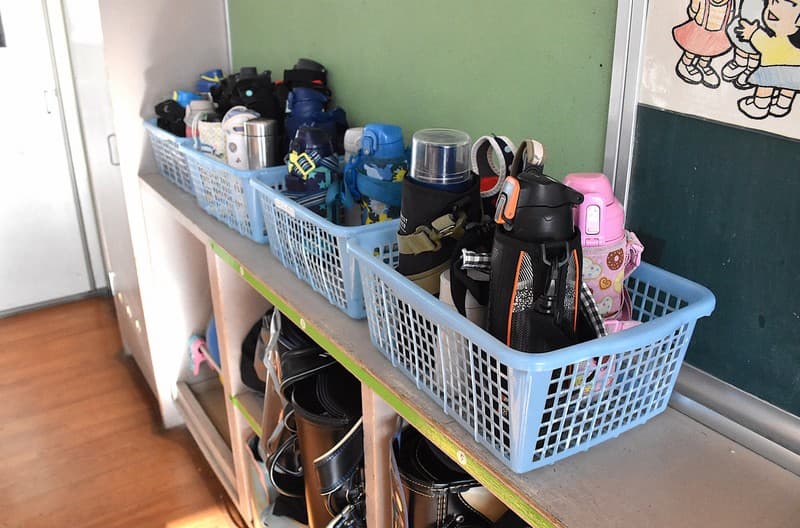
A Disturbing Pattern in School Hydration
Water bottles have become essential equipment for Japanese school children as temperatures climb and heatstroke prevention takes priority in classrooms across the nation. Yet this basic tool for staying healthy has transformed into a vector for danger in several disturbing incidents where foreign substances appeared inside bottles belonging to unsuspecting students. The contamination cases range from classroom magnets to sleep medication, revealing vulnerabilities in school safety protocols and sparking urgent discussions about how to protect children from their own peers.
Recent reports from Hyogo, Tokyo, and the Kyushu region document a pattern of tampering that has left parents anxious and administrators scrambling to implement new safeguards. While no students have suffered serious health consequences in the latest wave of incidents, the potential for harm has prompted education boards to revise storage policies and increase supervision. The cases also raise difficult questions about juvenile accountability and the psychological factors that drive children to endanger their classmates.
The problem has emerged against a backdrop of record-breaking temperatures that make hydration essential rather than optional. Japanese schools have traditionally encouraged students to drink water throughout the day to prevent heatstroke during outdoor activities and commutes. This medical necessity now clashes with security concerns, forcing educators to balance physiological needs against the reality that some students may exploit vulnerability in communal settings.
Education officials note that the incidents appear driven by interpersonal conflicts among students rather than random attacks, suggesting that prevention efforts must address social dynamics alongside physical security measures.
Magnets, Disinfectants, and Sleep Aids
The most recent major incident occurred in June 2024 at a school in Hyogo Prefecture, where a parent discovered a six to seven millimeter magnet rattling inside their child’s water bottle during routine cleaning. The discovery prompted an immediate investigation that uncovered similar magnets hidden in other students’ containers. The objects originated from a magnetic board used in a lower-grade classroom to display name tags, a system designed for convenience that inadvertently provided easy access to small magnetic objects.
According to the local board of education, the homeroom teacher had implemented the magnetic board system to make name tags accessible, but this meant any student could remove the magnets. Following the discovery, the school convened a meeting with parents three days later and agreed to store name tags in boxes rather than on magnetic displays. The institution also mandated that water bottles be kept in individual tote bags rather than left unattended, and teachers began monitoring hallways during breaks to prevent students from entering other classrooms without supervision.
Other cases have involved substances with genuine potential for harm. In October 2023, a junior high school student in the Kyushu region detected an unusual odor when attempting to drink from their bottle at home. Investigators suspected that disinfectant alcohol from school supplies had been introduced into the container, though the exact circumstances remained unclear. A more alarming case emerged in February 2024 in Tokyo, when an elementary school student noticed a smell resembling chlorine emanating from tea in their water bottle. The child spat out the liquid immediately and avoided injury, but the incident prompted the local education board to issue warnings about the safe management of classroom disinfectants and cleaning agents.
Perhaps the most serious recent case occurred in September 2025 at an elementary school in one of Tokyo’s wards. Two students added three packets of Melatobel, a sleep aid, to another student’s water bottle in a school restroom. A fellow student witnessed the act and alerted a teacher, who intervened before the victim could drink the contaminated liquid. The medication had been brought from home by one of the perpetrators. The school had previously allowed water bottles to remain on desks and other unattended locations, a practice the ward education board official described as “managed inadequately.”
Parents across Japan have expressed growing anxiety about water safety in schools, particularly following reports of previous public water tap incidents that left communities wary of shared drinking sources. Some families now question whether traditional Japanese practices of communal hydration can safely continue given the current social climate. The incidents have prompted discussions about whether personal water bottles should be transparent or whether schools should consider sealed, single-use alternatives, though such measures would generate significant environmental and financial costs.
Echoes of 1985: Japan’s History of Drink Tampering
While the recent school incidents involve children and have not resulted in fatalities, they evoke memories of one of Japan’s most notorious unsolved criminal cases. The paraquat murders of 1985 represent possibly the deadliest product-tampering case in history, claiming at least thirteen lives and leaving thirty-five others seriously ill. During that crisis, perpetrators laced bottled beverages with paraquat dichloride, a highly toxic herbicide, and placed them in and around vending machines across western and central Japan.
The 1985 attacks primarily targeted Oronamin C and Real Gold, popular vitamin-enriched energy drinks, though some victims consumed poisoned Coca-Cola. The first known victim drank a contaminated bottle left atop a vending machine in Fukuyama, Hiroshima Prefecture, on April 30, 1985. He died on May 30 after the paraquat destroyed his internal organs. The poisonings continued throughout the year, creating widespread panic and prompting the National Police Agency to launch a nationwide prevention campaign involving warning labels on Japan’s 5.2 million vending machines.
The 1985 case also generated copycat crimes, including instances of milk container tampering in schools in Mie Prefecture. Psychologists at the time identified a “new breed of thrill-seeking criminal” known as yukaihan, individuals who derived satisfaction from imagining victims suffering. Professor Susumu Oda, a mental health specialist at Tsukuba University, offered a disturbing characterization of these offenders.
They cynically enjoy superiority by imagining the victims groaning, and do not feel any remorse.
Police never identified the original culprit, and the case remains unsolved. However, Japan abolished the statute of limitations for murder in 2010, meaning the perpetrator could still face prosecution if apprehended today. The 1985 tragedy led to modifications in paraquat formulation by 1986 and heightened awareness about product tampering that remains relevant in current discussions about school water bottle safety.
The Contagion of Copycat Crimes
Product tampering incidents often spread through imitation, a pattern observed globally and documented extensively by criminologists. The 1982 Tylenol murders in Chicago, where seven people died from cyanide-laced pain relievers, inspired thirty-six credible copycat incidents across the United States within months, including needles in candy and chocolate milk contaminated with sodium hydroxide. Similarly, the 2018 Australian strawberry needle crisis began with isolated incidents but quickly escalated to over one hundred reports across all six states, many attributed to copycats seeking attention or thrills.
Dr. Michelle Noon, a psychologist and professor in Melbourne, explained that media coverage often drives copycat behavior by providing potential offenders with specific methods rather than motivating the underlying desire to commit crimes.
There is a suggestion that copycat crime is predicted by media and community interest. This media coverage is giving people an idea of what crime to commit.
Italy faced similar anxiety in 2003 when an unidentified perpetrator known as the “Acquabomber” injected bleach, dishwashing liquid, and nail polish remover into plastic bottles of mineral water using a syringe. The tampering occurred in both supermarkets and vending machines across the country, sending nearly a dozen people to hospitals and triggering a nationwide investigation involving state police and antiterrorist units. As with the Japanese cases, authorities worried about copycat criminals expanding the crisis beyond the original perpetrator’s scope.
This historical pattern suggests that publicity surrounding the Japanese school incidents could potentially inspire additional attempts, particularly given that children may lack full comprehension of the physical dangers involved. The Australian case saw a young child admit to inserting needles as “a prank,” illustrating how juvenile perpetrators often fail to grasp the severity of their actions until confronted with consequences.
Community Anxiety and Parental Concerns
The wave of tampering incidents has triggered significant anxiety among parents who previously viewed schools as safe environments for their children. Online discussions reveal communities questioning basic safety assumptions, with some parents referencing previous public water contamination cases that have left lasting impressions on Japanese society. The fear extends beyond the specific substances discovered to encompass broader concerns about supervision adequacy and the ability of young children to recognize when their drinks have been compromised.
Some families have begun requesting that schools allow only transparent water bottles to facilitate visual inspection, while others suggest installing water bottle lockers or requiring students to keep containers in sealed bags throughout the day. These proposed solutions illustrate the tension between maintaining open, communal school environments and implementing stringent security measures appropriate for an age group that includes both victims and potential perpetrators.
New Rules for an Old Problem
Educational institutions have moved quickly to implement physical barriers against tampering. Following the September 2025 sleep aid incident, the Tokyo elementary school established a protocol requiring water bottles to be stored collectively in a basket positioned next to the homeroom teacher’s desk. Students must now carry their bottles with them when moving between classrooms, eliminating the window of opportunity for contaminants to be introduced during unattended periods.
The Hyogo school implemented similar measures, combining storage changes with increased adult supervision in transitional spaces like hallways. These visible security measures address immediate risks, but education officials acknowledge that physical controls alone cannot prevent determined misconduct.
A ward education board official stressed that visible security measures only address part of the problem.
Revising water bottle management is a visible measure, but it’s crucial to instill in children the understanding that tampering with others’ bottles is unacceptable.
The official stated that the local government intends to continue supporting schools through both whole-school initiatives and individual student interventions, including enhanced educational activities designed to foster positive group dynamics and prevent bullying behaviors.
Regular individual interviews and lifestyle surveys now supplement traditional disciplinary approaches, allowing educators to identify personal concerns before they escalate into harmful actions. This dual strategy addresses both the physical security of student property and the underlying social tensions that may drive children to contaminate their peers’ belongings.
Accountability and Age Limits
Japanese law treats product tampering differently depending on the perpetrator’s age. Adults who contaminate others’ beverages face criminal charges for property damage and potentially more serious offenses depending on the substance used. In 2021, Hyogo Prefecture authorities arrested a woman in her thirties for allegedly placing a toxic substance in a colleague’s water bottle. More recently, in 2025, a man in Kanagawa Prefecture faced arrest for contaminating a coworker’s bottle with saliva, an act that rendered the container unusable and qualified as property damage.
Children under fourteen years of age fall outside the criminal liability framework, but their actions can trigger intervention by child consultation centers or family courts. Authorities may classify juvenile offenders as “juvenile delinquents” subject to protective custody and guidance rather than punishment. Even unsuccessful attempts, where no one ingests the contaminant, remain serious incidents that cannot be dismissed as harmless pranks.
Legal experts note that attempted poisoning or contamination carries significant weight in the juvenile justice system, particularly given the potential for severe health consequences. The distinction between criminal prosecution for adults and protective measures for children reflects Japan’s approach to juvenile rehabilitation, though victims and parents often struggle to accept that serious misconduct may result in counseling rather than stricter penalties.
The Essentials
- Multiple Japanese schools have discovered foreign substances including magnets, disinfectants, and sleep aids in student water bottles since 2023
- The most serious recent case involved two elementary students adding sleep medication to a peer’s bottle in a Tokyo restroom in September 2025
- Schools are implementing new storage protocols requiring bottles to be kept in supervised baskets or individual tote bags rather than left unattended
- Historical context includes the 1985 paraquat murders, Japan’s deadliest product-tampering case, which killed at least thirteen people via poisoned vending machine drinks
- Copycat phenomena have historically followed major tampering incidents globally, suggesting current cases may inspire additional attempts
- Children under fourteen face protective measures through child consultation centers rather than criminal prosecution, while adults face arrest for property damage and related charges
- No students have suffered serious health damage in the recent school incidents, though authorities warn that ingestion could have caused significant harm