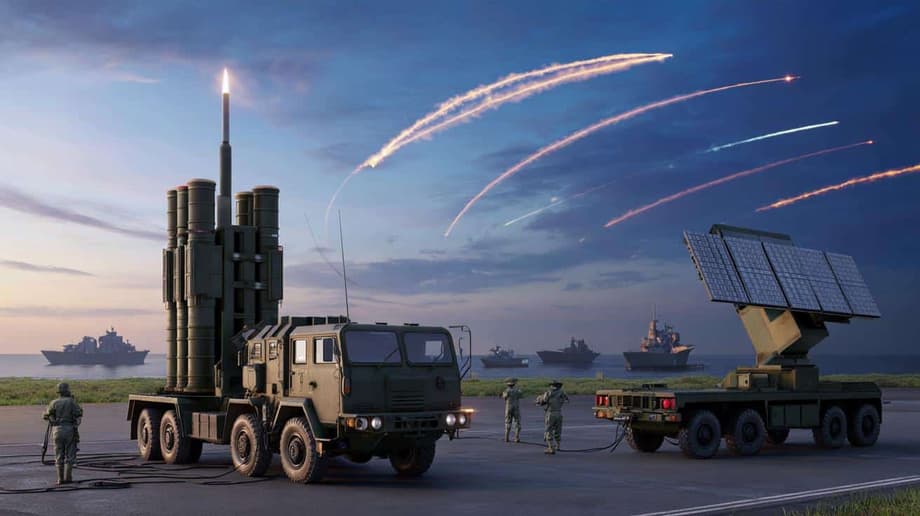
Tokyo Accelerates Production of Advanced Interceptor
Japan has initiated mass production of a significantly upgraded air defense missile system designed to counter the next generation of aerial threats, including hypersonic glide vehicles and maneuvering ballistic missiles. The Improved Type 03 Chu-SAM Kai represents a critical evolution in Tokyo’s integrated air and missile defense network, moving from experimental development into full-scale manufacturing years ahead of the original schedule. According to a Japanese Ministry of Defense document dated December 26, 2025, the decision to begin mass production reflects urgent concerns over regional missile proliferation and the need to protect Japanese territory and critical infrastructure against increasingly sophisticated attacks.
The upgraded system fills a crucial gap in Japan’s layered defense architecture, sitting between long-range naval interceptors and short-range point defense systems. Defense officials describe the Chu-SAM Kai as a critical layer capable of engaging threats that penetrate outer defenses or execute unpredictable maneuvers during their terminal flight phase. The 2026 budget allocates 5.1 billion yen, approximately $32.6 million, for an initial batch of missiles and associated equipment, signaling a long-term commitment to fielding these capabilities across the Japanese archipelago.
Research and development activities will continue through fiscal year 2028, running parallel to the manufacturing effort. This dual-track approach allows Tokyo to field operational units rapidly while refining the technology to meet emerging threats. Officials note that the system has already undergone rigorous testing in simulated contested electromagnetic environments, demonstrating resilience against heavy jamming and electronic interference that would accompany any actual conflict.
From Aircraft Hunter to Hypersonic Killer
The Type 03 Chu-SAM family has served as a cornerstone of Japanese ground-based air defense for more than two decades. The original system entered service with the Japan Ground Self-Defense Force (JGSDF) in 2003, replacing the aging Improved Hawk batteries that had guarded Japanese skies since the 1960s. Developed by Mitsubishi Electric in partnership with the Technical Research and Development Institute (TRDI), the baseline Type 03 introduced revolutionary capabilities for its era, including active radar-homing missiles, truck-mounted vertical launchers, and phased-array radar capable of tracking multiple targets simultaneously.
The system’s evolution continued with the Chu-SAM Kai, first evaluated in 2014 and fielded around 2017. This intermediate upgrade enhanced sensor capabilities, improved networking functions, and added resistance to electronic jamming. The modified Kai variant extended engagement ranges and enabled targeting of more complex threats such as cruise missiles and anti-surface weapons. However, the latest iteration, now entering mass production, represents a qualitative leap rather than an incremental improvement.
Technical specifications highlight the system’s sophistication. The Improved Type 03 utilizes an advanced active electronically scanned array (AESA) radar that can track up to 100 targets simultaneously while engaging 12 at once. Missiles launch vertically from eight-wheeled cross-country trucks, reaching speeds of Mach 2.5 with a range extending to approximately 100 to 120 kilometers according to recent specifications, though earlier variants operated closer to 50 kilometers. The missiles feature thrust vector control and all-moving aerodynamic surfaces, providing the extreme maneuverability necessary to intercept high-speed, evading targets.
The Hypersonic Threat in East Asia
Japanese defense planners are responding to a rapidly evolving security environment where potential adversaries have invested heavily in missiles designed to defeat traditional defense systems. Hypersonic glide vehicles, which travel at speeds exceeding Mach 5 while maneuvering unpredictably through the atmosphere, present particular challenges for conventional interceptors programmed to engage ballistic trajectories. China has deployed the DF-17 and other hypersonic systems capable of reaching Japanese bases and naval forces, while North Korea continues testing ballistic and claimed hypersonic platforms.
Traditional ballistic missiles follow predictable parabolic arcs, allowing defenders to calculate intercept points based on launch detection. Hypersonic glide vehicles, by contrast, can alter course during flight, skimming through the atmosphere at altitudes between 20 and 100 kilometers. This unpredictability compresses reaction times and demands defense systems capable of continuous tracking and rapid trajectory updates. The Improved Type 03 addresses these requirements through high-performance radar, rapid data processing, and missiles with sufficient agility to match the evasive maneuvers of advanced threats.
The system’s design specifically targets threats in their terminal phase, the final seconds before impact when hypersonic vehicles slow slightly and become more susceptible to interception. This terminal defense role complements Japan’s existing Aegis-equipped destroyers, which attempt long-range intercepts using SM-3 missiles outside the atmosphere, and Patriot PAC-3 batteries providing point defense around critical sites. Together, these layers create a comprehensive shield designed to force adversaries to expend enormous resources to achieve missile penetration.
Proven Performance at White Sands
Development of the Chu-SAM Kai has relied heavily on testing at the White Sands Missile Range in New Mexico, where Japanese teams have conducted extensive live-fire evaluations since 2001. During summer 2015, the Technical Research and Developmental Institute executed ten successful flight tests, achieving a 100 percent interception rate against various targets including the GQM-163A Coyote, a U.S. Navy supersonic target system representing advanced cruise missile and anti-ship threats.
Henry Sedillo, the White Sands test officer for the Chu-SAM Kai program, praised the Japanese team’s professionalism and technical expertise during these evaluations.
The Japanese test team we work with is excellent, they are highly experienced and trained to know what they need to succeed.
The Coyote target’s capability to cruise at low altitude or climb and descend at supersonic speeds provided crucial validation of the system’s ability to handle complex threat profiles. Kazuhiro Tobo, the Chu-SAM Kai test commander from TRDI, noted that Japan lacks domestic ranges with sufficient size and controlled airspace to satisfy the full requirements of modern air defense testing, making the White Sands partnership essential for system validation.
Testing continues under an agreement signed October 16, 2025, between Japan’s Ministry of Defense and the U.S. Department of the Army, valued at $39.2 million. This arrangement will see development and verification tests run through fiscal year 2028, with live testing planned for 2025 through 2028. The Japanese Ministry of Defense has stated that these tests aim to address technical challenges in predicting and tracking high-speed targets with unpredictable trajectories, ensuring the system meets operational requirements before widespread deployment.
Defending the Southwestern Islands
Strategic deployment of the Improved Type 03 focuses heavily on Japan’s southwestern island chain, particularly Yonaguni Island located just 110 kilometers east of Taiwan. Defense Minister Shinjiro Koizumi visited the JGSDF base on Yonaguni in November 2025, confirming that missile deployment plans remain on schedule despite local political transitions. The ministry has purchased approximately 45 acres of land near the existing base to accommodate the new air defense unit.
The southwestern islands have become a focal point of Japanese defense planning amid increasing Chinese military activity in the region. The Nansei Islands, including Okinawa, Ishigaki, and Miyako, sit astride potential conflict scenarios involving Taiwan. Tokyo plans to deploy seven of the fourteen planned Chu-SAM Kai units in this region, creating a dense defensive network to protect against missile attacks on bases, ports, and civilian populations. Construction of underground shelters capable of housing residents for up to two weeks complements these missile defenses, forming part of a broader deterrence by denial strategy.
This strategy aims to erode potential aggressor confidence in achieving objectives through military action by raising the costs and risks of attack. By deploying advanced interceptors on islands near potential flashpoints, Japan signals its capability to defend territory even during high-intensity conflicts. The system also enhances protection for U.S. military facilities in Japan, creating a seamless defensive network that complicates adversary targeting calculations.
Industrial Base and Export Potential
Mass production of the Improved Type 03 demonstrates the continued vitality of Japan’s defense industrial base, particularly the capabilities of Mitsubishi Electric and associated subcontractors. The accelerated production schedule, originally planned for later in the decade but moved up to fiscal year 2026, required parallel development and manufacturing processes that tested domestic production capacity. Officials are monitoring potential export interest from Indo-Pacific partners seeking medium-range systems compatible with U.S.-led defense networks.
Recent reports suggest Japan and the Philippines have held informal discussions regarding potential export of the Type 03 system. While Japan’s Ministry of Defense has denied formal negotiations, the possibility highlights evolving Japanese defense export policies. Prime Minister Sanae Takaichi’s government has moved to relax long-standing restrictions on lethal weapons exports, potentially allowing transfers to strategic partners like the Philippines under the Official Security Assistance framework established in 2023.
However, significant constraints remain. Japan’s defense industry has historically served only domestic customers, resulting in limited production capacity and high costs. The current surge in Self-Defense Force procurement, including massive increases in defense spending approved in 2022, will absorb most available manufacturing capacity for the foreseeable future. Any exports would likely involve retired systems or carefully managed production allocations that do not compromise domestic readiness.
The Essentials
- Japan began mass production of the Improved Type 03 Chu-SAM Kai on December 26, 2025, accelerating the program by several years to address growing regional missile threats.
- The system is designed to intercept hypersonic glide vehicles, short-range ballistic missiles, and advanced cruise missiles during their terminal flight phase, filling a critical gap between long-range naval defenses and short-range point defenses.
- Technical capabilities include an active electronically scanned array radar tracking 100 targets simultaneously while engaging 12, with missiles reaching Mach 2.5 and ranges extending to approximately 100 kilometers.
- Extensive testing at White Sands Missile Range since 2015 has validated the system’s ability to intercept supersonic and maneuvering targets, including the GQM-163 Coyote target drone.
- Fourteen ground-based units are planned nationwide, with seven expected to deploy across the southwestern islands including Yonaguni, located 110 kilometers from Taiwan, to counter Chinese and North Korean missile capabilities.
- The 2026 budget allocates 5.1 billion yen ($32.6 million) for initial procurement, with full research and development continuing through fiscal year 2028.
- Mitsubishi Electric manufactures the system, representing a significant achievement for Japan’s defense industry as it joins an exclusive club of nations capable of producing hypersonic-capable air defense systems.