Breakthrough Charging Technology Arrives in Indonesia
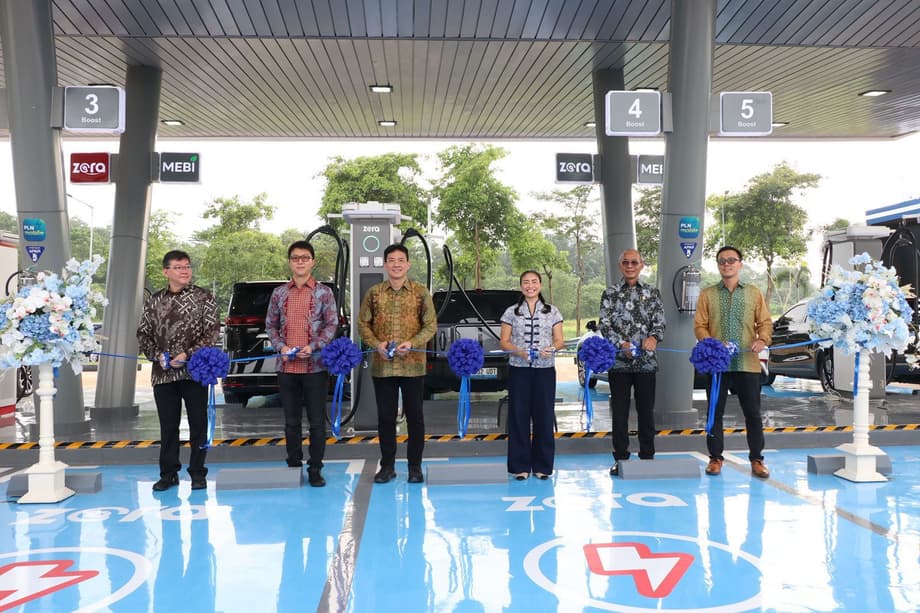
Indonesian energy company Mega Energi Biru Indonesia (MEBI) has unveiled the country’s most advanced electric vehicle charging facility in Gading Serpong, Tangerang, marking a significant leap forward in the archipelago’s sustainable transportation infrastructure. The new SPKLU Signature Station, developed in partnership with Huawei Tech Investment, represents Indonesia’s first deployment of liquid cooled ultra fast charging technology combined with an intelligent split charging system. Located within the Scientia Garden residential complex, the facility aims to redefine consumer expectations for electric vehicle charging speeds while supporting the government’s ambitious net zero emissions targets.
- Breakthrough Charging Technology Arrives in Indonesia
- How Liquid Cooling and Split Charging Work
- A New Benchmark for Infrastructure Standards
- Strategic Partnership for Green Transition
- Beyond Refueling: The Lifestyle Hub Concept
- Grid Integration and Renewable Energy
- Expanding the Charging Network
- Key Points
The station utilizes Huawei’s FusionCharge technology, which marks only the third global application of this advanced system by the Chinese technology giant. Unlike conventional charging stations that rely on air cooled systems and fixed power distribution, this facility employs cutting edge liquid cooling to maintain optimal temperatures during high speed charging sessions. The system delivers an impressive rate of up to one kilometer of driving range for every second of charging time, effectively reducing refueling stops to a duration comparable to traditional gasoline fill ups.
Rahayu Saraswati Djojohadikusumo, President Commissioner of MEBI, emphasized the transformative nature of the technology during the inauguration ceremony on Saturday. She distinguished the new facility from existing options in the Indonesian market, noting that this represents a fundamental upgrade from both standard and fast charging solutions currently available to consumers.
With Huawei’s technology, today we inaugurate a charging facility that marks a new milestone in Indonesia’s electric vehicle infrastructure standards. This is no longer ordinary charging, not even fast charging. This is ultra fast charging.
The executive highlighted that the combination of split charging architecture and liquid cooling enables high speed power delivery while maintaining flexible and efficient energy distribution across multiple vehicles simultaneously. This approach ensures thermal stability throughout the charging process, addressing safety concerns that often accompany high power electrical systems. The station operates across a voltage range of 200V to 1,000V and supports all major electric vehicle brands currently available in the Indonesian market, making it a universal solution rather than a proprietary platform. The twelve charging connectors integrated into the facility demonstrate scalability designed to accommodate growing demand as Indonesia’s electric vehicle population expands from current low levels toward mass adoption.
How Liquid Cooling and Split Charging Work
The technical innovations behind the SPKLU Signature Station address several limitations that have historically constrained electric vehicle adoption in tropical climates like Indonesia’s. Traditional air cooled charging systems struggle with heat dissipation during high speed charging sessions, particularly in humid environments where ambient temperatures remain elevated throughout the year. Liquid cooling technology circulates a specialized coolant through the charging cables and internal components, actively removing heat generated during the transfer of large electrical currents.
This thermal management system allows for substantially higher power throughput without risking component degradation or safety hazards. The technology also enables the use of lighter, more flexible charging cables that improve user experience, particularly for drivers who may find traditional heavy duty cables cumbersome to maneuver. The quiet operation of the liquid cooled system further enhances the charging experience, eliminating the fan noise commonly associated with high speed charging equipment.
The split charging system represents an equally significant advancement in power management architecture. Rather than dedicating fixed power outputs to individual charging points, the system intelligently distributes available electrical capacity based on real time demand and each vehicle’s specific charging capabilities. When multiple electric vehicles connect simultaneously, the system allocates power dynamically, ensuring that each vehicle receives optimal charging rates without overloading the facility’s electrical infrastructure.
Carlo John, Head of SPKLU Signature, explained that the facility features twelve charging connectors managed through this intelligent distribution system. The integration with solar power generation and on site energy storage systems further distinguishes this installation from conventional grid dependent charging stations. By reducing reliance on the main electrical grid during peak demand periods, the station promotes cleaner energy use while providing operational resilience against power fluctuations common in rapidly developing urban areas.
A New Benchmark for Infrastructure Standards
The inauguration of the Tangerang facility signals a shift in how Indonesian energy companies approach electric vehicle infrastructure development. Rahayu Saraswati framed the launch not merely as the opening of a new facility, but as the establishment of a long term foundation for sustainable mobility in the world’s fourth most populous nation. She emphasized that the transition to electric vehicles has evolved from an emerging trend into a strategic necessity for achieving environmental goals and reducing dependence on imported fossil fuels.
The executive stressed that building public confidence in electric mobility requires infrastructure that meets the highest standards of speed, safety, and reliability. When charging facilities demonstrate consistent performance and operational stability, consumer hesitation regarding range anxiety and charging convenience begins to dissolve. This confidence building represents a critical component of accelerating adoption rates among Indonesian drivers who have traditionally favored internal combustion engines due to refueling convenience and established maintenance networks.
This is not merely about technology. This is about building trust. When infrastructure arrives with high standards, fast, safe, and stable, public confidence will grow. When confidence grows, the acceleration of electric vehicle adoption will occur.
The facility’s design incorporates aesthetic considerations alongside functional requirements, featuring futuristic architecture that remains visually striking during nighttime operations. This attention to visual appeal reflects an understanding that charging stations must serve as destination points rather than purely utilitarian infrastructure. The concept transforms the charging experience into a lifestyle activity, encouraging drivers to view refueling stops as opportunities for leisure rather than interruptions to their journeys.
Strategic Partnership for Green Transition
Huawei’s involvement in the project extends beyond equipment supply to encompass a strategic commitment to Indonesia’s energy transition goals. Jin Song, chief executive of Huawei Indonesia, positioned the company as a leading provider of green technology solutions committed to accelerating the development of energy and mobility infrastructure across the archipelago. The partnership aligns with Indonesia’s target of achieving net zero emissions by 2060, a goal that requires substantial electrification of the transportation sector alongside renewable energy expansion.
This installation represents Huawei’s third global deployment of FusionCharge technology, indicating the company’s confidence in Indonesia’s market potential despite the current relatively low penetration of electric vehicles compared to neighboring markets. The technology transfer implicit in this partnership suggests ongoing collaboration between MEBI and Huawei as the Indonesian company expands its charging network beyond the initial flagship station in Tangerang.
The collaboration exemplifies a broader pattern of Chinese technology companies investing in Southeast Asian green infrastructure, using advanced manufacturing capabilities to establish market presence in rapidly growing economies. For Indonesia, partnerships with established technology providers offer accelerated access to proven solutions rather than requiring domestic development of complex charging systems from scratch.
Beyond Refueling: The Lifestyle Hub Concept
Contemporary electric vehicle charging infrastructure increasingly emphasizes user experience design that transcends basic utility functions. The SPKLU Signature Station embodies this philosophy through what industry professionals term destination charging, a concept that anticipates drivers spending meaningful time at charging locations rather than waiting impatiently beside their vehicles. Carlo John articulated this vision during the inauguration, thanking government officials, PLN representatives, Huawei partners, and installation teams for supporting the development of infrastructure that prioritizes user comfort.
The station operates 24 hours daily, accommodating diverse schedules and travel patterns. The futuristic design elements create what observers have described as an Instagramable location, suggesting that the facility may attract social media attention that indirectly promotes electric vehicle adoption among younger demographics. This marketing potential represents an unintentional but valuable secondary benefit of investing in high quality architectural design for utilitarian infrastructure.
The lifestyle hub concept implies that future expansions may incorporate additional amenities such as retail spaces, food and beverage services, or coworking areas where drivers can productively utilize charging intervals. While the Tangerang location currently focuses on the charging technology itself, the underlying infrastructure supports future expansion of services that could generate additional revenue streams while improving the overall economics of charging station operations.
Grid Integration and Renewable Energy
The technical specifications of the SPKLU Signature Station include integration with solar photovoltaic systems and battery energy storage, creating a hybrid power supply that reduces strain on Indonesia’s national electrical grid managed by Perusahaan Listrik Negara (PLN). This configuration addresses a common criticism of electric vehicle adoption in developing economies, namely that increased electricity demand would simply shift emissions from vehicle tailpipes to coal fired power plants that dominate many Southeast Asian grids.
Edwin Nugraha Putra, Director of Transmission and System Planning at PLN, attended the inauguration and emphasized that the facility represents more than an incremental addition to Indonesia’s charging network. He characterized the development as part of a larger trend toward vehicle electrification that will experience rapid growth in coming years. The PLN executive noted that ultra fast charging technology can reduce charging sessions to approximately five minutes for certain vehicle types, creating an experience nearly indistinguishable from conventional refueling.
This is not merely an inauguration of a charging station, but will become a trend that grows rapidly in Indonesia. Development of the electric vehicle ecosystem will become booming.
The solar integration allows the facility to generate clean electricity during daylight hours while storing excess capacity in battery systems for use during peak evening charging periods or cloudy weather conditions. This capability reduces operational costs while providing resilience against grid instability that occasionally affects industrial zones in the Tangerang area. The approach aligns with national priorities regarding energy security and reduced dependence on imported petroleum products that burden Indonesia’s trade balance.
Expanding the Charging Network
While the Tangerang facility represents a technological milestone, industry observers recognize that single installations cannot transform national transportation patterns without systematic network expansion. Rahayu Saraswati explicitly called for government support in building additional facilities across Indonesia’s diverse regions, noting that sustainable business models require careful calculation to ensure long term viability without perpetual subsidy dependence. The hope is that successful demonstration projects like the SPKLU Signature Station will attract private investment while informing regulatory frameworks that facilitate rapid deployment.
The MEBI Huawei partnership has already produced additional charging solutions including the Ostra and Zora product lines showcased on social media platforms, indicating an ongoing relationship that extends beyond the single flagship installation. These products suggest a tiered approach to market development, with ultra fast charging serving high traffic corridors while slower charging options serve residential and workplace applications.
Successful electrification of Indonesia’s transportation sector requires coordination between multiple stakeholders including energy companies, automotive manufacturers, government regulators, and grid operators. The collaboration model demonstrated in Tangerang, involving MEBI, Huawei, PLN, and local government authorities, provides a template for future developments. As Edwin Nugraha Putra observed, this transformation cannot occur through isolated efforts but requires strong collaboration between business entities, government agencies, and communities.
Indonesia’s geographic complexity, spanning thousands of islands with varying levels of infrastructure development, presents unique challenges for charging network deployment. Java and Sumatra will likely see initial concentration of ultra fast charging facilities, with subsequent expansion to tourist destinations and inter island ferry ports as demand patterns clarify. The liquid cooled technology demonstrated in Tangerang offers particular advantages for tropical climates, suggesting potential applicability across Southeast Asian markets facing similar environmental conditions.
Key Points
- MEBI and Huawei launched Indonesia’s first liquid cooled ultra fast EV charging station in Gading Serpong, Tangerang, featuring FusionCharge technology
- The SPKLU Signature Station delivers up to one kilometer of driving range per second of charging and operates on a 200V to 1,000V range supporting all major EV brands
- Advanced features include liquid cooling for thermal management, split charging for intelligent power distribution, and integration with solar power and battery storage systems
- The facility represents Huawei’s third global application of FusionCharge and operates as a 24 hour destination charging lifestyle hub
- Officials from MEBI, Huawei, and PLN emphasized the station’s role in building public confidence and supporting Indonesia’s net zero emissions target by 2060