Seoul Chooses a Technical Fix for a Diplomatic Dispute
South Korea has decided to remove the "last point of departure" and "next destination" fields from its electronic arrival card system, eliminating the places where travelers had to select "China (Taiwan)." The decision addresses a dispute that began after the system launched on February 24, 2025, and grew into an exchange of diplomatic protests, changes to immigration documents and a public appeal from Taiwanese President Lai Ching-te.
Contents
- Seoul Chooses a Technical Fix for a Diplomatic Dispute
- How the Electronic Form Created the Problem
- Protests Reached the Presidential Level
- Taiwan Used Naming Changes as Pressure
- The Dates Behind the Standoff
- Why Seoul Removed Fields Instead of Changing the Name
- The Diplomatic Framework Dates to 1992
- Beijing's Pressure and the Regional Security Setting
- Earlier Friction at the Gyeongju Summit
- Trade, Chips and Travel Raised the Stakes
- Other Disputes Show the Limits of Naming Diplomacy
- The Bottom Line
As of April 3, 2026, the Ministry of Foreign Affairs in Seoul had confirmed the planned removal, with the Ministry of Justice handling the technical work under the relevant procedures. Rather than replace the disputed designation with "Taiwan," South Korea chose to delete the two fields for all international travelers.
Taiwan had given Seoul until March 31 to correct the label or face additional measures. Since March 1, Taiwanese authorities had already changed the designation for Korean nationals on Alien Resident Certificates from "Republic of Korea" to "South Korea." They had also threatened to use "Korea (South)" in Taiwan's online immigration entry system.
Taiwan's Foreign Ministry responded to Seoul's decision by temporarily suspending its planned changes to the electronic entry registration system. Reciprocal steps to restore "Republic of Korea" on residency documents were expected. The announcement described administrative and technical reviews, without giving a completion date for the changes.
Seoul presented the adjustment as a way to simplify immigration procedures, improve convenience for visitors from Taiwan and align electronic declarations with paper arrival cards. Its officials said the decision was intended to support practical, unofficial cooperation with Taiwan while preserving South Korea's existing diplomatic position toward China.
How the Electronic Form Created the Problem
South Korea introduced its electronic arrival card on February 24, 2025, as a digital alternative to traditional paper landing cards. Foreign visitors could submit their entry declaration through a computer or mobile phone three days before arrival, helping speed up immigration procedures at airports.
Taiwanese travelers could select "Taiwan" as their nationality in the basic information section. In the departure and destination menus, however, the required designation was "China (Taiwan)." The same journey therefore involved different labels for the island within a single administrative process.
Taiwanese officials and citizens objected because the destination wording presented the self-governed island as part of the People's Republic of China. A system intended to make travel easier instead required passengers to select a political designation they opposed.
Traditional paper declarations allowed travelers to write their information themselves, including nationality and travel details, without choosing from preset menus. In explaining the latest decision, a South Korean ministry official said the paper arrival cards already excluded the two specific fields being removed from the electronic system.
Taiwan's Bureau of Consular Affairs eventually issued a Level 1 "gray alert" for travel to South Korea. It advised Taiwanese visitors to use paper arrival cards to avoid the contested electronic designation. The paper alternative remained available, making the alert a symbolic warning rather than a practical barrier to travel.
Protests Reached the Presidential Level
Taiwan's Foreign Ministry lodged its first formal complaint in December 2025, calling the label "factually inaccurate" and demanding a prompt correction. Richard Liu, deputy head of the ministry's Department of East Asia and Pacific Affairs, said Taipei had repeatedly requested changes and warned that an unresolved dispute would lead to a full review of bilateral relations.
President Lai Ching-te raised the matter publicly in March 2026. His intervention brought presidential attention to an issue that had begun with the wording of an immigration form. Diplomats and analysts described such a direct appeal to Seoul over a bilateral administrative matter as unusual.
Lai, Taiwan's president, pointed to the relationship between the two societies and called for respect for Taiwanese public sentiment.
Taiwan and Korea have close ties in trade and people-to-people exchanges. Korea will respect the will of the Taiwanese people.
Taiwan was facing growing pressure from Beijing over its international status and participation in global forums. Against that background, the wording mattered to Taipei as an issue of sovereignty and national identity, extending beyond the inconvenience of filling out a form.
Taiwan Used Naming Changes as Pressure
Taiwan began its response on March 1, 2026, by changing the nationality designation on Alien Resident Certificates issued to South Korean nationals. "Republic of Korea," South Korea's formal name, became "South Korea," the commonly used geographic name.
Foreign Minister Lin Chia-lung explained the measure through reciprocity, the diplomatic practice of responding to another government with comparable treatment. Approximately a decade earlier, Seoul had specifically asked Taiwan to use "Republic of Korea" instead of "South Korea" in official documents. Taipei had complied, while its own requests over the electronic arrival card remained unresolved.
Lin, Taiwan's foreign minister, described the response as a matter of dignity and control over negotiations.
Diplomacy is about reciprocity and dignity. Taiwan must take control of its negotiation strategy.
Lin set March 31 as the deadline for correcting "China (Taiwan)." Without a positive response, Taiwan would change "Republic of Korea" to "Korea (South)" in its online immigration entry system. The measure targeted Seoul's sensitivity about the use of its formal name in international settings.
Taipei pursued a graduated response through administrative inconvenience rather than economic sanctions. Its government nevertheless raised the possibility of economic measures, citing what it described as a large trade deficit with South Korea.
Criticism crossed party lines. Members of the ruling Democratic Progressive Party said the label failed to respect Taiwan's sovereignty. Opposition Kuomintang lawmakers proposed considering strategic countermeasures, pointing to tourism demand and trade imbalances. Lawmakers also cited Taiwan's influence in semiconductor supply chains, although economic sanctions were never implemented.
The Dates Behind the Standoff
The dispute lasted more than a year from the launch of the electronic system to Seoul's decision to remove the fields. Formal protests, presidential involvement and reciprocal naming measures marked its escalation.
- February 24, 2025: South Korea launched its electronic arrival card, including the disputed departure and destination labels.
- November 2025: Taiwan raised complaints over arrangements and communication surrounding the APEC summit in Gyeongju.
- December 2025: Taiwan's Foreign Ministry made its first formal complaint about "China (Taiwan)."
- March 1, 2026: Taiwan began using "South Korea" instead of "Republic of Korea" on Alien Resident Certificates for Korean nationals.
- March 2026: President Lai publicly appealed to Seoul, while Taiwan pressed for a correction by March 31.
- By April 3, 2026: Seoul had confirmed that the two electronic arrival fields would be removed, and Taiwan had temporarily suspended its planned electronic entry naming changes.
South Korean officials expressly denied that the decision was made in response to the March 31 deadline. They described it as an administrative adjustment supporting easier entry procedures and practical relations with Taiwan.
Why Seoul Removed Fields Instead of Changing the Name
South Korea's Ministry of Justice will remove both disputed fields, bringing the electronic format into line with the paper cards described by the Foreign Ministry. The change applies to visitors from every country, rather than creating a special rule for Taiwanese travelers.
A Foreign Ministry official described the decision as a "technical and administrative measure." Removing the categories gives Taiwan the practical result it sought: visitors will no longer encounter "China (Taiwan)" in those parts of the electronic declaration.
Seoul also avoided directly replacing that designation with "Taiwan" in the contested menus. Its approach allows it to address Taiwanese concerns while maintaining the diplomatic framework established with Beijing in 1992.
The universal application of the change may also help Seoul answer criticism from Beijing that it is giving Taipei special treatment. Officials framed the decision around simpler procedures and convenience for all international visitors, alongside improved practical cooperation with Taiwan.
Taiwan's Foreign Ministry said it had learned that South Korea was conducting an "internal administrative and technical review" of the system. Its spokesperson announced a temporary suspension of the planned electronic entry changes, while restoration of the formal Korean name on residency documents was expected as a reciprocal step.
The Diplomatic Framework Dates to 1992
South Korea severed formal diplomatic relations with Taipei in 1992 and established relations with Beijing, recognizing the People's Republic of China as the sole legitimate government. Since then, South Korea and Taiwan have maintained unofficial but substantial ties in trade, tourism and cultural exchanges.
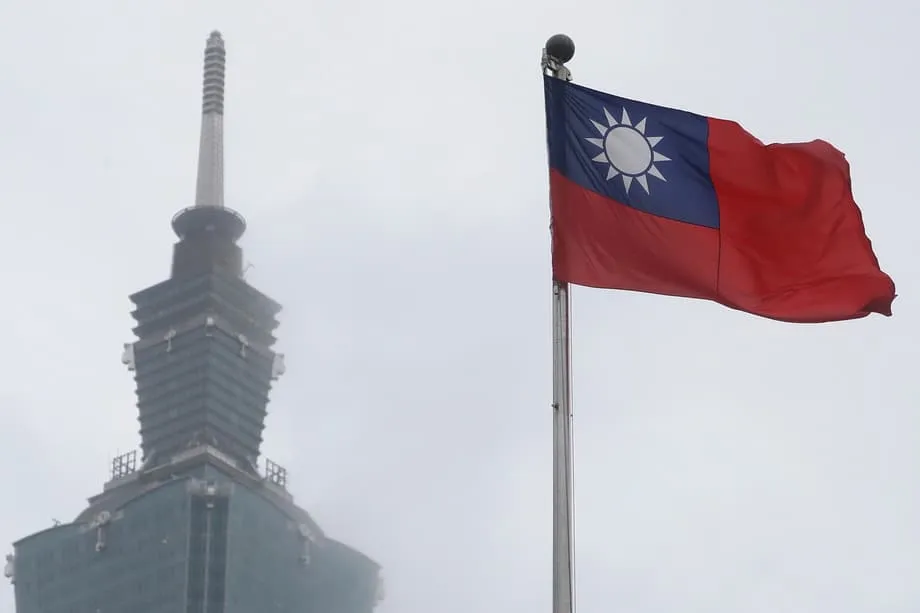
Seoul maintains its One China policy and does not recognize Taiwan as an independent state. Beijing regards the island as a province of China. Taiwan operates as a self-governed democracy with its own military, currency and immigration controls, creating practical difficulties for systems that require a single political designation.
China watched Seoul's handling of the arrival card dispute closely. A Chinese Foreign Ministry spokesman invoked the agreement that established diplomatic relations between Beijing and Seoul and stated Beijing's expectation.
continue to observe the One China principle, which is clearly stated in the China-ROK joint communique on the establishment of diplomatic relations.
A South Korean Foreign Ministry official also addressed communication with Beijing during the dispute.
We maintain necessary communication with China on matters of mutual interest.
Seoul's position required it to manage pressure from both Taipei and Beijing. Deleting the fields provided an administrative route through those competing demands while leaving its formal diplomatic policy in place.
Beijing's Pressure and the Regional Security Setting
A professor in the Department of Chinese Studies at Hankuk University of Foreign Studies said South Korea's options remained constrained by its recognition of Beijing in 1992. The professor suggested that Taiwan was seeking clarification of Seoul's position amid tensions between China and Japan, while also needing to consider South Korea's diplomatic and security circumstances.
Chinese state media described Taiwan's actions as pressure tactics by Democratic Progressive Party authorities and defended the label as consistent with the One China principle upheld internationally. Beijing has consistently opposed challenges to its position that Taiwan must be reunified with the mainland, by force if necessary.
Regional military tensions added to Seoul's calculations. In November 2025, Japan's prime minister said Japan would exercise collective self-defense in the event of a Taiwan contingency. Collective self-defense means acting to defend an ally or partner under attack. The statement prompted increased Chinese military pressure toward Tokyo, including joint demonstrations with Russia.
Chinese and Russian military aircraft entered South Korea's air defense identification zone in March 2026. Such a zone is an area where a country seeks to identify approaching aircraft for security purposes. The incident underlined the wider security environment surrounding Seoul's diplomatic choices.
South Korea expressed willingness to support dialogue between China and Japan while avoiding an explicit choice of sides. Senior officials in Washington avoided strong public intervention in the specific dispute between South Korea and Taiwan, leaving Seoul to manage it while considering its alliance commitments and economic interests.
Earlier Friction at the Gyeongju Summit
Taiwan and South Korea had already experienced diplomatic friction during the Asia-Pacific Economic Cooperation summit held in Gyeongju in November 2025. Taiwanese officials complained about airport reception arrangements for Taiwan's representative.
Subsequent accounts revealed that South Korea's Foreign Ministry communicated with Taiwan's representative office indirectly through Seoul's own office in Taipei, instead of making direct contact. Foreign Minister Lin described that communication method as "condescending."
The summit complaints gave the arrival card dispute a wider setting. For Taipei, dissatisfaction involved both the name used in an immigration system and the treatment of its representatives in official dealings, even though the two sides maintained unofficial relations.
Trade, Chips and Travel Raised the Stakes
South Korea and Taiwan remain closely connected economically despite their political disagreements. Both are deeply involved in global semiconductor supply chains, with Taiwan Semiconductor Manufacturing Company and Samsung Electronics dominating advanced chip production.
Taiwanese lawmakers referred to that industrial influence when discussing possible strategic responses. The government also pointed to its large trade deficit with South Korea, making the economic relationship part of the debate even though the immediate measures concerned names on immigration documents.
Tourism and business travel provide another substantial connection. Strong passenger demand supported extensive air links before the dispute. Taiwan's travel alert directed visitors toward the paper arrival card alternative, allowing journeys to continue without use of the disputed electronic fields.
Agreement across Taiwan's political divide showed how strongly international naming touched views about the island's status. The ruling party focused on sovereignty, while opposition lawmakers cited travel demand and trade as possible sources of negotiating pressure.
Airlines and airports face related difficulties when travel technology requires politically sensitive labels. Booking platforms and visa systems have previously listed Taiwan under China, drawing objections from Taiwanese authorities and travelers. Digital systems can make a designation unavoidable by requiring users to choose from fixed menus rather than enter their own wording.
Other Disputes Show the Limits of Naming Diplomacy
Taiwan has also faced recent disputes involving Denmark and Cameroon over changes to its treatment in official systems. Taipei responded by restricting privileges for staff of the Danish representative office and boycotting a World Trade Organization ministerial meeting hosted by Cameroon.
Those cases form part of the wider debate over whether reciprocal naming measures achieve meaningful results when most governments maintain diplomatic recognition of Beijing. In the Korean dispute, Taiwan's pressure was followed by a practical change to the arrival system, while Seoul retained its existing recognition policy.
An expert at the Taiwan Research Institute at Xiamen University interpreted South Korea's adjustment as consistent with the One China principle and as reflecting an intention to maintain regional order based on international law.
A professor in the Department of Political Science and International Relations at Dankook University placed the dispute within a broader issue: how far South Korea would align with United States policy toward China. The professor argued for a managed response that adjusts its pace according to relations between Washington and Beijing, rather than rushing into unilateral changes.
For travel authorities, Seoul's solution changes the structure of the form instead of choosing a replacement political label. For the two unofficial partners, it offers a way to ease a concrete disagreement while preserving trade, tourism and practical cooperation under their existing diplomatic constraints.
The Bottom Line
- South Korea will remove the departure and destination fields containing "China (Taiwan)" from its electronic arrival card.
- The system launched on February 24, 2025; Taiwan lodged its first formal complaint in December 2025.
- Taiwan changed "Republic of Korea" to "South Korea" on Alien Resident Certificates from March 1, 2026, and threatened further changes after March 31.
- Taipei has temporarily suspended its planned electronic entry naming changes, with restoration of "Republic of Korea" on residency documents expected.
- Seoul says the adjustment simplifies entry procedures and is not a response to Taiwan's deadline.
- The change applies to all international travelers while South Korea maintains its One China policy and unofficial relations with Taiwan.
- The dispute unfolded alongside substantial trade and tourism ties and growing regional tensions involving China, Japan, Russia and the United States.