US$195 Jet Fuel Sharpens an Unequal Contest
Chinese airlines are adding nearly 2,900 flights to their European summer schedules as a surge in jet fuel prices makes longer routes increasingly expensive for Western competitors. Access to Russian airspace lets Chinese carriers take shorter journeys between Europe and Asia, while many rivals must fly around it.
Contents
- US$195 Jet Fuel Sharpens an Unequal Contest
- Why Russian Airspace Makes Such a Difference
- European Airlines Pull Back from China
- KLM Calls for Action on Unequal Access
- Chinese Expansion Meets Weak Demand
- Small Fuel Savings Across Thousands of Flights
- Washington Proposes Restrictions on US Routes
- Enforcement and Emissions Add to the Debate
- Routing Advantages Have Not Secured Profits
- Passengers and Investors Face a Mixed Picture
- What to Know
The International Air Transport Association put the average jet fuel price for the week ending March 27 at US$195 per barrel, up from US$99.4 a month earlier. That is an increase of US$95.6, or about 96%, in a matter of weeks. For international airlines still struggling to recover from losses during the pandemic, the increase threatens already narrow profit margins.
As of April 3, 2026, the conflict involving the United States, Israel and Iran has entered its fifth week, with Tehran effectively blockading the Strait of Hormuz. The passage handles approximately one fifth of global oil flows. Disruption there has pushed up the cost of the fuel that airlines need to keep aircraft flying.
Fuel typically accounts for 20% to 40% of an airline's operating budget. When that expense rises sharply, a few extra hours in the air become much harder to absorb. Chinese carriers have a geographical advantage, but their own recent losses show that shorter routes offer only part of the protection they need.
The crisis is reshaping competition on two fronts. European airlines have been withdrawing from China as detours and weak demand weigh on their finances. Chinese airlines are expanding into the space they leave, even as higher fuel costs force them to seek savings throughout their operations.
Why Russian Airspace Makes Such a Difference
Russia's invasion of Ukraine in 2022 set off the airspace restrictions behind the current divide. Western nations banned Russian aircraft from their skies, and Moscow responded by closing Russian airspace to airlines from the European Union, North America, Japan and South Korea. Chinese carriers were not included in that ban.
The unequal access persisted three years after the invasion and has become more costly as fuel prices rise. Chinese airlines and a handful of other carriers unaffected by the sanctions can still use the northern corridor commonly called the Siberian route.
The corridor follows a path at high latitudes and provides the shortest great circle distance between Europe and East Asia. A great circle route is the shortest path between two places on the curved surface of the Earth. Before the war, Finnair and Aeroflot built their business models around this efficient crossing.
Analysis of Flightradar24 data shows how much the journeys have changed. Finnair's Helsinki to Shanghai service now averages 11 hours and 24 minutes, compared with eight hours and 30 minutes before the war. That adds two hours and 54 minutes to the journey. Scandinavian Airlines, or SAS, saw its Copenhagen to Shanghai flight grow from roughly 11 hours to more than 15 hours.
Industry estimates put the additional costs for European airlines at 10% to 15%, primarily because longer routes consume more fuel. More time in the air also affects staffing, an expense that becomes important when airlines need additional cockpit crew for extended journeys.
European Airlines Pull Back from China
SAS recently operated its final direct flight from Shanghai to Copenhagen, ending a service that had continued even through the COVID-19 pandemic. Its withdrawal forms part of a wider retreat by European carriers facing higher costs and demand weaker than they had expected.
Virgin Atlantic ended its China operations after 25 years, with its final London to Shanghai service in October. British Airways suspended London to Beijing flights until at least November 2025. Lufthansa paused Frankfurt to Beijing services while keeping flights from Munich.
Those developments span several years, rather than a single round of cancellations:
- 2019: Fourteen European carriers served China, and Chinese airlines operated approximately 60% of flights between China and Europe.
- 2022: Russia's invasion of Ukraine triggered reciprocal airspace bans, forcing many Western airlines to take longer routes.
- October: Virgin Atlantic operated its last London to Shanghai service after 25 years in the market.
- November 2025: This was the earliest endpoint given for British Airways' suspension of London to Beijing services.
- March 27, 2026: The week ending on this date recorded an average jet fuel price of US$195 per barrel.
- Summer 2026: Chinese carriers plan nearly 2,900 additional flights compared with the previous summer.
Only seven European airlines remain in the China market, half the 14 recorded in 2019. Among 855 flights between China and Europe during the late November period cited in the market figures, Chinese carriers operated more than 84%, compared with approximately 60% in 2019.
KLM Calls for Action on Unequal Access
KLM chief executive Marjan Rintel has urged European governments to act against what she describes as unfair competition. Her concern is that airlines competing for the same passengers face different restrictions on where they can fly.
Rintel described the extra flying time, staffing and fuel required by the detours:
It takes another two hours for us, four cockpit crew, and of course, more fuel, which is not the cheapest today. It's really frustrating and I think it's harmful for relationships. We are in an international world and an international competition, so it's very hard to have restrictions that are not valid for others.
Her comments connect the political restrictions directly to the cost of an individual flight. European carriers must spread the expense of longer journeys across their passengers while competing with airlines able to reach the same destinations more directly.
Weak demand makes that calculation harder. Raising fares can make a service less attractive, while keeping prices low leaves less money to cover the extra fuel and staffing. The route withdrawals show how that pressure has already reduced European participation in the China market.
Chinese Expansion Meets Weak Demand
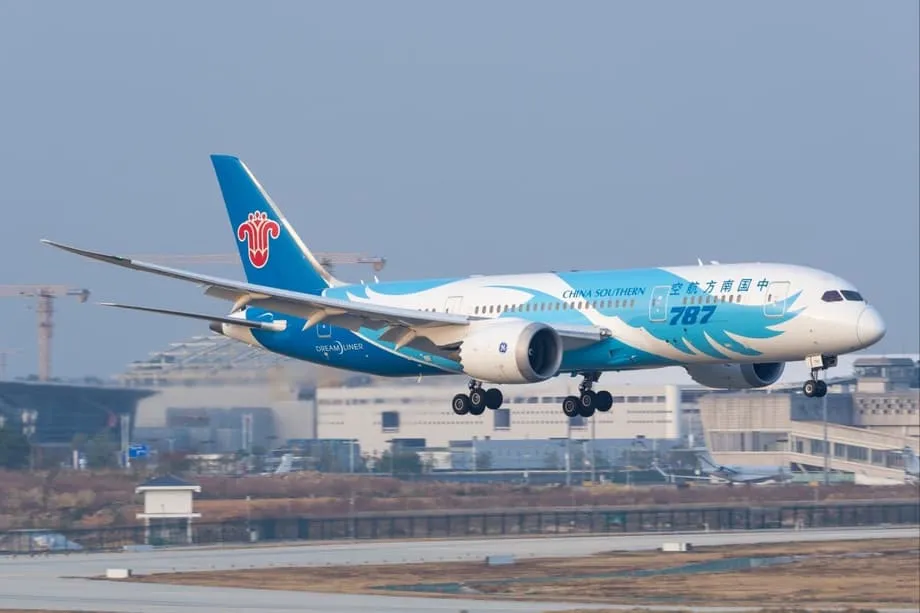
Figures compiled by British aviation intelligence firm OAG show that Chinese airlines will add nearly 2,900 flights to their summer schedules compared with last year. Air China accounts for 1,120 additional flights, China Southern Airlines for 839 and China Eastern Airlines for 654.
The three named increases total 2,613 flights. Hainan Airlines and smaller carriers are also adding capacity, extending the expansion beyond China's three largest state owned airlines.
Chinese carriers are gaining opportunities as Middle Eastern hubs suffer severe disruption. Those airports traditionally provide connections for passengers travelling between Europe and Asia. More than 710 flights in the Middle East were cancelled on a single day in early March as the regional conflict escalated.
Middle Eastern airlines are reportedly rebooking stranded travellers onto Chinese carriers. Access to the northern route allows those carriers to bypass the congested southern corridor entirely, giving passengers another way to complete their journeys.
Bloomberg Equity Research associate Eric Zhu says capacity on China to Europe routes has exceeded its level before the pandemic, while demand has recovered to only about 70%. Capacity means the amount of travel airlines can provide; demand means the amount passengers want to buy. More capacity alongside weaker demand creates pressure to lower prices.
That excess capacity has helped drive fares down by approximately 30%. Chinese airlines are better placed to absorb the resulting losses because their routes are more efficient, but the falling fares also explain why gaining market share does not automatically deliver strong profits.
Small Fuel Savings Across Thousands of Flights
China Eastern Airlines and other Chinese carriers are tightening operational controls as fuel costs rise. Their measures include stricter management of aircraft loads and weight, more precise planning of how much fuel to carry, and instructions for pilots to taxi using one engine instead of two.
Pilots are also being directed to fly at higher altitudes, where thinner air reduces aerodynamic drag, the resistance an aircraft encounters as it moves. Reducing that resistance helps limit fuel use.
Ground crews have removed items considered unnecessary, including magazines provided during flights. Each item represents only a small amount of weight, but the savings can accumulate across a large airline's schedule.
A pilot with budget operator Spring Airlines explained why even modest reductions matter:
Small per-flight savings, even insignificant amounts like 50 to 100kg (110 to 220lbs) of fuel, can add up if you multiply them by thousands of flights per week. This can mean tens of millions of yuan in savings.
Fuel is the largest variable expense in airline operations, meaning its cost changes with factors such as flying activity and market prices. With profit margins already thin, Chinese carriers are treating operational efficiency as a matter of survival.
Chinese airlines also have less protection against oil price spikes through fuel hedging than their European counterparts. Hedging uses financial arrangements to limit exposure to future price changes. Less hedging leaves an airline more exposed when the market price of fuel rises suddenly.
Washington Proposes Restrictions on US Routes
The US Department of Transportation has proposed banning Chinese airlines from flying through Russian airspace on services to and from the United States. The Trump administration argues that shorter flight times give those airlines an unfair advantage over American competitors required to avoid Russian territory.
Chinese carriers have strongly opposed the proposal. In filings with the department, China Eastern warned that the restriction could add two to three hours to flights on key routes. The airline said longer journeys would increase fuel consumption, raise fares and increase the risk of passengers missing connections.
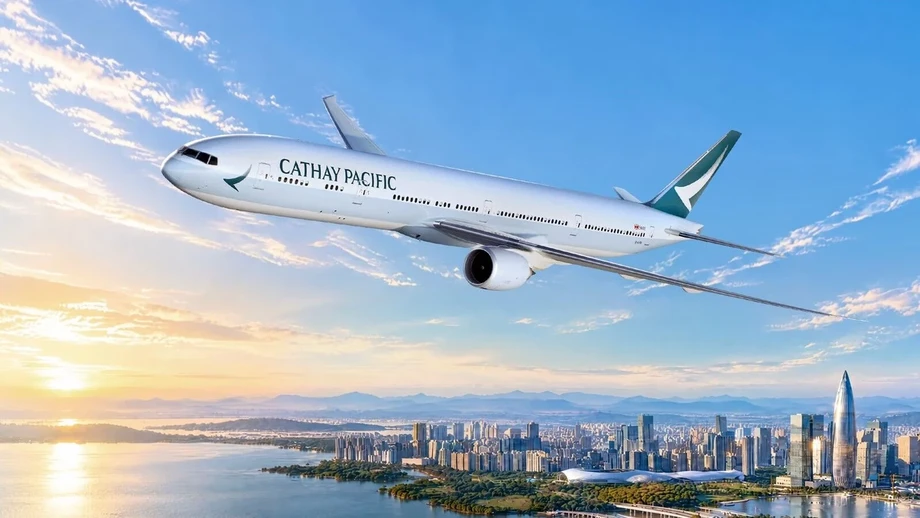
Air China and China Southern argued that the change would harm large numbers of travellers. United Airlines urged regulators to extend any ban to Cathay Pacific, the airline based in Hong Kong that also benefits from permission to cross Russian airspace.
The measure remains a proposal. Its scope matters because extending it to another carrier would bring more services within the restriction, while passengers could face both longer journeys and higher prices.
Enforcement and Emissions Add to the Debate
Legal experts question how practically the United States could enforce the proposed restriction. The Department of Transportation cannot stop a Chinese aircraft from entering Russian airspace, but it controls the landing rights and operating permits that airlines need to serve US destinations.
Those powers give Washington a way to attach conditions to access to its own market. Monitoring whether airlines comply would require tracking flight plans in real time, creating a substantial burden for regulators.
Environmental analysts have also raised concerns about the extra fuel required by longer routes. Research from the University of Reading suggests that Western airlines have increased fuel consumption by up to 15% on some long haul routes since 2022.
Requiring Chinese airlines to take similarly inefficient paths would add millions of tonnes to global aviation emissions and work against goals for reducing carbon output. The policy debate therefore extends beyond competition: changing where aircraft may fly also changes how much fuel they need.
Routing Advantages Have Not Secured Profits
China Southern was the only one of China's three largest state owned airlines to report a net profit for the full year of 2025. The result stood apart from the wider financial strain facing Air China and China Eastern.
All three returned to losses in the fourth quarter of 2025 as Middle East tensions pushed oil prices above US$120 per barrel. China Eastern recorded a deficit of 3.7 billion yuan, while Air China lost 3.64 billion yuan.
The annual and quarterly results describe different periods. China Southern could finish the full year with a profit while still losing money in its final three months. The fourth quarter reversal shows how quickly rising fuel expenses can consume the benefits of shorter routes and a larger share of traffic.
HSBC analysts project that the three carriers will not return to sustained profitability until 2027. That forecast points to a prolonged financial strain despite the market share and route efficiencies Chinese airlines gained after Russia's 2022 invasion.
European and American airlines typically hedge fuel costs more aggressively than Asian airlines. Greater exposure to current market prices leaves Asian carriers more vulnerable to sudden increases, even where their aircraft fly shorter distances.
Major Asian carriers began introducing substantial fuel surcharges in April, with some surcharges on long haul journeys rising by as much as US$71.50. A surcharge adds a fuel related charge to the cost of a ticket, passing part of the higher expense to passengers.
Passengers and Investors Face a Mixed Picture
Chinese airlines hold dominant positions on major long haul routes and have operational advantages that should support stronger returns. Their expansion also provides alternatives for passengers affected by European withdrawals and disruption at Middle Eastern hubs.
Investors nevertheless face a difficult combination: additional flights, fares pushed down by excess capacity, and fuel prices rising sharply. A larger share of the market can bring more passengers without generating enough revenue to cover the higher cost of carrying them.
Passengers face competing pressures too. Excess capacity on China to Europe routes has lowered fares by approximately 30%, while April fuel surcharges add new costs. Proposed US routing restrictions could also lengthen some journeys by two to three hours if adopted.
The central financial problem is that fuel volatility can erase savings earned through more direct flights. Chinese carriers retain an advantage over rivals forced into detours, but their recovery remains dependent on geopolitical stabilisation and relief from the costs now squeezing the industry.
What to Know
- Jet fuel averaged US$195 per barrel in the week ending March 27, up from US$99.4 a month earlier.
- The conflict involving the United States, Israel and Iran has entered its fifth week, with Tehran effectively blockading the Strait of Hormuz.
- Chinese airlines plan nearly 2,900 additional European flights this summer, led by Air China, China Southern and China Eastern.
- Chinese carriers operated more than 84% of 855 China to Europe flights in the cited late November period, compared with approximately 60% in 2019.
- The number of European airlines serving China has fallen from 14 in 2019 to seven, while detours add an estimated 10% to 15% to their costs.
- The United States has proposed restricting Russian airspace use on Chinese airline services to and from US destinations.
- China's three largest state owned airlines all lost money in the fourth quarter of 2025; HSBC projects sustained profitability will return in 2027.