A Contradiction in the Coral Triangle
Indonesia faces mounting scrutiny after awarding a major geothermal concession to a company with deep operational roots in Israel, creating a visible rupture between the nation’s vocal support for Palestinian self-determination and its pursuit of renewable energy investment. The Ministry of Energy and Mineral Resources issued Decree No. 8.K/EK.04/MEM.E/2026 on January 8, 2026, naming PT Ormat Geothermal Indonesia as the winner of the Telaga Ranu geothermal working area tender in West Halmahera, North Maluku. The announcement, made public four days later, grants the company rights to explore and develop what officials describe as a critical component of Indonesia’s transition away from fossil fuels.
The decision places Jakarta in an uncomfortable position. While Indonesian leaders consistently voice solidarity with Palestine at international forums and maintain a longstanding refusal to establish diplomatic relations with Israel, the contract with Ormat Technologies signals that commercial interests may override political principles when energy security enters the equation.
The Telaga Ranu Concession
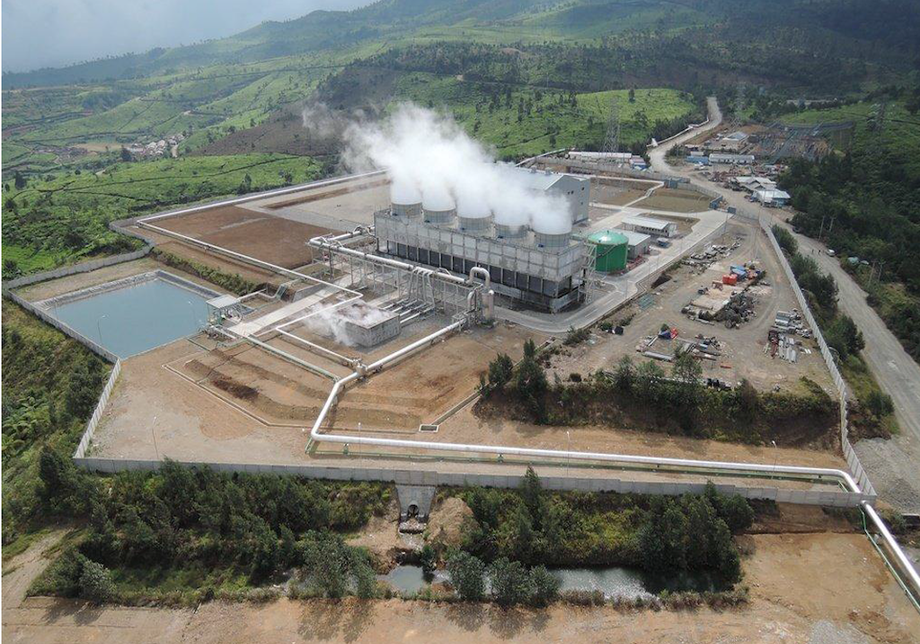
Located within Indonesia’s approved feed-in tariff zone, the Telaga Ranu project carries the potential to generate up to 40 megawatts of baseload geothermal energy. This capacity would support PT PLN’s Electricity Supply Plan while advancing the national Net Zero Emission 2060 target. The concession allows Ormat to move from exploration into full development under current geothermal regulations, with the government targeting operational status by the end of 2030 to replace diesel-based power generation in the region.
The tender process involved four qualified bidders, according to corporate filings. State officials describe the selection as pragmatic, noting that Telaga Ranu holds strong geothermal potential but lacks existing infrastructure. The criteria prioritized investors capable of acting quickly and absorbing technical risks associated with frontier development. From a narrow planning perspective, the choice appears consistent with Indonesia’s urgent need to expand renewable capacity in eastern regions where electrification remains uneven.
Corporate Ties to Israel
The central question surrounding the award involves the structural identity of the winning firm. PT Ormat Geothermal Indonesia operates as a subsidiary of Ormat Technologies Inc., a global renewable energy corporation founded by Israeli engineers and listed on both the New York and Tel Aviv stock exchanges. The parent company maintains major manufacturing facilities in Israel, and its technology development remains closely integrated with that nation’s energy sector.
This connection extends beyond symbolic affiliation. Capital moves through Israeli markets, with shares trading actively on the Tel Aviv exchange. Engineering expertise developed within Israel’s industrial ecosystem supports the company’s geothermal systems worldwide. When governments sign contracts with firms shaped by this economic architecture, they enter relationships that cross political boundaries in concrete, measurable ways.
Ormat has operated in Indonesia for years, holding stakes in facilities such as the Ijen geothermal plant in East Java and supplying equipment for fields including Salak. The Telaga Ranu concession deepens this presence significantly. Critics view the company as part of Israel’s broader public diplomacy architecture, often referred to as Hasbara, which strategically uses sectors such as energy to expand international acceptance and normalize partnerships with states that officially oppose Israeli policies.
Environmental Risks in a Fragile Ecosystem
Beyond geopolitics, the concession raises acute environmental concerns. Halmahera Island lies within the Wallacea ecological zone, recognized as one of the most biologically distinctive regions on Earth. The island already faces mounting industrial pressure from large nickel complexes backed primarily by Chinese investment, which have transformed sections into processing hubs for electric vehicle battery supply chains. Additional development by Japanese and Korean investors has financed smelters, captive power plants, and logistics networks, accelerating forest loss and stressing coastal waters.
Geothermal drilling carries specific risks in such contexts. Exploration can disrupt groundwater systems that support agriculture and fisheries. Road construction opens intact forest to further extraction, while transmission corridors fragment habitat. Once these pressures converge, ecological reversal becomes unlikely. Renewable energy reduces carbon emissions, but it does not eliminate environmental costs when oversight falters.
Previous Ormat-linked projects in Indonesia have already generated contamination incidents. At the Blawan Ijen Geothermal Power Plant, waste from a production well reportedly entered drainage channels and contaminated the Gending Waluh spring, the primary water source for residents in Watu Capil, Kebon Jeruk, and Margahayu. Locals described foul-tasting drinking water and bathwater that left sticky residue on skin, forcing many households to haul water from neighboring villages or purchase packaged supplies despite the financial burden.
Contamination later spread to the Sumber Macan spring in Curah Macan, where residents reported stomach illness after consuming the water. Community complaints, according to local accounts, drew limited response from operators. On Buru Island near Wapsalit, exploration activity reportedly pushed Indigenous residents deeper into forest areas out of fear and uncertainty, with villagers stating they received minimal explanation about project risks.
Questions of Process and Participation
Observers have questioned the speed of the Telaga Ranu tender and the limited room for public consultation. Frontier regions rarely possess regulatory capacity equal to the scale of incoming investment, creating asymmetries between corporate technical capacity and local oversight ability. Transparency under these conditions functions as protection rather than mere procedure.
Across Indonesia, geothermal projects have triggered disputes over land rights, compensation, and uneven distribution of economic benefit. Communities often absorb environmental risk first while waiting years for promised growth. The Telaga Ranu concession connects directly to local ecosystems, water sources, and community land, making robust oversight essential to prevent the disruptions seen at other sites.
Some civil society groups have urged the president to review the ministerial policy and suspend exploration activities until comprehensive environmental and social impact assessments receive proper public scrutiny. These calls highlight tensions between the urgency of energy transition and the necessity of community consent.
The Policy Paradox
Indonesia cannot claim moral leadership on Palestine while expanding business with Israel-linked corporations without creating a visible policy gap. Foreign policy loses force when economic policy points in opposite directions. For decades, Indonesia has positioned itself as a consistent defender of Palestinian rights, refusing diplomatic relations with Israel and supporting self-determination at international forums. That stance forms part of its international identity.
Supporters of the deal may argue that energy development should stand apart from geopolitics. This view overlooks how states consistently use trade to express political values. Countries have restricted imports, recalibrated defense ties, and applied economic pressure to signal diplomatic positions. Energy contracts warrant equivalent scrutiny, particularly when they involve companies structurally embedded in the economy of a nation with which Indonesia refuses formal relations.
When foreign policy messaging and economic behavior diverge, credibility declines. Moral positioning becomes harder to defend, and pro-Palestinian rhetoric risks sounding less like principle and more like branding. The concession indicates that investment still ranks above stated solidarity, sending a signal that political principle can yield to commercial opportunity.
Development Pressure in Eastern Indonesia
The Telaga Ranu project arrives amid intensifying global demand for Halmahera’s resources. The island sits at the center of Indonesia’s nickel processing boom, with industrial zones expanding rapidly to meet electric vehicle battery supply chain requirements. Forests face fragmentation, water systems confront contamination risks, and local residents bear the consequences of abrupt economic transformation.
The geothermal concession adds another long-term industrial footprint onto an ecosystem already absorbing cumulative impact. While the project supports the replacement of diesel generation with renewable baseload power, the manner of its approval and the identity of its operator introduce complications that extend beyond technical energy planning.
Integrity and environmental protection function as strategic assets. Eroding them through inconsistent policy application extends damage beyond any single project. Indonesia faces a clear choice: treat the Palestinian cause as diplomatic language while pursuing any available investor, or align economic decisions with the values promoted abroad.
Key Points
- Indonesia awarded the Telaga Ranu geothermal concession to PT Ormat Geothermal Indonesia, a subsidiary of Ormat Technologies Inc., which maintains deep operational and financial ties to Israel
- The project in West Halmahera, North Maluku, has potential capacity of 40 megawatts and targets operational status by 2030 to replace diesel generation
- Ormat Technologies is listed on both the New York and Tel Aviv stock exchanges and was founded by Israeli engineers, creating structural economic connections that critics argue contradict Indonesia’s pro-Palestine foreign policy
- Environmental groups warn that the project threatens the Wallacea ecological zone, with previous Ormat-linked projects in Indonesia having caused water contamination and community displacement
- Local activists question the tender’s rapid approval and limited public consultation, citing risks to Indigenous land rights and water systems
- The deal highlights tensions between Indonesia’s diplomatic solidarity with Palestine and its economic partnerships with Israel-linked corporations