A Historic Commitment
Indonesia is preparing to send up to 8,000 soldiers to Gaza, becoming the first nation to commit military forces to the devastated territory as part of an ambitious international stabilization effort under United States President Donald Trump. Army Chief of Staff General Maruli Simanjuntak confirmed that specialized training has already begun for the contingent, which would mark the first deployment of foreign troops to Gaza since 1967 and place the world’s most populous Muslim majority nation at the epicenter of efforts to secure the war ravaged enclave. The announcement has captured international attention as Muslim nations weigh their roles in the proposed stabilization framework.
The planned deployment represents a dramatic escalation in international involvement in Gaza’s post conflict future. According to presidential spokesman Prasetyo Hadi, the total multinational force could comprise approximately 20,000 troops from various contributing nations, with Indonesia potentially providing the largest single contingent. The soldiers would focus primarily on humanitarian and reconstruction roles, including medical support and engineering operations, rather than direct combat missions against Palestinian militant groups.
This commitment comes as the fragile ceasefire between Israel and Hamas enters its next phase, with mediators struggling to establish a viable framework for long term stability. The Indonesian forces would operate under the mandate of the International Stabilization Force, authorized by the United Nations Security Council to secure border areas, support Palestinian police forces, and oversee the territory’s demilitarization. However, the exact timing, specific locations, and operational parameters remain subject to intense negotiations between Jakarta, Washington, and regional stakeholders, with Indonesian officials emphasizing that nothing has been finalized.
The Board of Peace Framework
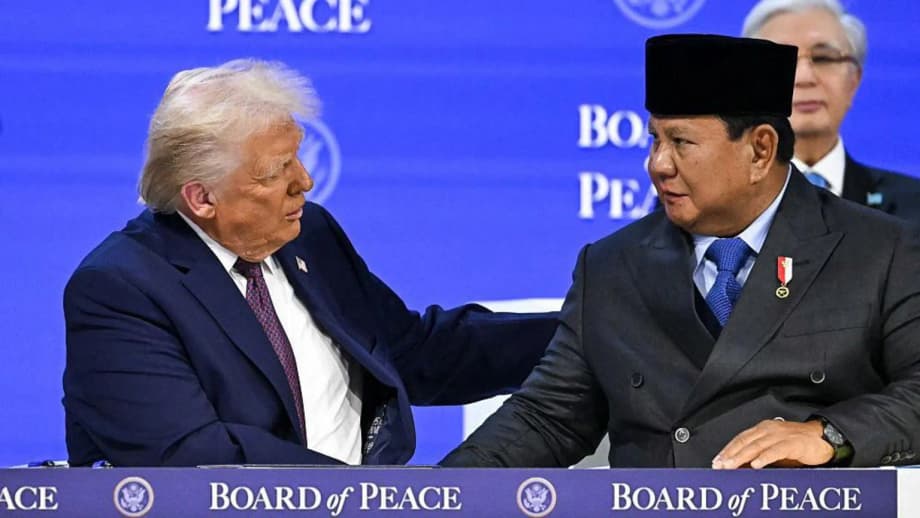
The Indonesian deployment is directly linked to President Prabowo Subianto’s decision to join Trump’s controversial Board of Peace, a new diplomatic mechanism designed to oversee conflict resolution in Gaza and potentially other global hotspots. The board, which holds its inaugural meeting in Washington on February 19, represents a parallel structure to traditional United Nations peacekeeping frameworks, with participating nations contributing troops and funding to support stabilization efforts under direct US leadership.
The Board of Peace operates alongside the International Stabilization Force, which carries a specific mandate from the UN Security Council to establish security in Gaza’s border regions and ensure the demilitarization of the territory, including the disarmament of Hamas. According to planning documents discussed at the World Economic Forum in Davos last month, the force would work with newly trained Palestinian police to secure humanitarian corridors and prevent the rebuilding of militant infrastructure.
However, the relationship between the board and traditional UN structures has raised questions about diplomatic precedence and accountability. Indonesia’s membership comes with a reported $1 billion price tag for permanent status, though spokesman Prasetyo Hadi indicated that Jakarta intends to negotiate this contribution before finalizing its participation. President Prabowo has received a formal invitation to the February meeting but has not yet confirmed his attendance, leaving open the possibility that final deployment decisions may await his participation.
Domestic Pressures and Diplomatic Ambitions
For President Prabowo, a former army general who assumed office in October 2024, the Gaza deployment represents a high stakes effort to raise Indonesia’s global standing while navigating complex domestic political currents. As the leader of the world’s largest Muslim majority nation, Prabowo has argued that Indonesia bears a unique responsibility to help stabilize Gaza and alleviate Palestinian suffering, framing the mission as supportive of an eventual two state solution to the Israeli Palestinian conflict.
Yet the decision has sparked significant controversy within Indonesia, where public anger over American support for Israel’s military operations remains intense. Islamic groups have criticized Prabowo’s alignment with Trump’s initiative, questioning whether participation in a US led framework serves Palestinian interests or merely legitimizes ongoing Israeli occupation. The Jakarta Globe editorialized that Indonesia’s participation represents a diplomatic gamble that is only worthwhile if it produces real influence rather than mere symbolism, warning that the country risks becoming entangled in a conflict it cannot control.
Indonesia maintains no diplomatic relations with Israel, a position rooted in decades of solidarity with the Palestinian cause. However, Prabowo has hinted at potential future normalization, stating last year that Jakarta would consider establishing ties if Israel recognizes Palestinian statehood. This nuanced positioning reflects an attempt to balance Indonesia’s traditional pro Palestinian stance with pragmatic engagement in international peace efforts, though critics argue that joining Trump’s board may compromise that balance.
The Disarmament Challenge
Central to the International Stabilization Force’s mandate is the thorny question of Hamas disarmament, a requirement that threatens to derail the entire peace process before it begins. While the UN Security Council resolution authorizing the force explicitly tasks international troops with the permanent decommissioning of weapons from non state armed groups, Hamas has publicly refused to lay down its arms while Israeli occupation forces remain in Gaza and before a Palestinian state is established.
Everyone says, “Oh, well, they won’t disarm.” They will disarm. I spoke to Hamas, and I said, “You’re going to disarm, right?” “Yes, sir, we’re going to disarm.” That’s what they told me. They will disarm or we will disarm them. Got it?
President Trump’s confident assertion, made during a White House event, contrasts sharply with statements from Hamas leaders and regional analysts who view the disarmament timeline as unrealistic without concrete steps toward Palestinian sovereignty. This disconnect creates a fundamental challenge for Indonesian troops and other international forces, who according to US officials will not engage in direct combat with Hamas but are authorized to use force for demilitarization purposes if necessary.
The current security situation on the ground further complicates deployment plans. Despite the October ceasefire agreement, near daily Israeli bombardments have killed more than 500 Palestinians since the truce began, according to monitoring groups. Israeli forces maintain control over approximately 53 percent of Gaza’s territory, while Hamas retains authority in the remaining areas. The stabilization force is currently expected to deploy initially in Israeli controlled zones, creating potential flashpoints with local populations who may view foreign troops as abetting occupation rather than facilitating peace.
Assembling the Coalition
While Indonesia has taken the lead in publicly committing troops, several other nations are negotiating participation in the stabilization force. Pakistan and Turkey have expressed interest but stipulated that their soldiers would serve strictly as peacekeepers and would not participate in disarming Hamas. Azerbaijan has also emerged as a potential contributor, according to US defense officials, though no country besides Indonesia has made firm commitments to date.
Morocco is reportedly positioned to become the second nation to formally commit forces, according to sources familiar with the negotiations. Bangladesh, Egypt, and Qatar have additionally signaled interest in participating. However, key American allies including Saudi Arabia and Jordan have declined to contribute troops under any circumstances, highlighting the limited regional buy in for Trump’s approach and the difficulty of assembling a broad based Muslim coalition for the mission.
The United States has deployed 200 troops to Israel to coordinate stabilization efforts from a coordination center north of Gaza, with personnel from US Central Command working alongside Egyptian, Qatari, and Emirati representatives. Indonesian and Azerbaijani forces fall outside CENTCOM’s traditional area of responsibility, requiring complex logistical arrangements for command and control that could delay deployment timelines.
Thailand has separately offered to contribute up to 20,000 troops for health and construction tasks, potentially supplementing the Indonesian contingent’s humanitarian focus. The diversity of proposed contributions reflects the experimental nature of the stabilization force, which lacks precedent in Middle East peacekeeping history and has no established doctrine for operating in an active conflict zone where the primary militant group refuses to disarm.
Operational Uncertainties Remain
Despite the flurry of diplomatic activity, significant uncertainties cloud the deployment timeline. General Maruli Simanjuntak emphasized that troop numbers remain fluid, stating that “it’s all still being negotiated, not certain. So there’s no certainty on the number until now.” The Indonesian Defense Ministry has explicitly denied Israeli media reports claiming that a specific site between Rafah and Khan Younis had been designated for Indonesian barracks, insisting that operational details remain unfinalized and would be announced only after an official decision is made.
Deputy Defense Minister Donny Hermawan indicated that final political approval from President Prabowo is expected by the end of February, following the Washington Board of Peace meeting. However, Indonesian officials have provided varying estimates of deployment size, with some suggesting as few as 600 personnel while others maintain the full 8,000 troop brigade remains possible depending on the final mandate.
The House of Representatives Commission I, which oversees foreign affairs and defense, has reportedly recommended against sending a very large contingent given Gaza’s compact geography. The entire territory spans less than 45 square kilometers, roughly the size of Indonesia’s Central Jakarta district, raising practical questions about accommodating thousands of foreign troops alongside a displaced civilian population of two million people. With Hamas refusing to disarm while Israel continues its occupation, and with ceasefire violations occurring almost daily, the Indonesian troops may find themselves deployed to keep a peace that does not yet exist.
Key Points
- Indonesia is preparing up to 8,000 troops for deployment to Gaza as part of a 20,000 strong multinational International Stabilization Force under Trump’s peace plan
- The deployment would mark the first foreign military presence in Gaza since 1967 and represents the first concrete commitment to the UN authorized stabilization force
- Training has begun for Indonesian engineering and medical units, though final deployment timing and locations remain under negotiation and subject to political approval
- President Prabowo Subianto has joined Trump’s Board of Peace, which convenes its first meeting in Washington on February 19, 2026
- Key obstacles remain unresolved, including Hamas’s refusal to disarm while Israeli occupation continues and the lack of finalized operational mandates for the international troops
- Other nations including Pakistan, Turkey, Azerbaijan, and Morocco are considering participation, while Saudi Arabia and Jordan have declined involvement