A Bigger Commitment to China Under Trade Pressure
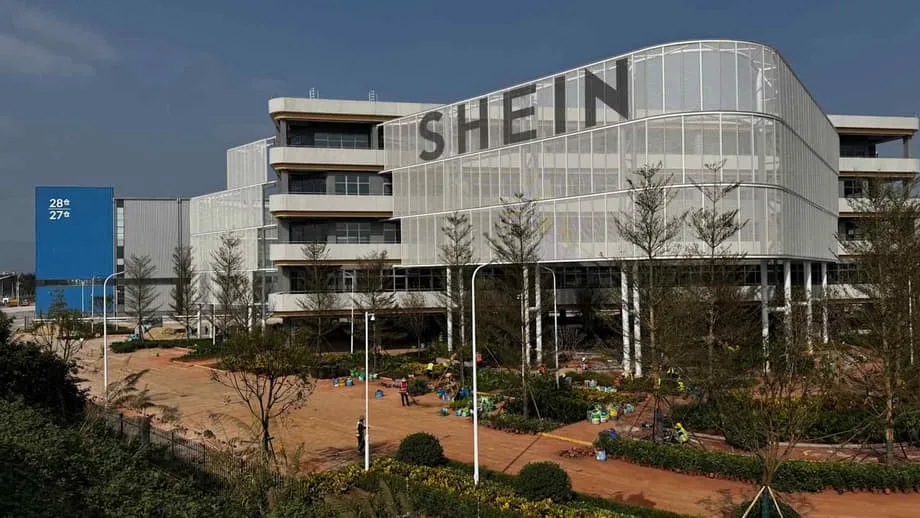
Shein is investing 3.5 billion yuan ($504 million) in a major logistics hub in Guangdong province, deepening its dependence on Chinese manufacturing as tariffs and restrictions on small parcels put its low prices under pressure. The investment brings together two problems facing the online fashion retailer: keeping exports affordable and maintaining the production network that Chinese authorities want to preserve.
Contents
- A Bigger Commitment to China Under Trade Pressure
- How Small Parcels Became a Tariff Target
- Why Suppliers Cannot Easily Absorb the Cost
- Beijing Wants the Factories to Stay
- Shorter Shifts in Shein Village
- Brazil Shows How Difficult Moving Production Can Be
- Australia Offers Relief, With Limits
- The Shipping Choice Could Change Shein's Model
- Retailers and Factory Owners Face the Same Price Question
- Key Points
The Guangzhou manufacturing region gives Shein access to a dense network of garment workshops, fabric suppliers and transport services. Its new facility will consolidate warehousing and distribution in Guangdong, a region described as producing roughly half of the world's textiles and garments. Building there means using an established industrial network instead of trying to recreate it overseas.
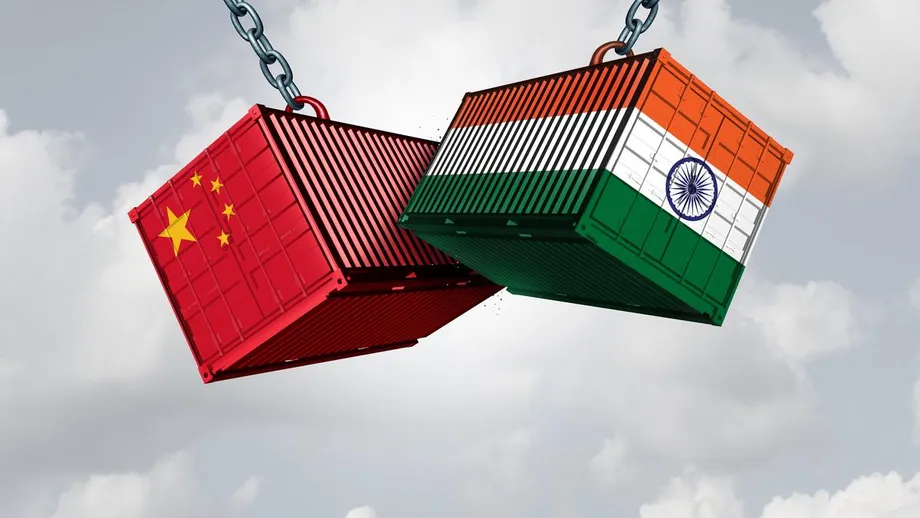
The United States and European Union have been taking aggressive measures against the flow of cheap Chinese imports that helped reshape global retail over the past decade. Under the Trump administration's tariff measures, duties exceeded 100% on many Chinese goods entering the United States, while the exemption that allowed qualifying packages worth less than $800 to enter without duties ended.
Shein and its rival Temu have raised prices by as much as 91% on some items, according to market observations. In Guangdong, workers describe shorter shifts and growing concern about their earnings. Beijing, meanwhile, has urged Shein to stop plans to move manufacturing abroad, adding political pressure to an already difficult commercial calculation.
The company has not disclosed specific operating targets for the hub. Its scale suggests an effort to reduce costs through automation and centralized processing, while the location signals continued commitment to the Chinese factories behind its business.
How Small Parcels Became a Tariff Target
Shein built its business around shipping millions of individual packages directly to American customers. The US provision known as de minimis allowed qualifying shipments valued below $800 to enter without import duties. A duty is a tax charged when goods cross a border; removing that tax helped make very cheap individual orders economical.
The arrangement supported prices such as $4 for a T-shirt and $10 for a dress, with delivery times that rivaled those of domestic retailers. Shein generated more than $48 billion in annual revenue and became the world's largest online fashion retailer and a dominant force in discount fashion.
May 2, 2025, marked the end of that exemption for the Chinese parcels at issue. The tariff measures described at that point imposed a 120% tariff on small parcels, with a $100 fee per item scheduled to rise to $200 on June 1. Those charges formed part of a rapidly changing trade environment that made the economics of inexpensive orders much harder to sustain.
Bloomberg's Second Measure data indicated that Shein's US sales fell between 16% and 41% during a stretch of five days in February as policy changes took effect. That February decline preceded the May 2 end of the exemption, placing the sales pressure earlier in the sequence of trade changes.
Temu's owner, PDD Holdings, also faced a sharp financial setback. Its shares fell nearly 14% after it reported a 50% decline in net profit. Executives warned that profitability would remain depressed for a considerable period.
The key dates and commitments show how manufacturing plans and trade restrictions developed:
- In 2023, Shein pledged $150 million to build production partnerships with 2,000 Brazilian factories.
- By late 2023, it had announced 336 initial factory partnerships in Brazil.
- On May 2, 2025, the United States ended the small parcel exemption described here and began imposing the new charges.
- June 1 was the scheduled date for the fee per item to rise from $100 to $200.
- Shein's Brazilian initiative promised 100,000 jobs by 2026, but most of the initial partnerships have dissolved.
Why Suppliers Cannot Easily Absorb the Cost
Garment suppliers often work with profit margins of just 10% to 15%. That means a factory selling an order for $100 may retain only $10 to $15 after its costs. A new import charge can quickly consume that margin, leaving the supplier, retailer or customer to bear the remaining expense.
Jerson Wong, head of an apparel company in Shantou, China's largest lingerie manufacturing hub, described why the small parcel changes were particularly damaging to the supply chain.
"This time, even cross-border small parcels are taxed. The supply chain simply can't absorb this cost increase," said Jerson Wong.
Wong's company relied on the United States for 40% of its sales. It has stopped investing in the American market entirely, showing how tariff pressure can change a supplier's spending decisions as well as the price of a finished garment.
Shein's logistics investment addresses the cost of storing, sorting and moving goods. Faster processing and lower costs per item could help absorb part of the pressure, but import duties remain a separate expense charged at the border. The commercial challenge is to find enough savings while preserving prices customers will accept.
Beijing Wants the Factories to Stay
Chinese authorities have urged Shein to halt plans to shift manufacturing out of China, according to people familiar with the matter. Beijing wants to prevent the loss of jobs and industrial capacity as President Donald Trump's trade measures put exporters under strain.
Southeast Asia and Latin America offer possible locations for production outside China. Shein's interest in diversification, however, runs into the government's wish to keep manufacturing at home. Export production is both an economic priority and a matter of national strategic interest for Chinese authorities.
The Guangdong hub therefore has two purposes. It can improve operations while demonstrating alignment with Beijing's priorities. Maintaining that relationship may matter for regulatory favor in a market where authorities have shown a willingness to constrain companies that appear to be leaving Chinese manufacturing behind.
Shein's choices also depend on the strength of its existing supplier network. Guangdong combines specialized workers, integrated suppliers and polyester fabric production with mature transport infrastructure. Moving the sewing stage overseas would still require reliable access to materials, delivery services and factories able to respond quickly to new orders.
Shorter Shifts in Shein Village
Panyu district in Guangzhou is known locally as "Shein Village." Thousands of small garment workshops occupy narrow streets, with motorcycles carrying rolls of fabric between factory buildings of four stories. This closely packed production network helps factories move materials quickly and respond to changing orders.
Workers typically earn between 4,000 and 10,000 yuan a month ($548 to $1,370), with pay tied directly to how much they produce. When orders are plentiful, work can continue until midnight. When demand weakens, shifts may finish at dinner time, reducing the opportunity to earn.
Wu, a worker at a jeans manufacturer in Panyu, described a sharp reduction in his working hours, with evening departures replacing midnight finishes. Another worker, who declined to give his name, said his employer had visited Vietnam several times to explore moving production.
Vietnam presented its own problems. The relocation calculation included the prospect of tariffs of 46% on Vietnamese imports, as well as logistics infrastructure that was less developed than Guangdong's. A factory moving abroad would face both a different tariff calculation and the practical work of rebuilding its supply arrangements.
Lily Liao, owner of Guangzhou Dawang Garment, operates a textile factory covering 140,000 square feet. Her orders from US businesses fell from $100,000 a month to zero after Trump took office. She described the personal cost of the trade conflict.
"The tariff war is ultimately going to hurt everyone; people like me, who just want to make a living," says Lily Liao.
Factory owners have also described suspended shipments, returned containers and clients asking for indefinite delays while they wait for policy developments. For workers paid according to output, those decisions can turn into lower earnings before a factory closes or formally cuts jobs.
Brazil Shows How Difficult Moving Production Can Be
Shein's Brazilian initiative provides a concrete example of the difficulty of reproducing its Chinese model. In 2023, the company pledged $150 million for partnerships with 2,000 factories, promising 100,000 jobs by 2026. Brazil was intended to become a manufacturing base for Latin America.
Local production also offered a way around Brazil's "little blouse tax," a duty of 20% on online purchases worth less than $50. Producing garments inside the country would change how Shein supplied Brazilian consumers, reducing its dependence on imported individual orders.
The project faltered within months. Brazilian factories struggled to meet demands for price reductions of 30% and faster delivery while complying with local labor rules and tax arrangements. Of the 336 initial partnerships announced by late 2023, most have dissolved. Only a handful of suppliers remain, including GB Manufacturing in Espirito Santo state.
Fernando Pimentel, managing director of the Brazilian Association of Textile and Apparel Industry, explained why factories could not simply adopt the same operating conditions as their Chinese counterparts.
"Working in Brazil is different from working in China. Brazil has very different regulatory frameworks and standards," said Fernando Pimentel.
Shein acknowledged the difficulties in a written statement, pointing to the time needed to develop local production and differences in industrial conditions.
production in Brazil required time to mature, and soon differences in business and industrial infrastructure became apparent.
The company also acknowledged the pace and difficulty of the work.
progress has been slower and more challenging
Brazil's experience helps explain the attraction of another large investment in Guangdong. China's connected network of suppliers and specialized workers keeps costs low and allows quick production changes. Establishing partnerships elsewhere requires factories to meet Shein's prices and schedules within different legal, tax and industrial systems.
Australia Offers Relief, With Limits
Chinese sellers have been redirecting inexpensive goods toward other markets as access to American customers becomes more costly. Australia has emerged as a major destination: Chinese exports there rose 9% in April, while shipments to the United States fell 18%.
The Reserve Bank of Australia cited the redirection of exports affected by tariffs as a factor allowing interest rate cuts. It estimated that cheaper Chinese goods would help reduce inflation by 20 to 50 basis points over the following two years. A basis point is one hundredth of a percentage point, so that range equals 0.2 to 0.5 percentage points.
Shein has strengthened its Australian presence with a Sydney pop-up store earlier this month and the launch of Aralina, its first brand focused on Australia. Alibaba's Taobao and JD.com have also moved aggressively into the market, using English interfaces and free shipping thresholds to attract consumers looking for bargains.
Australia gives exporters another outlet and shoppers access to cheaper goods. Its market, however, lacks the scale to absorb China's full manufacturing capacity. The United States accounted for roughly 30% of global apparel and footwear consumption, making a complete withdrawal from that market difficult for suppliers and retailers.
Hu Jie, a professor at the Shanghai Advanced Institute of Finance, described the tension between retaining American customers and paying higher duties.
Giving up the US market isn't realistic," said Hu Jie. "But absorbing further tariffs will be extremely hard.
The Shipping Choice Could Change Shein's Model
Shein's production method depends on starting with small quantities of many styles, then quickly increasing output for garments that sell well. Often described as "small-batch, fast-return," the model uses immediate demand data to decide which products deserve larger orders. This reduces the risk of producing large amounts of clothing customers do not want.
The system traditionally launches minimal initial quantities of hundreds of styles daily and relies on air freight carrying individual parcels. Quick delivery links customer demand to factory decisions, helping Shein preserve both speed and inventory flexibility.
Switching to bulk ocean shipping and American warehouses would change that calculation. The cash flow cycle could lengthen from 30 to 100 days, more than tripling the time between spending money and recovering it through sales. Larger shipments would also require decisions about stock further in advance, reducing the flexibility that protects against fashion risk.
The Guangdong hub is an attempt to maintain rapid turnaround while lowering costs per item through consolidated warehousing, sorting and distribution. Industry assessments describe the new tariff regime as a threat to the economics of Shein's existing model, rather than simply another expense that can be added without changing operations.
Retailers and Factory Owners Face the Same Price Question
Walmart announced price increases effective by late May, citing tariffs it described as "too high" to absorb. Best Buy, Ford and Mattel issued comparable warnings. Across different products, the same choice confronts businesses: reduce their own earnings, ask suppliers for savings or charge customers more.
Shein faces that choice alongside pressure to preserve manufacturing jobs in China. Its Guangdong investment anchors it more firmly to the industrial cluster behind its growth, even as overseas markets become harder to serve at its traditional prices.
Liao, the Guangzhou Dawang Garment owner whose American orders disappeared, offered a longer view of the disruption. She traced a wave pattern on paper to explain her belief that business conditions rise and fall.
There is no end, only ups and downs," she explains. "Now Trump's policies are affecting the world, and we're at a low point. But he's over 70 years old, and there are elections every four years. This situation won't last forever.
For Shein, the $504 million commitment combines operational necessity with a political signal. Greater efficiency in Guangdong may reduce some costs, while sales in Australia and other markets provide additional outlets. The investment keeps the company close to the manufacturing network that built its business as nationalist trade policies push global supply chains in different directions.
Key Points
- Shein is investing 3.5 billion yuan ($504 million) in a Guangdong logistics hub to consolidate warehousing and distribution.
- The end of the US exemption for qualifying Chinese small parcels on May 2, 2025, and higher tariffs put pressure on its low prices.
- Shein and Temu raised prices by as much as 91% on some items, while suppliers with margins of 10% to 15% struggled to absorb new costs.
- Chinese authorities urged Shein to halt manufacturing moves abroad as Guangdong workers faced shorter hours and weaker orders.
- Most of Shein's 336 initial Brazilian factory partnerships dissolved after disagreements over prices, speed and local operating requirements.
- Chinese exports to Australia rose 9% in April as shipments to the United States fell 18%, giving sellers another market.
- Moving from individual air parcels to bulk ocean shipping and American warehouses could extend the cash flow cycle from 30 to 100 days.