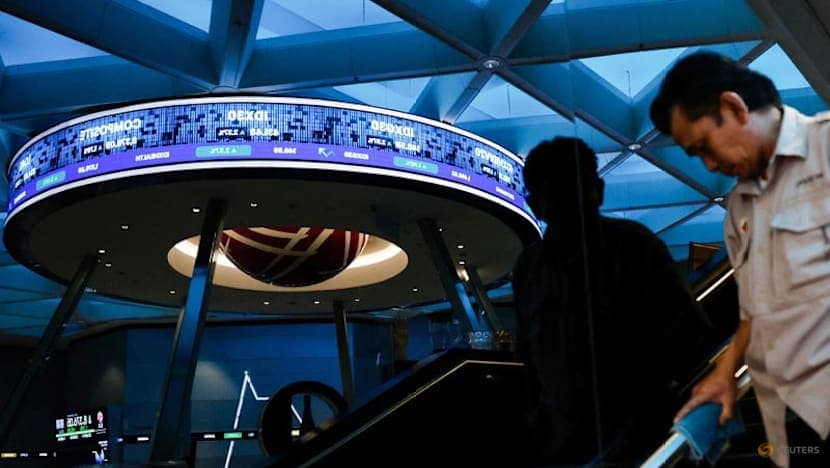
Markets Slide as Moody’s Delivers Stern Warning
Indonesian markets opened sharply lower on Friday as traders reacted to a stern warning from Moody’s Investors Service, with the Jakarta Composite Index plunging more than 2 percent and the rupiah touching 16,880 per dollar, its weakest level since January 22. The sell-off accelerated following Thursday’s announcement that Moody’s had revised the country’s credit rating outlook from stable to negative, maintaining the Baa2 rating but cautioning that policy unpredictability and governance concerns could erode Indonesia’s long established credibility.
- Markets Slide as Moody’s Delivers Stern Warning
- What Prompted the Negative Outlook?
- Officials Dismiss Concerns as Misunderstanding
- Prabowo’s Ambitious Agenda Collides with Market Reality
- A Cascade of Crises Erodes Investor Confidence
- Regional Risks and the Investment Grade Threshold
- Analysts Warn of Potential Downgrade Cascade
- The Essentials
The timing could hardly have been worse for Southeast Asia’s largest economy. The downgrade arrived just days after MSCI Inc., the global index provider, flagged serious transparency issues in Indonesian securities, triggering a two-day market rout that wiped out more than $80 billion in value. Foreign investors, already jittery about the direction of policy under President Prabowo Subianto, responded by dumping shares. Exchange data showed foreigners sold a net $860 million worth of equities since last Wednesday, bringing total outflows for 2025 to approximately $1 billion.
The negative market reaction reflected growing anxiety about the $1.4 trillion economy’s trajectory. The benchmark Jakarta Composite Index, which had closed 0.5 percent lower on Thursday, was on track to extend last week’s steep 6.9 percent decline. Longer dated dollar denominated government bonds slipped between 0.3 and 0.5 cents following the Moody’s announcement, with many trading at their weakest levels in five months according to Tradeweb data. The rupiah remained pinned near its record low of 16,985 per dollar touched late last month, down nearly 1 percent for the year.
What Prompted the Negative Outlook?
Moody’s decision to shift the outlook to negative while affirming the Baa2 rating reflects specific concerns about the direction of policy under the new administration. In its official statement, the agency identified reduced predictability in policymaking as the primary driver, noting that weak coordination among policies and inconsistent communication to markets has increased stock market volatility and exchange rate pressure while damaging perceptions of policy credibility.
The agency pointed to six major factors behind the revision. First, Moody’s assesses that government policy direction has become increasingly unpredictable. Second, governance and institutional factors have weakened, as reflected in declining scores on the Worldwide Governance Indicators, particularly regarding government effectiveness and regulatory quality. Third, fiscal risks are mounting from public spending policies, specifically highlighting the imbalance between ambitious social programs and limited revenue capacity.
Among these programs, the Free Nutritious Meals initiative and affordable housing projects stand out. These are being funded through budget reallocations and cuts to other items, including infrastructure maintenance. Moody’s warned that further expansion could strain the government’s ability to manage a relatively small budget compared to the size of the economy. Fourth, the agency expressed uncertainty about the governance of the sovereign wealth fund Danantara, which oversees state owned enterprise assets valued at more than $900 billion, equivalent to roughly 60 percent of Indonesia’s gross domestic product.
Fifth, controversial policy discussions have added to uncertainty, including debates about raising the fiscal deficit limit beyond the current 3 percent ceiling, questions about the mandate and governance of Bank Indonesia, and shifts in natural resources policy. Sixth, Moody’s noted increasing risks to social and political stability, with public protests on the rise alongside dissatisfaction regarding income growth and living standards.
Officials Dismiss Concerns as Misunderstanding
Indonesian authorities moved quickly to downplay the significance of Moody’s decision, framing it as a temporary misunderstanding rather than a fundamental criticism of their economic strategy. Coordinating Minister for Economic Affairs Airlangga Hartarto led the defense, asserting that ratings agencies and global financial markets were simply failing to grasp the country’s new growth model.
“It is true that our budget is a little different because we are spending big for the president’s programmes such as free meals, red and white cooperatives, and public services.”
Speaking at an event hosted by the Financial Services Authority on Thursday evening, Airlangga explained that previous investments were supported directly by state owned enterprises or the state budget, but are now being channeled through Danantara. He argued that this represents an unlocking and reforming of state enterprises that international observers had long requested.
Finance Minister Purbaya Yudhi Sadewa, who took office in September after the respected Sri Mulyani Indrawati was dismissed, struck a similarly dismissive tone on Friday. He described the outlook change as merely a projection with no immediate consequence for the country’s investment grade status. He acknowledged that Moody’s had raised concerns about the potential widening of the fiscal deficit during consultations with government institutions, but expressed confidence in his ability to manage the situation.
“They are worried the deficit could increase. But they also know that I can manage it properly. We must make sure there is no uncontrolled extravagance.”
Bank Indonesia Governor Perry Warjiyo added that the outlook cut did not signal weakening economic fundamentals, stressing that financial system stability remained well maintained through adequate liquidity, strong banking capital, and low credit risks. The central bank pledged to strengthen policy coordination and work with the government to improve communication and maintain market confidence.
Prabowo’s Ambitious Agenda Collides with Market Reality
The negative outlook reflects deepening tension between President Prabowo Subianto’s ambitious economic transformation goals and the conservative fiscal management that has long underpinned Indonesia’s investment grade ratings. Since taking power in late 2024, the 74-year-old former special forces commander has pursued an aggressive agenda to lift economic growth from its steady 5 percent pace to 8 percent annually, a target that requires substantial state intervention and social spending.
Prabowo’s approach represents a sharp break from the technocratic caution of the Widodo era. He replaced widely respected Finance Minister Sri Mulyani Indrawati, known for her fiscally conservative stance, with Purbaya Yudhi Sadewa, an expansionary economist more willing to expand the state’s role. The government has pushed the fiscal deficit close to the 3 percent ceiling imposed after the 1997 Asian Financial Crisis, while launching massive social programs including the Free Nutritious Meals initiative designed to improve productivity among the young population. The program alone targets providing subsidized food to tens of millions of schoolchildren and pregnant women, representing one of the largest social assistance expansions in the country’s history.
Central to the new strategy is Danantara Indonesia, a sovereign wealth fund that consolidates control over state owned enterprises managing assets exceeding $900 billion. The fund reports directly to the president and aims to make state companies more efficient while providing capital to invest in future industries. However, Moody’s highlighted that the governance, funding, and investment priorities of this massive entity remain unclear, creating uncertainty about how it will operate alongside traditional budget processes.
Concerns about institutional independence have also spooked investors. Prabowo installed his nephew as deputy governor of Bank Indonesia, raising questions about central bank autonomy at a time when the government is seeking closer coordination between fiscal and monetary policy. The administration has even attempted to write Bank Indonesia’s debt financing scheme into the constitution, a move that would institutionalize the central bank’s role in funding government deficits rather than maintaining price stability as its primary mandate.
A Cascade of Crises Erodes Investor Confidence
The Moody’s downgrade represents merely the latest shock in a turbulent start to 2026 for Indonesian markets. The crisis began last week when MSCI Inc. warned that concerns over ownership and trading transparency could prompt a downgrade of Indonesian stocks from emerging market to frontier market status if unresolved by May. The index provider specifically targeted the transparency of beneficial ownership in Indonesian equities, noting that complex cross-holding structures and low free float levels made it difficult for international investors to assess true market capitalization and liquidity. That warning triggered a panic selloff that erased over $80 billion in market value and prompted the resignation of five top officials from the stock exchange and financial regulator.
While officials have since promised capital market governance reforms and measures to address MSCI’s concerns, including doubling the free float requirement to 15 percent, the episode exposed deep vulnerabilities in the country’s market infrastructure. The swift resignations and policy adjustments, while aimed at stabilizing sentiment, may have inadvertently reinforced Moody’s concerns about governance and institutional stability. The MSCI warning gave Indonesian authorities until May to implement reforms or face reclassification, a move that would trigger automatic selling by emerging market index funds.
Complicating matters further is an ongoing dispute over the Martabe gold mine in Sumatra, controlled by Hong Kong-based Jardine Matheson Holdings through subsidiary PT Astra International. Reports emerged that Danantara was considering a takeover of the mine, which was among 28 operations that had licenses revoked following devastating floods in December that killed more than 1,100 people. The communications regarding the mine have been chaotic and confusing, with Danantara’s chief operating officer Dony Oskaria mentioning plans for a new company called Perminas to take over the asset, while senior officials later told Jardine no such takeover was intended.
The episode has alarmed foreign investors who fear the government may be willing to seize assets without due process. Prabowo has spoken aggressively against what he calls “robber barons” and has suggested doubling the amount of land seized from alleged illegal operators in 2026. At the World Economic Forum in Davos last month, he railed against “greednomics” while vowing to lift up poorer citizens, creating uncertainty about the rule of law for established investors.
Regional Risks and the Investment Grade Threshold
Indonesia’s predicament mirrors challenges faced by other Southeast Asian economies, particularly the Philippines, which received a negative outlook from Fitch Ratings in 2021 on similar concerns about medium term growth and fiscal consolidation. Both nations currently hold BBB ratings from Fitch, and an outright downgrade for either could bring them to the edge of the investment grade universe at BBB-, just one misstep away from junk status.
The consequences of losing investment grade status can be severe. When Colombia suffered twin downgrades from S&P and Fitch to junk status in 2021, the country’s bonds and currency experienced extreme volatility that scared off institutional investors bound by mandates requiring investment grade holdings. Indonesian officials are acutely aware that a similar fate would trigger heavy selling by foreign funds and sharply raise the government’s borrowing costs.
Compared to the Philippines, Indonesia entered the current crisis with somewhat stronger fundamentals. Its 2020 GDP contraction of 2.0 percent was far less severe than the Philippines’ 9.6 percent drop, and its debt-to-GDP ratio of around 41 percent remains more manageable than Manila’s 52 percent. However, the Philippines’ troubles preceded Indonesia’s current crisis by several years, suggesting that rating agencies may now be turning their attention to Jakarta with similar skepticism.
External vulnerabilities add another layer of risk. Both countries saw improved current account balances during the pandemic as import demand collapsed, but these positions are deteriorating as economies reopen. The rupiah has weakened nearly 1 percent against the dollar this year, and further depreciation could force authorities to draw down foreign exchange reserves to service dollar denominated debt, potentially triggering additional currency weakness.
Analysts Warn of Potential Downgrade Cascade
Market analysts view Moody’s outlook revision as a warning that other rating agencies may soon follow suit if Jakarta fails to restore policy credibility. Economists at OCBC characterized the move as a “warning shot” that could trigger similar actions by S&P or Fitch, particularly if policymaking remains subject to continued uncertainty.
“The Moody’s outlook downgrade is a warning shot, which could trigger other ratings agencies to follow suit, particularly if the nature of policymaking remains subject to a heightened degree of uncertainty. The responses of the authorities will be watched even more closely, as credible policy choices remain a necessity to avert a credit ratings downgrade over the course of the next twelve to eighteen months.”
Rully Arya Wisnubroto, a market analyst at Mirae Asset Sekuritas Indonesia, outlined the specific market impacts likely to result from the higher risk premium now attached to Indonesian assets. He identified particular pressure on long term government bonds, stocks of state owned enterprises and major banks, as well as sentiment toward the rupiah and capital flows.
CIMB economists suggested the development would limit Bank Indonesia’s room to lower interest rates, with macroeconomic and currency stability taking priority over growth stimulation. They maintained their view that the central bank will not deliver additional rate cuts this year, despite slowing growth momentum. The rupiah’s weakness and inflation risks from the weak currency will likely keep monetary policy tight even as the government pushes for faster expansion.
For the moment, Indonesia retains its Baa2 rating, which remains one notch above the investment grade threshold. However, the negative outlook signals that Moody’s next move could be an outright downgrade if the government fails to demonstrate sustained fiscal discipline, resolve external vulnerabilities, or strengthen governance at state enterprises and the central bank. With foreign investors having already pulled $1 billion from equities this year, the margin for error appears to be narrowing rapidly.
The Essentials
- Moody’s cut Indonesia’s credit rating outlook from stable to negative on Thursday, citing policy unpredictability and governance concerns, while maintaining the Baa2 investment grade rating
- The Jakarta Composite Index fell more than 2 percent on Friday, while the rupiah touched 16,880 per dollar, its lowest since January 22
- Foreign investors have sold $1 billion worth of Indonesian equities in 2025, including $860 million since last Wednesday
- Chief Economic Minister Airlangga Hartarto defended the government’s budget changes, stating ratings agencies do not understand the new growth strategy centered on Danantara and social programs
- Finance Minister Purbaya Yudhi Sadewa downplayed the outlook change as merely a projection with no immediate impact on the country’s ability to service debt
- Moody’s identified six key concerns: unpredictable policy direction, weak governance indicators, fiscal risks from social spending, Danantara uncertainty, controversial policy debates, and social stability risks
- Analysts warn the negative outlook provides a 12 to 18 month window for the government to restore credibility before facing a potential downgrade to junk status