When Prices Fall, Vietnamese Rush to Buy Rather Than Sell
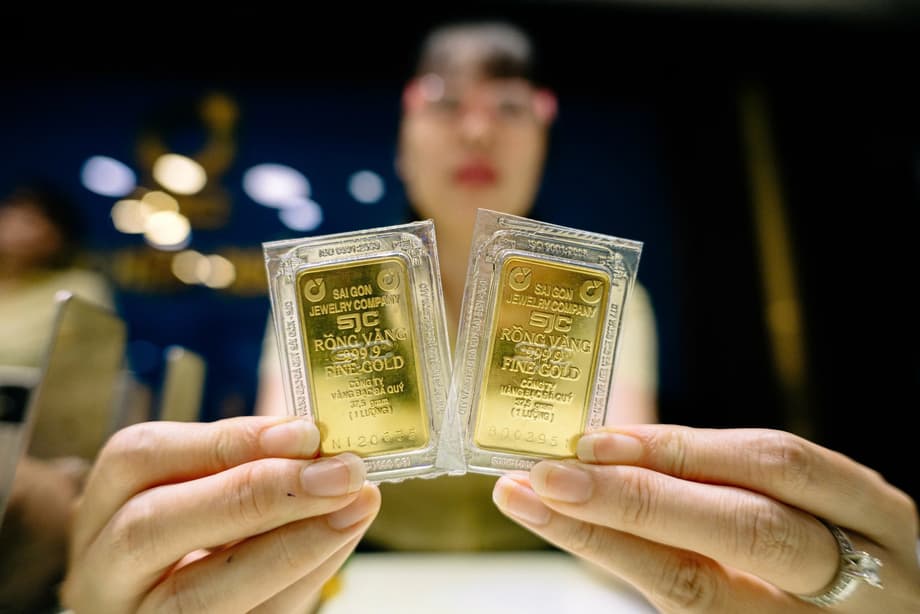
On Saturday morning, January 31, 2026, an unusual scene unfolded outside gold shops across Vietnam. As global precious metal markets suffered their steepest two-day drop in months, with domestic gold prices plunging roughly 10% and silver crashing nearly 30%, crowds did not panic and sell their holdings. Instead, they formed long queues to buy more. This defiance of typical market behavior, where sharp corrections usually trigger sell-offs, signals a profound shift in investor psychology across the Southeast Asian nation.
- When Prices Fall, Vietnamese Rush to Buy Rather Than Sell
- Gold Shops Run Out of Stock by Mid-Morning
- Individual Investors Bet on the Dip
- Part of a Broader Asian Gold Rush
- Economic Drivers Behind Vietnam’s Gold Obsession
- The Copper Spillover: When Base Metals Become Precious
- Silver’s Volatility and Dual Identity
- Regulatory Warnings and Portfolio Prudence
- The Bottom Line
Over the preceding 48 hours, domestic gold prices had fallen by approximately VND20 million (US$771) per tael, retreating from recent peaks. Silver suffered an even more dramatic decline, dropping about VND35 million per kilogram, representing a 30% plunge from its recent highs. Yet at major retailers in both Hanoi and Ho Chi Minh City, buying demand overwhelmingly outpaced selling, creating shortages that forced shops to turn customers away.
Gold Shops Run Out of Stock by Mid-Morning
In Hanoi, the buying frenzy began at dawn. At Phu Quy’s branch on Tran Nhan Tong Street, the retailer stopped accepting customers and announced it had exhausted its inventory of both gold rings and silver bars by 9:30 a.m., barely an hour after opening its doors. Store employees could only offer apologies to those still waiting in lines that stretched down the street.
“Please come back tomorrow,” a store employee told customers still waiting in line, many of whom left empty-handed.
Nearby, Bao Tin Minh Chau had already issued more than 100 queue numbers by 9:20 a.m., with staff imposing strict purchase limits of one tael of plain gold rings per customer. Similar scenes played out at Bao Tin Manh Hai and other established dealers throughout the capital. In Ho Chi Minh City, Mi Hong’s store on Bui Huu Nghia Street saw lines forming from 7 a.m., with a security guard reporting dozens of people waiting when doors opened. Within three hours, the shop had sold out of plain gold rings and tightened limits to one mace per person.
At Phu Quy’s southern metropolis location, customers repeatedly inquired about silver bars and ingots, only to be told purchases could only be registered on weekdays. The Saigon Jewelry Company, one of the nation’s largest gold dealers, kept its outlets closed on Saturday morning, unable to meet the surge in demand.
Individual Investors Bet on the Dip
The crowd composition revealed a mix of seasoned accumulators and first-time buyers catching what they perceived as a fleeting opportunity. Hoang, a 38-year-old freelancer, arrived at a gold shop at 7 a.m. after monitoring the global tumble in precious metals prices during the previous trading session. He had purchased gold just days earlier at more than VND170 million per tael, yet the sudden discount convinced him to double down.
“I’m worried prices could rebound and I won’t be able to buy,” he explained while waiting in line. “So I’m taking the opportunity to add more, and I’m also buying on behalf of a few friends.”
Not all participants shared this bullish outlook. Nga, approaching 60 years old, began accumulating gold after retiring in mid-2025 and had built a position of several mace. The morning’s price drop of nearly VND10 million per tael triggered anxiety rather than excitement.
“This morning my son told me prices had dropped by nearly VND10 million,” she said while completing her sale. “I felt uneasy and decided to sell and use the money for something else.”
These divergent reactions illustrate the tension between fear and opportunity that currently defines Vietnam’s gold market, where some view corrections as entry points while others see them as warning signals.
Part of a Broader Asian Gold Rush
Vietnam’s buying frenzy did not occur in isolation. From Singapore to Sydney, retail investors have been queuing outside bullion dealers, often arriving before sunrise, as part of a regional rush toward physical precious metals. In Singapore, viral videos from BullionStar showed customers lining up before opening hours, while in Sydney, buyers reported waiting over two hours outside ABC Bullion, with demographics spanning from retirees to twenty-somethings.
This regional phenomenon reflects mounting alarm over currency devaluations against the US dollar, persistent inflation, and geopolitical uncertainty. Michael Langford, executive director of corporate consultancy Airguide International based in Singapore, explained the underlying motivation driving these queues.
“What they are trying to do is to protect themselves against local currency depreciation,” Langford observed. “If you don’t have much money in life, and all the goods that you buy and sell are ultimately priced in US dollars, and your local currency is going down, that doesn’t feel good. You have got inflation working against you, plus you’ve got currency depreciation. You are getting hit twice.”
Some market veterans view these retail queues as contrarian indicators. Analysts have noted that when physical buying reaches fever pitch, assets often approach macro tops. Gold’s total market capitalization recently surpassed $30 trillion, with prices hitting all-time highs above $4,300 per ounce before the current correction. Trader Mayne commented on social media that “Peter Schiff [is] reaching insane levels of insufferability and people are lining up to buy physical gold. I’m thinking the top is close.”
Economic Drivers Behind Vietnam’s Gold Obsession
Vietnam’s particular intensity in gold accumulation stems from specific domestic economic conditions. The State Bank of Vietnam has previously identified soaring domestic gold prices as partly driven by speculative and hoarding behavior, exacerbated by weakness in alternative investment channels. Corporate bonds remain fragile following past defaults, property prices stay prohibitively high for many investors, and bank deposit interest rates sit at historically low levels.
The resulting fear of missing out has created feedback loops where rising prices attract more buyers, pushing prices higher still. Nguyen Huu Huan, head of the Financial Market Department at the Banking Faculty, University of Economics Ho Chi Minh City, noted that many investors who sold earlier in the month at around VND103 million per tael rushed back in as prices spiked, creating self-reinforcing demand cycles.
The spread between domestic and international gold prices has at times ballooned to over VND15 million per tael, an abnormally large difference that reflects both the thin liquidity of the local gold market and the speculative mentality intensifying during periods of global uncertainty. This divergence means Vietnamese investors often pay significantly more than global spot prices, increasing their risk exposure.
The Copper Spillover: When Base Metals Become Precious
The speculative energy unleashed by gold and silver’s dramatic rises has spilled over into unexpected territory. Following the surge in precious metals, many Vietnamese investors began buying large quantities of copper, often in hundreds of kilograms, hoping for similar price explosions. While copper prices hover around $13 per kilogram globally, retail prices for engraved feng shui copper bars in Vietnam run twice as high.
Hoa, a resident of Ninh Binh province, purchased 200 kg of copper bars for VND100 million (US$3,850), loading them into her pickup truck from a Hanoi shop. She explained her logic: “Seeing online groups discussing stockpiling copper bars instead of gold and silver, which are already too expensive, I decided to give it a try. At worst, I will use it to make ancestor worship items.”
Dinh Lam Toi, owner of a Hanoi crafting workshop, reported selling out one ton of copper bars within a week of launching the product. The trend has even influenced corporate gift-giving, with property broker Dinh Dac Nguyen ordering 60 kilograms of copper bars as Lunar New Year gifts for employees instead of traditional wine or confectionery.
However, the copper trade carries risks that precious metals do not. Le Bich Ngoc, an analyst at a commodity exchange, warned that many people are falling into FOMO traps without understanding market fundamentals.
“Gold and silver have liquidity comparable to currency and are scarce, whereas copper is a common industrial metal with abundant supply,” Ngoc explained. “Copper oxidizes easily in Vietnam’s climate, corroding and tarnishing in a short time, losing a great deal of value.”
Huy Hoang, a 40-year-old short-term trader from Hung Yen Province, learned this lesson painfully. After paying VND36 million for 100 kilograms of copper billets based on social media hype, he found no buyers when attempting to resell.
“There are many sellers but few buyers. The posts online are mostly fake accounts used to lure in inexperienced investors,” he said after selling back to the original dealer at a VND2 million loss. “Better to lose VND2 million than hold a hundred kilograms of heavy metal that will tarnish over time and sell for scrap at a throwaway price.”
Silver’s Volatility and Dual Identity
While gold dominates headlines, silver’s recent performance has been even more dramatic. Before the January correction, silver had surged approximately 70% since the beginning of the year, outpacing gold’s 25% rise. This volatility reflects silver’s unique position as both an industrial workhorse and a financial safe haven.
Technical analysis from financial markets shows silver trading with significant momentum but vulnerable to sharp corrections. The metal serves essential roles in solar panels, electric vehicles, and electronics, giving it fundamental demand drivers beyond investment flows. However, this industrial exposure also makes it more volatile than gold during economic uncertainty.
Financial forecasts for 2025 suggest silver prices could range between $28 and $32 per ounce, with some analysts predicting climbs to $35 if industrial demand and inflationary pressures persist. The gold-silver ratio, which measures how many ounces of silver equal one ounce of gold, currently suggests silver may be undervalued relative to its yellow counterpart, potentially explaining why Vietnamese investors showed particular interest in silver during the price dip.
Market expert Huynh Trung Khanh characterized the recent correction as a normal development after a rapid rally, noting that large investors and funds often lock in profits toward the end of January. He emphasized that individual investors should view gold as a defensive asset for long-term wealth protection rather than a short-term speculative instrument.
Regulatory Warnings and Portfolio Prudence
Vietnamese authorities have repeatedly urged caution amid the trading frenzy. The State Bank of Vietnam continues to warn that gold represents a volatile asset class, advising the public to conduct transactions only through licensed dealers, particularly during periods of sharp price swings. Deputy Prime Minister Ho Duc Phoc previously issued directives demanding tighter supervision of gold trading activities to prevent market manipulation and protect retail investors.
Financial advisors recommend limiting precious metals exposure to 15-20% of total portfolio value to maintain proper diversification. Economist Nguyen Tri Hieu warned that with gold prices at current elevated levels, the market poses significant risks due to limited physical supply, which could lead to sharp declines when speculative peaks exhaust themselves.
“Investors should be cautious of the buy-sell price difference and carefully assess risks,” Hieu advised. “Investors need to stay calm, avoid herd mentality, and control FOMO.”
The buy-sell spreads at Vietnamese gold shops can erode profits significantly, especially for small investors. When shops impose purchase limits of one mace or one tael while allowing unlimited selling, the asymmetry reveals the underlying supply constraints driving the domestic premium over global prices.
The Bottom Line
- Vietnamese investors defied conventional market wisdom by rushing to buy gold and silver during a sharp price correction on January 31, 2026, rather than selling their holdings.
- Domestic gold prices dropped approximately 10% (VND20 million per tael) while silver plunged nearly 30% (VND35 million per kilogram) over two days, triggering queues outside major dealers in Hanoi and Ho Chi Minh City.
- Several major retailers, including Phu Quy and Mi Hong, sold out of inventory by mid-morning, with some shops issuing over 100 queue numbers before 9:30 a.m.
- The buying frenzy reflects broader Asian trends, with similar queues appearing in Singapore, Sydney, and Thailand as investors seek protection against currency depreciation and inflation.
- Speculative behavior has spilled over into copper markets, with investors buying hundreds of kilograms of base metal bars despite liquidity risks and oxidation concerns.
- Experts recommend limiting gold to 15-20% of investment portfolios and warn that the large spread between domestic and international prices creates additional volatility risks for Vietnamese buyers.
- Regulators continue urging caution, emphasizing that gold should serve as a long-term defensive asset rather than a vehicle for short-term speculation.