Beyond the Medal Table: Philippines Excels in Olympic Sports Achievement
Team Philippines returned from the 33rd Southeast Asian Games in Thailand with a sixth-place overall finish, but a deeper analysis reveals a far more impressive performance story. While critics focused on the modest gold medal haul of 50, data shows the Philippines achieved the second-highest percentage of gold medals from Olympic sports among all participating nations. This strategic focus on disciplines contested at the highest global level signals the country’s growing potential for future Olympic success, particularly as the 2028 Los Angeles Games approach.
- Beyond the Medal Table: Philippines Excels in Olympic Sports Achievement
- The Strategic Shift Toward Olympic Excellence
- Breaking Down the Gold Medal Performance
- Regional Context and Competitive Landscape
- Quality Over Quantity: Measuring Olympic Potential
- Athlete Spotlight: Key Filipino Performers
- Looking Toward Los Angeles 2028
- Leadership Perspective and Future Direction
- The Bottom Line
- Key Points
According to analysis by Vietnamese sports publication VnExpress International and confirmed by the Philippine Sports Commission (PSC), 70.37% of the Philippines’ gold medals came from sports featured in the Olympic program. This figure narrowly trailed Singapore’s 70.59% but significantly outperformed traditional regional powerhouses. Host Thailand dominated the overall medal standings with 233 gold medals, yet only 64% came from Olympic sports. Similarly, Indonesia’s impressive 91 gold medals yielded just 65% from Olympic disciplines, while Malaysia and Vietnam posted 57% and 51.85% respectively.
The Strategic Shift Toward Olympic Excellence
The stark contrast between overall medal standings and Olympic sports percentages reveals different national strategies for athletic development. Host nations traditionally include non-Olympic and indigenous sports in SEA Games programming, often tilting the medal race in their favor through specialization in these niche disciplines. Thailand’s overwhelming medal count included significant hauls from Muay Thai, sepak takraw, jujitsu, petanque, and teqball. This approach ensures medal table dominance but offers limited pathway to global recognition.
The Philippines and Singapore have taken markedly different approaches, focusing resources primarily on Olympic-recognized sports. This strategic pivot reflects the long-term vision of sports officials in both nations, who prioritize performances that translate to the world stage. Philippine Olympic Committee President Abraham “Bambol” Tolentino emphasized this perspective when discussing the team’s performance, noting that the gold medals came from events that matter most in international competition.
The PSC’s official statement highlighted the significance of this achievement, stating that Team Philippines ranked second overall in the percentage of medals won in Olympic-recognized events. The figures suggest that despite the sixth-place overall finish, the bulk of the Philippines’ medal output came from disciplines contested in the Olympics, highlighting a positive outlook for the country’s long-term international campaign.
Breaking Down the Gold Medal Performance
The Philippines secured its 50 gold medals across a diverse portfolio of sports, with particular strength in core Olympic disciplines. Athletics proved the most productive battleground, yielding five gold medals. Swimming contributed three golds, all delivered by Olympian Kayla Sanchez, who also collected five silver medals in a dominant display in the pool. The gymnastics program added three golds, while triathlon and modern pentathlon each contributed three to the tally.
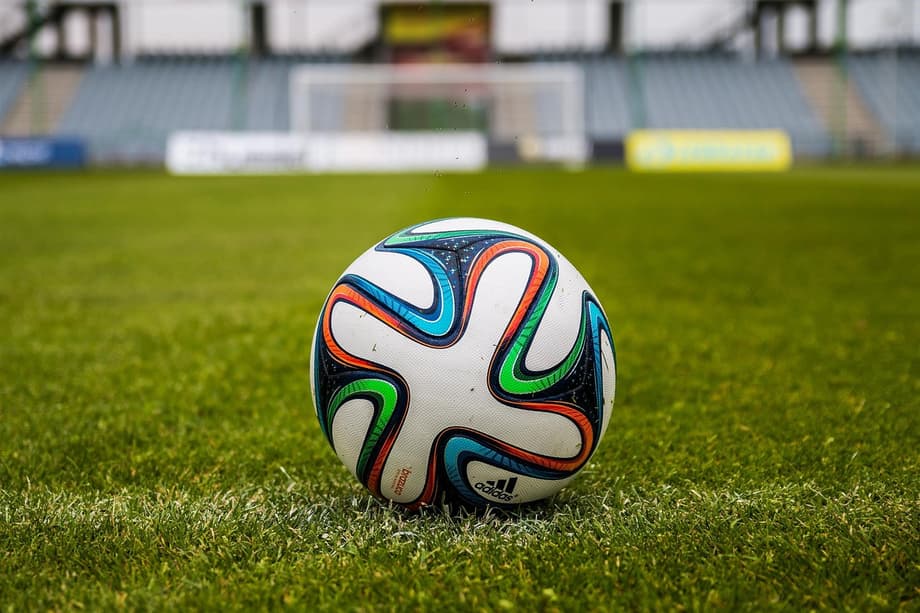
Team Philippines achieved breakthrough victories in several team sports that typically favor regional giants. The women’s football team secured a historic gold medal, marking a significant milestone for the sport’s development in the country. Men’s baseball also claimed the top spot on the podium, while tennis, beach volleyball, and men’s basketball all delivered championship performances. The basketball gold medals were particularly meaningful as the country successfully retained its title in men’s 5×5 basketball, a sport deeply embedded in Philippine culture.
Rising tennis star Alex Eala captured the women’s singles title, reinforcing her status as one of the region’s most promising young talents. Additional gold medals came in judo, skateboarding, softball, and taekwondo, with two golds each in these disciplines. The country also found success in rowing, sailing, short-track speed skating, weightlifting, and wrestling, with one gold medal each in these sports.
Boxing Controversy and Limiting Factors
The Philippines could have achieved an even higher percentage of Olympic sports gold medals if not for specific limitations imposed by the host nation. Boxing, traditionally a gold mine for Filipino fighters, was limited to just one gold medal courtesy of Eumir Marcial. Observers argue that questionable officiating cost the Philippines three to four additional boxing titles. More significantly, host Thailand won 14 of the 17 boxing categories, a sweep that many found statistically improbable without home-field advantage.
Gymnastics faced similar restrictions. Double Paris Olympic gold medalist Carlos Yulo missed most of the biennial meet after the host country restricted gymnasts to just one apparatus event. Given the opportunity to compete in all six men’s artistic gymnastics apparatus events and the all-around competition, Yulo could potentially have added four to five more golds to the Philippines’ tally, including the men’s team title. His limited participation highlights how host country scheduling decisions can significantly impact medal distributions.
Despite these limitations, the Philippines tied with Singapore for the highest percentage of gold medals from Olympic sports among the 11 competing nations. This achievement demonstrates the effectiveness of the country’s investment in core sports, even when facing structural disadvantages at regional competitions.
Regional Context and Competitive Landscape
The comparative analysis across Southeast Asia reveals distinct approaches to sports development. Thailand’s overwhelming overall victory with 233 gold medals, 154 silvers, and 113 bronzes reflects a comprehensive strategy across both Olympic and non-Olympic disciplines. The host nation demonstrated particular strength in boxing (14 golds), athletics (13), canoeing (10), taekwondo (10), cycling (10), and weightlifting (9). While their Olympic percentage dropped due to success in niche sports, their foundation in core sports remained the region’s strongest in absolute numbers.
Indonesia followed the overall standings with 91 golds, 112 silvers, and 130 bronzes, posting a 64.86% rate in Olympic sports. Their success stems from a diversified investment strategy, fielding over 1,000 athletes across 49 of the 50 sports. By comparison, Vietnam sent 841 athletes to compete in 37 sports, winning 87 gold medals across 27 different sports. However, Vietnam’s Olympic sports percentage of 51.85% placed them at the bottom of the top six nations, despite strong performances in athletics (12 golds), wrestling (10), shooting (8), swimming (7), and karate (6).
Malaysia’s performance showed a similar pattern, finishing fourth overall with 57 gold medals but posting only a 56.52% rate in Olympic sports. The Philippines and Singapore clearly set their focus toward Olympic sports, with both nations boasting a gold medal ratio of 80% or higher when measured by medal count rather than sport categories. This strategic alignment positions both countries favorably for future global competitions, where the specialized non-Olympic sports that boost SEA Games medal counts offer no competitive advantage.
Quality Over Quantity: Measuring Olympic Potential
While medal percentages provide one metric for evaluating performance, the quality of athletic achievement compared to international standards offers another crucial perspective. Vietnam, despite its lower Olympic sports percentage, ranked second in the region for gold medal ratio per athlete at 10.34%, trailing only host Thailand (12.89%) but performing better than Indonesia (8.91%), Singapore (5.59%), Malaysia (4.99%), and the Philippines (4.28%). This suggests that while the Philippines focuses on the right sports, there remains room for improvement in athlete development efficiency.
The gap between regional success and Olympic qualification standards presents the ultimate challenge for Southeast Asian nations. For example, Vietnamese high jumper Bui Thi Kim Anh won gold with a leap of 1.86 meters, which would have been well short of the 1.97-meter qualifying standard for the 2024 Paris Olympics. Similarly, Vietnamese weightlifter Tran Dinh Thang’s gold medal performance of 366kg in the over 94kg category came in a weight class not featured at the Olympics, and his total would only rank eighth among Paris Olympic competitors in the closest valid weight class.
Vietnam’s biggest Olympic medal hope remains shooter Trinh Thu Vinh, whose performance in the women’s 10-meter air pistol final yielded a score of 242.7 points, equivalent to a silver medal at the 2024 Olympics. Her score of 34 in the 25-meter individual pistol final would have been competitive for a bronze medal in Paris. These examples highlight that while regional success is growing, bridging the gap to Olympic podium contention remains the critical next step for all Southeast Asian nations.
Athlete Spotlight: Key Filipino Performers
The Philippines’ strong showing in Olympic sports was built on standout performances from both established stars and emerging talents. Swimmer Kayla Sanchez delivered the most medals in swimming, showcasing her international experience as an Olympian with three gold medals and five silver medals. Her dominance in the pool demonstrated the growing strength of the Philippine swimming program and bodes well for future Olympic competitions.
Tennis phenom Alex Eala continued her ascent in the sport by topping the women’s singles tournament, adding to her growing resume of international achievements. At 19 years old, Eala represents the new generation of Filipino athletes capable of competing at the highest global level. Her success at the SEA Games provides valuable experience and confidence as she pursues Grand Slam and Olympic ambitions.
Boxer Eumir Marcial secured the lone gold medal in men’s boxing despite the sport’s controversial officiating and Thailand’s dominance across most weight classes. As an established international competitor, Marcial’s ability to navigate the challenging environment and deliver gold underscores the resilience and championship mentality of Filipino fighters. His performance maintains the Philippines’ proud boxing tradition as the program builds toward Los Angeles 2028.
The triathlon program delivered exceptional results with three gold medals, including contributions from Cebuano athletes Andrew Kim Remolino, Raven Faith Alcoseba, and Matthew Justine Hermosa. These victories highlight the sport’s growing popularity in the Philippines and the development of world-class endurance athletes capable of competing on the global stage.
Team Sport Breakthroughs
The Philippines achieved historic victories in several team sports traditionally dominated by other Southeast Asian nations. The women’s football team’s gold medal represents a watershed moment for the sport in the country, potentially inspiring greater participation and investment at the grassroots level. Football’s global popularity and Olympic inclusion make this success particularly valuable for long-term sports development.
Men’s baseball’s championship performance reinforces the Philippines’ position as a regional powerhouse in the sport. While baseball’s Olympic status has fluctuated in recent years, its inclusion in the 2028 Los Angeles Games ensures that this gold medal contributes directly to the country’s Olympic pipeline. The team’s success maintains a rich baseball tradition and provides opportunities for Filipino players to showcase their skills to international scouts.
Beach volleyball, led by veteran Sisi Rondina, also claimed gold, continuing the country’s strong tradition in the sport. Rondina, one of the country’s most popular athletes, delivered another championship performance that maintains her status as a role model for aspiring Filipino athletes. The combination of individual excellence and team success across multiple sports demonstrates the increasing depth and breadth of Philippine athletic talent.
Looking Toward Los Angeles 2028
The 2028 Los Angeles Olympics loom as the ultimate target for the Philippines’ current investment in Olympic sports. With the event more than two years away, sports officials are already mapping strategies to convert regional success into global podium contention. The strong performance in Olympic sports at the SEA Games provides a foundation, but significant work remains to bridge the gap to Olympic medal competitiveness.
Other top Southeast Asian nations have identified their strengths for Los Angeles as well. Thailand, Indonesia, and Malaysia could all potentially win medals, even gold, in badminton on a strong day. Thailand also maintains strength in taekwondo, while Indonesia has emerged as a force in sport climbing. Malaysia and Singapore are strong in sailing, creating competitive pressure across multiple disciplines.
The Philippines’ hopes rest significantly on established stars like Carlos Yulo in gymnastics and developing talents like Alex Eala in tennis and Kayla Sanchez in swimming. The absence of Yulo from full competition at the SEA Games was disappointing, but his status as a double Olympic gold medalist provides a solid foundation for the program. The challenge lies in identifying and developing additional athletes capable of reaching the podium in Los Angeles.
Leadership Perspective and Future Direction
Philippine Olympic Committee President Abraham “Bambol” Tolentino expressed optimism about the country’s sports trajectory despite the sixth-place overall finish. He emphasized that the gold medals came in the most important events, Olympic sports, reflecting a strategic focus that positions the country for future international success. Tolentino’s leadership has seen the Philippines win its first Olympic gold medal via weightlifter Hidilyn Diaz at Tokyo 2020 and two more in gymnastics through Carlos Yulo at Paris 2024.
Tolentino highlighted improved coordination between the POC and the Philippine Sports Commission as a key factor in the country’s sports development. This harmonious working relationship allows for more efficient resource allocation and strategic planning across different sports programs. The collaboration appears to be bearing fruit, with medal percentages in Olympic sports rising and athlete performances improving across multiple disciplines.
“There will be more competitions overseas and more historic achievements to come for Team Philippines in 2026,” said Tolentino.
The POC president also pointed to successes beyond the SEA Games as indicators of progress. Team Philippines won seven gold medals at the Bahrain Asian Youth Games, secured two silvers and two bronzes at the Chengdu World Games, and made history at the Ninth Asian Winter Games in Harbin with a men’s curling gold. The curling victory was particularly significant as the first gold medal in an international winter sports competition for both the Philippines and Southeast Asia.
Tolentino outlined a packed calendar for 2026 that includes the Milano Cortina Winter Olympics, the Sanya Asian Beach Games, and the Aichi-Nagoya Asian Games. The ambitious schedule reflects the growing confidence within Philippine sports leadership about the country’s ability to compete at the highest level across multiple disciplines.
The Bottom Line
The Philippines’ performance at the 33rd Southeast Asian Games tells two stories. The surface narrative of a sixth-place overall finish with 50 gold medals might suggest disappointment to casual observers. However, the deeper analysis revealing 70.37% of gold medals from Olympic sports, the second-highest percentage among competing nations, paints a far more optimistic picture of the country’s sports trajectory.
This Olympic-focused approach represents a strategic investment in long-term international competitiveness rather than short-term medal table positioning. While regional rivals chase overall dominance through specialization in non-Olympic sports, the Philippines is building a foundation for sustained success on the global stage. The results are already evident in Olympic medals, and the pipeline appears stocked with emerging talent capable of contending in Los Angeles and beyond.
The collaboration between the POC and PSC, the identification of key sports for investment, and the development of athlete pathways from youth competitions to the Olympic stage all signal a mature, strategic approach to sports development. While challenges remain in closing the gap between regional dominance and Olympic medal contention, the direction is clear and the momentum is building.
As the Philippines looks toward 2028 and beyond, the focus on Olympic sports provides both a roadmap and a measuring stick for progress. The 33rd SEA Games may not have produced the overall medal count some hoped for, but it delivered exactly what sports officials prioritized, victories in sports that matter most on the world stage. In the Olympic pursuit, that’s the only scoreboard that ultimately counts.
Key Points
- Philippines finished 6th overall at 33rd SEA Games with 50 gold, 73 silver, and 154 bronze medals
- 70.37% of Philippine gold medals came from Olympic sports, 2nd highest among nations
- Singapore led with 70.59%, followed by Philippines (70.37%), Indonesia (64.86%), Thailand (63.64%), Malaysia (56.52%), and Vietnam (51.85%)
- Key gold medal performances came in athletics (5), swimming (3 by Kayla Sanchez), gymnastics (3), triathlon (3), modern pentathlon (3)
- Historic victories achieved in women’s football, men’s baseball, and beach volleyball
- Alex Eala won women’s singles tennis gold, while basketball team retained 5×5 title
- Boxing limited to 1 gold (Eumir Marcial) as Thailand won 14 of 17 categories
- Carlos Yulo restricted to 1 apparatus event, potentially costing 4-5 additional gold medals
- POC President Tolentino emphasized Olympic focus as key metric for success
- Philippine athletes also won gold at Asian Winter Games in curling, first for Southeast Asia