Changi Airport’s Engineering Marvel
Changi Airport is preparing to unveil an impressive underground transportation system that will allow passengers to travel between the future Terminal 5 and Terminal 2 in just four minutes. This rapid connection represents a significant advancement in airport infrastructure and highlights Singapore’s commitment to maintaining its position as a leading global aviation hub. The automated people-mover system, similar to the existing Skytrain service, will serve as a vital link between the new mega terminal and the rest of the airport complex, ensuring smooth transfers for millions of travelers annually.
The underground link is more than just a convenience for passengers. It represents a sophisticated engineering feat involving complex tunneling beneath one of Asia’s busiest airports. With Terminal 5 and the wider Changi East development nearly doubling the airport’s size, this connection will enable Changi Airport to serve 140 million passengers yearly—over 55 percent more than its current capacity of 90 million. This expansion is crucial for Singapore’s continued competitiveness in the global aviation landscape.
Dr. Wen Dazhi, Changi Airport Group’s Senior Vice President for Changi East construction, emphasized the importance of this infrastructure project during a media visit to the tunnels. He noted that these underground connections enable Changi Airport to operate as a single integrated facility, ensuring seamless passenger experience across all terminals.
“The tunnels enable Changi Airport to operate as a single integrated airport,” said Dr. Wen Dazhi, Changi Airport Group’s Senior Vice President for Changi East construction.
The project demonstrates how infrastructure development can enhance operational efficiency while maintaining the high standards of service that travelers have come to expect from Changi Airport, consistently ranked among the world’s best airports.
The Tunnel System Beneath Changi
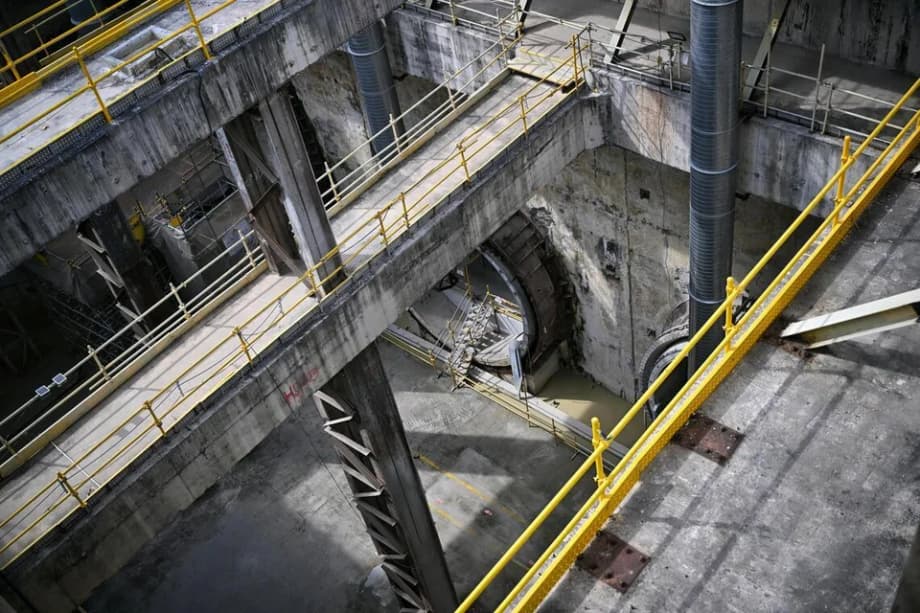
The underground link consists of an impressive network of three tunnels spanning a total length of 2.5 kilometers. As of October 2024, approximately 1.7 kilometers of these tunnels have been completed, marking a significant milestone in the construction process. Two of these tunnels will accommodate the people-mover system that transports passengers between Terminal 5 and Terminal 2. The third tunnel is dedicated entirely to baggage handling, facilitating the transfer of up to 3,000 bags per hour between the two terminals.
These tunnels extend 28 to 35 meters below ground level—the equivalent depth of a 12-story building. The baggage tunnel, with a diameter of 12.3 meters, was Singapore’s largest tunnel drilled using tunnel-boring machines when construction began in 2022. While it has since been surpassed by tunnels for the upcoming Cross-Island Line, it remains an impressive engineering achievement in its own right.
The scale of these tunnels highlights the massive undertaking involved in building Terminal 5 and connecting it to the existing airport infrastructure. The three-tunnel system represents a sophisticated approach to airport logistics, separating passenger and baggage flows for optimal efficiency. This design allows for simultaneous operations without interference between different systems.
What makes this project particularly remarkable is that these tunnels were constructed beneath an active taxiway near Terminal 2. Taxiways are essential pathways that allow aircraft to move between runways and terminal gates. Building underneath such critical infrastructure required meticulous planning and execution to ensure airport operations continued without disruption.
Baggage Transfer Capabilities
The dedicated baggage tunnel between Terminal 5 and Terminal 2 will handle an impressive 3,000 bags per hour. This capacity exceeds the existing baggage system connecting Terminals 1, 2 and 3, which handles more than 2,700 bags per hour. This increased capacity is essential for accommodating the projected growth in passenger numbers and maintaining efficient baggage transfer times across the expanded airport complex.
The baggage system forms a crucial part of the seamless passenger experience that Changi Airport aims to provide. With the promise that transit passengers at Terminal 5 can connect to another flight in less than an hour, efficient baggage handling becomes a critical component of this commitment. The dedicated tunnel ensures that baggage transfers can occur independently of passenger transportation, optimizing both systems for maximum efficiency.
Advanced People-Mover System
The automated people-mover system connecting Terminal 5 and Terminal 2 will operate similarly to the existing Skytrain that serves Terminals 1, 2 and 3. Each train will comprise two carriages, capable of holding up to 96 passengers with luggage—48 passengers per carriage. The system will operate at a frequency of four to eight minutes, with two trains from a fleet of five operational at any given time during service hours. Changi Airport Group has not yet finalized the specific operating hours for this service.
In comparison, the existing Skytrain system features trains with one to three carriages carrying up to 50 passengers each, arriving every one to four minutes between 5am and 2am daily. The slightly less frequent but higher capacity trains for the Terminal 5 connection reflect the specific needs of inter-terminal transfers rather than the high-volume movements within the existing terminal complex.
The four-minute journey time between Terminal 5 and Terminal 2 represents a significant improvement in connectivity for passengers moving between terminals. Once at Terminal 2, passengers can access the existing Skytrain network to reach Terminals 1 and 3, or use shuttle buses to reach Terminal 4, which is not served by the Skytrain. This integrated approach ensures that all terminals remain accessible regardless of a passenger’s starting point.
For transit passengers, this connection is particularly valuable. Changi Airport Group has stated that transit passengers at Terminal 5 can connect to another flight in less than an hour. This competitive transfer time helps maintain Changi’s appeal as a transit hub, allowing passengers with tight connections to move between terminals quickly and efficiently.
Technical Specifications
The people-mover system between Terminal 5 and Terminal 2 will operate at speeds of up to 80 kilometers per hour, transporting approximately 10,800 passengers per hour. This capacity is designed to handle the projected passenger volumes when Terminal 5 reaches full operations in the mid-2030s. The trains will be fully automated, requiring no drivers, which increases operational efficiency and reduces potential delays.
The station facilities at both Terminal 2 and Terminal 5 are being designed with passenger convenience in mind. At Terminal 2, a basement is being excavated for the construction of the people-mover station and depot. This careful planning ensures minimal disruption to existing terminal operations while providing the infrastructure needed for future expansion.
Innovative Construction Methods
Constructing tunnels beneath an active international airport presents unique challenges that required innovative engineering solutions. Dr. Wen Dazhi and his team at Changi Airport Group had to ensure that ground surface movements remained minimal to avoid disrupting airport operations, particularly when tunneling under the live taxiway near Terminal 2. Any settlement of the ground could have affected the taxiway’s usability, potentially disrupting flight schedules and compromising safety.
To address these challenges, the construction team employed a top-down construction method for ongoing tunneling works near Terminal 2. This approach involved first setting out a concrete layer for the roof of the tunnels, which allowed the ground surface to be reinstated quickly. This technique meant that all subsequent excavation and construction works could continue even after the airport resumed operations on the taxiway near Terminal 2. Compared with traditional excavation methods, this approach saved the team at least one to two years of construction time while minimizing disruption to airport operations.
One particularly innovative solution developed by the team was the use of a conveyor-belt system to transport excavated soil vertically upwards from the completed baggage tunnel to the surface for disposal. The alternative approach would have involved using tipping trucks to transport soil up and down the airport apron, where aircraft operate and passengers board. By using the conveyor belt, the team significantly lowered traffic volumes in the apron area, reducing the risk of congestion and potential safety hazards.
“This system can move up to 350 tonnes of soil per hour, similar to the amount that almost 30 trucks can carry in the same period,” noted Dr. Wen Dazhi, explaining the efficiency of the conveyor-belt system.
This innovative soil removal system demonstrates the thoughtful approach taken to minimize the construction footprint while maintaining airport operations. It is precisely this kind of careful planning that has allowed Changi Airport to expand its infrastructure without compromising its operational excellence.
Major Infrastructure Investment
The construction of the underground link between Terminal 5 and Terminal 2 represents a significant financial investment in Singapore’s aviation future. Shanghai Tunnel Engineering Company secured a SGD622 million (US$456 million) contract to build the 2.5-kilometer underground link. This contract encompasses the construction of a 9-meter-wide tunnel for baggage transfers, as well as tunnels exceeding 6 meters in width in each direction for the underground train system.
In addition to the inter-terminal connection, Changi Airport Group has awarded a S$999 million contract for the construction of intra-terminal tunnels within Terminal 5 itself. This contract was awarded to a joint venture between Japanese firm Penta-Ocean Construction and Koh Brothers Building & Civil Engineering Contractor, a subsidiary of Koh Brothers Eco Engineering. These intra-terminal tunnels will support the transfer of passengers and baggage across Terminal 5’s concourses while facilitating the routing of common utilities.
The scope of these contracts highlights the massive scale of the Terminal 5 project. The intra-terminal tunnel system will include several sub-tunnels housing key infrastructure such as automated people-mover systems, baggage handling systems, and a common services tunnel for utilities including electrical power, communication systems, and water services. The project will also comprise a ventilation building and provisions for a future underground infrastructure tunnel, demonstrating long-term planning for potential expansions.
These investments come after Changi Airport Group awarded S$4.75 billion in contracts for various Terminal 5 projects, including a S$3.8 billion contract to a joint venture between the Singapore branch of China Communications Construction Company and Obayashi Singapore, and a S$950 million contract to Hwa Seng Builder. This substantial financial commitment underscores the strategic importance of Terminal 5 to Singapore’s aviation future.
Connecting to the Mass Rapid Transit Network
Terminal 5 will feature seamless integration with Singapore’s comprehensive Mass Rapid Transit (MRT) system. The terminal will house a dedicated ground transportation center that brings together the Cross Island Line (CRL) and Thomson-East Coast Line (TEL), along with buses, taxis, and other transport services. This integration will provide passengers with convenient access to and from the airport, reducing reliance on private vehicles and enhancing overall transportation efficiency.
The Thomson-East Coast Line extension will provide a direct rail link between Changi Airport and the city center, connecting to key areas such as Gardens by the Bay, Maxwell, and Orchard. This direct connection will significantly reduce travel time between the airport and Singapore’s central business district, benefiting both business and leisure travelers. The Cross Island Line will connect Terminal 5 to neighborhoods such as Ang Mo Kio, Hougang, Punggol, and Clementi, providing comprehensive coverage across the island.
A new MRT station at Terminal 5 will serve as an interchange station connecting the airport to both the Thomson-East Coast Line and Cross Island Line. Two additional tunnels connecting to this future MRT station are currently under construction as part of the Terminal 5 development. This integrated transportation approach ensures that Terminal 5 is not just an isolated facility but a fully integrated node in Singapore’s broader transportation network.
The connectivity extends beyond land transportation. Terminal 5’s location near Tanah Merah Ferry Terminal paves the way for potential air-sea transfers, offering passengers additional travel options. Ong Chee Chiau, Changi Airport Group’s managing director for Changi East, highlighted this possibility, noting that the proximity to the ferry terminal could enable convenient connections to neighboring destinations via ferry services.
Sustainable Design and Operations
Terminal 5 is being designed with sustainability as a core principle, aiming to achieve Green Mark Platinum Super Low Energy Building certification. This commitment to environmental responsibility is reflected in various aspects of the terminal’s design and operations. The terminal will incorporate advanced building management systems that optimize energy usage throughout the facility.
One of the most significant sustainable features will be one of Singapore’s largest rooftop solar panel systems. This installation is expected to generate enough energy to power approximately 20,000 four-room Housing Development Board flats for a year. This substantial contribution to renewable energy generation aligns with Singapore’s broader sustainability goals and reduces the airport’s carbon footprint.
The terminal’s design also addresses the challenges posed by climate change and extreme weather conditions. Recognizing the risks associated with global warming and rising sea levels, Terminal 5 is elevated 5.5 meters above sea level. Additionally, aircraft taxiways will be sloped for better drainage of rainwater. These design features will allow stormwater to be effectively managed during high tides or extreme storm and rainfall events, ensuring continued operations even in adverse weather conditions.
The terminal will feature curved roofs of varying heights instead of a single large roof covering the entire structure. This “roof leaves” design breaks the mega terminal building into smaller spaces, creating a more human-scale environment. Natural light and landscaping will contribute to what Changi Airport Group describes as a “familiar cosy yet uplifting feel” that the airport is known for. This approach balances the functional requirements of a large terminal with the passenger experience, creating comfortable spaces despite the terminal’s massive scale.
Automation and Digitalization
Terminal 5 will leverage advanced technology to automate and digitalize airport operations, improving both efficiency and the passenger experience. An Integrated Operations Center will allow operators to have better situational awareness and make decisions based on real-time data. This centralized approach to operations management will enable more rapid responses to changing conditions and potential disruptions.
Ground handlers will benefit from improved understanding of aircraft activities and potential delays, allowing them to better utilize resources to mitigate issues before they affect passengers. Autonomous vehicles will be used to shuttle passengers and staff within the terminal complex, potentially improving road traffic flow and safety. Automated baggage transfers and baggage handling systems will improve delivery efficiency even during adverse weather conditions.
The terminal will also feature automated aerobridge docking, improving productivity and operational efficiency. These automation initiatives not only enhance operational efficiency but also reduce the potential for human error, contributing to a more reliable passenger experience. The extensive use of technology positions Terminal 5 as a forward-looking facility ready to meet the evolving demands of air travel.
Timeline and Future Outlook
The Terminal 5 project has been in development for more than a decade, with initial plans announced in 2013. Land preparation began in 2014, followed by the appointment of consultants in 2018. The project was paused in 2020 due to the COVID-19 pandemic but resumed in 2022. Construction of Terminal 5 officially began in May 2024, following a groundbreaking ceremony officiated by Prime Minister Lawrence Wong.
The terminal is scheduled for completion in the mid-2030s, with Phase 1 expected to handle approximately 50 million passenger movements per year. When fully operational, Terminal 5 will allow Changi Airport to handle 140 million passengers annually, cementing its position among Asia’s “mega airports” defined as those handling more than 100 million passengers per year. The airport’s network is also projected to increase from around 170 city links to more than 200 by the mid-2030s.
Terminal 5 will be divided into three sections—T5A, T5B, and T5C—located at one-kilometer intervals. T5A will house the arrival and departure halls, immigration, and baggage collection, while boarding gates and other services will be distributed across all three sections. An underground automated people-mover system, similar to the existing Skytrain services, will allow passengers to navigate between these sections with ease. This design also allows for operational flexibility, with the capacity to operate as smaller sub-terminals when needed.
The terminal will serve as the home for Singapore Airlines and its budget subsidiary, Scoot, consolidating operations currently spread across three terminals. This consolidation will improve operational efficiency and potentially enhance the passenger experience for these airlines’ customers. The groundbreaking ceremony marked a significant milestone in this ambitious project, which represents the largest expansion in Changi Airport’s history.
“Our vision is for T5 to be mega yet cosy, a terminal that embraces the Changi DNA – delivering a personalised, stress free and positively surprising airport experience,” said Changi Airport Group CEO Yam Kum Weng.
The project has not been without its challenges, but the careful planning and innovative engineering solutions demonstrate Singapore’s commitment to infrastructure development excellence. As construction progresses, the airport community and travelers alike eagerly anticipate the opening of this new chapter in Changi Airport’s distinguished history.
Economic Impact and Job Creation
The Terminal 5 project extends beyond aviation infrastructure to deliver significant economic benefits for Singapore. Prime Minister Lawrence Wong highlighted that the mega terminal will create job opportunities for Singaporean companies and workers, particularly in the areas of data science, robotics, and sustainability. These high-value opportunities align with Singapore’s economic development strategy and workforce upskilling initiatives.
The construction phase itself generates substantial economic activity, with contracts awarded to both international and local companies. The involvement of firms like Koh Brothers Eco Engineering in major infrastructure projects demonstrates how Singapore’s construction industry is developing capabilities to undertake increasingly complex and large-scale projects. This expertise can potentially be exported to other markets in the future.
Upon completion, Terminal 5 will boost demand for services and workers, both within the airport and in supporting industries. The expanded cargo facilities in the Changi East Industrial Zone will increase handling capabilities to 5.4 million tonnes per annum, strengthening Singapore’s position as a logistics hub and creating additional employment opportunities in the logistics sector.
The terminal’s role as an air hub also supports various economic activities beyond direct aviation services, including tourism, business travel, and cargo logistics. By enhancing Singapore’s connectivity with the world, Terminal 5 will contribute to the country’s attractiveness as a destination for investment, business, and leisure. This expanded connectivity is particularly valuable in a global economy where ease of access to international markets is increasingly important.
Strategic Importance
Prime Minister Lawrence Wong emphasized the strategic importance of Terminal 5 during the groundbreaking ceremony, stating that Singapore and Changi cannot afford to be complacent and must “continue to work hard.” He highlighted that like Singapore itself, Changi has “defied the odds to thrive and succeed beyond all expectations.” This sentiment reflects the broader national strategy of continuous improvement and investment in infrastructure to maintain competitiveness.
Terminal 5 represents a bold investment in Singapore’s future as a global aviation hub. In an increasingly competitive regional landscape, maintaining and enhancing Changi Airport’s position requires sustained investment and innovation. The terminal’s capacity to handle 50 million additional passengers annually positions Singapore to capture growth in regional and international air travel demand.
The project also demonstrates Singapore’s ability to undertake long-term infrastructure planning and execution despite challenges such as the COVID-19 pandemic. The pause in 2020 and subsequent resumption in 2022 show how the project team adapted to changing circumstances while maintaining the long-term vision. This resilience in planning and execution is a valuable capability for infrastructure development.
Key Points
- Terminal 5 will connect to Terminal 2 via a 2.5-kilometer underground link allowing passengers to travel between terminals in just four minutes
- The underground system comprises three tunnels: two for an automated people-mover and one for baggage transfer capable of handling 3,000 bags per hour
- Each people-mover train will carry 96 passengers with luggage, operating at frequencies of four to eight minutes with two trains running simultaneously
- The tunnels extend 28 to 35 meters underground and were constructed beneath an active airport taxiway requiring innovative engineering solutions
- Construction used a top-down method and conveyor-belt soil removal system to minimize disruption to airport operations, saving one to two years compared to traditional methods
- Terminal 5 will increase Changi Airport’s capacity from 90 million to 140 million passengers annually, representing a 55 percent increase
- The terminal is scheduled for completion in the mid-2030s and will serve as the home for Singapore Airlines and Scoot
- Terminal 5 will feature a ground transportation center integrating the Thomson-East Coast Line and Cross Island Line MRT services
- The terminal aims to achieve Green Mark Platinum Super Low Energy Building certification with one of Singapore’s largest rooftop solar panel systems
- Changi Airport Group has awarded contracts worth more than S$5.7 billion for various aspects of Terminal 5 construction