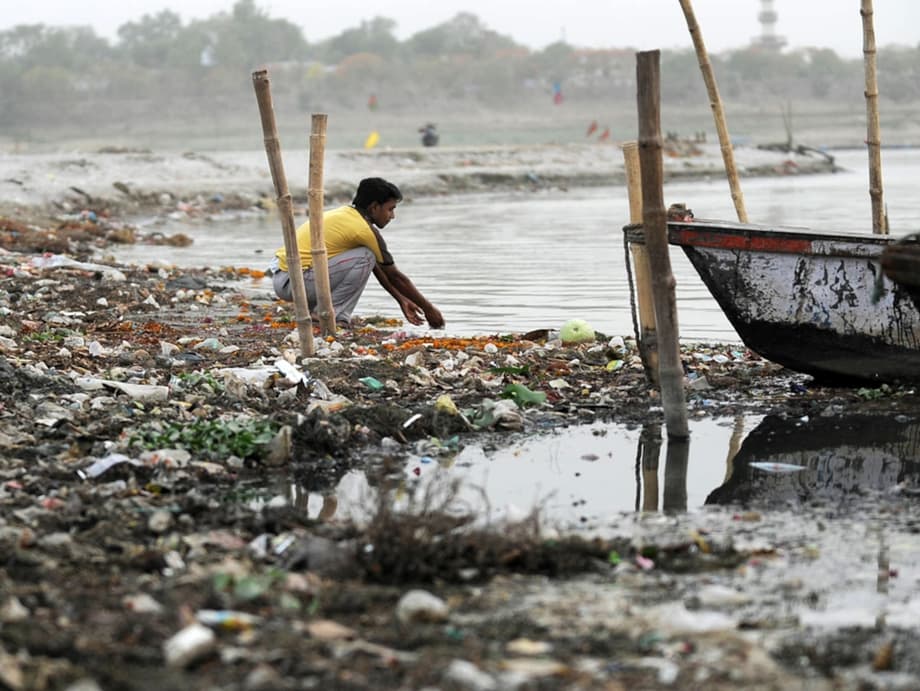
A Deadly Surprise in Everyday Water
What should have been an ordinary glass of drinking water turned fatal for several families in Indore’s Bhagirathpura area, where contaminated water has claimed lives and sent hundreds to hospitals. The tragedy has unfolded in Indore, a city in central India that has been ranked the country’s cleanest for eight consecutive years. This stark contrast between the city’s celebrated status and the deadly reality now confronting its residents has sparked questions about urban infrastructure and accountability.
Official reports place the death toll between four and nine, though residents claim the number could be as high as 15. More than 200 people have been hospitalized with severe gastrointestinal symptoms, while over 2,400 have reported illness related to the contaminated water supply. The outbreak has affected thousands of residents in the Bhagirathpura neighborhood, a predominantly lower-income area where families now fear something as basic as drinking water from their taps.
The crisis began in late December when residents started reporting severe cases of diarrhoea, vomiting, and fever. Emergency screenings were launched as panic spread, with medical teams moving door to door to identify affected individuals. By January 2, health authorities had screened approximately 40,000 residents, identifying thousands of suspected cases.
Families Grieve Lost Loved Ones
Behind the official figures lie homes filled with silence, shock, and unanswered questions. Among the deceased is a six-month-old boy named Avyan, whose birth had come after a decade of waiting for his family. Sunil Sahu, the infant’s father, struggles to understand how quickly life slipped away from his son.
“He had diarrhoea and fever. We took him to the doctor on December 26. The medicines helped, and he seemed fine for two days,” Sahu recalled, his voice breaking. “But suddenly one night, he developed a very high fever. He vomited and died at home on December 29.”
According to reports from BBC, Avyan was being breastfed but had been given cow milk diluted with tap water. The family had boiled the mixture before feeding it to the infant, believing this would make it safe. They had no way of knowing that the water coming through their pipes contained deadly contaminants.
“I already have a daughter. This son came after so many years. He was only six months old,” the father said, expressing the depth of his family’s loss.
Other families share similar stories of sudden, devastating loss. Sudha Pal recounted her father’s death after consuming contaminated water, saying he passed away after suffering severe diarrhoea and vomiting. “He did not have a heart attack or any other illness. It was solely due to diarrhoea and vomiting,” she said, adding that his condition deteriorated so rapidly that he could no longer stand on his own.
Sanjay Yadav, a tailor from the area, shared that his 69-year-old mother started vomiting on the evening of December 26. “We took her to a hospital, but she died in less than 24 hours,” said Yadav, whose 11-month-old son also fell ill.
These stories of pain have emerged throughout the affected neighborhood, where residents from economically weaker sections have borne the brunt of the tragedy. Each trip to the hospital brought fear of losing another loved one, as families watched helplessly while their relatives suffered from preventable illnesses.
Sewage in Drinking Water: The Technical Failure
Investigations have revealed that the contamination occurred due to a critical infrastructure failure. According to reports from Reuters and The Guardian, sewage was mixing “in the main line leading from the water tank.” The specific cause was a toilet constructed directly above a main drinking water pipeline near a police outpost without a mandatory septic tank, allowing sewage to seep into the water supply.
Indore’s chief medical officer, Madhav Prasad Hasani, told Reuters that drinking water in the Bhagirathpur area was contaminated due to a leak, and water tests confirmed the presence of bacteria in the pipeline. “I cannot say anything on the death toll but yes over 200 people from the same locality are undergoing treatment at different hospitals of the city,” Hasani said.
District Administrative Officer Shravan Verma confirmed that authorities had found and fixed one leakage point that could have contaminated the water. “We have found one leakage point that could have contaminated the water and that point has been fixed,” Verma said.
Water tests confirmed “the presence of abnormal bacteria generally found in sewer water comprising human waste,” according to a medical official cited in The Guardian. This finding explains the severe gastrointestinal symptoms that affected residents throughout the neighborhood.
The tragedy highlights a critical vulnerability in urban infrastructure—aging pipelines and poorly planned construction can create deadly situations when sewage lines intersect with drinking water supplies. Several pipelines in the area are reportedly over 30 years old, making detection and repair difficult.
Warnings That Went Unheeded
Perhaps most troubling about this tragedy is that it may have been preventable. According to media reports, residents of Bhagirathpura had complained about foul-smelling and contaminated water for more than two months before the diarrhoea outbreak became a crisis.
“For the past week the water tasted bitter almost metallic,” Jitendra Prajapat, whose sister died in the tragedy, told The Indian Express. “My sister complained about it. My neighbours and I did too. We thought maybe they had added too much chlorine or some purification chemical. We boiled the water thinking that would make it safe.”
Residents described the water as having a foul odor and unusual color for weeks before the deaths occurred. Yet these warnings were apparently ignored or dismissed by municipal authorities. The complaints ran into what residents described as “a bureaucratic maze of red tape.”
Investigations by ABP News revealed repeated warnings, delayed repairs, and ignored audit recommendations dating back to 2019. The pattern of negligence where early warnings and concerns were not adequately acted upon by responsible authorities turned a potentially preventable situation into a fatal disaster.
Even more damning is the revelation that a tender to replace the aging pipeline had been issued in August but remained stalled for four months due to administrative delays, only being fast-tracked after the outbreak became a full-blown emergency.
“Prima facie, this case falls under gross dereliction of duty,” said Indore municipal councillor Kamal Waghela.
The failure to respond to citizen complaints about water quality represents a breakdown in governance at the most basic level—ensuring access to safe drinking water.
Government Response and Accountability
In response to the crisis, the Madhya Pradesh government has announced several measures. Chief Minister Mohan Yadav stated that “negligence” would not be tolerated and announced disciplinary actions as the state prepares to implement corrective measures.
The government has announced an ex-gratia compensation of ₹2 lakh for families of the deceased and assured free treatment for all patients. Authorities have suspended or dismissed several municipal officials, including Municipal Commissioner Dilip Kumar Yadav, Additional Commissioner Rohit Sisonia, and Sanjeev Shrivastava, the in-charge superintending engineer of the Public Health Engineering department.
“It should not have happened in the first place. We have set up a committee to investigate the matter, and no stone will be left unturned to make sure that it does not happen again,” Chief Minister Yadav told the media.
The local municipal corporation is currently supplying water to Bhagirathpura through tankers, and residents have been advised not to use tap water until further notice. Health teams are conducting door-to-door visits, distributing oral rehydration solution (ORS) packets and chlorine tablets to help purify water.
However, opposition leaders have criticized the government’s response. Jitu Patwari of the Congress party accused the Bharatiya Janata Party-led state government of negligence, saying “clean water isn’t a favour—it’s a right to life.”
“Indore has consistently given votes to the BJP but they have given poisoned water instead,” Patwari told news agency ANI.
The National Human Rights Commission has taken suo motu cognizance of the incident, calling it a serious matter involving possible violations of citizens’ right to safe drinking water. The commission has sought a detailed report from the Madhya Pradesh government within two weeks.
Medical Response and Ongoing Situation
Hospitals in Indore have been stretched to capacity as they handled the surge of patients. Many patients were discharged after recovery, but dozens remain under observation. The city administration allocated 100 additional beds at Aurobindo Hospital specifically for Bhagirathpura residents.
District Magistrate Shivam Verma outlined the scale of the medical response: “Around 149 people are admitted to hospitals… Our survey team is going door-to-door. 2700 houses had been surveyed by yesterday.”
The survey has been extended to nearby areas to determine if contamination has spread beyond Bhagirathpura. Auxiliary Nurse Midwife and ASHA workers continue to distribute ORS to residents as a precautionary measure.
“Our survey team is also visiting nearby areas. The ANM and ASHA workers are also going door-to-door and distributing ORS to people,” District Magistrate Verma said.
Officials have screened over 8,500 people and identified hundreds with symptoms. As of the latest reports, over 200 people remain in hospitals across the city, with several in intensive care units. However, the district administration has reported that patients are recovering and the condition of those in critical care has improved.
Despite these medical efforts, trust in something as basic as drinking water has been deeply shaken among Bhagirathpura residents. Many remain fearful of consuming even the tanker-supplied water now being provided by the government.
Broader Implications for Water Safety
The Indore tragedy comes amid broader concerns over water safety nationwide. The Times of India reported that only 8% of public water-testing laboratories run by the Delhi government were accredited by the National Accreditation Board for Testing and Calibration Laboratories, which certifies facilities meeting international quality-control standards. Nationwide, 59% of public labs are now accredited.
Experts warn that as India’s urban population grows rapidly, lapses in water testing heighten the risk of disease outbreaks. The situation in Indore serves as what one newspaper editorial called “a wake-up call for India’s water management.”
An editorial in The Hindu called for “better enforcement of water guidelines and other environmental laws at all levels.” The newspaper noted that toxic air pollution, which blankets many cities, was already “wreaking havoc on citizens’ health” and said what happened in Madhya Pradesh should serve as a cautionary tale about infrastructure maintenance.
The tragedy is particularly ironic given Indore’s reputation as India’s cleanest city for eight consecutive years. This distinction is based largely on visible cleanliness measures like waste segregation and street sanitation, but the crisis has exposed the hidden dangers lurking beneath the city’s surface in aging infrastructure.
As one commentator noted, true cleanliness must include “the invisible safety of underground infrastructure, not just the visible cleanliness of streets.”
The incident has also prompted legal action, with a Public Interest Litigation filed before the Indore Bench of the Madhya Pradesh High Court arguing that the administration’s failure to provide potable water is a grave violation of the fundamental right to life under Article 21 of the Indian Constitution.
The Bottom Line
As Indore struggles to come to terms with the tragedy, the focus on numbers, reports, and promises feels hollow to families who have already paid the highest price. For them, this is not about statistics or statements but about loved ones lost to something as basic and essential as water.
The investigation continues to determine exactly how many lives were lost and which specific monitoring mechanisms failed. Authorities have promised a comprehensive audit of water pipelines across Madhya Pradesh to prevent similar tragedies from recurring in other cities.
Chief Minister Yadav has instructed officials to prepare a time-bound plan for corrective steps across the state and ensure immediate appointments in the municipal corporation. The government has also appointed Kshitij Singhal as the new Municipal Commissioner of Indore, replacing Dilip Kumar Yadav who was transferred following the crisis.
Yet for the grieving families of Bhagirathpura, these measures come too late. Their questions remain simple, yet devastating: How did this happen? Could it have been prevented? And who will ensure it never happens again?
Key Points
- At least 9 people officially confirmed dead, though residents claim up to 15 fatalities in Indore’s Bhagirathpura area
- Over 200 hospitalized with severe gastrointestinal symptoms, while more than 2,400 reported illness
- Contamination caused by sewage mixing with drinking water through a pipeline leak beneath a toilet without septic tank
- Residents had complained about foul-smelling water for over two months before the outbreak became a crisis
- Indore has been ranked India’s cleanest city for eight consecutive years
- Government announced ₹2 lakh compensation for victims’ families and suspended several municipal officials
- National Human Rights Commission has taken suo motu cognizance of the incident
- Water currently being supplied through tankers as tap water remains unsafe in affected areas