The Fuel Crisis Reshaping Global Aviation
Jet fuel prices have nearly doubled in recent weeks, creating a existential challenge for international airlines already struggling to recover from pandemic-era losses. According to the International Air Transport Association, the average price of jet fuel for the week ending March 27 hit US$195 per barrel, up from US$99.4 just one month earlier. This dramatic surge stems from the escalating conflict between the United States, Israel, and Iran, which has entered its fifth week with Tehran effectively blockading the Strait of Hormuz.
- The Fuel Crisis Reshaping Global Aviation
- A Tale of Two Routes: The Russian Airspace Divide
- The European Exodus
- Chinese Carriers Capture the Market
- Operational Extremes: How Chinese Airlines Are Saving Fuel
- Washington Threatens to Level the Playing Field
- The Financial Reality: Profits Turn to Losses
- What to Know
This strategic chokepoint handles approximately one-fifth of global oil flows, making its closure a seismic event for energy markets. For airlines, which typically spend between 20% and 40% of their operating budgets on fuel, the timing could not be worse. The industry now faces a stark bifurcation: carriers that can access the shortest routes between Europe and Asia are thriving, while those forced into circuitous detours are hemorrhaging money.
A Tale of Two Routes: The Russian Airspace Divide
The geopolitical fallout from Russia’s 2022 invasion of Ukraine has created an uneven playing field in international aviation that persists three years later. When Western nations banned Russian aircraft from their airspace, Moscow retaliated by closing its skies to airlines from the European Union, North America, Japan, and South Korea. Chinese carriers, however, were not included in this ban.
This distinction has become economically decisive. The northern corridor, commonly known as the Siberian route, represents the highest-latitude path and the shortest great-circle distance between Europe and East Asia. Before the conflict, airlines like Finnair and Aeroflot built business models around this efficient crossing. Today, only Chinese airlines and a handful of other non-sanctioned carriers may use it.
The operational disadvantage for Western carriers is stark. Analysis of Flightradar24 data shows Finnair’s Helsinki to Shanghai service now averages 11 hours and 24 minutes, compared to 8 hours and 30 minutes before the war. Scandinavian Airlines (SAS) saw its Copenhagen to Shanghai flight extend from roughly 11 hours to over 15 hours. Industry estimates suggest these reroutes add 10% to 15% to European airlines’ costs, primarily through increased fuel consumption.
The European Exodus
Faced with structurally higher costs and weaker than expected demand, European carriers are abandoning the China market in droves. SAS recently operated its final direct flight from Shanghai to Copenhagen, ending a route that had survived even the Covid-19 pandemic. Virgin Atlantic withdrew entirely after 25 years, operating its last London to Shanghai service in October. British Airways suspended its London to Beijing route until at least November 2025, while Lufthansa paused its Frankfurt to Beijing service, though maintaining flights from Munich.
The retreat is measurable. In 2019, 14 European carriers served China; today, only seven remain. Of the 855 flights operating between China and Europe during late November, over 84% were operated by Chinese carriers, compared to approximately 60% in 2019.
KLM CEO Marjan Rintel has been vocal about the competitive imbalance, urging European governments to take action against what she describes as unfair competition.
“It takes another two hours for us, four cockpit crew, and of course, more fuel, which is not the cheapest today. It’s really frustrating and I think it’s harmful for relationships. We are in an international world and an international competition, so it’s very hard to have restrictions that are not valid for others.”
Chinese Carriers Capture the Market
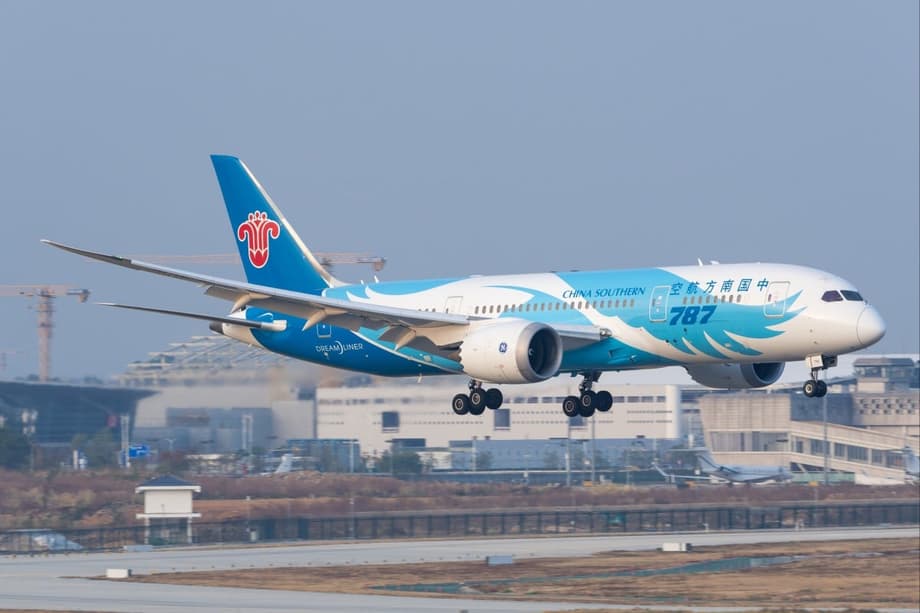
While their Western competitors retreat, Chinese airlines are aggressively expanding. Data compiled by British aviation intelligence firm OAG shows Chinese carriers will add nearly 2,900 flights to their summer schedules compared with last year. Air China leads this expansion with 1,120 additional flights, followed by China Southern Airlines with 839 and China Eastern Airlines with 654. Hainan Airlines and smaller carriers are also increasing capacity.
This expansion comes as Middle Eastern hubs, traditionally the connection point for Europe-Asia traffic, face severe disruption. More than 710 flights in the Middle East were canceled on a single day in early March as the regional conflict escalated. Middle Eastern airlines are reportedly rebooking stranded passengers onto Chinese carriers, which can bypass the congested southern corridor entirely.
The market dynamics are shifting rapidly. Bloomberg Equity Research associate Eric Zhu notes that while capacity on China-Europe routes has exceeded pre-pandemic levels, demand has only recovered to about 70%. This overcapacity has driven fares down by approximately 30%, yet Chinese carriers remain better positioned to absorb these losses due to their route efficiencies.
Operational Extremes: How Chinese Airlines Are Saving Fuel
Despite their routing advantage, Chinese airlines are not immune to the fuel price surge. In response, carriers have implemented draconian cost-cutting measures that extend to every aspect of operations. China Eastern Airlines and others have enforced stricter load and weight control, instructed pilots to taxi on one engine rather than two, and optimized fuel load planning with greater precision.
Pilots are now directed to fly at higher altitudes where thinner air reduces aerodynamic drag. Ground crews have removed non-essential items including in-flight magazines to reduce aircraft weight. A pilot with budget operator Spring Airlines explained the mathematics of these savings.
“Small per-flight savings, even insignificant amounts like 50 to 100kg (110 to 220lbs) of fuel, can add up if you multiply them by thousands of flights per week. This can mean tens of millions of yuan in savings.”
These measures reflect the razor-thin margins that define modern aviation. With fuel representing the largest variable expense, and Chinese carriers less hedged against oil price spikes than their European counterparts, operational efficiency has become a matter of survival.
Washington Threatens to Level the Playing Field
The competitive imbalance has prompted regulatory intervention in the United States. The Department of Transportation recently proposed banning Chinese airlines from flying over Russian airspace on routes to and from the United States. The Trump administration argues that the reduced flight times give Chinese carriers an unfair advantage over American airlines, which must fly longer routes to avoid Russian territory.
Chinese airlines have vigorously opposed the measure. In filings with the DOT, China Eastern warned the ban could extend flight times by two to three hours on key routes, significantly increasing fuel burn, raising fares, and boosting risks of missed connections. Air China and China Southern argued the change would harm large numbers of travelers. United Airlines has urged regulators to extend any ban to include Hong Kong-based Cathay Pacific, which also benefits from Russian overflight rights.
Legal experts question whether the US can practically enforce such rules. While the DOT cannot prevent a Chinese airline from entering Russian airspace, it can control landing rights and operating permits within the United States. However, monitoring compliance would require tracking flight plans in real time, creating significant regulatory strain.
Environmental analysts have raised additional concerns. Research from the University of Reading suggests Western airlines have increased fuel burn by up to 15% on some long-haul routes since 2022. Forcing Chinese carriers to adopt similarly inefficient routings would add millions of tonnes to global aviation emissions, undermining carbon reduction goals.
The Financial Reality: Profits Turn to Losses
Despite their strategic advantages, the fuel crisis is taking a financial toll on Chinese carriers. After Russia’s 2022 invasion, Chinese airlines captured market share and routing efficiencies that promised improved profitability. China Southern emerged as the only one of the “Big Three” state-owned airlines to report a full-year net profit for 2025.
However, the fourth quarter of 2025 saw all three major carriers return to losses as Middle East tensions drove oil prices above $120 per barrel. China Eastern posted a deficit of 3.7 billion yuan, while Air China lost 3.64 billion yuan. The reversal highlights a fundamental vulnerability: structural routing advantages mean little when fuel prices spike dramatically.
Analysts at HSBC project that the Big Three will not return to sustained profitability until 2027, indicating a prolonged period of financial strain. Unlike European and American carriers, which typically hedge fuel costs more aggressively, Asian airlines face greater exposure to spot market volatility. Major Asian carriers began implementing substantial fuel surcharges in April, with some long-haul surcharges rising by up to US$71.50.
The situation presents a paradox for investors. Chinese carriers hold dominant market positions on the world’s most important long-haul routes, with operational advantages that should generate superior returns. Yet fuel price volatility threatens to erase these gains, leaving the industry dependent on geopolitical stabilization to secure financial recovery.
What to Know
- Jet fuel prices have surged to US$195 per barrel, nearly double the price from one month ago, following the blockade of the Strait of Hormuz.
- Chinese airlines will add 2,900 flights to Europe this summer, while European carriers have reduced capacity, leaving Chinese operators with 84% market share on the route.
- European airlines face 10% to 15% higher operating costs due to Russian airspace closures, forcing longer flight times of 2 to 4 hours compared to Chinese competitors.
- Major carriers including Virgin Atlantic, SAS, and British Airways have suspended or terminated China routes, with European operator numbers falling from 14 in 2019 to 7 today.
- The US Department of Transportation has proposed banning Chinese airlines from using Russian airspace on US routes, a move that could add 2 to 3 hours to transpacific flights.
- China Eastern, Air China, and China Southern all returned to losses in Q4 2025 despite routing advantages, as fuel costs overwhelmed operational savings.