A Return to Wartime Rationing
South Korea stands on the precipice of implementing its most severe civilian fuel rationing measures in 35 years. Finance Minister Koo Yun-cheol announced this week that the government is actively reviewing plans to extend mandatory vehicle restrictions from public employees to the general public if global oil prices surge to between $120 and $130 per barrel. Such a move would mark the first time since the 1991 Gulf War that Seoul has imposed nationwide driving curbs on private citizens, underscoring the gravity of an energy crisis that has been rippling through global markets since the closure of the Strait of Hormuz.
The potential return to a rotating ban on private vehicles represents a dramatic escalation in South Korea’s emergency response to what officials describe as the worst energy security threat in the nation’s history. Currently, Brent crude prices hover between $100 and $110 per barrel, having already breached $115 in recent trading sessions amid escalating conflict involving Iran and Houthi forces in Yemen. The government has established a clear price threshold that, if crossed, would trigger compulsory participation in a five-day license plate rotation system that has thus far applied only to civil servants.
“We are reviewing whether to extend the system to the private sector to encourage public cooperation, but we hope the war ends soon so that such measures will not be necessary,” Koo said during an appearance on broadcaster KBS. His comments reflect both the government’s preparation for worst-case scenarios and the hope that diplomatic resolutions might yet avert the need for such draconian measures.
The Mechanics of Emergency Conservation
Under the existing framework, public sector vehicles operate under a strict five-day rotation determined by the final digit of their license plates. Vehicles ending in 1 and 6 are barred from operation on Mondays, those ending in 2 and 7 on Tuesdays, 3 and 8 on Wednesdays, 4 and 9 on Thursdays, and 5 and 0 on Fridays. This system, which took effect for government employees last week, affects more than 1.5 million vehicles across over 20,000 institutions including central ministries, local governments, schools, and universities.
Starting April 8, the government plans to implement an even stricter odd-even license plate system for approximately 11,000 public institutions, replacing the looser late-March rotation. Additionally, roughly 30,000 publicly operated car parks will enforce the five-day rotation. The Ministry of Climate, Energy and Environment estimates these measures will conserve approximately 3,000 barrels of petroleum daily, equivalent to roughly 476,700 liters or about $580,000 in daily savings at current prices.
Should the crisis escalate to what officials term “Level 3” or the “warning” stage (the third tier in South Korea’s four-stage resource security alert system), private vehicles would face similar compulsory restrictions. The government raised the alert to the “warning” level on April 1, citing prolonged instability in the Middle East. Energy Minister Kim Sung-whan has indicated that authorities are reviewing tighter demand-management measures, including broader enforcement of driving curbs while encouraging voluntary participation by companies and the financial sector.
Why South Korea Faces Unique Vulnerability
South Korea’s exposure to the Middle East crisis stems from its profound dependence on imported energy. The nation imports approximately 70 percent of its crude oil from Middle Eastern suppliers, with nearly all of those shipments previously transiting the Strait of Hormuz, the narrow waterway connecting the Persian Gulf and Gulf of Oman that normally carries one-fifth of global energy flows. The effective closure of this maritime chokepoint since the war began on February 28 has severed these supply lines, leaving Seoul scrambling for alternatives.
The vulnerability extends beyond crude oil to liquefied natural gas (LNG). South Korea ranks among the most exposed Asian importers to disruptions in Qatari LNG supplies, which have been offline following force majeure declarations. Together with Taiwan and Singapore, Seoul faces acute risks from the loss of Qatari term LNG supply, according to Vortexa LNG analyst Ken Lee. This dual threat to both oil and gas supplies has created a perfect storm for an economy that relies heavily on energy-intensive manufacturing industries including semiconductors, automobiles, and petrochemicals.
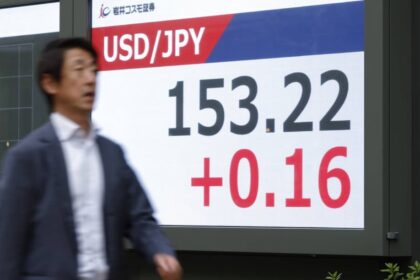
Compounding these supply concerns, the South Korean won has weakened significantly against the dollar, recently crossing the 1,500 won threshold. This currency depreciation creates a double blow for the economy, as dollar-denominated energy imports become simultaneously more expensive while domestic purchasing power erodes. Finance Minister Koo has attempted to downplay currency concerns, noting that South Korea maintains foreign reserves exceeding $420 billion and net external assets of roughly $900 billion, but markets remain jittery.
From Voluntary Conservation to Mandatory Rationing
The government’s approach has followed a graduated escalation model, beginning with voluntary measures before threatening compulsory restrictions. President Lee Jae Myung launched a nationwide 12-step energy-saving campaign earlier this month, invoking the patriotic spirit South Koreans displayed during the 1997 Asian financial crisis when families sold gold jewelry to support the national treasury. The president has taken to social media to model energy-efficient behavior, posting about using public transport and bicycles while urging citizens to take shorter showers, charge phones during daylight hours, and use washing machines only on weekends.
Major conglomerates including Samsung Electronics and SK Group have joined the voluntary effort, urging employees to reduce private car use and adopt fuel-saving measures. Lawmakers and senior politicians have similarly embraced public displays of conservation, sharing images of subway commutes and bicycle trips to encourage public cooperation. However, these voluntary measures may prove insufficient if oil prices breach the critical $120 threshold.
“If the Middle East situation worsens, the crisis alert would have to move up to the ‘warning’ stage, and around that point we would need to curb consumption,” Koo explained, referring to the alert system that ranges from “attention” through “warning” and “alert” to “serious.” The finance ministry has emphasized that any decision to apply vehicle rotation to private cars would follow a comprehensive review of oil prices, overall energy supply conditions, and impacts on daily life.
Global Parallels and Emergency Responses
South Korea is not alone in implementing emergency energy conservation. Across Asia and beyond, governments are imposing drastic measures as the Strait of Hormuz crisis squeezes global supply chains. The Philippines has declared a national emergency over high oil prices, instituted a four-day work week for government employees, and reportedly sought permission from the United States to purchase oil from sanctioned countries to replenish reserves estimated at just 45 days of consumption. Sri Lanka has declared every Wednesday a public holiday, limiting fuel rations to five liters weekly for motorcycles, 15 liters for cars, and 60 liters for buses.
Egypt has imposed early closing times for shops, restaurants, and cafes (9:00 pm on weekdays, 10:00 pm on weekends) to reduce energy consumption, though tourist areas remain exempt to protect foreign currency earnings. Australia has halved its fuel tax for three months at a cost of $1.75 billion while making public transport free in Victoria and Tasmania. Japan has begun a record release from its oil reserves and restarted more than a dozen nuclear reactors to compensate for lost Middle Eastern supplies.
Singapore’s Foreign Minister Vivian Balakrishnan captured the regional anxiety, stating that “closing the Strait of Hormuz is, to some extent, an Asian crisis. This vulnerability is known, but it has not been tested to this extent before.” The comment reflects growing recognition that Asian economies, which depend on the Middle East for the bulk of their crude imports, face existential economic threats from the ongoing conflict.
Economic Countermeasures and Strategic Pivots
Beyond driving restrictions, South Korea has deployed an array of economic interventions to cushion the shock. The government imposed price caps on gasoline, diesel, and heating kerosene on March 13, the first such intervention in 30 years. Goldman Sachs estimates these caps could lower retail fuel prices by roughly 8 percent on an annual basis. Seoul is also preparing a supplementary budget worth approximately 25 trillion won ($16.5 billion) to mitigate economic fallout, with spending focused on responding to high oil prices, supporting livelihoods for small business owners, assisting key industries, and stabilizing supply chains.
On the supply side, Seoul has delayed the retirement of coal-fired power plants and removed an 80 percent maximum operation limit on existing facilities. The government is also accelerating the restart of five nuclear power plants currently under maintenance, raising overall nuclear utilization rates from around 70 percent to over 80 percent. These measures represent a temporary retreat from the country’s green energy transition goals in favor of immediate energy security.
President Lee has stressed the need for longer-term structural changes, urging acceleration toward renewable energy and electric vehicles. “The energy issue is so severe that even I cannot sleep at night,” he told cabinet members, citing International Energy Agency warnings that the Iran crisis represents the worst energy security threat in history. The president has also warned against profiteering, noting that “from delivery containers to medical tools, there is hardly any part of daily life that does not rely on petrochemical products.”
Historical Precedents and Public Memory
The potential return to nationwide driving restrictions evokes powerful memories for South Koreans who experienced similar measures during previous crises. During the 1970s oil shocks, authorities banned the operation of luxury cars with eight or more cylinders. Following the 1990 Gulf War, Seoul implemented a 10-day vehicle rotation system for approximately two months in 1991, the last time such comprehensive curbs were enforced. During the 1997 Asian financial crisis, officials considered but ultimately rejected an odd-even driving scheme.
These historical parallels serve as both warning and reassurance. They demonstrate that South Korea has previously survived severe energy disruptions through collective sacrifice and government coordination. However, they also highlight how extraordinary current circumstances must be to warrant such measures, given the economic transformation the country has undergone since the 1990s. Modern South Korea possesses a far more complex, energy-dependent economy than the industrializing nation of three decades ago, making disruptions potentially more costly.
“We desperately need the cooperation from the people,” President Lee declared at a recent cabinet meeting. “We can surely overcome this crisis if we put our minds together.” The statement reflects the government’s strategy of framing energy conservation as a patriotic duty akin to the pandemic compliance that helped South Korea achieve relatively low COVID-19 mortality rates through collective discipline.
The Bottom Line
- South Korea is preparing to implement its first nationwide driving restrictions on private vehicles since the 1991 Gulf War if oil prices reach $120 to $130 per barrel
- Current measures include a mandatory five-day license plate rotation for 1.5 million public sector vehicles and an odd-even system affecting 11,000 institutions starting April 8
- The government raised its energy security alert to the “warning” level, the third tier in a four-stage system, amid the closure of the Strait of Hormuz
- South Korea imports approximately 70 percent of its crude oil and 20 percent of its LNG from the Middle East, leaving it highly exposed to supply disruptions
- A supplementary budget of $16.5 billion has been prepared to support households and industries, while fuel price caps and nuclear plant restarts aim to stabilize the energy supply
- Major conglomerates including Samsung and SK Group have voluntarily joined conservation efforts, while the government considers additional fuel tax cuts
- Global parallels include fuel rationing in Sri Lanka, four-day work weeks in the Philippines, and early business closures in Egypt as countries worldwide grapple with the Iran war’s economic fallout