Emergency Shipment Bridges Critical Supply Gap
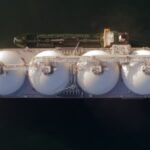
PetroChina has mobilized a rare cargo of crude oil from its strategic storage facilities in China to sustain operations at its Singapore refinery, marking an extraordinary response to supply chain disruptions triggered by the ongoing war in Iran. The tanker New Merit loaded approximately 1.8 million barrels of Murban crude at Dalian port in northeastern China during mid-March, completing delivery to Singapore’s Jurong Island by late March according to tanker tracking data from Vortexa and Kpler.
The shipment represents a significant deviation from standard operating procedures for both the Chinese state oil major and Beijing’s broader energy policy. China rarely exports crude oil, maintaining strict control over its strategic petroleum reserves and domestic production to ensure energy security for its massive consumption base. The cargo originated from storage tanks rather than fresh production, indicating the severity of supply constraints facing Asian refineries since the conflict began.
According to vessel tracking data and trade sources familiar with the transaction, the crude consisted of Murban grade oil from the United Arab Emirates. PetroChina holds equity stakes in Murban production fields, giving it preferential access to this particular crude stream. The company declined to provide immediate comment on the shipment when contacted by media outlets.
Strait of Hormuz Blockade Paralyzes Asian Refineries
The emergency supply mission comes as refineries across Southeast Asia struggle with severe feedstock shortages following the effective closure of the Strait of Hormuz. The waterway, which normally carries approximately one-fifth of global oil and liquefied natural gas shipments, has been effectively blocked for over a month since the United States and Israel initiated military operations against Iran on February 28.
The Singapore Refining Company facility, located on Jurong Island, typically processes Middle Eastern crude as its primary feedstock. Since early March, the plant has reduced operations to approximately 60 percent of its 285,000 barrel-per-day capacity, down from previous levels of 75 percent, according to sources familiar with the facility’s operations. This reduction mirrors similar cuts across the region.
Malaysia’s Pengerang Refining Company, a joint venture between Petronas and Saudi Aramco, shut its 300,000 barrel-per-day crude unit entirely last week due to lack of feedstock, with plans to halt derivative units including a 1.2 million-ton-per-year steam cracker. ExxonMobil has also reduced crude runs at its 592,000 barrel-per-day Jurong Island facility to roughly 50 percent or lower, down from 80 percent or more previously, due to delivery delays from Middle Eastern suppliers.
Beijing Breaks with Export Protocol
The decision to export crude from Chinese storage reserves signals the exceptional circumstances facing global oil markets. China maintains one of the world’s largest strategic petroleum reserves, with estimates suggesting approximately 1.2 billion barrels of onshore crude inventories. This stockpile represents nearly four months of the country’s total seaborne crude imports, providing substantial cushion against supply disruptions.
PetroChina chairman Dai Houliang addressed the supply situation last week, explaining the company’s current operational status.
We are able to maintain normal oil and gas operations due to our low reliance on supply that transits through the Strait of Hormuz.
The chairman’s comments came as the company tapped domestic storage to support international operations, demonstrating the flexibility of its integrated supply network. Analysts note that such measures provide temporary relief but cannot sustain indefinitely given China’s massive domestic consumption requirements.
Dalian Hub Faces Restructuring
The Dalian loading port holds particular significance in this transaction. PetroChina plans to close its historic Dalian refinery by mid-2025, marking the first complete shutdown of a state-operated refinery in China. The facility, which began operations in 1993, processes 410,000 barrels per day primarily of Russian ESPO crude delivered via pipeline from Siberian fields. While the refinery has focused on supplying domestic markets including diesel, gasoline, and jet fuel, its storage infrastructure remains operational as the company transitions operations to newer facilities in the region.
Joint Venture Structure Under Pressure
The Singapore Refining Company operates as a 50-50 joint venture between PetroChina and American energy major Chevron, with the Chinese company holding its stake through the wholly-owned Singapore Petroleum Company subsidiary. Under the partnership agreement, the two parent companies alternate responsibility for crude supply on a quarterly basis.
The facility represents one of three major refineries in Singapore, serving as a critical hub for fuel processing and distribution throughout Asia. The plant has historically processed approximately 179,000 barrels per day of crude via the Strait of Hormuz, according to Kpler shiptracking data, with typical monthly imports of around 6 million barrels. The current supply disruption has forced the refinery to cut or delay naphtha deliveries to at least two offtakers while maintaining reduced runs through at least the end of March.
Chevron declined to comment on specific refinery operations, while Singapore Refining Company representatives did not provide immediate statements regarding current processing rates or supply arrangements.
Asian Refineries Pivot to Russian Supply
While PetroChina tapped domestic reserves for its Singapore operations, Chinese state oil majors have simultaneously resumed purchases of Russian crude after a four-month suspension, taking advantage of a temporary United States sanctions waiver. Trading arms under PetroChina and Sinopec made inquiries with suppliers this week for possible purchases of Russian oil, representing their first such efforts since November 2025.
The hiatus in Russian purchases began after Washington imposed sanctions on Moscow’s two largest oil companies, Rosneft and Lukoil, in October 2025. The current 30-day waiver, which began March 12, applies to cargoes already loaded at sea. Approximately 126 million barrels of Russian crude remain afloat and available for purchase, though competition has intensified dramatically among Asian buyers.
Independent Chinese refiners, often called teapots, have begun reselling Russian and Iranian crude inventories purchased before the war at substantial profits rather than processing the oil themselves. End-April arriving ESPO blend, Russia’s flagship Far East export grade, was last offered at $8 per barrel above July ICE Brent on a delivered basis, compared with Brazil’s Tupi grade at premiums of $12 to $15 over dated Brent.
Muyu Xu, senior crude oil analyst at the global trade data firm Kpler, emphasized the severity of the supply crunch facing Asian buyers.
The real problem is how much cargo is still available in this market.
She added that countries are prioritizing immediate supply security over other considerations.
Right now, really the priority is to ensure your supply and all the other considerations are secondary.
Ownership Future Hangs in Balance
The supply crisis coincides with potential major changes in the Singapore refinery’s ownership structure. Global commodities traders Vitol and Glencore are expected to make formal bids for Chevron’s 50 percent stake in the facility, with the entire refinery valued at approximately $1 billion according to sources familiar with the sale process.
Chevron appointed Morgan Stanley to handle the sale as part of a broader cost-cutting initiative targeting $3 billion in reductions by the end of 2026. The divestment includes terminal and fuel storage facilities in Australia and the Philippines, plus retail stations in Malaysia, which may be purchased as a bundle or separately.
PetroChina holds the right of first refusal to purchase Chevron’s share, though the company did not respond to requests for comment regarding its intentions. Should PetroChina decline to exercise this option, the entry of trading houses like Vitol or Glencore could fundamentally alter the operational dynamics of the refinery, potentially affecting long-term supply security for the region.
Vitol currently owns a 32,000 barrel-per-day refinery in Tanjung Bin, Malaysia, and holds a 50 percent stake in the ATB Oil terminal near Jurong Island. Glencore, through a joint venture with Indonesia’s Chandra Asri, owns part of Singapore’s Aster Chemicals and Energy, which operates a 237,000 barrel-per-day refinery and chemical complex on Pulau Bukom and Jurong Island.
Key Points
- PetroChina shipped 1.8 million barrels of Murban crude from Dalian storage to its Singapore refinery to offset shortages caused by the Iran war blocking the Strait of Hormuz
- The Singapore Refining Company joint venture has reduced operations to 60 percent capacity, down from 75 percent, due to Middle Eastern supply disruptions
- China rarely exports crude oil, making this emergency shipment a significant departure from standard policy
- Asian refineries are competing aggressively for Russian crude after a US sanctions waiver allowed purchases of cargoes already at sea
- Chevron is selling its 50 percent stake in the Singapore refinery, with trading houses Vitol and Glencore preparing bids while PetroChina holds right of first refusal
- Refineries across Southeast Asia have cut processing rates or shut units entirely as the month-long Hormuz blockade continues