The 3.70 Target Marks a New Era
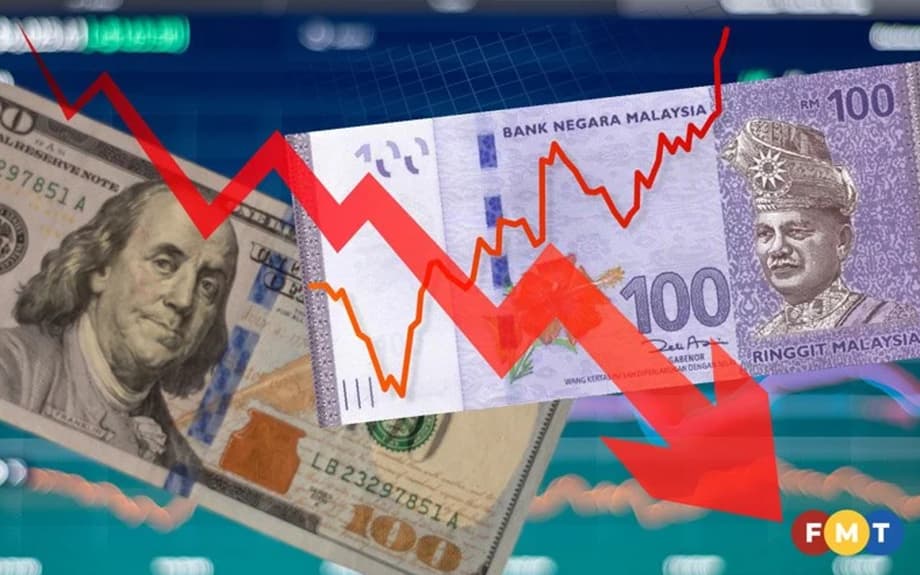
The Malaysian ringgit has already surged to levels unseen in nearly eight years, yet Japan’s largest bank believes the currency has substantially further to climb. MUFG Bank now projects the US dollar-ringgit pair will decline to 3.7000 by the close of 2026, representing one of the most optimistic forecasts among major financial institutions. Senior currency analyst Lloyd Chan attributes this constructive outlook to a fundamental transformation in Malaysia’s economic drivers, positioning the currency for a durable appreciation cycle rather than a temporary spike driven by short-term market sentiment.
The ringgit recently touched 3.8995 against the greenback, hovering near its strongest position since April 2018. This revised target suggests the currency could strengthen another five percent from current trading levels, a remarkable trajectory for a unit that has already appreciated roughly seventeen percent since the beginning of 2024. Such sustained strength has made the ringgit Asia’s best-performing currency over the period, outpacing regional peers including the Singapore dollar and Japanese yen while delivering double-digit gains against the Indonesian rupiah and Vietnamese dong.
The forecast represents a dramatic reversal from market expectations just three months prior. In November 2025, MUFG had anticipated the ringgit would reach merely 4.10 by year-end, while earlier in March 2025, the bank had warned of extended weakness driven by monetary policy divergence and concerning trade balance deterioration. The current projection reflects what analysts describe as a fundamental reclassification of the Malaysian economy from a Fed-dependent emerging market to a fundamentals-driven quality destination, creating room for appreciation even as global monetary conditions evolve.
Unlike previous cycles driven primarily by commodity price fluctuations, Chan emphasizes that the current appreciation rests upon structural foundations including sustained foreign direct investment, technological upgrading, and broad macroeconomic stability. This foundation suggests the ringgit can maintain its upward trajectory despite potential volatility in global financial markets or shifts in risk sentiment toward emerging economies.
Technology Investment Reshapes Economic Foundations
Malaysia’s economy is currently experiencing its strongest investment cycle in years, with approved investments across manufacturing and services sectors rising 14.7 percent year on year during the first nine months of 2025. Information and communications technology has emerged as the largest contributor to total approved investments, with foreign direct investment approvals in this sector surging approximately 32 percent compared to the same period last year. This digital transformation marks a decisive shift from the commodity-led expansions of the past toward a more sustainable, productivity-driven growth model that enhances the country’s external balances.
Lloyd Chan, senior currency analyst at MUFG Bank, highlighted the fundamental shift in Malaysia’s economic trajectory.
Malaysia’s economy is undergoing a strong investment cycle that will support its medium-term growth outlook.
The investment upcycle reflects renewed confidence in Malaysia’s policy framework, infrastructure capabilities, and role within regional supply chains. Since 2022, foreign participation in Malaysian technology investments has strengthened consistently, channeling capital into high-value manufacturing, data centers, and digital services. Chan notes that sustained foreign direct investment inflows typically support the currency by lifting productivity and strengthening external balances over time. When multinational corporations establish manufacturing facilities or research centers, they create persistent demand for local labor, goods, and services while generating export revenues that provide fundamental support for the exchange rate.
Whereas previous ringgit appreciation cycles often tracked volatile palm oil and petroleum prices, the current expansion draws support from semiconductor manufacturing, cloud computing infrastructure, and artificial intelligence supply chains. This structural rebalancing reduces dependence on raw material exports while positioning Malaysia as a critical node in global technology networks. The shift toward technology-driven investments helps compress risk premiums for the currency as investors recognize the long-term earnings potential and stability of Malaysia’s upgraded industrial base compared to commodity-dependent economies.
Policy Stability Enhances Yield Appeal
Bank Negara Malaysia’s steady monetary policy stance provides crucial support for the ringgit’s continued appreciation. MUFG expects the central bank to maintain the overnight policy rate at 2.75 percent throughout 2026, preserving a neutral posture that contrasts with aggressive easing cycles elsewhere. This stability allows Malaysia to benefit from narrowing interest rate differentials as the US Federal Reserve continues cutting rates, enhancing the relative yield appeal of Malaysian assets for international fixed-income investors seeking positive real returns.
Macroeconomic stability has successfully compressed risk premiums despite significant policy adjustments at home. Inflation has remained contained even after the rationalization of RON95 fuel subsidies and adjustments to sales and services tax, allowing the central bank to avoid reactive rate hikes that might otherwise have disrupted growth. Chan observed that fiscal discipline keeps sovereign risks in check, supporting investor confidence in local financial markets. The government’s budget deficit narrowed to 3.3 percent of GDP during the first nine months of 2025 compared to 4.1 percent in the same period last year, further reinforcing credibility.
The combination of stable domestic rates and falling US yields has already driven a steady pickup in net foreign bond inflows since 2024. As the Federal Reserve delivers additional cuts expected this year, Malaysian government securities offer increasingly attractive risk adjusted returns compared to developed market alternatives. This yield advantage, coupled with reasonable equity valuations and solid macroeconomic fundamentals, positions Malaysia for renewed foreign portfolio interest that provides additional upside for the currency beyond pure trade dynamics or speculative momentum.
Global Factors Align for Further Gains
External conditions are turning increasingly favorable for the ringgit beyond Malaysia’s domestic improvements. Resilient demand for electronics and semiconductors, particularly linked to United States capital expenditure in computers, peripherals, and artificial intelligence-related infrastructure, provides ongoing support for Malaysian exports. Firmer commodity prices also underpin the country’s terms of trade, with palm oil benefiting from zero percent US tariff treatment and Malaysia’s strategic role in rare-earth exports adding further resilience to the trade balance against potential shocks.
The Chinese yuan’s continued strength offers another significant tailwind given its historically close correlation with the ringgit. MUFG projects the yuan will appreciate to 6.8000 against the dollar by year-end, supported by China’s asset revaluation theme and structural reforms aimed at rebalancing the economy. This regional currency dynamic reduces downward pressure on the ringgit while reinforcing Malaysia’s position within Asian supply chains. The investment bank ranks the ringgit among its top three Asian currency picks for 2026 alongside the South Korean won and Taiwanese dollar, all of which benefit from exposure to persistent artificial intelligence themes coupled with strong domestic structural reform momentum.
Global investment houses are increasingly recognizing this shift in Malaysia’s economic profile. Goldman Sachs recently recommended buying the ringgit against the Singapore dollar, expecting the Malaysian currency to outperform across Asia as supply chains reconfigure around technology manufacturing. Analysts note that markets are pricing Malaysia less as a China proxy and more as a semiconductor and artificial intelligence-adjacent manufacturing hub, effectively reclassifying the economy into the quality emerging markets category. This perceptional upgrade attracts longer-term institutional capital rather than short-term speculative flows, providing more stable support for the exchange rate.
Assessing the Downside Risks
Despite the optimistic structural outlook, MUFG acknowledges several scenarios that could derail the ringgit’s projected trajectory toward 3.70. A sharp global growth slowdown would likely reduce demand for Malaysian exports across both technology and commodity sectors, undermining the current account position that has strengthened considerably in recent quarters. Similarly, a significant decline in global commodity prices or a downturn in the electronics cycle, particularly if artificial intelligence capital expenditure peaks sooner than expected or faces regulatory constraints, could remove key supports for the currency and trigger renewed volatility.
Monetary policy uncertainties in the United States present additional complications that could interrupt the ringgit’s appreciation. The Federal Reserve is expected to nominate a new chair in 2026, and markets are pricing in potential changes to the policy framework. Some analysts warn that the Fed might maintain tighter monetary conditions than currently anticipated if inflation proves persistent, or that a new chair could usher in a more hawkish stance than Jerome Powell’s administration. Such developments would widen rate differentials again, potentially strengthening the dollar and placing pressure on the ringgit to retreat from current levels despite Malaysia’s strong fundamentals.
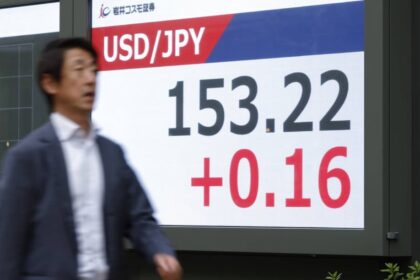
Technical factors also suggest potential for near-term volatility even within the broader uptrend. Currency specialists note that the ringgit appears technically overbought according to various momentum indicators, creating conditions for periodic profit-taking and market corrections as traders cash in gains from the recent rally. Also the yen’s recent weakness has influenced regional currency dynamics, with potential intervention by Japanese authorities creating unpredictable ripple effects across Asian foreign exchange markets. While these factors might cause temporary setbacks or consolidation phases, the structural investment inflows and policy stability provide cushions against sustained depreciation or a full reversal of the current trend.
The Essentials
- MUFG Bank forecasts the ringgit will strengthen to 3.70 against the US dollar by end-2026, upgraded from previous targets near 4.10
- Malaysia’s ICT sector leads a 14.7% surge in investment approvals, with technology investments up 32% year on year, marking a shift from commodity-dependent growth
- Bank Negara Malaysia is expected to maintain the overnight policy rate at 2.75% through 2026 while Fed easing enhances Malaysia’s relative yield appeal
- The ringgit has already gained approximately 17% since early 2024, reaching eight-year highs near 3.90 against the greenback
- Downside risks include a global growth slowdown, commodity price declines, electronics cycle downturn, and potential Federal Reserve policy shifts under new leadership