A Milestone Preview on the Tracks
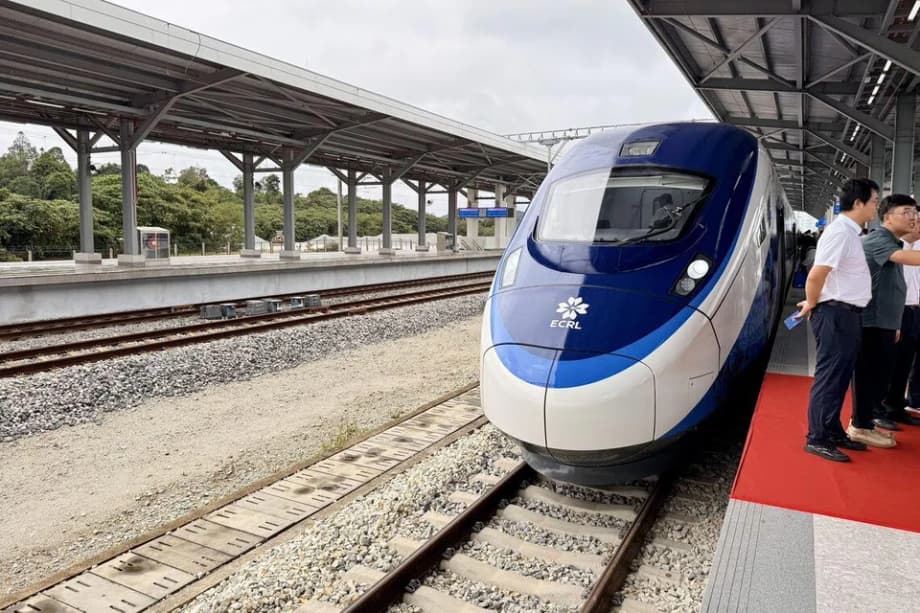
On February 11, Malaysia’s ambitious East Coast Rail Link (ECRL) project reached a critical moment as government officials and dignitaries gathered in Kuantan for a preview run of the long-awaited service. Transport Minister Anthony Loke joined Communications Minister Fahmi Fadzil and Chinese ambassador Ouyang Yuying aboard the recently delivered Chinese-made CR200J trainset, marking a 20-kilometer round trip between the KotaSAS station and Kuantan Port City in Pahang state. The demonstration served as tangible proof that the 665-kilometer infrastructure project remains firmly on schedule for its January 2027 launch, with construction now nearly 92 percent complete according to official statements.
The preview run introduced Malaysians to the rolling stock that will redefine intercity travel across Peninsular Malaysia. Unlike the existing railway network operated by Keretapi Tanah Melayu (KTM), which uses a narrow 1,000mm gauge limiting coach dimensions, the ECRL operates on the international standard 1,435mm gauge. This technical distinction allows coaches to be approximately 30 centimeters wider, accommodating five seats per row rather than the four found on KTM’s Electric Train Service (ETS). Communications Minister Fahmi Fadzil, who participated in the walkthrough, described the interior as spacious and comfortable.
It is very nice and spacious, less claustrophobic.
Each seat offers ample legroom and full-sized power sockets for electronic devices, while the trainset includes a dedicated dining car, though this facility remained non-operational during the preview demonstration. The first trainset delivered represents the initial unit of 11 passenger EMU sets that will serve the line, alongside 12 electric locomotives dedicated to cargo operations.
Engineering Marvels Across the Peninsula
The ECRL represents Malaysia’s first major railway construction since independence in 1957, stretching 665 kilometers from Gombak in Selangor to Kota Bharu in Kelantan. The route traverses the rugged Titiwangsa mountain range, requiring extensive tunneling and bridging to maintain a consistent track gradient of 0.9 percent. This engineering achievement allows passenger trains to operate at maximum speeds of 160 kilometers per hour, while freight services will run at 80 kilometers per hour. The project includes 41 tunnels, all of which have been fully excavated as of late 2025, including the record-breaking Genting Tunnel which at 16.39 kilometers became Southeast Asia’s longest rail tunnel upon its breakthrough earlier in 2025.
Transport Minister Anthony Loke officiated the Genting Tunnel breakthrough ceremony, calling it a historic moment for Malaysian infrastructure. The tunnel was completed on schedule after more than two years of construction using both Tunnel Boring Machines (TBM) and traditional drill-and-blast methods. The TBMs, built in China and specifically designed for Malaysia’s hard rock terrain, each weigh over 1,600 tonnes and measure nearly 9 meters in diameter. Malaysia Rail Link (MRL) CEO Datuk Seri Darwis Abdul Razak noted that completing this tunnel on time was particularly challenging given the mountainous conditions and geological complexity of the Main Range.
The project has also incorporated significant environmental considerations. Through route realignment completed in 2019, forest clearing was reduced from an initial projection of 2,000 hectares to just 276 hectares by utilizing more tunnels and elevated tracks. This adjustment minimized ecological disruption while maintaining the railway’s operational efficiency. The alignment change also shortened the total distance and reduced project costs from the original estimate to the final budget of RM50.27 billion (approximately $16.2 billion).
Chinese Technology Adapted for Malaysia
The rolling stock for the ECRL comes from CRRC Dalian Locomotive and Rolling Stock Company, a subsidiary of the state-owned China Railway Rolling Stock Corporation. The first batch of trains, comprising two six-car Electric Multiple Units (EMUs) and two electric locomotives for cargo, arrived at Kuantan Port in late 2025 following a month-long sea journey from Dalian in northeastern China. These units represent the first application of the CR200J series in Malaysia, adapted from proven CR200J and HXD3C technology platforms to suit local climate, terrain, and passenger requirements including high humidity and tropical temperatures.
Each six-car EMU can accommodate up to 430 to 440 passengers and features business and economy class cabins, wheelchair-accessible spaces, prayer rooms with ablution facilities, and hot water dispensers for beverages. A dual-redundancy network control system monitors traction, high voltage, and auxiliary systems in real time to ensure safety and reliability. The distinctive blue-and-white livery draws inspiration from Malaysia’s coastal landscapes and wildlife. For freight operations, the 12 electric locomotives will feature intelligent human-machine interfaces and millisecond-level safety monitoring for braking systems, fire protection, and high-voltage insulation.
Before entering service in January 2027, the trains must undergo rigorous testing including an 8,000-kilometer fault-free run supervised by Malaysia’s Land Public Transport Agency (APAD). CRRC Dalian has committed to providing full life-cycle services, including technical training for local personnel and two-year warranty coverage. Nine additional EMUs and ten more E-Locos are scheduled for delivery throughout 2026 in phases to support the ramp-up of operations.
A Unique Operational Partnership
Beyond construction, Malaysia and China have established an unusual operational arrangement for the ECRL’s management. Malaysia Rail Link (MRL), the project’s owner and a subsidiary of the Minister of Finance (Incorporated), signed a joint-venture agreement with China Communications Construction ECRL (CCCECRL) in December 2024 to oversee operations through a newly formed company. This partnership represents a 50-50 split in both investment and operational risk exposure, an arrangement rarely seen in international infrastructure projects of this scale.
Transport Minister Anthony Loke explained the financial structure during the signing ceremony. Under the terms, both parties share potential losses equally, but operational profits are distributed differently to favor the Malaysian government. The government will receive 80 percent of all operational profits, while the Chinese partner receives 20 percent. This arrangement was renegotiated in 2019 and materialized in late 2024.
The Chinese company built this track and they need to take the burden of risk in its operations as we want this to be a sustainable and profitable endeavour. As we all know, turning a profit in the rail sector is very hard.
Despite the operational partnership, MRL retains full ownership of all ECRL assets including tracks, stations, and rolling stock. The workforce composition emphasizes local participation, with 80 percent of operational and maintenance positions designated for Malaysian workers. This requirement forms part of broader technology transfer initiatives aimed at building domestic railway expertise and maintenance capabilities.
Transforming Economic Geography
The ECRL carries expectations of substantial economic transformation for Peninsular Malaysia’s less-developed east coast states. With a total project cost of RM50.27 billion, the railway is projected to boost Malaysia’s gross domestic product by 3.8 percent over 20 years through improved cargo transport efficiency and industrial spillover effects. The line will serve as a land bridge connecting Kuantan Port on the South China Sea with Port Klang on the Strait of Malacca, potentially cutting cargo shipping times by up to 2.5 days and enhancing Malaysia’s position as a regional logistics hub for international trade.
For residents of Kelantan, Terengganu, and Pahang, the railway promises dramatic improvements in mobility and quality of life. The journey from Gombak to Kota Bharu will take approximately four hours and 45 minutes, compared to the six to seven hours required by road under normal conditions, or the 12-plus hours common during festive periods when highway congestion peaks. Unlike driving, which requires constant attention and alertness, train passengers can rest, work, or enjoy entertainment during the trip. For Muaz Hussin, a marketing executive in Kuala Lumpur who originates from Pasir Mas in Kelantan, the benefits extend beyond mere time savings.
On top of that, you have to be driving the entire time, alert. On trains, I can sleep, watch movies and walk around.
Small business owners along the route anticipate increased tourism and economic activity. In coastal towns like Cherating and Balok near Kuantan, vendors hope the railway will reverse declining visitor numbers by solving transportation access issues that have plagued the area for years. In Temerloh, Pahang, located in the peninsula’s interior, local merchants expect domestic tourists from both coasts to visit more frequently once direct rail service becomes available. Restaurant owner Hazri Mokhtar expressed excitement about seeing trains on test runs, noting that visible progress has been encouraging after years of uncertainty surrounding the project.
From Suspension to System Integration
The ECRL’s path to completion has not been smooth. Construction began in August 2017 under Malaysia’s previous administration but was suspended in July 2018 following a change of government, triggering a comprehensive review of costs and alignment. The project resumed after a supplementary agreement signed in April 2019 reduced costs and realigned the southern route to better serve existing population centers while avoiding sensitive ecological areas. The current budget of RM50.27 billion represents the revised figure following these negotiations, down from original estimates that had raised concerns about affordability.
As the project nears physical completion, attention has shifted to system integration, which Transport Minister Loke identifies as the critical determinant of the January 2027 launch date. While construction of tracks, tunnels, and stations progresses steadily, the complex process of aligning signaling, communications, rolling stock, and safety systems presents the greatest technical challenge. Loke has drawn lessons from previous Malaysian rail projects, including the KLIA Terminal 1 aerotrain and LRT3, where system and software problems caused operational delays and disruptions despite completed infrastructure.
Rail systems are not just about the tracks. What matters most is whether the entire system works together safely and reliably. System integration testing is often the most demanding phase, as it ensures signalling, communications, rolling stock and safety systems operate in sync before passenger services begin.
The project has also generated local controversies that highlight the human costs of infrastructure development. Residents in Kampung Permatang Sungkai, Kelantan, have reported flooding they attribute to the raised track platform creating barriers to natural water flow during heavy rains. In Port Klang, Selangor, some homeowners face compulsory acquisition and demolition of their properties to accommodate the railway alignment. Questions have been raised about the project’s profitability and Malaysia’s capacity to service the Chinese loans funding 85 percent of construction costs, given that freight rather than passenger traffic is expected to generate approximately 70 percent of revenue.
Gateway to Regional Connectivity
Looking beyond domestic boundaries, the ECRL is positioning Malaysia as a potential hub in broader Asian rail networks. Transport Minister Loke has outlined plans to extend the line from its current terminus in Kota Bharu to Rantau Panjang, which sits on the Malaysian-Thai border opposite Sungai Kolok. This extension would connect with the revived Sungai Kolok-Rantau Panjang railway link, a cross-border service dormant for over two decades that Thai and Malaysian authorities are actively working to restore through bilateral agreements.
Such connections could eventually integrate the ECRL into the Trans-Asian Railway network, creating a continuous rail corridor potentially extending to Kunming in southern China. This would establish Malaysia as a critical transit point for overland trade between Southeast Asia and China, complementing the maritime routes already dominated by Port Klang and Kuantan Port. The ECRL’s standard gauge alignment also breaks from Malaysia’s historical narrow-gauge network, facilitating easier integration with international rail systems used throughout China, Europe, and most of Asia.
Phase 1 of the project, running from Kota Bharu to the Gombak Integrated Terminal, remains scheduled for completion by December 2026 with passenger operations beginning January 2027. Phase 2, connecting Gombak to Port Klang, is expected to complete by December 2027 with operations starting January 2028. Once fully operational, the railway will offer an alternative to the century-old eastern railway line, known colloquially among enthusiasts as the jungle train, which requires passengers to travel south to Gemas before switching to west coast services.
Key Points
- The ECRL conducted a successful preview run on February 11, 2025, using Chinese-made CR200J trains between KotaSAS and Kuantan Port City
- The 665-kilometer standard-gauge railway is approximately 92 percent complete, with Phase 1 operations scheduled to begin January 2027
- A Malaysia-China joint venture will operate the line, with Malaysia receiving 80 percent of profits while sharing losses equally at 50-50
- The project features Southeast Asia’s longest rail tunnel at 16.39 kilometers through the Genting mountain range
- Travel time between Kuala Lumpur (Gombak) and Kota Bharu will be reduced to 4 hours and 45 minutes, compared to 6 to 12 hours by road
- The railway will serve as a land bridge between Kuantan Port and Port Klang, with potential extensions to Thailand creating cross-border connectivity to the Trans-Asian Railway