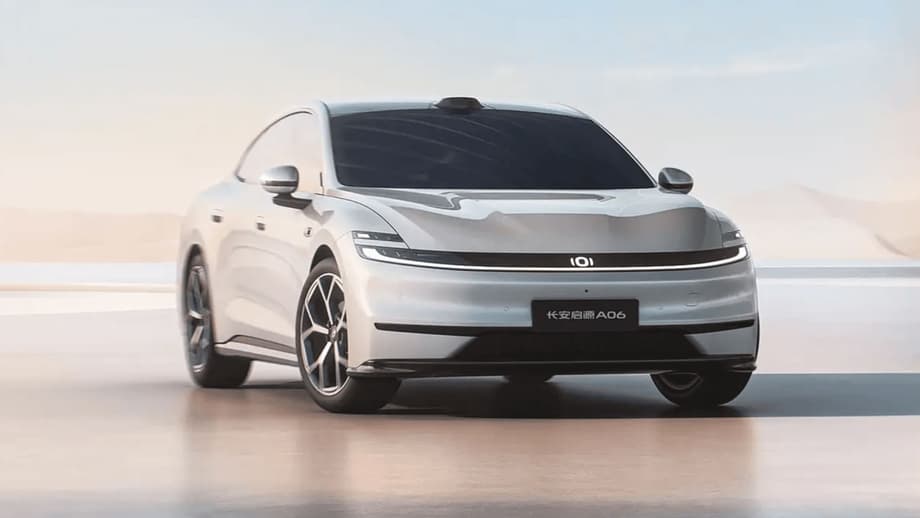
A New Chemistry Enters the Market
The electric vehicle industry has reached a significant milestone with the unveiling of the first mass-produced passenger car powered by sodium-ion battery technology. Chinese automaker Changan Automobile and battery giant CATL have announced that the Nevo A06 sedan will become the first production vehicle to rely on sodium rather than lithium for its energy storage, marking a fundamental shift in how manufacturers approach electrification.
The announcement came during a strategic launch event held in Yakeshi, Inner Mongolia, where the companies demonstrated the technology under extreme winter conditions. The CATL Naxtra battery pack, rated at 45 kWh, delivers approximately 400 kilometers of range under standard testing conditions, placing it in direct competition with existing lithium iron phosphate alternatives already popular in the entry level EV segment.
What distinguishes this development is not merely the substitution of one element for another, but the specific performance advantages that sodium chemistry brings to regions where conventional batteries struggle. While lithium-ion technology has dominated the market for over a decade, its limitations in cold weather and dependence on concentrated supply chains have prompted manufacturers to explore alternatives. The Nevo A06 represents the transition from laboratory curiosity to commercial reality, with production scheduled to begin by mid 2026.
The partnership between Changan and CATL signals a maturation of alternative battery technologies that have remained in developmental stages for decades. While sodium-ion research dates back to the 1980s, energy density limitations and cycle life challenges prevented commercial automotive applications until recent advances in electrode materials and electrolyte formulations solved critical technical barriers. The Nevo A06 does not represent an experimental prototype or limited production showcase, but rather a volume vehicle intended for daily transportation duties in some of the world’s most demanding climates.
How Sodium-Ion Changes the Battery Landscape
Sodium-ion batteries operate on principles similar to their lithium counterparts, moving ions between electrodes during charge and discharge cycles. However, the substitution of sodium for lithium brings distinct material properties that alter performance characteristics. CATL’s Naxtra cells achieve an energy density of 175 watt-hours per kilogram, roughly equivalent to current lithium iron phosphate technology though below the density of nickel rich chemistries.
The battery employs a Cell to Pack architecture that integrates cells directly into the pack structure, eliminating intermediate modules and improving space utilization. This design choice helps compensate for the lower volumetric energy density of sodium chemistry by reducing structural overhead. The 45 kWh pack installed in the Nevo A06 weighs approximately 257 kilograms, making it suitable for compact and mid-size vehicles where range requirements remain modest.
Unlike conventional modular designs that house cells in separate enclosures before integration into the pack, the Cell to Pack approach used in the Naxtra system bonds cells directly to the structure. This method reduces weight and complexity while improving thermal management capabilities. The resulting configuration achieves packaging efficiency rates that help compensate for the intrinsic energy density limitations of early generation sodium cells, allowing competitive range figures despite lower watt-hour-per-kilogram ratings compared to advanced nickel cobalt aluminum formulations.
CATL has invested nearly a decade in developing this technology, allocating over 10 billion yuan to research and producing nearly 300,000 test cells during the validation phase. The company has assembled a specialized team of more than 300 researchers, including 20 doctoral specialists, to solve the engineering challenges associated with scaling sodium chemistry for automotive applications. This extensive preparation has resulted in a battery that meets certification standards for passenger vehicles, a first for sodium technology.
Conquering the Frozen North
The most compelling advantage of the Naxtra sodium-ion system manifests in subzero temperatures, where traditional lithium batteries typically suffer significant performance degradation. During validation testing in Inner Mongolia, the Nevo A06 demonstrated charging capability at temperatures as low as minus 30 degrees Celsius, with operational stability confirmed down to minus 50 degrees Celsius. At minus 40 degrees Celsius, the battery retained over 90 percent of its usable capacity, a performance metric that remains difficult to achieve with conventional lithium iron phosphate cells.
This cold weather resilience addresses one of the most persistent concerns among potential EV buyers in northern climates. Current lithium batteries can lose half their effective range in extreme winter conditions, creating anxiety for drivers in regions with prolonged cold seasons. The sodium-ion chemistry delivers discharge power nearly three times higher than comparable lithium iron phosphate packs at minus 30 degrees Celsius, ensuring that heating systems and drivetrains receive adequate energy even when ambient temperatures drop severely.
The implications extend beyond comfort to fundamental usability. In regions where winter temperatures regularly fall below minus 20 degrees Celsius, the ability to maintain range and charging capability transforms the practical viability of electric transportation. CATL has indicated that this performance advantage makes sodium-ion technology particularly suitable for markets in northern China, the American Midwest, and Nordic countries where cold weather has historically slowed EV adoption rates.
Winter performance degradation has historically forced EV owners in cold climates to modify driving habits significantly, reducing cabin heating usage and limiting highway speeds to conserve battery charge. The sodium-ion alternative appears to eliminate many of these compromises, allowing normal vehicle operation without the range anxiety that typically accompanies January driving in northern latitudes. This capability could accelerate adoption in regions where consumers have previously dismissed electric vehicles as impractical for year-round use.
Built to Survive Extreme Abuse
Safety considerations have driven significant interest in sodium-ion chemistry, particularly regarding thermal stability and resistance to physical damage. CATL subjected the Naxtra battery to a series of tests exceeding national safety standards, including multi-directional compression, electric drill penetration, and complete sawing through the pack while fully charged. Throughout these extreme scenarios, the battery exhibited no smoke, fire, or thermal runaway, and remarkably continued to discharge normally even after being physically severed.
The fundamental chemistry of sodium-ion cells reduces the risk of thermal runaway compared to both nickel manganese cobalt and lithium iron phosphate alternatives. This safety margin stems from the material properties of sodium compounds, which remain stable under abuse conditions that would compromise lithium based systems. For vehicle occupants, this translates to reduced fire risk in collision scenarios or manufacturing defects.
Additionally, the elimination of cobalt and the reduction of copper requirements in some sodium-ion formulations decreases dependence on minerals associated with problematic mining practices. While the Naxtra cells use specific proprietary compositions that CATL has not fully disclosed, the general shift toward sodium addresses growing concerns regarding the ethical and environmental implications of lithium extraction in certain geographic regions.
End-of-life handling for sodium-ion batteries also presents advantages, as the materials involved carry lower toxicity concerns and require less intensive processing for recycling or disposal compared to heavy metal containing lithium chemistries. While comprehensive recycling infrastructure for sodium systems remains under development, the fundamental chemistry suggests reduced environmental impact throughout the complete lifecycle of the vehicle.
Economics of Abundance
The raw material economics of sodium-ion technology present a compelling case for widespread adoption. Sodium occurs approximately one thousand times more abundantly than lithium in the earth’s crust, distributed across diverse geographic regions rather than concentrated in specific countries. This abundance virtually eliminates supply chain bottlenecks and price volatility associated with lithium carbonate markets, which reached 170,000 yuan per ton earlier this year, up from roughly 50,000 yuan in 2021.
Industry analysts project significant cost advantages as production scales. Early estimates suggested first generation sodium cells could reach approximately 77 dollars per kilowatt-hour at the pack level, with second generation costs potentially falling to 40 dollars per kilowatt-hour. These figures compare favorably to current lithium iron phosphate pack prices, which average around 81 dollars per kilowatt-hour according to BloombergNEF data, though actual vehicle integration costs vary considerably by manufacturer.
Beyond immediate pricing, the supply chain diversification offers strategic benefits for automakers seeking to reduce dependence on single-source mineral supplies. The geographic distribution of sodium availability means that battery production could expand to regions currently excluded from the lithium supply chain, potentially reducing shipping costs and carbon footprints associated with raw material transport. CATL has indicated that scaled production could significantly lower entry level EV pricing, making electric mobility accessible to broader consumer segments.
CATL’s commitment to this technology includes dedicated production lines and supply chain partnerships specifically oriented toward sodium chemistry. The company has projected that sodium-ion shipments will grow from 9 gigawatt-hours in 2025 to over 1,000 gigawatt-hours within four years, representing one of the fastest scaling curves for any emerging battery technology. This production capacity will serve not only automotive applications but also stationary energy storage systems where weight and volume constraints matter less than cost and safety.
Lithium and Sodium Side by Side
CATL has characterized this launch as the beginning of a dual chemistry era, where manufacturers select battery technologies based on specific application requirements rather than defaulting to lithium-ion for all use cases. The company simultaneously announced advancements in lithium technology, including a 5C charging pack capable of charging from empty to full in approximately 12 minutes while retaining 80 percent capacity after 3,000 cycles, equating to over one million miles of service life.
This parallel development illustrates the complementary roles these chemistries will likely play. Sodium-ion batteries appear optimized for vehicles operating in extreme temperatures, urban commuters with moderate range requirements, and cost sensitive market segments. Lithium-ion technology, particularly advanced nickel rich formulations and high density phosphate variants, will continue serving long range vehicles and applications requiring rapid charging capability.
The contrast between the sodium-ion Naxtra and the 5C lithium pack announced simultaneously highlights the specialization that will define future battery selection. Where the sodium pack prioritizes thermal stability and cold weather resilience, the 5C lithium system targets drivers requiring rapid replenishment and maximum longevity. This 5C system can theoretically accept a full charge in the time required for a brief rest stop, addressing the other primary concern cited by potential EV buyers. By offering both solutions, CATL enables automakers to match powertrain specifications to actual use patterns rather than forcing a single compromise solution upon all customers.
Changan plans to integrate sodium-ion options across multiple brand lines including Avatr, Deepal, Qiyuan, and Uni, suggesting a strategic commitment to diversifying powertrain offerings. The company has also announced expansion of its Choco-Swap battery exchange network to over 3,000 stations across 140 Chinese cities, with particular emphasis on northern regions where cold weather impacts battery performance. This infrastructure investment supports the practical deployment of sodium-equipped vehicles in challenging climates.
From Lab to Showroom
The Changan Nevo A06 will enter the Chinese market around mid 2026, representing the culmination of nearly three years of intensive development since CATL first announced its sodium-ion roadmap. The vehicle platform, also known as the Qiyuan A06, previously launched with lithium iron phosphate options offering up to 630 kilometers of range, but the sodium variant targets a specific niche where cold weather reliability outweighs maximum range specifications.
Market projections suggest rapid growth for this technology category. Precedence Research estimates the global sodium-ion battery market will expand from 1.39 billion dollars in 2025 to 6.83 billion dollars by 2034, with 2026 marking an inflection point for automotive applications. CATL has indicated that future iterations of the Naxtra technology could achieve ranges of 500 to 600 kilometers for pure electric vehicles, while extended range and hybrid configurations might reach 400 kilometers on electric power alone.
Validation testing for the Nevo A06 extended beyond laboratory conditions to include real-world scenarios across diverse topographies. The Yakeshi testing grounds in Inner Mongolia provided temperatures consistently below minus 30 degrees Celsius, while additional programs will evaluate performance in Southeast Asian humidity and European alpine altitudes. This comprehensive approach ensures that the sodium-ion technology meets reliability standards comparable to proven lithium systems before reaching consumer hands.
For now, the rollout remains focused on the Chinese domestic market, though Changan maintains sales operations in 117 international markets. The company sold nearly three million vehicles last year, providing substantial volume to justify the production tooling required for sodium-ion manufacturing. As the technology matures and supply chains develop, similar offerings will likely appear from Western manufacturers seeking to address cold weather performance complaints that have slowed EV adoption in northern climates.
Key Points
- The Changan Nevo A06 becomes the first production passenger vehicle powered by sodium-ion batteries, using CATL’s 45 kWh Naxtra pack
- Sodium chemistry retains over 90 percent capacity at minus 40 degrees Celsius and charges normally at minus 30 degrees Celsius, outperforming lithium alternatives in extreme cold
- The battery delivers approximately 400 kilometers of range on China’s CLTC cycle, comparable to entry level lithium iron phosphate vehicles
- Extreme abuse testing including drilling and sawing produced no fire or thermal runaway, demonstrating superior safety characteristics
- Sodium is one thousand times more abundant than lithium, offering supply chain diversification and potential cost reductions as production scales
- CATL and Changan describe this as the beginning of a dual chemistry era, with sodium targeting cold climates and cost sensitive segments while lithium serves long range applications
- The vehicle launches in China by mid 2026, with expansion planned across Changan’s brand portfolio including Avatr, Deepal, Qiyuan, and Uni