From Leather-Bound Theses to Steel Bridge Blocks
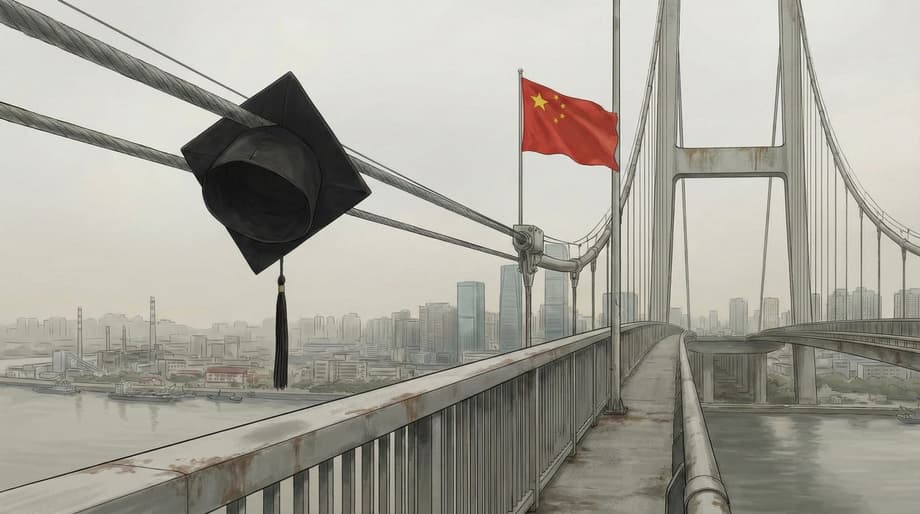
Last month, Zheng Hehui stood before an academic panel at Southeast University in Nanjing and defended his doctoral work. Instead of submitting a thick dissertation destined for library archives, he presented a product: reinforced steel, Lego-like blocks designed to snap together into massive bridge pylons. These blocks now support a cable-stayed rail and road bridge spanning the Yangtze River. Zheng represents a revolutionary shift in higher education. He is among the first cohort of “practical PhD” students in China who are bypassing traditional written theses entirely. Under a law passed in 2024, universities can now award engineering doctorates based on physical prototypes, new manufacturing techniques, or major project installations.
Since September, at least 11 engineers have obtained their doctoral degrees through this unconventional route. Their achievements range from Zheng’s bridge components to a fire-fighting system for large seaplanes and advanced welding equipment for nuclear power applications. Wei Lianfeng, a researcher at the Nuclear Power Institute of China, became the first graduate under this scheme at the Harbin Institute of Technology in September. His doctoral work consisted of developing vacuum laser welding processes and manufacturing the associated equipment, solving specific problems he encountered while working his way up from technician to technical expert over a decade.
This reform signals a strategic recalibration by the world’s second-largest economy. Faced with technological blockades and an intensifying trade war with the United States, China is fundamentally restructuring how it trains engineers. The objective is clear: prioritize function and real-world application over abstract theory. The government aims to cultivate what it calls “elite engineers” capable of solving concrete industrial problems rather than producing research that exists only to be cited by other academics.
The Paper Mill Crisis That Sparked Reform
To understand why China is dismantling its traditional PhD requirements, one must examine the mountain of fraudulent research it is trying to escape. For years, Chinese academia operated under a single metric: volume. In 2022, reports confirmed that China had overtaken the United States as the world leader in both total scientific research output and so-called high-impact studies. On the surface, this appeared to be a victory for Chinese science. Beneath the impressive citation counts, however, lay widespread structural rot that the government is now attempting to excise.
The pressure to “publish or perish” in China, where cash rewards and professional titles were often directly tied to publication counts, spawned a sprawling black market known as “paper mills.” These shadow organizations sell ghostwritten articles, fabricated data, and authorship slots to researchers desperate to meet quotas. Investigations have revealed that these firms operate like legitimate businesses, charging thousands of dollars to guarantee publication in recognized journals. The scale of academic fraud became so severe that in 2023 alone, more than 10,000 academic papers were retracted globally, with analyses indicating that a significant portion involved Chinese co-authors.
In early 2024, a genetics journal retracted 18 papers from China in a single action due to ethical concerns regarding DNA collection, while other publishers have been forced to shutter entire special issues overrun by fabricated science. This era created a generation that critics call “Paper Generals” (zhishang tanbing in Mandarin), referring to researchers who command impressive citation indices and win grants, but whose work collapses the moment it leaves the theoretical realm. The practical PhD represents the government’s direct counter-attack against this culture. By allowing students to graduate with a bridge pylon or a vacuum welding system, the Ministry of Education is effectively removing the economic foundation of the paper mill industry. New regulations already punish those who engage in misconduct, but the PhD reform goes further by eliminating the incentive entirely. If you can build the machine, you do not need to buy the paper.
Geopolitics and the Race for Tech Independence
The drive for practical doctorates is explicitly linked to national security and economic sovereignty. The program specifically targets what Chinese officials describe as “bottleneck” problems, meaning technological choke points where the country relies heavily on foreign imports. Since 2022, the Ministry of Education has launched pilot programs in 18 critical fields, including electronics, information technology, and semiconductors. This initiative represents the culmination of the National Excellence Engineer Training Program, a massive mobilization involving 50 newly established graduate colleges for engineers, 20,000 enrolled students, 60 participating universities, and over 100 enterprises.
The geopolitical urgency became acute when the United States, under the Biden administration, assembled a coalition with the Netherlands, South Korea, and Japan to block China from obtaining the most advanced semiconductor manufacturing equipment. Extreme ultraviolet lithography (EUV) machines, which produce the most advanced chips, became the focus of this blockade. EUV lithography is exceptionally difficult to implement, requiring 13.5 nanometer light generated by firing high-power lasers at microscopic tin droplets to create plasma, reflected by multilayer mirrors manufactured to near-atomic precision. Only Dutch manufacturer ASML has succeeded in commercializing these systems.
Once commercial access to EUV systems was closed, China faced a clear choice: accept permanent exclusion from the most advanced chip manufacturing nodes, or attempt to recreate one of the most complex industrial systems ever built. The decision to pursue domestic EUV capability was not based on confidence in rapid success, but on the recognition that without EUV, the most advanced chips would remain structurally out of reach. The foundation under this effort is human capital. Over the past two decades, China has produced a substantial share of the world’s doctorates in the parent disciplines that feed advanced chip manufacturing, including optics, photonics, materials science, plasma physics, and control systems. However, the country discovered that academic credentials did not automatically translate into hardware capabilities. As Li Jiang, an information scientist at Nanjing University, observed, there is a substantial gap between the theoretical knowledge students learn from books and the hands-on ability society needs from them.
A New Model for Engineering Education
To ensure these degrees maintain rigorous standards and do not become “easy As,” universities have completely restructured their supervision models. Students in these programs are not guided by a single professor. Instead, they operate under a dual-mentor system. One supervisor provides academic rigor and theoretical foundations, while the other offers solid practical experience from industry. This addresses a chronic weakness in Chinese engineering education: many engineering professors in universities have always been academics and never worked in industry.
During oral examinations, candidates are evaluated by panels comprising both scholars and practicing engineers. They must prove their prototypes are viable in real-life scenarios and at scale, not just in laboratory conditions. This is a sharp divergence from “industrial PhDs” seen in Europe or the United States, where students might work with a company but are generally still expected to produce a traditional written thesis that contributes to scientific literature. Tsinghua University in Beijing, for example, has partnered with 56 companies in 14 key sectors over the past three years. Under the program, the university has recruited 1,430 graduate students who have already secured more than 100 patents while solving industrial problems. Some universities offering the program maintain strong links to national defense. Northwestern Polytechnical University in Xi’an works with 16 major Chinese groups, including China North Industries Group, which manufactures weapons and military equipment.
Zong Yingying, executive vice-dean of the graduate school at the Harbin Institute of Technology, one of the “Seven Sons of National Defence” universities known for military research, argues that the old thesis requirements actually held innovation back. Many engineering problems are unsuitable for the traditional thesis format or are simply not suitable for publication at all. For some issues, the solution lies solely in the technology itself. The 2024 degree law provided the legal framework for this approach, allowing students to submit industrial work, such as new welding techniques or microchip designs, instead of written theses.
Diffusion Versus Discovery
While other nations offer industry-linked doctorates, China’s approach differs fundamentally in its emphasis on diffusion rather than discovery. In the United States and Europe, industrial PhD programs typically require students to conduct research that advances theoretical knowledge, often resulting in published papers even when the work is commercially sponsored. China’s model treats the real-world impact itself as first-class scholarly output, asking what engineers can build rather than what they can theorize.
This strategy bears historical parallels to the Second Industrial Revolution in the United States. America did not dominate that era because it invented electricity or power tools first. It won because it built an entire system to spread them through technical institutes, land-grant universities, vocational schools, and applied engineering programs. Millions of people were trained to use, adapt, and deploy new technologies across the economy. Diffusion, not discovery, created dominance. China appears to be executing a similar strategy today, training engineers who can turn deep technology into infrastructure and industry at scale.
Europe’s deep technology sector illustrates the alternative risk. The European Union excels at frontier research but remains structurally weak at turning breakthroughs into economy-wide capability. European systems train for discovery rather than deployment, rewarding novelty over absorption. China’s practical PhD model explicitly prioritizes the ability to manufacture, iterate, and scale over the ability to publish theoretical advances. In the next technological cycle, the decisive advantage may not come from who invents first, but from who trains society to use technology at scale. Innovation opens the door, but diffusion determines who walks through it.
Challenges on the Horizon
While the program addresses clear economic and security needs, it introduces complex challenges for academic evaluation and quality control. Assessing a welding technique or a set of bridge blocks is objectively harder than grading a dissertation. It is relatively easy to judge whether a thesis is good using established academic criteria, but much harder to evaluate a real-life product, let alone decide whether it represents a leap forward for an entire industry. The intangible nature of practical innovation complicates assessment.
There is also the risk of quality control regarding the industry mentors themselves. If the industry experts hired by universities lack sufficient expertise or ethical standards, that will affect the quality of the doctorates awarded. The dual-mentor system depends entirely on the caliber of the practicing engineers recruited to guide students. Additionally, the current numbers remain small relative to the massive output of Chinese academia. In 2024, China graduated over 97,000 PhD students; the practical PhD cohort remains a tiny fraction of that total. However, the first cohort suggests a high uptake rate within the pilot programs, with 67 students from the pilot program applying for degrees based on designs, proposals, and case reports.
Researchers like Sun Yutao at Dalian University of Technology believe the program is unlikely to expand to foundational sciences such as theoretical physics or pure mathematics, where theory remains the primary currency. However, others see potential for the model to expand into hybrid fields. Future practical doctorates could emerge in disciplines like advanced medical device design and intelligent diagnosis, where the line between engineering and applied science blurs. The success of the current engineering pilots will likely determine whether this educational experiment spreads to other technical domains.
Key Points
- China passed a law in 2024 allowing engineering PhDs to be awarded based on physical prototypes, techniques, or project installations rather than traditional dissertations.
- At least 11 engineers have already earned doctorates through this route, including candidates who developed bridge components, fire-fighting systems for seaplanes, and nuclear welding equipment.
- The reform aims to combat widespread academic fraud in China’s “publish or perish” culture, including the “paper mill” black market that sells fake research and authorship slots.
- The program targets “bottleneck” technologies where China faces foreign dependency, particularly in semiconductors, as part of the National Excellence Engineer Training Program.
- Students work under a dual-mentor system pairing academic supervisors with industry experts, and must prove their inventions work at scale in real-world applications.
- Unlike industrial PhD programs in the West, which still typically require written theses, China’s practical PhDs treat real-world engineering impact as sufficient scholarly output.