A Long-Awaited Breakthrough for Korean Pop Music
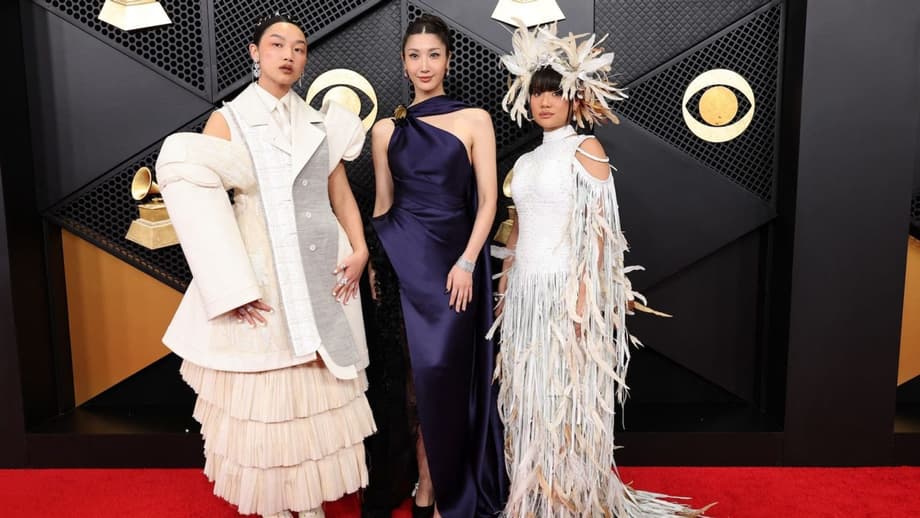
On Sunday, February 1, the 68th Annual Grammy Awards witnessed a historic moment that South Korean music fans had pursued for years. “Golden,” the smash hit from the Netflix animated phenomenon “KPop Demon Hunters,” claimed the award for Best Song Written for Visual Media, becoming the first K-pop track ever to win at music’s most prestigious ceremony. The victory arrived during the pre-telecast Premiere Ceremony at Los Angeles’ Peacock Theatre, where the fictional girl group Huntr/x secured an accolade that had long eluded the global powerhouse genre despite its massive international following.
- A Long-Awaited Breakthrough for Korean Pop Music
- The Animated Blockbuster That Changed Everything
- The Voices and Songwriters Behind the Anthem
- Shattering the Grammy Ceiling for Korean Pop
- Multiple Milestones for Korean Music
- National Pride and Cultural Impact
- Oscar Prospects and the Future of K-Pop Cinema
- The Bottom Line
The song, performed by Ejae, Audrey Nuna, and Rei Ami as the voices of the animated trio Rumi, Zoey, and Mira, represents far more than a soundtrack entry. It stands as a self-empowerment anthem that dominated the Billboard Hot 100 for eight consecutive weeks during the summer of 2025, topped the Billboard Global 100, and became Spotify’s seventh most-streamed song of the year. For an industry that has shattered streaming records and sold out stadiums worldwide, this golden statuette finally acknowledges what fans have known for years: K-pop has become an undeniable force in global music culture.
The achievement arrives after years of frustration for the genre’s biggest acts. BTS, the septet that helped popularize Korean pop music across Western markets, accumulated five Grammy nominations since 2021 without securing a win. Blackpink, another juggernaut act, similarly failed to convert nominations into victories. This drought made the “Golden” triumph particularly sweet for observers who had criticized the Recording Academy for overlooking K-pop’s cultural and commercial impact. The win suggests a significant shift in how the American music establishment views Korean popular music.
The Animated Blockbuster That Changed Everything
“KPop Demon Hunters” erupted onto screens in June 2025 as a collaboration between Sony Pictures Animation and Netflix, quickly becoming the streaming platform’s most-watched film in history with over 480 million views. The movie follows the adventures of Huntrix, a K-pop girl group whose members possess dual identities as demon hunters protecting humanity from supernatural threats. Their rivals, the Saja Boys, serve as both competing boy band and actual demons, creating a narrative where music literally possesses the power to save the world.
The film’s cultural penetration proved so profound that it inspired Demon Hunters-themed ramen products, boosted tourism to Seoul’s historic fortress walls and other cultural sites featured in the animation, and made the characters popular Halloween costume choices across the United States. According to Nielsen data, the title accumulated 20.5 billion viewing minutes in the United States alone during 2025, equivalent to 207 million full movie watches despite debuting midway through the year.
Chart Dominance and Musical Integration
What separated this soundtrack from typical animated fare was its seamless integration into the narrative. As Time magazine critic Kayti Burt observed, the music holds power to influence in-world listeners, making it integral to the plot rather than mere background accompaniment. The soundtrack became Billboard’s highest-charting album of 2025, achieving a feat last accomplished by Disney’s “Encanto” in 2022 when it reached the summit of the Billboard 200. At one point, four songs from the film simultaneously occupied spots in the top ten of the Billboard Hot 100, a first for any soundtrack.
The Voices and Songwriters Behind the Anthem
The Grammy trophy recognizes a diverse team of creative talent. The award went to songwriters Ejae (Kim Eun-jae), Park Hong Jun (also known as Teddy), Joong Gyu Kwak, Yu Han Lee, Hee Dong Nam, Jeong Hoon Seo, and Mark Sonnenblick. Ejae, who provided the singing voice for protagonist Rumi, made history as the first Korean-American female songwriter nominated for Song of the Year, while Teddy Park stands as a legendary figure who has shaped the global crossover of South Korean music for over two decades through his work with BIGBANG, G-Dragon, PSY, 2NE1, and Blackpink.
The creation of “Golden” emerged from personal struggle and artistic vision. Ejae revealed that she composed the melody while traveling to a dentist appointment, with the lyrics “gonna be golden” arriving later as a message of self-empowerment. “I don’t know if Mark knows this, but when I wrote ‘Golden,’ I was going through a hard time. I actually cried singing the demo, because it connected with me so much,” Ejae told Rolling Stone in an interview conducted before the Grammy ceremony. “Maybe that’s why ‘Golden’ is ‘going up up up,’ because everyone is going through a hard time and they want to feel hope.”
This bilingual approach proved crucial. Co-director Maggie Kang specifically requested Korean lyrics woven throughout the track rather than confined to verses, creating a genuine bridge between languages that audiences worldwide embraced. Producer Jeong Hoon Seo (known professionally as 24) delivered the acceptance speech in both English and Korean, paying special tribute to Teddy as “the pioneer of K-pop.”
“Growing up, people didn’t know where Korea was or what Korea was, and that’s why it’s so incredible to have the song ‘Golden’ being sung all over the world, singing the Korean lyrics word by word. It means so much and I think this award is about that representation. Today’s about celebrating culture and music that unites all culture, and we need that right now.”
Ejae shared these remarks in the press room after receiving the award, highlighting the personal significance of seeing Korean language and culture celebrated on the global stage.
Shattering the Grammy Ceiling for Korean Pop
For years, the Recording Academy faced criticism for overlooking K-pop despite the genre’s record-breaking commercial performance. BTS, the genre’s most prominent global ambassador, accumulated five Grammy nominations since 2021, including three in Best Pop Duo/Group Performance for “Dynamite,” “Butter,” and “My Universe,” yet departed empty-handed each time. Blackpink, another major act, similarly failed to secure wins despite their massive influence.
Music columnist Kim Do-hoon told AFP that the Grammys had traditionally sidelined K-pop because of what he described as its “cookie-cutter format” and heavy production values. “The Grammys have traditionally placed strong emphasis on musical quality, an area in which K-pop is not widely recognised. They are also known for avoiding heavily produced music, which is often the case with K-pop artists,” he explained. This win suggests a shifting perspective within the voting body.
In August 2025, the Recording Academy announced that significant contributors to K-pop had joined its voting membership, including Supreme Boi, Wonderkid, Bumzu, Slow Rabbit, Huh Yunjin, Jungwon, Yeonjun, Zico, Woozi, and Vernon. This expansion of representation within the academy likely contributed to the genre’s breakthrough. While South Korea had previously won Grammys in technical and classical categories, “Golden” marks the first victory for a K-pop production in a major popular music category.
Multiple Milestones for Korean Music
The 2026 ceremony represented a watershed night for K-pop visibility beyond the “Golden” victory. Blackpink member Rosé opened the primetime telecast with a raucous performance of “APT.” alongside Bruno Mars, their collaboration having earned nominations for Song of the Year, Record of the Year, and Best Pop Duo/Group Performance. She left without a trophy, yet Rosé became the first K-pop artist to score a nomination in the general field as a main performer, the first Korean soloist nominated, and the first Korean soloist to perform at the ceremony, joining BTS as the only K-pop acts to grace the Grammy stage.
The group Katseye, created through a partnership between South Korea’s HYBE and U.S. label Geffen Records, earned two nominations including Best New Artist for their track “Gabriela,” though their music blends multiple influences beyond strict K-pop parameters. These multiple high-profile nominations suggest the “Grammy barrier” may indeed be permanently fractured.
The Song of the Year category itself reflected K-pop’s ascension, with both “Golden” and “APT.” competing against entries by Billie Eilish, Kendrick Lamar, Sabrina Carpenter, Lady Gaga, Bad Bunny, and Doechii. Billie Eilish and Finneas O’Connell ultimately won for “Wildflower,” yet the presence of two Korean-pop entries in the prestigious category signaled genuine mainstream acceptance.
National Pride and Cultural Impact
South Korea erupted in celebration following the announcement, with President Lee Jae Myung taking to social media platform X to praise the achievement. “This marks the first time a K-pop composer or producer has won a Grammy Award. I extend my warmest congratulations on this remarkable achievement,” he wrote, adding that the victory opens a “new chapter in K-pop history.”
The Kyunghyang Shinmun daily noted that the Grammys had long been viewed as “a conservative awards show that is not particularly open to diverse music genres, making it difficult for K-pop to break through.” Yonhap news agency utilized the shorthand “Kedehun” (referring to “Korean Demon Hunters”) in its headline declaring the triumph. YouTube commentator striderz1971 captured fan sentiment by noting that with major acts like BTS and Blackpink previously unable to secure wins, “a path had now been forced open” for future recognition.
For Ejae personally, the moment carried profound significance. After struggling as a young K-pop trainee in South Korea before establishing herself in the United States, she stood on music’s biggest stage representing both her heritage and her journey. “This is crazy because this is like a historical moment for you know, as being a Korean American,” she remarked at the press conference. “It’s a song that also represents Korea.”
Oscar Prospects and the Future of K-Pop Cinema
The awards season momentum shows no signs of slowing. “Golden” previously won Best Original Song at the Golden Globes and Critics’ Choice Awards, and currently stands nominated for Best Original Song at the upcoming Academy Awards, marking the first Oscar nomination for a K-pop track. The film itself contends for Best Animated Feature at the Oscars, while the Huntr/x trio is scheduled to perform “Golden” live at the BAFTA Film Awards in London on February 22, marking their first international performance outside the United States.
Netflix and Sony Animation have already confirmed plans for a sequel to “KPop Demon Hunters,” ensuring the fictional band’s continued cultural presence. Meanwhile, Ejae has capitalized on her newfound spotlight by releasing a solo single “Time After Time,” an anthemic pop reflection on heartbreak that demonstrates her range beyond the animated character of Rumi.
Some critics debate whether “Golden” truly qualifies as K-pop given its English-language dominance and American pop production values, with comparisons to Katy Perry or early Lady Gaga emerging in analysis. However, as music critic Lim Hee-yun noted, for viewers previously unfamiliar with the genre beyond BTS or Blackpink, the film “certainly boosted awareness of the K-pop world and even sparked interest in traveling to South Korea.” The Grammy win, regardless of definitional debates, has undeniably elevated the genre’s institutional recognition within the Western music industry.
The Bottom Line
- “Golden” from “KPop Demon Hunters” won Best Song Written for Visual Media at the 2026 Grammy Awards, becoming the first K-pop track to win a Grammy.
- The song was performed by Ejae, Audrey Nuna, and Rei Ami as the fictional group Huntr/x, with songwriting credits including industry pioneer Teddy Park and Mark Sonnenblick.
- The animated film stands as Netflix’s most-watched movie ever with over 480 million views, while the soundtrack topped Billboard charts and dominated streaming platforms throughout 2025.
- South Korean President Lee Jae Myung celebrated the win as opening a “new chapter in K-pop history” and the first Grammy for a K-pop composer or producer.
- The victory follows years of nominations for acts like BTS without wins, and coincides with the Recording Academy’s recent expansion to include K-pop creators in its voting body.
- “Golden” continues its awards season run with an Oscar nomination for Best Original Song and a scheduled performance at the upcoming BAFTA Film Awards.