The Double Crisis Facing Southeast Asia’s Hidden Gem
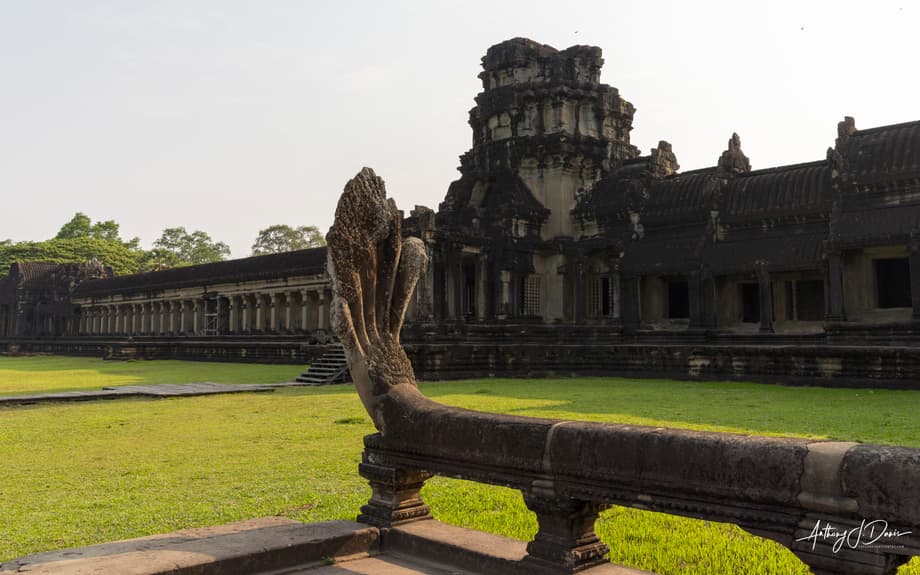
Cambodia stands at a crossroads where ancient glory meets modern infamy. The nation that once drew millions to marvel at the stone faces of Angkor Wat and the intricate bas-reliefs of Bayon now finds its tourism industry crumbling under the weight of two converging crises that have redefined the country’s global image. In 2024, tourism contributed merely 9.4% to the national gross domestic product, a sharp decline from 12.1% in 2019, according to ministry data released this week. This contraction reflects not just the lingering effects of the global pandemic, but something far more insidious: the country’s emerging reputation as a global hub for cybercrime combined with active military conflict along its western border. The dual pressures have created a perfect storm that is washing away two decades of careful destination marketing and infrastructure development. Visitors from across the Asia Pacific region, who traditionally comprised the backbone of Cambodia’s tourism economy, have retreated in large numbers. Regional arrivals plummeted by 20% throughout 2025, with certain source markets experiencing catastrophic declines exceeding 50%. As the new year begins, early indicators suggest the situation is deteriorating further rather than stabilizing, raising urgent questions about the sector’s viability during the current high season.
When Neighbors Become Barriers
The ancient temples of Angkor have survived centuries of jungle encroachment, but they cannot withstand the closure of land borders. For decades, backpackers and cultural tourists have flowed overland from Thailand into Cambodia, creating a vibrant artery of travel that connected Southeast Asia’s most popular destinations. That pathway has now been severed by the worst border conflict between the two nations in over a decade. Tensions that simmered for generations regarding disputed territory near the Preah Vihear temple erupted into sustained armed conflict throughout 2025. The clashes, which included exchanges of artillery fire and military strikes, resulted in at least one Cambodian soldier’s death and prompted both nations to implement severe restrictions on cross-border movement.
Thailand imposed a complete ban on tourist crossings through seven provinces, blocking all vehicles and travelers from entering Cambodia via land. The Thai military stated these measures matched the current security situation, though Prime Minister Paetongtarn Shinawatra also explicitly linked the restrictions to efforts targeting scam operations based in Cambodian border towns. The impact on tourism was immediate and devastating. Land arrivals collapsed by 26.5% through September 2025, representing roughly 800,000 fewer visitors compared to the previous year. Travelers from Thailand, historically Cambodia’s largest source market, fell by more than 35% from January through September, then plummeted an astonishing 91% in September alone as the border closure took full effect. The closure also disrupted transit routes from Laos, causing sharp drops in visitors from that nation as well. Even Siem Reap, located far from the border zones, felt the impact. Many tourists historically reached Angkor Wat by road from Thailand, and the severing of that route has isolated the UNESCO World Heritage site from its natural geographic tourism flow.
From Temples to Fraud Centers
While bullets and border closures have blocked the western frontier, a different invasion has poisoned Cambodia’s reputation from within. The country has become synonymous with a new form of industrial scale criminal enterprise: the online scam compound. These operations, often housed in casino resorts and special economic zones, have transformed portions of the Cambodian landscape into centers for cyber fraud that target victims worldwide. According to the United Nations Office on Drugs and Crime, profits from these illicit activities have reportedly flowed to political elites within the country, creating complex incentives that have hampered enforcement efforts. The scale of operations is staggering. Criminal syndicates have established sophisticated facilities capable of housing thousands of workers, many of them victims of human trafficking who were lured by false job offers then forced to work under conditions of near slavery. These compounds generate billions of dollars annually through romance scams, fake investment platforms, cryptocurrency fraud, and impersonation schemes. The reputational damage has proven particularly acute in East Asian markets, where media coverage of abductions, torture, and deaths has dominated headlines. The crisis reached a tragic peak with the death of a South Korean student who was allegedly tortured after being lured to work in a Cambodian scam compound. This incident prompted Seoul to impose its most severe travel warning, effectively banning travel to parts of the country where employment fraud has surged. Unlike Western tourists, who often remain unaware of these dangers, Asian travelers receive constant reminders through social media and news reports about the risks of detention and forced criminality in Cambodia.
By the Numbers: Measuring the Collapse
The statistical evidence of Cambodia’s tourism crisis paints a sobering picture that extends beyond general declines to specific market failures. At the crown jewel of Cambodian tourism, Angkor Archaeological Park, international visitation dropped 6.7% in 2025 to 955,131 visitors, generating $44.7 million in ticket revenue, down 6.5% from the previous year. The January 2026 figures reveal an accelerating disaster, with visits to Angkor plummeting 36% compared to the same month in 2025, and revenue falling 34.5% to just $4.52 million. The geographic distribution of losses tells a clear story about the source of troubles. While European markets have shown resilience, with French visits rising 9.7% and UK arrivals growing 17%, Asian markets have cratered. South Korean tourism collapsed by 20.6% following the travel warning implementation. Thai visitors evaporated. Even the Chinese market, which showed a 41.5% increase in December 2025, remains at less than half of pre pandemic levels, depriving the economy of high spending tourists who once filled luxury hotels in Siem Reap and Phnom Penh.
The crisis has moved beyond simple inconvenience to threaten economic stability. With tourism contributing less than 10% of GDP compared to over 12% five years ago, the sector no longer provides the economic engine that once drove national development. Hotels and restaurants in tourist districts report occupancy rates significantly below projections for 2026, forcing business owners to reconsider investments and staffing levels. The decline has hit transportation providers, tour operators, and the thousands of small vendors who depend on temple visitors for their daily income. The loss of regional travelers who once formed the tourism foundation represents a structural shift that could take years to reverse, even if immediate security concerns are resolved.
Global Warnings and Diplomatic Pressure
International governments have responded to Cambodia’s dual crises with increasingly stern warnings that further deter potential visitors. Australia maintains a travel advisory urging citizens to exercise a high degree of caution and explicitly warning against travel within 50 kilometers of the Thailand border due to armed conflict, military strikes, and landmine risks. The advisory notes that the security situation remains unpredictable and that land border crossings remain closed. South Korea’s response has been even more severe. Following the death of its national, Seoul initially imposed Level 4 travel warnings, the most severe tier in its system, effectively treating portions of Cambodia as no go zones comparable to active war zones. While this was later downgraded to Level 2 or Level 1 for different regions following diplomatic negotiations, the psychological impact on Korean travelers persists.
China has applied pressure through diplomatic channels rather than public warnings. The Chinese embassy in Cambodia posted on WeChat in January that the scam hub reputation risked damaging bilateral relations between the countries. Beijing has demanded Phnom Penh crack down on operations that primarily target Chinese citizens, leading to the extradition of alleged scam kingpin Chen Zhi to face trial in China. These international pressures have placed the Cambodian government in a difficult position, forced to balance economic relationships with its powerful neighbors against the apparent involvement of domestic power structures in the lucrative scam trade. The contradictions have slowed the government’s response, as authorities attempt to dismantle criminal networks without disrupting the economic interests of well connected elites.
Inside the Fraud Factories
The reality of Cambodia’s scam centers emerged into harsh light following recent military actions and police raids. In the border town of O’Smach, Thai forces occupied a six story compound known as Royal Hill after bombing it during December clashes. What they discovered revealed the industrial scale and brutal efficiency of the operations. Rooms were designed to mimic police stations from at least seven countries including Australia, Singapore, China, and Brazil, complete with uniforms and official looking insignia. These mock facilities served as sets for impersonation scams where workers would threaten victims with arrest unless they transferred funds immediately. Other rooms replicated bank branches, including a Vietnamese bank complete with service counters and waiting areas, used to convince targets they were communicating with legitimate financial institutions.
Documents scattered throughout the abandoned facility included detailed profiles of intended victims, such as a 73 year old Japanese retiree complete with phone numbers and bank account balances, and scripts for romance scams written in multiple languages. The Thai military recovered 871 SIM cards enabling anonymous international communication, dozens of smartphones, and hard drives containing what appeared to be vast databases of potential targets. Lt. Gen. Teeranan Nandhakwang, director of the Thai army’s intelligence unit, described the infrastructure as highly organized, with good systems and workflows designed to maximize fraud efficiency. The compounds also housed military style anti riot equipment and emergency drill protocols, revealing how operators viewed their workers as captive labor to be controlled through force. The discovery of these facilities has confirmed worst fears about the sophistication of criminal networks operating with apparent impunity in border regions.
Phnom Penh Fights Back
Faced with economic collapse and international isolation, Cambodian authorities have launched aggressive efforts to dismantle the criminal networks and rebuild diplomatic bridges. The Ministry of Interior announced that authorities have made nearly 2,000 scam center arrests, with over 2,000 suspects detained in recent operations. In a significant move, Cambodian police arrested Chen Zhi, an alleged kingpin behind major fraud operations, and extradited him to China to face trial. The crackdown has extended to foreign nationals, with 73 South Koreans repatriated to face investigations over their alleged involvement in scams that cheated fellow Koreans out of $33 million. Cambodian authorities have detained over 5,000 suspects of 23 different nationalities and deported more than 4,500 to their home countries over the past seven months. Interior Ministry spokesperson Touch Sokhak has pledged to eliminate cyber fraud by April, though skepticism remains given previous enforcement failures.
On the diplomatic front, Cambodia has collaborated with South Korea since November 2025 to coordinate responses to transnational scam cases, resulting in Seoul lowering its travel warnings. To attract legitimate visitors, the Ministry of Tourism introduced a visa exemption for Chinese citizens running from June 15 to October 15, hoping to restore the crucial high spending market. Tourism Board CEO Kim Minea has acknowledged the need for a new marketing approach, suggesting campaigns built around Cambodia’s people and undiscovered culinary and coastal attractions rather than relying solely on Angkor Wat. The government has also attempted to address the border crisis through ceasefire agreements, though the December 27 truce remains fragile following the collapse of an earlier June agreement.
The Long Road to Recovery
Rebuilding Cambodia’s tourism sector requires more than arrests and border treaties; it demands the reconstruction of trust. Industry experts note that reputational damage travels faster than recovery news. Stephen Higgins, managing partner at Mekong Strategic Capital, observed that perceptions of danger affect East Asian travelers more intensely than Western visitors, creating a skewed recovery pattern where European numbers hold steady while crucial regional markets remain depressed. The challenge lies in convincing potential visitors that the isolated compounds in remote provinces bear no relation to the safety of major tourist corridors like Siem Reap and Phnom Penh. Yet the task is complicated by continued reports of gun crime, explosions from personal disputes, and street crimes like bag snatching that occur regularly in tourist areas.
For Cambodia to recover its status as a premier destination, analysts suggest the government must achieve sustained elimination of scam operations rather than temporary displacements, resolve border tensions through definitive legal frameworks rather than fragile ceasefires, and invest in marketing that highlights the warmth of Cambodian culture rather than just ancient stones. The path forward remains uncertain. While the Chinese market shows signs of revival and European visitors continue to discover the kingdom, the loss of regional travelers represents a structural shift that could take years to reverse. Until the shadows of fraud and conflict clear, the temples of Angkor may remain magnificent but largely unvisited monuments to a troubled present rather than a glorious past.
Key Points
- Tourism’s contribution to Cambodia’s GDP fell from 12.1% in 2019 to 9.4% in 2024
- Asia Pacific visitor numbers dropped 20% year on year in 2025, with Thai visitors down over 50%
- Angkor Archaeological Park saw 955,131 visitors in 2025, down 6.7%, with January 2026 visits crashing 36%
- Thailand closed all land border crossings to tourists following armed clashes and scam center concerns
- Cambodian authorities have arrested nearly 2,000 scam suspects and extradited key figures to China
- South Korea imposed then lowered travel warnings after cooperation agreements on scam crackdowns
- Chinese tourist arrivals rose 41.5% in December 2025 but remain below half of pre pandemic levels
- A ceasefire between Cambodia and Thailand took effect December 27, 2025, following months of conflict