Shein’s Half-Billion Dollar Gamble on Chinese Manufacturing
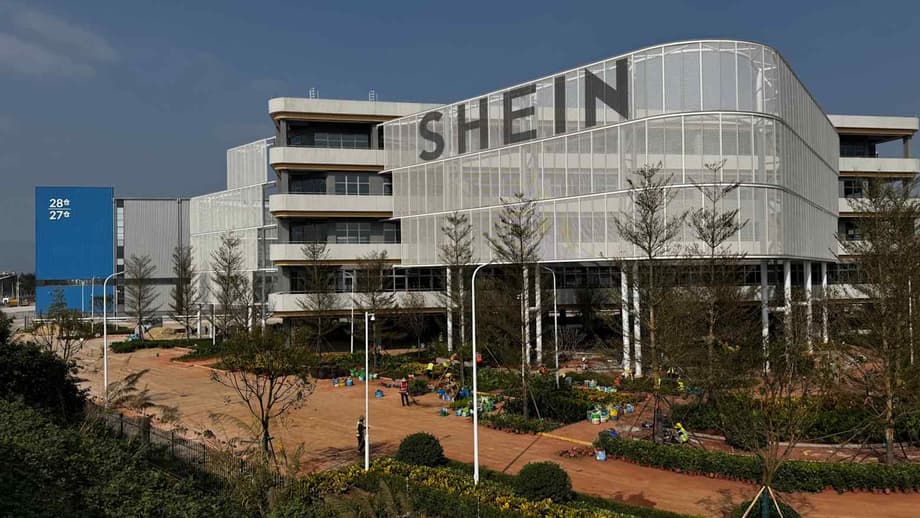
GUANGZHOU, Chinese fast-fashion giant Shein is investing 3.5 billion yuan ($504 million) to construct a massive logistics hub in Guangdong province, a strategic move that signals the company’s commitment to its domestic manufacturing base even as Western markets erect formidable trade barriers. The facility, which will strengthen Shein’s supply chain infrastructure, comes at a critical moment when the United States and European Union are implementing aggressive measures to curb the flow of ultra-cheap Chinese imports that have transformed global retail over the past decade.
- Shein’s Half-Billion Dollar Gamble on Chinese Manufacturing
- The End of an Era for Small-Parcel Trade
- Pressure from Beijing Complicates Diversification
- The Failed Brazilian Experiment
- Global Markets Redirect as US Doors Close
- Operational Calculations in a Hostile Trade Environment
- What Comes Next
- Key Points
The investment represents a calculated risk. Shein faces escalating tariffs that now exceed 100% on many Chinese goods entering the United States, alongside the termination of the “de minimis” exemption that previously allowed packages valued under $800 to enter duty-free. These policy changes, enacted by the Trump administration, have already forced Shein and rival Temu to raise prices by as much as 91% on some items, according to market observations. Workers in Guangdong’s manufacturing districts report shrinking hours and mounting anxiety about their economic futures.
Yet Beijing is actively pressuring Shein to maintain its production footprint within China, opposing attempts to shift manufacturing to Southeast Asia or Latin America. This convergence of political pressure at home and commercial pressure abroad has left Shein with limited options: double down on the manufacturing ecosystem that made it the world’s largest online fashion retailer, or watch its competitive advantage evaporate. The Guangdong hub thus serves dual purposes, offering operational improvements while signaling corporate loyalty to Chinese authorities who view manufacturing exports as both an economic priority and a matter of national strategic interest. The facility will consolidate warehousing and distribution capabilities in a region that produces roughly half of the world’s textiles and garments, utilizing existing infrastructure rather than attempting costly replication abroad. Company executives have not disclosed specific operational targets for the hub, but the scale of investment suggests an attempt to offset rising logistics costs through automation and centralized processing.
The End of an Era for Small-Parcel Trade
For years, Shein’s business model relied on a loophole in American trade law that allowed the company to ship millions of individual packages directly to American consumers without paying duties. This “de minimis” provision, which applied to shipments under $800, enabled Shein to offer $4 t-shirts and $10 dresses with delivery times that rivaled domestic retailers. The model generated over $48 billion in annual revenue and made Shein the dominant force in discount fashion.
That advantage disappeared on May 2, 2025, when the United States began imposing a 120% tariff on these small parcels, with a $100 fee per item that will rise to $200 by June 1. The change has already triggered a measurable decline in sales. Data from Bloomberg’s Second Measure indicated that Shein’s US sales dropped between 16% and 41% during a five-day stretch in February as policy changes took effect. Temu, owned by PDD Holdings, saw shares plunge nearly 14% after reporting a 50% drop in net profit, with executives warning that profitability would remain depressed for a considerable period of time.
The tariff structure has created an impossible arithmetic for traditional Shein suppliers. With profit margins often ranging between 10% and 15%, absorbing even a fraction of the new duties would render sales unprofitable. “This time, even cross-border small parcels are taxed. The supply chain simply can’t absorb this cost increase,” said Jerson Wong, head of an apparel company in Shantou, China’s largest lingerie manufacturing hub. Wong’s company, which relied on the United States for 40% of its sales, has stopped investing in the American market entirely.
Pressure from Beijing Complicates Diversification
While Shein might prefer to relocate production to countries facing lower tariff rates, the Chinese government has actively opposed such moves. According to sources familiar with the matter, Beijing has urged Shein to halt plans to shift manufacturing out of China, seeking to prevent an exodus of jobs and industrial capacity as Trump escalates trade tensions. This pressure adds a political dimension to Shein’s logistics investment, transforming the Guangdong hub from a purely commercial decision into a gesture of corporate alignment with state interests.
The Chinese government’s concerns are visible on the factory floor. In Panyu district, an area known locally as “Shein Village,” thousands of small garment workshops cluster in narrow streets where motorcycles transport rolls of fabric between four-story factory buildings. Workers here typically earn between 4,000 and 10,000 yuan monthly ($548 to $1,370), with wages tied directly to output volumes. When orders flow, work continues until midnight; when they dry up, shifts end at dinner time.
Worker Wu, employed at a jeans manufacturer in Panyu, describes the current atmosphere as precarious. His working hours have drastically decreased this year, shifting from midnight finishes to evening departures. Another worker, who declined to provide his name, said his employer had visited Vietnam several times to explore relocation options, only to face the prospect of 46% tariffs on Vietnamese imports and logistical infrastructure that remains underdeveloped compared to Guangdong’s mature ecosystem.
“The tariff war is ultimately going to hurt everyone; people like me, who just want to make a living,” says Lily Liao, owner of Guangzhou Dawang Garment, a textile factory covering 140,000 square feet. Her orders from US businesses have fallen from $100,000 monthly to zero since Trump took office.
The Failed Brazilian Experiment
Shein’s attempt to replicate its Chinese manufacturing model in Brazil illustrates why the company is now retreating to Guangdong. In 2023, Shein pledged $150 million to establish production partnerships with 2,000 Brazilian factories, promising to create 100,000 jobs by 2026. The initiative aimed to bypass Brazil’s “little blouse tax,” a 20% duty on online purchases under $50, while positioning the country as a manufacturing hub for Latin America.
The project faltered within months. Brazilian factories found they could not meet Shein’s demands for 30% price cuts and accelerated delivery schedules while complying with local labor regulations and tax structures. “Working in Brazil is different from working in China. Brazil has very different regulatory frameworks and standards,” said Fernando Pimentel, managing director of the Brazilian Association of Textile and Apparel Industry. Of 336 initial factory partnerships announced by late 2023, most have dissolved. Only a handful of suppliers remain, including GB Manufacturing in Espirito Santo state.
Shein conceded in a written statement that “production in Brazil required time to mature, and soon differences in business and industrial infrastructure became apparent.” The company acknowledged that “progress has been slower and more challenging” than anticipated. However, the model has proven difficult to replicate outside China, which has a highly integrated and efficient supply chain keeping costs low. This failure highlights a fundamental truth about Shein’s success: it depends on Guangdong’s unique ecosystem of integrated suppliers, specialized workers, and polyester fabric production that cannot be easily replicated elsewhere.
Global Markets Redirect as US Doors Close
As American markets become prohibitively expensive, Chinese e-commerce platforms are redirecting their ultra-cheap goods to alternative destinations. Australia has emerged as a primary beneficiary, with Chinese exports to the continent jumping 9% in April while shipments to the United States tumbled 18%. The Reserve Bank of Australia cited the redirection of tariff-affected exports as a factor enabling interest rate cuts, noting that cheap Chinese goods would help tame inflation by 20 to 50 basis points over the next two years.
Shein has responded by intensifying its presence in these secondary markets. The company held a pop-up store in Sydney earlier this month and launched Aralina, its first Australia-focused brand. Alibaba’s Taobao and JD.com have also entered the Australian market aggressively, offering free shipping thresholds and English-language interfaces to capture bargain-conscious consumers.
This geographic pivot, however, cannot fully compensate for losing access to the world’s largest consumer economy. The United States accounted for roughly 30% of global apparel and footwear consumption. While markets like Australia provide relief, they lack the scale to absorb China’s full manufacturing capacity. “Giving up the US market isn’t realistic,” said Hu Jie, professor at the Shanghai Advanced Institute of Finance. “But absorbing further tariffs will be extremely hard.”
Operational Calculations in a Hostile Trade Environment
The $500 million Guangdong logistics hub represents Shein’s attempt to extract maximum efficiency from the one market it cannot afford to lose: China itself. By consolidating warehousing, sorting, and distribution infrastructure in Guangdong, Shein aims to reduce per-unit costs sufficiently to offset some tariff impacts while maintaining the rapid turnaround times that define its brand.
The investment also serves diplomatic purposes. By committing capital to domestic infrastructure rather than pursuing aggressive offshore diversification, Shein aligns itself with Beijing’s economic priorities during a period of heightened US-China tensions. This positioning may prove essential for maintaining regulatory favor in its home market, where authorities have shown willingness to constrain companies that appear to be abandoning Chinese manufacturing.
Industry analysts note that Shein’s “small-batch, fast-return” production model faces existential challenges under the new tariff regime. The company traditionally launches minimal initial quantities of hundreds of styles daily, then rapidly scales successful items based on immediate demand data. This system depends on air freight of individual parcels; switching to bulk ocean shipping and American warehousing would extend cash flow cycles from 30 to 100 days and eliminate the inventory flexibility that protects against fashion risk.
What Comes Next
Shein’s path forward involves navigating competing pressures that show no signs of resolution. The company must satisfy Beijing’s desire to preserve manufacturing jobs while finding ways to serve Western consumers who can no longer access $4 t-shirts. Competitors face similar constraints. Walmart has announced price increases effective by late May, citing tariffs that are “too high” to absorb. Best Buy, Ford, and Mattel have issued comparable warnings.
For the workers of Shein Village, the immediate future holds uncertainty. Factory owners report suspended shipments, returned containers, and clients requesting indefinite delays while sitting back and watching policy developments. Yet some maintain optimism rooted in historical perspective. Lily Liao traces a wave pattern on paper to illustrate her point: “There is no end, only ups and downs,” she explains. “Now Trump’s policies are affecting the world, and we’re at a low point. But he’s over 70 years old, and there are elections every four years. This situation won’t last forever.”
Until then, Shein’s multibillion yuan bet on Guangdong infrastructure represents both a strategic necessity and a political statement. In an era when global supply chains are fragmenting under nationalist trade policies, the fast-fashion giant is anchoring itself more deeply than ever to the manufacturing cluster that created its empire, betting that efficiency gains can outpace the headwinds gathering overseas.
Key Points
- Shein is investing $504 million (3.5 billion yuan) to build a logistics hub in Guangdong province to improve operational efficiency
- The investment comes as the US ended the “de minimis” exemption and imposed tariffs exceeding 100% on many Chinese imports, forcing Shein to raise prices by up to 91% on some items
- Chinese government officials have urged Shein to halt supply chain shifts out of China, pressuring the company to maintain domestic manufacturing
- Workers in Guangdong’s “Shein Village” report reduced hours and job uncertainty as US orders have dropped significantly
- Shein’s attempt to diversify manufacturing to Brazil failed after local factories could not meet the company’s price and speed demands
- The company is redirecting exports to markets like Australia, where cheap Chinese goods are helping reduce inflation
- Shein’s business model faces structural challenges as small-parcel duty-free shipping ends, potentially forcing shifts to bulk shipping and overseas warehousing