A Historic Shift in Regional Bullion Markets
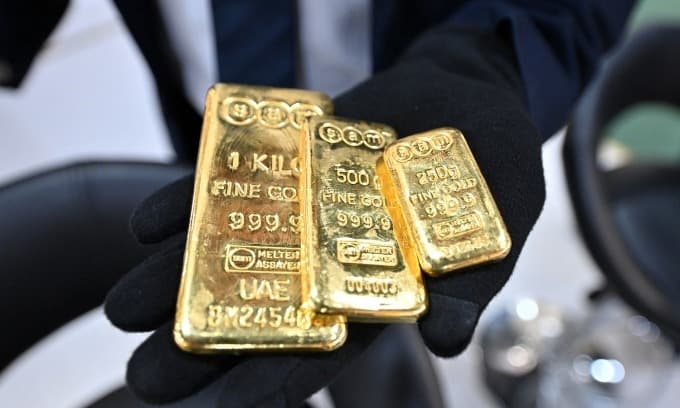
Thailand has emerged as the undisputed leader in Southeast Asia’s gold market, displacing Vietnam from a position it held for several years. According to comprehensive data from the World Gold Council, Thai investors purchased 51.4 tonnes of gold bars and coins throughout 2025, capturing approximately 36% of the region’s total demand. This figure represents the highest level of gold consumption in Thailand in seven years and translates to a market value exceeding $6 billion, underscoring the massive scale of capital flowing into precious metals within the kingdom.
The surge marks a dramatic reversal in regional rankings that had remained stable for multiple years. Vietnam, which had dominated Southeast Asian gold markets with 42.1 tonnes of demand in 2024, slipped to second place with 36.1 tonnes in 2025. The 14% decline made Vietnam the only country among the five major Southeast Asian markets to record negative growth, even as neighboring nations posted some of their strongest results in over a decade. Together, Thailand and Vietnam accounted for two-thirds of all gold bar and coin demand across Southeast Asia, though their trajectories moved in sharply opposite directions during this period of record-breaking global prices.
Collectively, the five primary Southeast Asian gold markets witnessed bar and coin purchases surge by more than 15% to reach 139 tonnes in 2025, the highest regional total in nine years. This collective growth occurred despite gold prices reaching unprecedented levels, suggesting that regional investors viewed the precious metal as an essential safe-haven asset rather than a discretionary purchase. The strength of Thai demand particularly stood out given that high prices typically suppress physical gold buying in most markets worldwide.
Vietnam’s Supply Crisis Drives Decline
While Thailand celebrated record-breaking investment figures, Vietnam grappled with a structural supply crisis that severely constrained its gold market. The country recorded six consecutive quarters of contracting gold trading through the final quarter of 2025, sinking to levels not seen in nearly five years. Unlike its neighbors, where demand grew despite soaring prices, Vietnam’s market suffered from a fundamental inability to secure adequate bullion supplies to satisfy consumer appetite.
The State Bank of Vietnam has repeatedly stressed that the country lacks domestic gold production capabilities and relies almost entirely on imports to satisfy consumer demand. However, foreign currency reserves are prioritized for essential goods and economic necessities, leaving limited capacity for gold imports. This supply bottleneck created severe shortages of gold bars in the domestic market, preventing willing buyers from completing purchases even as prices climbed.
Compounding the shortage, Vietnamese consumers simultaneously drove up demand for 24-karat gold rings, creating a perfect storm of scarce supply and intense demand. Domestic bullion prices skyrocketed by 81% in 2025, with an additional 13.5% increase recorded in early 2026, creating a massive premium over international rates. At times, the price gap between Vietnamese and global gold markets widened to approximately 20 million Vietnamese dong (roughly $760) per tael, making local gold significantly more expensive than comparable international products and effectively pricing many investors out of the market.
In response to these pressures, the Vietnamese government announced plans in 2025 to permit private gold producers to operate domestically, provided they meet specific capital requirements. However, regulatory authorities have yet to issue any licenses under this new framework, leaving the supply constraints unresolved. Some lawmakers have proposed establishing a national gold exchange where citizens could deposit physical gold in exchange for electronic certificates, potentially mobilizing an estimated 55 tonnes of gold currently sitting idle in private safes to fund infrastructure and economic development initiatives.
Singapore, Malaysia and Indonesia Post Record Growth
While Thailand and Vietnam dominated in absolute volume, the most impressive growth rates emerged elsewhere in the region, painting a picture of widespread gold fever across Southeast Asia. Singapore recorded the fastest expansion among Southeast Asian nations, with gold bar and coin demand jumping 48% from the previous year to reach 9.6 tonnes, establishing a new record volume for the city-state. This surge reflected growing investor appetite for safe-haven assets amid global economic uncertainty and currency fluctuations.
Malaysia secured fourth place in the regional rankings with demand increasing 37% to 10.3 tonnes, matching a 12-year high last seen in 2013. Indonesia claimed third place with 31.6 tonnes in sales, representing a 29% increase and the highest volume of Indonesian gold demand in 12 years. Both countries benefited from improved economic conditions and heightened awareness of gold as a portfolio diversification tool among middle-class investors.
Even Singapore’s jewelry market, which declined 13% due to high prices, showed resilience in value terms. The total value of gold jewelry demand across the region actually increased despite lower physical volumes, as record-high prices offset reduced purchases. This pattern repeated globally, where jewelry demand volumes fell 18% worldwide but value rose 18% to $172 billion, indicating that consumers who did buy gold were purchasing higher-value items or accepting elevated price points.
The Monetary Authority of Singapore (MAS) adjusted its gold reserves during this period, selling 15 tonnes in 2025 to bring total holdings to 205 tonnes. This central bank activity occurred against a backdrop of continued institutional gold accumulation globally, though at a slower pace than the previous three years when central banks consistently purchased over 1,000 tonnes annually.
Global Records and Safe-Haven Rush
The Southeast Asian gold surge formed part of a broader global phenomenon that saw total gold demand exceed 5,000 tonnes for the first time in history. Global investment demand for bars and coins reached 1,374 tonnes, equivalent to $154 billion in value. China and India maintained their positions as the world’s two largest gold markets, together accounting for more than half of total global bar and coin demand, with China recording 28% growth and India posting a 17% increase.
Global gold prices shattered records throughout the year, breaking the $3,000 per ounce barrier during the first quarter and eventually soaring past $5,000 per ounce by late January 2026. Prices continued climbing, exceeding $5,500 per ounce within days. This relentless upward trajectory would normally suppress physical demand, yet investors continued accumulating bullion at unprecedented rates.
Louise Street, senior markets analyst at the World Gold Council, described the environment as highly uncertain, citing trade turmoil, unpredictable U.S. policy announcements, sustained geopolitical tensions and a return of recessionary fears. These factors created fertile ground for gold investment, pushing first-quarter demand to its highest level since 2016 despite extraordinary price levels that might have deterred buyers in calmer times.
It has been a bumpy start to the year for global markets as trade turmoil, unpredictable U.S. policy announcements, sustained geopolitical tensions and a return of recessionary fears have created a highly uncertain environment for investors.
Gold exchange-traded funds experienced a dramatic reversal of fortunes, recording inflows of 801 tonnes globally after experiencing outflows in previous periods. Asian gold ETFs saw particularly explosive growth, with holdings increasing 97% from the previous year and attracting $25 billion in inflows as the investor base broadened across the region. This institutional participation complemented the strong physical bar and coin demand seen in Thailand and elsewhere.
Quarterly Momentum Confirms Thai Leadership
Data from individual quarters throughout 2025 confirmed Thailand’s sustained dominance in the regional gold market rather than a single exceptional period. During the first quarter, Thai gold demand rose 17% from the previous year to reach 9.1 tonnes, outpacing all other Southeast Asian nations. Singapore, Malaysia, and Indonesia posted growth between 5% and 8% during the same period, while Vietnam declined 15% to 12 tonnes, establishing an early pattern that would persist throughout the year.
The second quarter accelerated Thailand’s lead, with demand hitting 10 tonnes, a 38% increase from the same period in 2024. This quarterly performance demonstrated that Thai investors were not merely reacting to temporary price dips but maintained consistent purchasing behavior throughout the year. Shaokai Fan, head of Asia-Pacific at the World Gold Council, noted that Thai consumers reacted strategically to mid-quarter price corrections, seizing the opportunity to buy before prices resumed their upward trajectory.
Thailand’s gold bar and coin investment specifically jumped 25% in the first quarter alone to 7.4 tonnes, indicating a strong preference for physical bullion over other investment vehicles. This tendency aligned with broader regional patterns where investors sought tangible assets amid currency volatility. The Thai baht’s weakness throughout 2025 enhanced gold’s attractiveness as a store of value relative to the local currency, driving both bar purchases and jewelry acquisitions.
Vietnam’s quarterly trajectory moved in the opposite direction, with gold trading contracting consistently across all four quarters of 2025. By the final quarter, Vietnamese demand had reached its lowest point in nearly five years, confirming that supply constraints rather than price sensitivity were driving the decline. While Thai investors accumulated metal at every price level, Vietnamese buyers faced empty shelves and unavailable products regardless of their willingness to pay premiums.
Structural Factors Behind the Shift
Several structural economic factors explain why Thailand succeeded where Vietnam struggled during this period of record gold prices. Thailand possesses a more developed and liberalized gold trading infrastructure, with established networks of importers, refiners, and retailers who could accommodate increased demand without the supply bottlenecks that paralyzed Vietnamese markets. The regulatory environment in Thailand allows for smoother importation and distribution of bullion products, ensuring that consumer demand translates into actual transactions rather than frustrated waiting lists.
Currency dynamics also played a significant role in driving Thai demand. As the Thai baht experienced weakness against the dollar during 2025, Thai investors increasingly viewed gold as a hedge against currency depreciation and inflationary pressures. This relationship between local currency performance and gold demand repeated across the region, though Vietnam’s supply constraints prevented similar behavior despite fluctuations in the dong’s value.
Thailand’s jewelry demand demonstrated particular resilience, rising 12% from the previous year to 2 tonnes in the second quarter of 2024, defying the global trend of declining jewelry sales as prices surged. This suggested deep cultural attachment to gold consumption that transcends pure investment calculations, providing a stable base of demand even during periods of extreme price volatility. The combination of investment demand for bars and coins plus steady jewelry purchases created a robust overall market.
The divergence between the two largest Southeast Asian markets highlights how physical supply chains and regulatory frameworks can matter as much as consumer sentiment in determining gold market outcomes. While Vietnamese citizens clearly desired gold, as evidenced by queues forming outside gold shops and the extreme price premiums they were willing to pay, structural import restrictions and the lack of domestic production prevented this demand from translating into measured purchases. Thailand’s ability to source gold efficiently allowed it to capture the regional leadership position that Vietnam’s constrained market could not hold.
Key Points
- Thailand purchased 51.4 tonnes of gold bars and coins in 2025, representing 36% of Southeast Asian demand and displacing Vietnam as the regional leader for the first time in years.
- Vietnam’s gold demand fell 14% to 36.1 tonnes, making it the only Southeast Asian nation to record a decline amid a regional surge of more than 15% to 139 tonnes.
- Supply shortages and strict import restrictions drove Vietnam’s decline, while Thailand benefited from robust trading infrastructure and safe-haven seeking amid economic uncertainty.
- Singapore posted the fastest regional growth at 48% (9.6 tonnes), followed by Malaysia at 37% (10.3 tonnes) and Indonesia at 29% (31.6 tonnes), all reaching multi-year highs.
- Global gold prices broke records throughout 2025, eventually exceeding $5,500 per ounce, while total world demand surpassed 5,000 tonnes for the first time in history.
- China and India remained the world’s largest gold markets, accounting for over half of global bar and coin demand with respective growth of 28% and 17%.