A Tense Homecoming: The Lunar New Year Dilemma
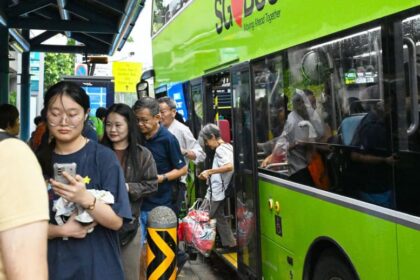
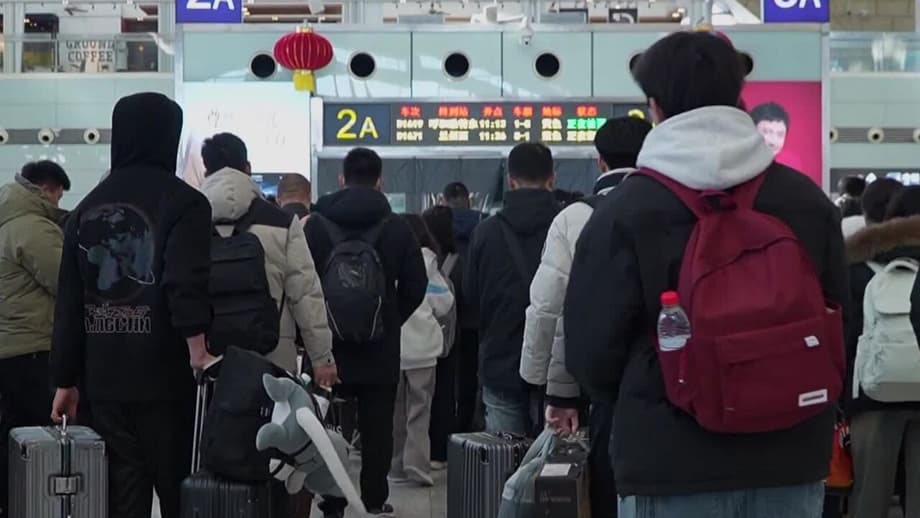
Every winter, China witnesses the largest human migration on Earth as hundreds of millions of workers board trains, buses, and planes to reunite with families for the Lunar New Year. This annual ritual normally carries an air of celebration and renewal, marking a time when factory hands and construction crews return to ancestral villages with savings and gifts. This year, however, a shadow hangs over the festivities. Chinese authorities fear that many rural migrants, who form the backbone of the nation’s building sites and manufacturing floors, may not return to their city jobs after the holiday ends.
In November, China’s rural affairs ministry issued an unusually direct warning that signaled the severity of the situation. Officials declared that the government must “prevent a large-scale” problem of migrants “sticking around” in their home villages. Such frank admissions of labor market distress remain rare in Chinese official communications, suggesting that the situation has reached a critical threshold. The ministry’s concern centers on the construction and manufacturing sectors, which have historically absorbed surplus rural labor but now face severe contraction due to the ongoing property crisis and weakening export demand.
The signs of distress are already visible at railway stations across the country. At a station in eastern China, 60-year-old Zhao, a tile layer who worked in Nanjing, was heading home to Henan province a full month before the holiday. Construction work had dried up, he explained, and his monthly income had plummeted from 9,000 yuan to 5,000 yuan. While Zhao expects to return to Nanjing after the holiday, millions of others may not have jobs waiting for them. In Zhoukou, a midsized city near Zhao’s village, the local government has established a job office in a shopping mall to assist returning migrants. Staff there report a surge in workers seeking employment over the past month as coastal factories closed early for the holiday, with most available positions offering only temporary work in delivery services or local maintenance roles.
The Invisible Crisis: How China Counts Unemployment
To understand why this crisis is particularly insidious, one must understand China’s unique household registration system, known as hukou. This policy, inherited from the Maoist period, ties citizens to their place of birth for access to social services, healthcare, pensions, and education. Rural migrants can work in cities for decades, but without urban hukou status, they remain second class citizens in the urban landscape, excluded from public welfare and social safety nets available to registered residents.
This system creates a statistical blind spot that masks the true extent of rural suffering. China’s official unemployment statistics only count urban residents with proper registration. Rural migrants, despite working in cities, are excluded from these figures. As Scott Rozelle, co-director of the Stanford Center on China’s Economy and Institutions, observed in a 2023 interview, “Do you know how many rural people are unemployed? Zero: By definition, rural inhabitants are never unemployed, because in theory, every rural family in China owns a small plot of farmland.”
The authorities assume that rural workers can simply return to farming if they lose their jobs. However, this assumption grows increasingly hollow. Nearly 40 percent of rural households now lease out their land rather than farming it themselves, limiting fallback options. When Rozelle’s team visited over 100 rural families in June and July of 2023, they found that average earnings for working family members had fallen to 60 percent of pre-pandemic levels. “We’re facing a problem of massive unemployment and underemployment among rural inhabitants, which undermines confidence in the future,” Rozelle noted. “The problem affects many more people than urban youth unemployment.” With 295 million rural migrant workers making up a significant portion of China’s 780 million total workers, the statistical invisibility of their plight represents a crisis of measurement as well as economics.
Historical Echoes: When the Cities Spit Workers Back
China has witnessed similar reverse migrations before. During the 2008 global financial crisis, shrinking global demand pushed millions of rural migrant workers back to the countryside. When the economy recovered, labor shortages emerged in urban sectors. This pattern illustrates what economists call cyclical unemployment, which fluctuates with economic conditions and primarily affects industrial workers who lack the protections afforded to urban registered residents.
However, the current slowdown appears structurally different from the 2008 crisis. The property sector crisis, which has dragged on for years, shows no signs of rapid resolution. Weak domestic consumption and the escalating trade war with the United States have created a more prolonged downturn with no clear recovery timeline. In April, Chinese factories experienced the sharpest monthly slowdown in more than a year while shipments to the United States plunged 21 percent from a year earlier, suggesting that external demand will not rescue the labor market as it did following the 2008 crisis.
Demographic shifts compound these cyclical challenges. China’s working age population peaked at 1 billion in 2013 and has declined steadily since. The demographic dividend that once fueled explosive growth has evaporated, leaving fewer young workers to support an aging population. Meanwhile, the country faces a growing mismatch between labor skills and market demand. While new university graduates struggle to find positions commensurate with their education, industries face shortages of skilled technical workers. This structural unemployment has long lasting effects that outlive temporary downturns and requires fundamental economic adjustments rather than simple stimulus measures.
Empty Toolbelts and Silent Factories
The immediate crisis centers on two sectors that traditionally absorb rural labor: construction and manufacturing. The real estate crisis has decimated building sites across the country. Property development, which contributes roughly 17 percent of China’s GDP even after a sharp slowdown, has shed jobs at an alarming rate. Workers who once laid tiles, poured concrete, and installed windows now find themselves idle as developers default on debts and new projects stall. The 60-year-old tile layer Zhao, whose income fell by nearly half, represents thousands facing similar precarity.
The manufacturing sector faces parallel pressures. While China maintains its position as the world’s factory, the nature of that production is shifting. Labor intensive industries that once welcomed unskilled rural migrants are relocating to countries with lower wages or automating production lines. The trade war has accelerated these trends, with tariffs forcing companies to reconsider their China operations. Former Premier Li Keqiang noted in 2020 that the foreign trade sector directly or indirectly accounted for the employment of 180 million Chinese. A sustained downturn in exports threatens to displace a significant portion of this workforce.
This economic divergence reveals what some analysts call “Two Chinas.” One China comprises high tech success stories like artificial intelligence startup DeepSeek, electric vehicle giant BYD, and tech powerhouse Huawei. This China deploys more industrial robots per manufacturing worker than any country except South Korea and Singapore, and leads globally in electric vehicles, solar panels, and drones. The other China, the one inhabited by rural migrants and older workers, faces sluggish consumer spending, rising joblessness, and chronic economic insecurity. As one former university librarian in southern China, who lost his job to budget cuts at a top-tier institution, explained, “I’ve become even more cautious with spending. I weigh every penny.” This gloomy China encompasses hundreds of millions who see little benefit from the nation’s technological triumphs.
Robots and Algorithms: The New Competition
While trade wars and property crashes create immediate pain, automation poses a longer-term threat to rural migrant employment. China installed 300,000 industrial robots on production lines last year, more than all other countries combined. By comparison, the United States installed 34,000. This push for technological self-reliance and manufacturing supremacy, while boosting national prestige and geopolitical standing, threatens the labor intensive jobs that have historically lifted rural families out of poverty.
The impact extends beyond the factory floor to office sectors. Artificial intelligence advances threaten to displace young college graduates seeking entry level positions, creating competition for scarce professional jobs. Youth unemployment in Chinese cities reached 18.9 percent among those aged 16-24 years old and not in school, according to recent data. With a record 12.22 million college graduates expected to enter the job market in 2025, the competition for positions grows fiercer by the day. This creates a squeeze from both ends: migrants losing blue collar jobs to automation while graduates flood the service sector.
This technological transition creates a vicious cycle for rural youth. Without access to quality education in their home villages, they lack the skills to compete for emerging tech jobs. However, the traditional manufacturing and construction roles that once required only physical stamina increasingly demand technical literacy or disappear entirely. “Right now, we have too many potential employees looking for jobs, but too few potential entrepreneurs creating jobs,” observed Dr. Chen Bo, a senior research fellow at the National University of Singapore. The central government has encouraged towns to attract industries and persuade skilled migrants to return inland, but local economies can absorb only a limited number of workers, and wages remain lower than in coastal megacities.
Beijing’s Balancing Act
Chinese leaders recognize the political sensitivity of mass unemployment. Employment remains directly linked to social stability in a country where economic distress can spark protests. While rural demonstrations are easier to suppress than urban movements due to limited media access and organizational resources, they still pose significant governance challenges. The government has pledged to create more than 12 million new urban jobs in 2025 while maintaining employment for over 300 million people previously lifted out of poverty.
The strategy relies heavily on promoting private entrepreneurship. Minister of Human Resources and Social Security Wang Xiaoping announced plans to create an entrepreneur friendly environment and expand loan support for startups. The government hopes that encouraging business creation will address both technological advancement and labor market challenges simultaneously. During a rare meeting in February between President Xi Jinping and technology leaders including DeepSeek’s Liang Wenfeng and Alibaba’s Jack Ma, Xi urged private entrepreneurs to serve the country’s ambitions. The private sector accounts for more than half of China’s economy and provides the majority of urban employment.
Additional measures include expanding vocational training to upskill workers for manufacturing and service industries facing labor shortages. However, these programs face the challenge of scale. With millions of workers potentially displaced from construction and traditional manufacturing, retraining programs would need to operate at an unprecedented scope to prevent rural stagnation. Some regions experiment with localized solutions, such as the job offices in shopping malls, but these offer mostly temporary positions in delivery and local services rather than stable careers.
The fundamental challenge for Beijing lies in reconciling its ambition to lead global technology markets with the immediate need to provide basic economic security. While the government tolerates wasteful investment in chosen industrial initiatives, as seen in the electric vehicle sector where hundreds of startups failed after receiving state support, it remains reluctant to fund the rural pensions and health insurance that would boost domestic consumption and provide a safety net for displaced workers. Until these structural imbalances are addressed, the countryside will continue to serve as a pressure valve for urban economic distress, but one with increasingly limited capacity to absorb the shock.
Key Points
- China’s rural affairs ministry warned in November about a potential large-scale problem of migrant workers remaining in villages after the Lunar New Year due to scarce urban jobs in construction and manufacturing.
- Rural migrants are excluded from official unemployment statistics because the hukou registration system assumes they can return to farming, masking the true extent of joblessness among 295 million workers.
- The property crisis and trade war have hit traditional employment sectors hard, with some construction workers reporting wage drops of nearly half and factories closing early for the holiday.
- Automation and AI threaten to displace both blue collar migrant workers and young graduates, with China installing 300,000 industrial robots last year while youth unemployment exceeds 18 percent.
- The government plans to create 12 million new urban jobs in 2025 and promote entrepreneurship, but faces structural challenges including an aging workforce, skill mismatches, and limited rural safety nets.