Strategic Partnership with Spanish Engineering Expertise
The Ministry of Construction has formally signed a contract with Ineco, Spain’s largest public engineering consultancy, to lead the feasibility study for Vietnam’s North-South high-speed railway project. Deputy Minister of Construction Nguyen Danh Huy announced the agreement on Friday, confirming that the Spanish firm will provide critical cost estimates and establish criteria for selecting contractors to build the monumental infrastructure project. Ineco will also consult on technology and technical standards, ensuring the project aligns with international best practices while adapting to Vietnam’s specific geographical conditions.
- Strategic Partnership with Spanish Engineering Expertise
- Technical Specifications and Project Parameters
- Investment Framework and Private Sector Dynamics
- Diplomatic Foundations and Technology Transfer
- Implementation Timeline and Economic Objectives
- National Railway Renaissance and Legal Framework
- Key Points
Ineco will operate as part of a consortium that includes the French engineering firm Artelia and Vietnamese company RCIC, with Spain’s national railway operator Renfe participating as a key collaborator. This alliance brings together international expertise in high-speed rail development, drawing from Spain’s extensive experience with its Alta Velocidad Espanola (AVE) network, which ranks as the world’s second-longest high-speed railway system. The consortium has secured more than ten months to complete the preparatory work, which involves studying technical, economic, and operational feasibility while developing basic engineering to define scope, requirements, and construction costs precisely.
The contract award follows an intensification of commercial activity after Spanish Prime Minister Pedro Sanchez visited Vietnam in April 2025. During that state visit, Sanchez expressed Spain’s readiness to cooperate and share expertise in railway development with Vietnam. The current agreement represents a concrete outcome of those diplomatic discussions, positioning Spanish companies at the forefront of Vietnam’s most ambitious infrastructure initiative. For Ineco, the award marks a strategic milestone in international activity, positioning Spain’s public engineering sector as a reference in high-speed rail corridor development.
Technical Specifications and Project Parameters
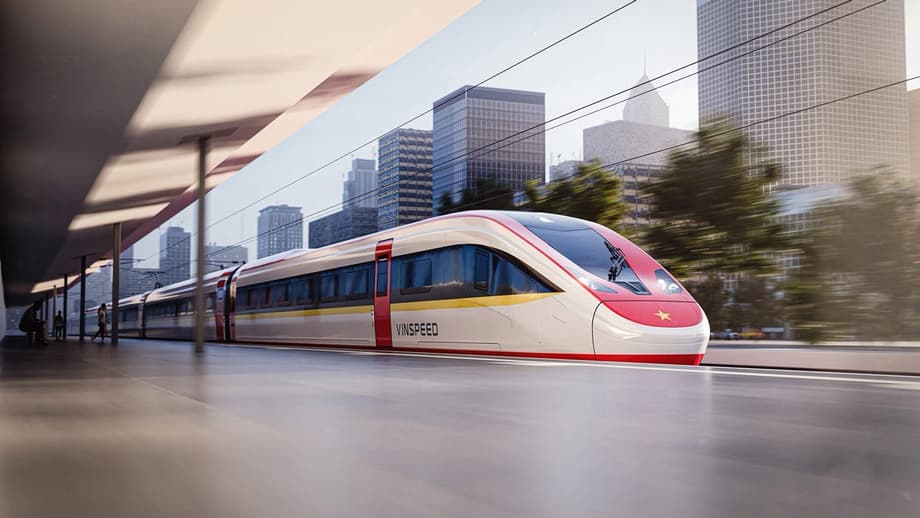
The North-South high-speed railway will span approximately 1,541 kilometers, connecting the capital city of Hanoi with the economic hub of Ho Chi Minh City. According to Resolution 106 issued by the Vietnamese government in April 2025, the railway will feature a design speed of 350 kilometers per hour and a load capacity of 22.5 tons per axle, placing it among the most advanced rail systems in Southeast Asia.
The route will include 23 passenger stations and five cargo stations, passing through 20 provinces and cities along Vietnam’s dense economic corridor. With an estimated investment requirement of VND 1.7 quadrillion (approximately US$67 billion), the project represents one of the largest infrastructure investments in the country’s history.
Ineco’s responsibilities include leading essential technical disciplines such as alignment design, civil works, tunnels, structures, energy supply, architecture, electromechanical systems, and Building Information Modeling methodology. The consortium will develop criteria to help the ministry select contractors and determine the total investment required. Once the feasibility study report is completed, authorities will finalize the investment model and move toward implementation.
Investment Framework and Private Sector Dynamics
Vietnamese authorities are evaluating three distinct investment models for the project: state-funded construction, private investment, and public-private partnerships. Deputy Minister Huy clarified the government’s position regarding public and private sector roles in the massive undertaking.
The State policy is to mobilize social resources but it is not possible to transfer all risks to enterprises. For public services in which the private companies finds it difficult to participate, the State will retain a leading role.
Prime Minister Pham Minh Chinh has directed relevant agencies to consider all three models while ensuring balanced interests among the State, the people, and businesses. The government seeks to avoid corruption or negative practices while preventing loss or waste of public assets.
The investment landscape shifted significantly last month when Vingroup, the conglomerate owned by Vietnam’s richest billionaire Pham Nhat Vuong, withdrew its bid to build the railway. The company explained that the decision allows it to focus resources on other approved infrastructure projects, including a 9,000-hectare Olympic-standard sports complex in Hanoi, the 54-kilometer Ben Thanh-Can Gio metro line in Ho Chi Minh City, and a 120-kilometer high-speed rail link between Hanoi and Ha Long Bay. Vingroup had proposed contributing 20 percent of the capital while borrowing the remainder through zero-interest government loans repayable over 35 years.
Other domestic and international entities continue to express interest in participation. Automaker Truong Hai has proposed contributing 20 percent equity toward the investment capital, with the remainder sourced from foreign and domestic loans. Steel manufacturer Hoa Phat has begun constructing a plant specifically to supply materials for the railway. Additionally, an alliance between Vietnamese company Mekolor and American entity Great USA has indicated intentions to participate, claiming access to $100 billion in investment funds.
Diplomatic Foundations and Technology Transfer
The contract with Ineco builds upon years of strengthening ties between Vietnam and Spain, which elevated their relationship to a strategic partnership in December 2009. During a meeting between Prime Minister Pham Minh Chinh and Spanish Prime Minister Pedro Sanchez in June 2025, both leaders discussed concrete steps to deepen this partnership, including cooperation in railway development.
During the June meeting, Sanchez reaffirmed his country’s commitment to supporting Vietnam’s railway ambitions.
Spain, which boasts the world’s second-longest high-speed railway system, is ready to cooperate and share expertise with Vietnam in this field.
Vietnam has explicitly requested Spanish assistance in technology transfer and human resources training. Prime Minister Chinh indicated plans to send working groups to Spain to learn from experience in developing railway industries. This knowledge transfer component extends beyond the immediate construction project, aiming to build domestic capacity for long-term railway maintenance and operations.
For Renfe, the collaboration represents strategic positioning for potential future operations contracts. The Spanish railway operator aims to generate 10 percent of its revenue from international markets by 2028. Renfe has established partnerships including a strategic alliance with Central Japan Railway in 2025 to compete jointly on international high-speed rail projects. Previous collaborations between Ineco and Renfe include the Desert High-Speed Rail line between Medina and Mecca in Saudi Arabia.
Implementation Timeline and Economic Objectives
The Vietnamese government has established an aggressive timeline for the project, targeting groundbreaking ceremonies in December 2026 with full completion scheduled for 2035. This nine-year construction window aligns with Vietnam’s broader economic goals, including achieving double-digit economic growth through infrastructure modernization.
Prime Minister Pham Minh Chinh has stressed the urgency of shifting from institutional building to implementation. At meetings of the Steering Committee for key national railway projects, he directed relevant agencies to apply six principles of clarity: clear responsibilities, tasks, timelines, accountability, outputs, and authority. The Prime Minister instructed localities to step up land clearance work, ensure lawful and fair compensation, improve resettled residents’ living conditions, and prevent corruption.
The Ministry of Construction has assigned the Thang Long Project Management Board as the project owner, replacing the previous Railway Project Management Board, to ensure rigorous oversight of quality, progress, and costs. Authorities are currently reviewing domestic and international standards to identify the most suitable technology options for Vietnam’s specific geographical and economic conditions.
National Railway Renaissance and Legal Framework
The North-South high-speed railway forms the centerpiece of a comprehensive railway modernization program that entered an accelerated implementation phase in early 2026. For the first time, Vietnam has issued specific standards and technical regulations for high-speed rail, including nine construction technical regulations, 219 sector-specific national standards, 37 general standards, and 146 standards aligned with European and international benchmarks.
Four related laws have been promulgated to support these projects, including the revised Railway Law, Construction Law, Law on Planning, and Law on Investment. These legal foundations enable special mechanisms to simplify administrative procedures and shorten project preparation timelines while promoting technology transfer and domestic railway industry development.
Parallel to the North-South line, Vietnam is advancing the Lao Cai-Hanoi-Hai Phong railway, which includes cross-border connections with China. Component Project 1 of this route has already broken ground, while Component Project 2 is accelerating feasibility studies with approval targeted for June 2026. The government plans to complete a cross-border railway bridge agreement with China by March 2026.
Human resources preparation is also underway through a training scheme extending to 2035, with hundreds of engineers and experts receiving education both domestically and abroad. This workforce development component aims to ensure Vietnam can gradually master core technologies and reduce long-term dependence on foreign expertise.
Key Points
- The Ministry of Construction signed a contract with Spanish consultancy Ineco to prepare feasibility studies for the $67 billion North-South high-speed railway connecting Hanoi and Ho Chi Minh City.
- Ineco leads a consortium including Artelia and RCIC, with Renfe collaborating, bringing Spanish high-speed rail expertise to the 1,541-kilometer project designed for speeds of 350 kilometers per hour.
- The government is evaluating state-funded, private, and public-private partnership investment models while retaining a leading role in public services to avoid transferring all risks to enterprises.
- Vingroup withdrew its construction bid to focus on other infrastructure projects, though Truong Hai, Hoa Phat, and a Mekolor-Great USA alliance remain interested in participation.
- Spain and Vietnam elevated cooperation following Prime Minister Pedro Sanchez’s April 2025 visit, with agreements on technology transfer, workforce training, and potential future operations partnerships.
- The project targets a groundbreaking date of December 2026 with completion by 2035, supported by new legal frameworks and technical standards aligned with European and international benchmarks.