A Climate Paradox Emerges From Clear Skies
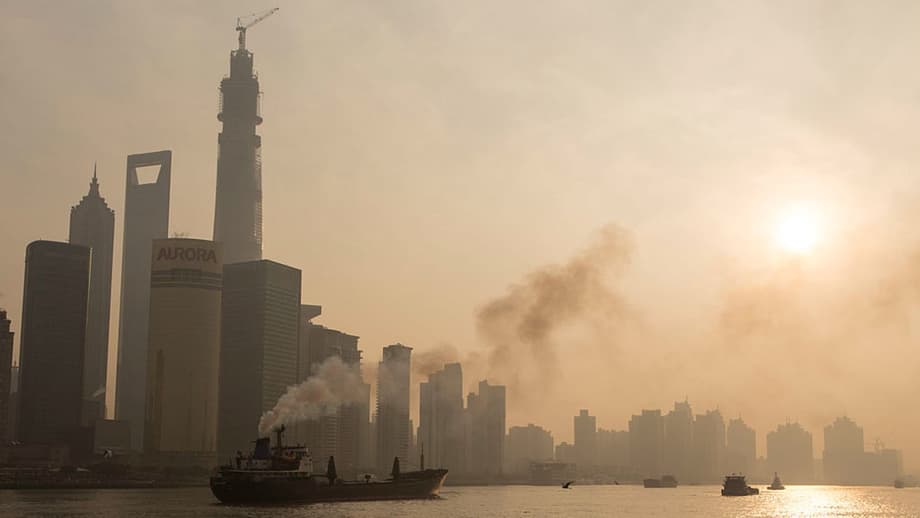
China’s dramatic reduction in air pollution represents one of the most successful environmental interventions in human history. Since 2013, the nation has slashed sulfate aerosol emissions by approximately 75%, transforming smog-choked skylines into clearer vistas. Yet this victory carries an unexpected climatic cost. Scientists now confirm that the same pollution cuts protecting millions of Chinese citizens from respiratory illness have altered global weather patterns, accelerating warming trends while simultaneously shielding Arctic sea ice from destructive storms.
The complexity of this phenomenon illustrates the intricate connections within Earth’s climate system. Aerosols, the microscopic particles produced by burning fossil fuels, act as a parasol for the planet by reflecting sunlight and modifying cloud formation. While these particles caused severe health problems in Chinese cities, they also suppressed global warming and influenced the trajectory of winter storms across the Pacific Ocean. As these aerosols dissipate, the full force of greenhouse gas warming emerges, creating what researchers call an unmasking effect.
Bjørn Samset, a senior researcher at the CICERO Centre for International Climate Research in Norway, described the trade-offs inherent in this transition.
“The Chinese people suffered under bad air quality for decades,” he noted. “This pollution temporarily slowed global warming and gave the rest of us a bit more time to adapt to a warmer climate. What is happening now is that we’re seeing the full effects of greenhouse-gas-driven warming, which we would sooner or later have to face anyway.”
The 2019 Bering Sea Crisis
Scientists first detected the atmospheric changes during a catastrophic ice loss event in early 2019. In late January that year, wind patterns over the North Pacific shifted dramatically, directing a series of five powerful cyclones into the Bering Sea in rapid succession. Each storm drove warm southerly winds across the ice pack, breaking it apart and pushing it northward. Air temperatures across the northern Bering soared to 21.6 to 28.8 degrees Fahrenheit above normal.
By early March, satellite measurements revealed that ice cover had shrunk by 82%, representing a retreat of approximately 154,440 square miles. This marked the largest decline ever recorded by satellites at that time of year. Researchers struggled to explain why such intense storm activity had targeted the Arctic that winter, or why similar events had become less frequent in subsequent years as China’s air quality improved.
How Industrial Haze Redirected Storm Tracks
The answer lies in the intricate mechanics of mid-latitude cyclones, the swirling comma-shaped systems that generate much of the Northern Hemisphere’s winter weather. These storms function like heat engines, drawing energy from warm, moist air that evaporates near the ocean surface, rises, and condenses into clouds. Aerosols alter this process in subtle but consequential ways.
Under normal conditions, water vapor condenses around a limited number of airborne particles, forming large droplets that fall as rain on the storm’s southern flank. When air contains high concentrations of aerosols, however, each particle becomes a seed for a cloud droplet. This creates numerous smaller droplets that resist coalescing into raindrops. Rainfall on the storm’s southern flank becomes suppressed, allowing moisture to travel farther along the storm’s conveyor belt toward its northeastern flank, where it releases heat in exactly the right position to push the entire system toward the pole.
Lead author Dianbin Cao, a researcher at the Chinese Academy of Sciences’ Institute of Tibetan Plateau Research, combined four decades of observational data with climate model simulations to examine these relationships. Comparing 14 years of elevated aerosol loading between 2000 and 2014 against 15 lower-aerosol years from previous decades, the research team found that cyclone tracks shifted northward by up to 1.23 degrees by the time the storms dissipated. This shift was sufficient to nearly double the number of cyclones crossing into the Arctic during high-pollution periods.
Alex Crawford, an Arctic climate scientist at the University of Manitoba who studies cyclone-sea ice interactions, reviewed the findings.
“This aerosol-driven push on storm systems is stronger than I might have suspected,” he stated. “They’ve done a really good job of demonstrating the mechanism by which aerosols can impact extratropical cyclones.”
Global Teleconnections From Local Emissions
The influence of China’s emission reductions extends far beyond the Arctic. Research published in 2025 reveals that aerosol cuts in East Asia have intensified drought and wildfire risks in Australia, triggered massive ocean heatwaves in the Pacific, and contributed to record-breaking marine temperature anomalies in the Atlantic.
The infamous Pacific marine heatwave known as “The Blob” exemplifies these long-range effects. First forming in 2013 and persisting for three years across an area the size of Canada, this warm water mass devastated fish stocks, starved seabirds, created toxic algal blooms, and forced whales into shipping lanes. Until recently, scientists could not fully explain this abrupt heating. New analysis indicates that China’s air pollution cleanup played a decisive role by removing the aerosol shield that previously reflected solar radiation back into space.
When aerosol levels drop, altered temperature and pressure gradients between the Northern and Southern Hemispheres intensify outflow from Asia toward the South Indian Ocean. This strengthens the Southern Indian Subtropical High and associated trade winds, causing moisture divergence over Australia. The resulting dry and warm conditions have increased wildfire risks during fire seasons, converting more surface energy into sensible heat rather than evaporative cooling.
Similarly, the North Atlantic experienced exceptional warming between 2023 and 2024 that sent fish fleeing toward Arctic waters. Research suggests that approximately one-third of this marine heat wave might be attributable to international regulations reducing sulfur emissions from shipping. Ships traditionally emitted sulfur dioxide that created reflective clouds over ocean routes. New clean fuel standards have eliminated this cooling effect, allowing solar radiation to warm surface waters directly.
The Warming Unmasked
While the reduction in Chinese aerosols may spare the Arctic some cyclone-driven destruction, the broader climatic impact trends toward accelerated warming. Aerosols provide a cooling effect that partially offsets greenhouse gas heating. According to the Intergovernmental Panel on Climate Change, greenhouse gases currently produce approximately 1.5 degrees Celsius of warming, with 0.4 degrees masked by aerosol reflection. Without this particulate shading, the world would have already crossed the 1.5-degree threshold defined as dangerous climate change under the Paris Agreement.
Dan Westervelt, an atmospheric scientist at Columbia University’s Lamont-Doherty Earth Observatory, believes the warming effects will ultimately dominate over the storm-track changes.
“Unmasking warming will probably dominate, as it is more persistent and can occur during all seasons, while the storm-track changes are probably more episodic,” he explained. “The speed of the aerosol reductions in East Asia is underappreciated. Emissions decreases that took three decades in North America and Europe are taking one decade in East Asia.”
This rapid transition means that regions across the Northern Hemisphere are experiencing enhanced warming effects simultaneously. Chinese researchers calculate that by 2017, aerosol reductions had already boosted the existing greenhouse warming trend in eastern China by 0.1 degrees Celsius. By 2030, this additional heating could reach 0.2 to 0.5 degrees Celsius, and exceed 0.5 degrees by 2060 as cleanup efforts extend to transportation sectors.
Proposed Interventions and Uncertain Futures
Faced with the dilemma of maintaining clean air while controlling temperature rise, some researchers have proposed marine cloud brightening as a potential stopgap measure. This geoengineering strategy involves injecting sea salt aerosols into low-level marine clouds to increase their reflectivity. Simulations suggest that carefully implemented cloud brightening over the eastern Pacific could offset the warming unleashed by anthropogenic aerosol reductions.
However, such interventions carry their own risks. Climate models indicate that marine cloud brightening can create uneven cooling patterns, potentially accelerating the Atlantic Meridional Overturning Circulation while leaving Europe and the United States warmer than projected. The technique also tends to produce La Niña-like precipitation patterns, increasing rainfall around the Maritime Continent and Australia while decreasing it over the central tropical Pacific and southern United States.
Alternative approaches focus on reducing methane emissions, which persist in the atmosphere for only about a decade compared to centuries for carbon dioxide. Because methane’s warming effect currently approximates the cooling effect of remaining aerosols, rapid methane elimination could provide a temporary buffer against the warming unmasked by air pollution controls. Low-cost interventions include preventing venting from natural gas wells and pipelines.
Arctic Winds and Future Shipping Risks
As the Arctic continues warming, additional changes are reshaping the region’s physical environment. Recent research demonstrates that near-surface wind speeds across the Arctic Ocean have accelerated markedly since the 1960s, with the strongest increases occurring over peripheral seas. This acceleration results from reduced atmospheric stability caused by upward heat fluxes and decreasing surface roughness as glaciers and sea ice melt.
These wind changes carry significant implications for the future of trans-Arctic shipping. As ice retreat opens new navigation routes through the Kara Sea and Beaufort Sea, stronger winds will generate higher waves and increase coastal erosion. Projections under high-emission scenarios suggest Arctic wind speeds could increase by up to 0.3 meters per second by century’s end, with substantial increases over ocean areas and smaller changes over land.
The interaction between reduced storm frequency and increased wind speeds creates a complex environment for ice formation and retention. While fewer cyclones may mean less mechanical ice breakup in some years, the persistent warming and wind acceleration could prevent ice recovery even without major storm events. The future of Arctic sea ice remains uncertain as these competing forces continue to evolve.
The Bottom Line
- China’s 75% reduction in sulfate aerosol emissions since 2013 has altered North Pacific storm tracks, reducing the number of cyclones reaching the Arctic and destroying sea ice.
- The same pollution cuts have accelerated global warming by removing aerosol particles that previously reflected sunlight, unmasking decades of suppressed greenhouse gas heating.
- Aerosol reductions have triggered drought and increased wildfire risks in Australia, contributed to Pacific marine heatwaves, and warmed the North Atlantic.
- Research indicates that without aerosol cooling effects, the world would have already exceeded the 1.5-degree Celsius warming threshold defined under the Paris Agreement.
- Scientists propose marine cloud brightening or methane emission cuts as potential strategies to counteract warming caused by necessary air quality improvements.
- Arctic near-surface wind speeds have increased significantly since the 1960s due to reduced surface roughness and atmospheric instability, creating new challenges for shipping safety.