The Old Narrative Is Dead
For decades, the story of Asian economic development followed a simple script: the region served as the world’s factory floor, churning out manufactured goods for Western consumers, particularly in the United States. When Washington imposed tariffs last year, analysts dusted off this familiar warning that Asia’s export-dependent economies face an existential threat whenever American consumers pull back. This narrative is not merely outdated; it is obsolete. The structure of the global economy has shifted in ways that conventional analysis has been slow to recognise. ASEAN+3, comprising the ten ASEAN nations plus China, Japan, and South Korea, has transcended its role as a manufacturing appendage to the West. It has become the world’s largest market, a self-sustaining economic colossus that now generates more internal demand than the United States can match.
By the Numbers: A New Economic Reality
The evidence for this transformation is quantitative and striking. In 2023, ASEAN overtook both the United States and the European Union to become China’s largest export market, a milestone that signals a fundamental reorientation of global trade flows. Chinese exports to ASEAN surged by an additional 12% in 2024, reaching nearly $587 billion, while ASEAN exports to China grew by only 2%, creating a widening trade deficit that now exceeds $190 billion. This imbalance, while concerning for individual ASEAN nations, illustrates the sheer gravitational pull of the regional market. China itself has become the world’s largest automotive market since 2009, with new energy vehicles now accounting for over 40% of domestic sales. The combined nominal GDP of the ten ASEAN nations totals approximately $4 trillion, and when integrated with the industrial might of Northeast Asia, the bloc represents a consumer base of nearly two billion people with rapidly growing middle classes.
From Factory Floor to Consumer Powerhouse
The traditional view of ASEAN+3 as an export-dependent region dependent on American demand ignores the intricate web of intra-regional trade that has developed over the past decade. Since 2017, big trading economies have increasingly exchanged goods among geopolitically aligned partners, but within Asia, this has accelerated a decoupling from Western-centric models. Research from the National Bureau of Economic Research shows that while China’s share of US imports collapsed from 21% in 2017 to just 9% by mid-2025, effectively reversing two decades of trade integration, total US imports from all countries continued to grow at an average annual rate of 5.7%. The displaced trade did not simply vanish; it found new routes within Asia. Vietnam and Mexico gained significant US market share, but simultaneously, ASEAN’s trade with China deepened to the point where the region now serves as both a production hub and a primary destination for Chinese manufactured goods.
US Tariffs Accelerate Regional Diversification
The Trump administration’s tariff policies, including rates exceeding 40% for Vietnam and Cambodia and baseline rates of 10% even for allies like Singapore, have forced ASEAN economies to accelerate diversification strategies that were already underway. Rather than retreating inward, ASEAN nations are strengthening engagement with non-US markets. Malaysia and Thailand secured observer status in BRICS in 2024, while Singapore, Malaysia, and Indonesia pursue new trade agreements with the European Union and the Gulf Cooperation Council. This strategic pivot reflects a recognition that the United States, despite remaining a major export destination, can no longer serve as the sole economic anchor for the region. The US risks creating a lose-lose scenario in which it fails to reshore low-cost manufacturing while simultaneously raising domestic prices and pushing traditional allies toward Asian-led frameworks like the Regional Comprehensive Economic Partnership.
ACFTA 3.0 and the Integration of Digital and Green Economies
The deepening of regional ties is not merely a reaction to external pressure but a deliberate strategic choice codified in trade agreements. In October 2025, China and ASEAN formally signed the ASEAN-China Free Trade Area 3.0 Upgrade Protocol, the most comprehensive revision since the pact’s 2010 inception. This agreement expands cooperation into nine areas including the digital economy, green development, supply chain connectivity, and support for micro, small, and medium enterprises. Bilateral trade between China and ASEAN approached $1 trillion in 2024, marking a near-tripling since 2010. The upgrade establishes mechanisms for cross-border data flows, renewable energy collaboration, and technical standards that embed ASEAN more deeply into Chinese value chains while attempting to address concerns about industrial overcapacity.
The Overcapacity Challenge: Opportunity and Risk
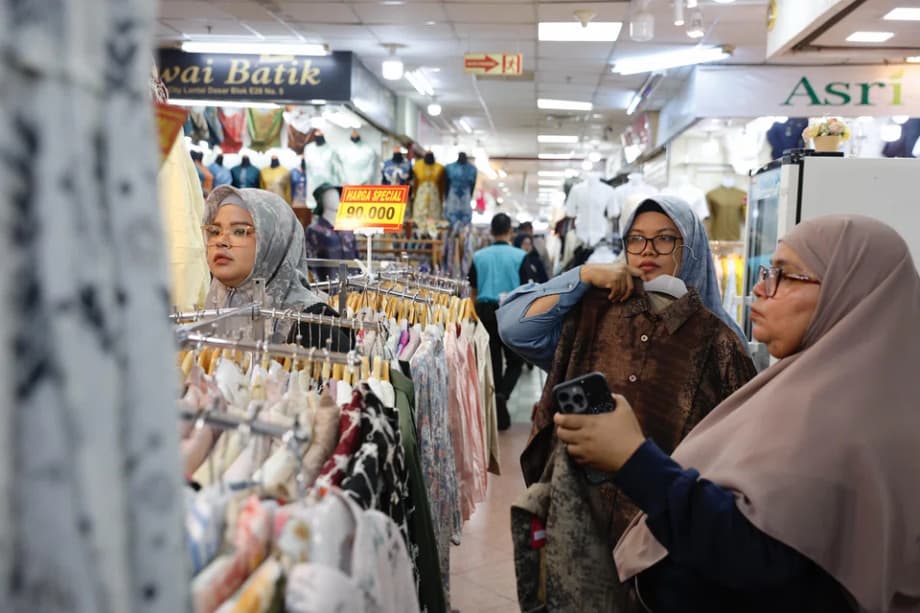
China’s industrial overcapacity, driven by nonmarket policies and domestic demand shortfalls, presents both an opportunity and a threat to ASEAN’s development. China’s manufactured goods trade surplus surged from roughly $1 trillion in 2018 to more than $1.8 trillion in 2023, with ASEAN absorbing a significant portion of this export surge. In Indonesia, the textile sector has shed 80,000 jobs in 2024, with 280,000 more at risk, as cheap Chinese imports flood e-commerce platforms. Vietnam faces an estimated 4 to 5 million low-value orders daily from Chinese cross-border platforms, amounting to almost $2 billion monthly. Supavud Saicheua, Chairman of the National Economic and Social Development Council of Thailand, highlighted growing concerns among Thai policymakers regarding the flood of cheap imports.
The Chinese are now trying to export left, right and centre. Those cheap imports are really causing trouble.
However, ASEAN is also becoming a key offshore manufacturing base for Chinese companies seeking to avoid Western tariffs, with Chinese foreign direct investment into ASEAN reaching a record $17.6 billion in 2023. This investment supports the region’s energy transition and industrial modernization, though it raises concerns about vertical integration that limits local value capture.
Washington’s Strategic Response
The United States faces a narrowing window to maintain economic influence in a region that increasingly looks to China for trade leadership. US foreign direct investment in ASEAN totaled $74.4 billion in 2023, comprising 32.4% of total inward FDI flows and supporting 625,000 American jobs. More than 6,000 US companies operate in the region, generating 10% of total global sales by overseas affiliates of US firms. Yet Washington has not concluded a major regional trade initiative since the 2003 US-Singapore FTA, and the withdrawal from the Trans-Pacific Partnership in 2016, followed by the apparent abandonment of the Indo-Pacific Economic Framework, has shaken ASEAN trust in American reliability. The US must now compete not merely with Chinese tariffs but with Beijing’s trade-centered regional diplomacy, which portrays China as the defender of the global trading system against American protectionism.
Key Points
- ASEAN+3 has replaced the United States as the world’s largest market, with ASEAN becoming China’s top export destination in 2023.
- Chinese exports to ASEAN grew 12% in 2024 to nearly $587 billion, while the region’s internal trade corridors are projected to grow 4 to 5 percent annually through 2035.
- US tariffs have accelerated ASEAN’s diversification toward BRICS, the European Union, and Gulf Cooperation Council markets rather than strengthening American economic ties.
- The ACFTA 3.0 agreement establishes new frameworks for digital trade, green energy, and supply chain connectivity, deepening regional integration independent of Western structures.
- China’s industrial overcapacity is flooding ASEAN with cheap imports, causing job losses in textiles and steel, while simultaneously driving record Chinese FDI into the region.
- McKinsey research identifies corridors connecting China to emerging economies, including ASEAN, as safe bets that will grow even under trade fragmentation scenarios.