Maritime Enforcement Action Raises Tensions with Beijing
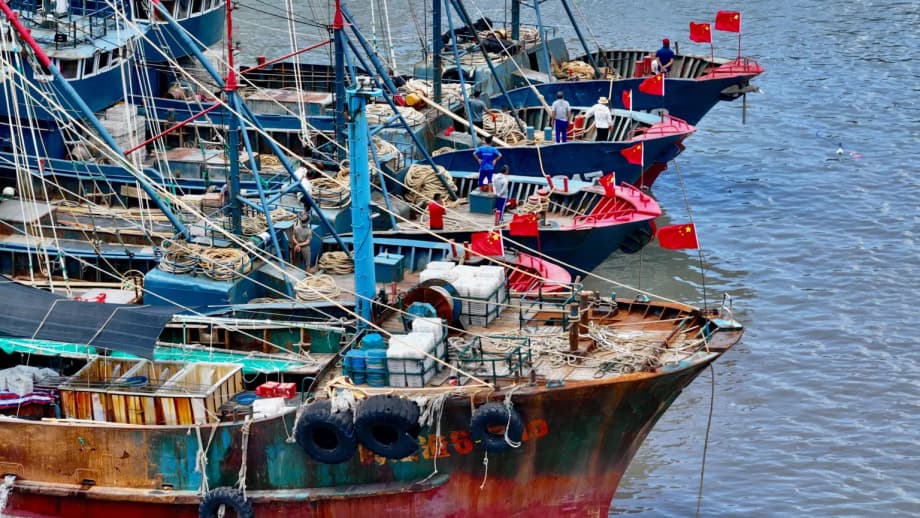
Japanese authorities have detained a Chinese fishing boat and arrested its captain after the vessel allegedly attempted to evade inspection in Japan’s exclusive economic zone off the coast of Nagasaki Prefecture. The incident, which occurred on Thursday approximately 89.4 nautical miles (165 kilometers) southwest of Meshima Island in the Goto archipelago, marks the first seizure of a Chinese fishing vessel by Japanese authorities since 2022 and threatens to exacerbate already strained bilateral relations.
The Fisheries Agency identified the detained skipper as Zheng Nianli, a 47-year-old Chinese national, who now faces charges related to attempting to flee an onboard inspection. The vessel, named Qiong Dong Yu 11998 and described by officials as a “tiger net fishing boat” equipped with high-capacity trawling equipment, carried a crew of 11 people when intercepted. Japanese authorities stated that fisheries inspectors ordered the vessel to stop for routine inspection upon detecting it within Japanese waters, but the captain refused to comply and attempted to flee before being intercepted.
The seizure comes at a particularly sensitive moment in Japan-China relations, which have deteriorated significantly since November when Prime Minister Sanae Takaichi suggested that Tokyo would consider military intervention should Beijing attempt to take Taiwan by force. China, which considers the self-governing island an inseparable part of its territory, reacted furiously to the remarks, describing them as “egregious” and accusing Japan of interfering in Chinese internal affairs.
Japan’s Chief Cabinet Secretary Minoru Kihara addressed the fishing vessel incident during a press conference on Friday, emphasizing Tokyo’s commitment to maritime law enforcement.
We will continue to take resolute action in our enforcement activities to prevent and deter illegal fishing operations by foreign vessels.
Kihara stated that the investigation remains ongoing while underscoring that such enforcement measures apply equally to all foreign vessels operating within Japanese maritime zones.
China’s Ministry of Foreign Affairs responded to the seizure through spokesperson Lin Jian, urging Japanese authorities to handle the matter in accordance with bilateral agreements.
It is hoped Japan strictly respects the China-Japan fisheries agreement, fairly enforces the law and safeguards the safety and legitimate rights and interests of Chinese crew members.
Lin added that Beijing consistently requires Chinese fishermen to operate according to laws and regulations while resolutely protecting their legitimate rights. Notably, China has not yet issued an official protest at the ambassadorial level regarding this specific incident.
Diplomatic Rift Deepens Over Taiwan Remarks
The current maritime enforcement action unfolds against a backdrop of the most serious diplomatic crisis between the two Asian powers in recent years. Prime Minister Takaichi, who assumed office in October and secured a landslide election victory in early February, has maintained a hawkish stance regarding Chinese regional ambitions. Her November comments regarding Taiwan represented a significant hardening of Japanese policy, suggesting that a hypothetical Chinese attack on the democratic island could create what Tokyo terms a “survival-threatening situation” for Japan.
Such a designation under Japanese constitutional interpretation would permit the deployment of the country’s Self-Defense Forces to protect national interests and fulfill alliance obligations with the United States, which maintains approximately 60,000 military personnel in Japan. Beijing immediately summoned Tokyo’s ambassador for a formal protest following Takaichi’s remarks and has repeatedly demanded that she retract her statements, warning Japan to “stop playing with fire.”
The diplomatic standoff has triggered concrete economic and cultural consequences. Chinese authorities issued travel advisories warning citizens against visiting Japan as tourists or students, causing a sharp decline in Chinese visitor numbers that has significantly impacted Japanese retail and tourism stocks. Beijing also tightened export controls on items with potential military applications, raising concerns about potential restrictions on rare-earth minerals critical to Japanese manufacturing.
Additionally, China reportedly suspended certain seafood imports from Japan and accepted the return of Japan’s last two giant pandas from a Tokyo zoo last month, ending a goodwill gesture that had persisted since the two countries normalized diplomatic relations in 1972. Popular Japanese movies have faced postponed release dates in China, while Japanese musical artists scheduled to tour the country have experienced sudden cancellations.
Historical Context of Maritime Disputes
Thursday’s incident evokes memories of a similar confrontation in 2010, when Japanese authorities arrested the captain of a Chinese fishing boat near the disputed Senkaku Islands (known as Diaoyu in China) after a collision with Japanese Coast Guard vessels. That episode triggered a major diplomatic crisis that saw China impose sanctions and suspend high-level exchanges until Tokyo eventually released the captain without charge, handing Beijing a significant diplomatic victory.
The uninhabited Senkaku Islands, surrounded by rich fishing grounds and potential energy resources, remain a persistent flashpoint. While Thursday’s seizure occurred in undisputed waters off Nagasaki rather than near the contested islands, analysts note that China has increasingly employed what security experts term “gray zone” tactics, using fishing fleets and maritime militia vessels to assert territorial claims and pressure neighboring states.
Taiwanese President Lai Ching-te added regional context to the tensions this week, warning in an interview with Agence France-Presse that a Chinese seizure of Taiwan would threaten the broader Indo-Pacific region.
The next countries under threat would be Japan, the Philippines, and others in the Indo-Pacific region, with repercussions eventually reaching the Americas and Europe.
Lai suggested that Beijing would become “more aggressive, undermining peace and stability in the Indo-Pacific and the rules-based international order” should it successfully annex the island.
Legal Framework and Enforcement Practices
The incident highlights the complex legal environment governing maritime zones in East Asia. Japan’s exclusive economic zone extends up to 200 nautical miles (370 kilometers) from its coastline, granting Tokyo exclusive rights to regulate fishing, resource extraction, and economic activities while allowing foreign vessels freedom of navigation. However, some confusion emerged in initial reporting regarding the precise location, with one outlet describing the waters as “territorial waters” rather than the EEZ, a distinction carrying significant legal implications as territorial waters extend only 12 nautical miles and afford sovereign rights rather than merely economic jurisdiction.
The Japanese Fisheries Agency has intensified enforcement activities in recent years, conducting seven onboard inspections in 2024 and seizing vessels from Taiwan and South Korea for illegal fishing operations. The current incident represents the first foreign vessel seizure of 2026. Maritime law enforcement remains a priority for Tokyo as it seeks to protect domestic fishing industries and assert sovereign rights in waters increasingly contested by larger neighbors.
Japanese officials have privately urged domestic fishers to avoid the Senkaku Islands area to prevent provocations, reflecting the delicate balance Tokyo attempts to maintain between asserting legal rights and avoiding unnecessary escalation with Beijing. However, with Takaichi’s government now firmly established following her electoral victory, Japan appears to be adopting a more assertive posture regarding maritime enforcement regardless of diplomatic sensitivities.
Key Points
- Japanese authorities arrested Chinese captain Zheng Nianli, 47, after his vessel allegedly fled inspection in Japan’s EEZ off Nagasaki on Thursday
- The seizure marks the first time Japanese authorities have detained a Chinese fishing boat since 2022
- The vessel Qiong Dong Yu 11998 carried 11 crew members and is classified as a high-capacity “tiger net” trawler
- Incident occurs amid severe diplomatic strain following Prime Minister Sanae Takaichi’s November remarks suggesting Japanese military intervention if China attacks Taiwan
- China has already imposed economic measures including travel warnings, export controls, and seafood import restrictions against Japan
- Beijing urges Japan to respect fisheries agreements and protect Chinese crew rights while maintaining demand for Takaichi to retract Taiwan statements
- Japan’s Chief Cabinet Secretary Minoru Kihara affirmed Tokyo’s commitment to “resolute action” against illegal fishing operations