A High-Stakes Gamble Transforms Japanese Politics
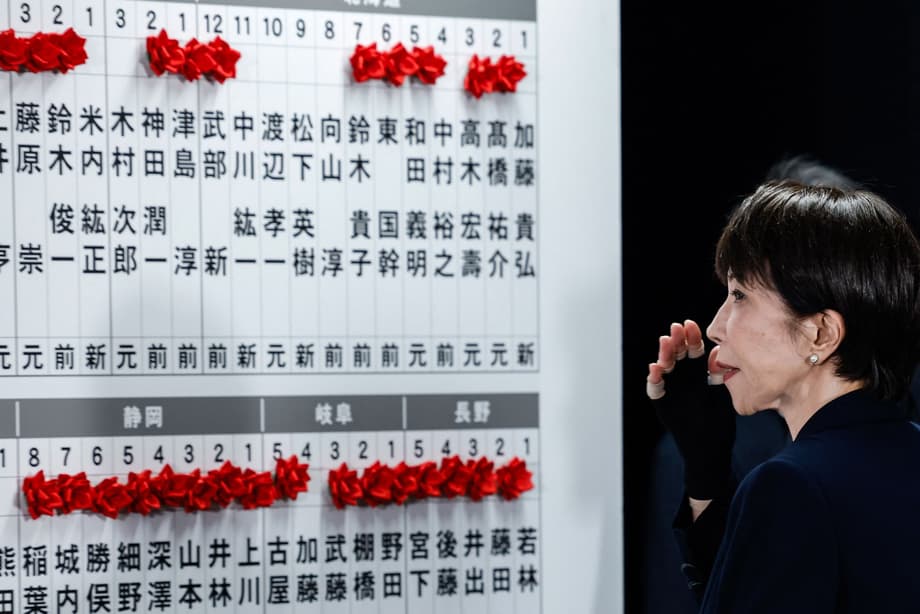
When Sanae Takaichi called a snap election just 110 days after becoming Japan’s first female prime minister, political observers questioned the wisdom of risking her fledgling leadership on such an early test. The gamble, however, has delivered one of the most dramatic political victories in modern Japanese history. On Sunday, Takaichi’s Liberal Democratic Party secured a historic two thirds supermajority in the lower house of parliament, capturing 316 of 465 seats in a landslide that represents the strongest single party majority since World War II and the largest in the LDP’s seven decade history.
The results shatter the previous record of 300 seats set during former Prime Minister Yasuhiro Nakasone’s administration in 1986, giving Takaichi unprecedented legislative power to reshape Japan’s economy, defense posture, and social policies. Combined with 36 seats won by coalition partner the Japan Innovation Party, the ruling bloc now commands 352 lawmakers, enabling them to override the upper house, chair all lower house committees, and potentially initiate constitutional amendments. The scale of victory surprised even seasoned analysts who had expected gains but not a complete transformation of the parliamentary landscape.
Takaichi told public broadcaster NHK following the victory:
“I wanted the voters to give me a mandate because I advocated for responsible, proactive fiscal policy that would significantly shift economic and fiscal policy.”
The 64 year old leader had pledged to resign if her coalition failed to secure a simple majority, making Sunday’s outcome not merely a political triumph but a personal vindication that cements her authority until the next required election in 2028. Voter turnout reached 55.6 percent, up from 53.8 percent in the previous election, with more than 27 million people casting early votes despite heavy snowfall that disrupted transportation across much of the country.
Japanese stocks surged on Monday as markets welcomed the prospect of stable leadership, with the benchmark Nikkei 225 jumping 5 percent in early trading. The business community quickly embraced the results, with Keidanren head Yoshinobu Tsutsui welcoming the restoration of political stability at what he described as a critical juncture for sustainable growth. Yet investors also remain cautious about Takaichi’s promises to suspend the consumption tax on food, a measure that would reduce annual revenue by approximately 5 trillion yen in a nation already carrying the world’s heaviest debt burden relative to GDP.
Breaking the Mold: Japan’s Unconventional New Leader
Takaichi’s ascent marks a radical departure from Japan’s traditionally staid political landscape, which for decades has been dominated by elderly men from established political dynasties. Unlike many predecessors whose families built political empires, Takaichi comes from a middle class background: her father worked for a car company and her mother served as a police officer. As the nation’s first female premier, she brings a distinctly different personal profile, riding motorcycles, playing drums, and enjoying heavy metal music rather than the golf and traditional pastimes favored by previous leaders.
This unconventional image has helped her galvanize typically disengaged young voters in a country where political participation among youth has historically lagged. Polls indicate over 90 percent support among 18 to 19 year olds, a demographic that has embraced her dynamic presence. The phenomenon dubbed “Sana mania” by Japanese media has transformed Takaichi into a cultural icon as much as a political leader. Fans affectionately call her “Sana chan,” using a suffix usually reserved for close friends, and eagerly emulate everything from the bags she carries to the pens she uses. In her hometown of Nara, souvenir shops sell towels emblazoned with her slogans, key chains, stationery, and even cookies bearing her likeness alongside that of her political idol, former British Prime Minister Margaret Thatcher.
Her social media strategy has proven equally effective at reaching voters outside traditional channels. Takaichi delivers succinct, slogan ready messages and shares viral videos, including one showing her jamming to Korean pop music with South Korean President Lee Jae Myung. This approach stands in stark contrast to the formal, often inaccessible communication style typical of Japanese political leaders. Thousands of supporters braved freezing temperatures during a Tokyo rally last week, a level of public enthusiasm for a Japanese political leader that has not been seen for years. “It feels like she’s creating a sense of direction, like the whole country pulling together and moving forward,” said Kazushige Cho, a 54 year old voter in Niigata prefecture, where snow reached depths of more than two meters on election day.
A Conservative Agenda for Economic and Constitutional Change
Takaichi’s sweeping victory reflects not only her personal popularity but also a significant rightward shift in Japanese politics that has seen long time LDP supporters abandon the party for newer right wing alternatives in recent years. Her platform includes socially conservative positions that distinguish her from both previous Japanese leaders and Western conservatives. She opposes same sex marriage, supports patriotic education in schools, and backs maintaining Japan’s single surname system for married couples, a 19th century legal requirement that pressures most women to abandon their maiden names. She has argued that allowing separate surnames “may destroy the social structure based on family units.”
Perhaps most significantly for Japan’s long term trajectory, Takaichi has made clear her intention to revise the country’s postwar pacifist constitution, specifically Article 9, which renounces war as a sovereign right and technically prohibits Japan from maintaining land, sea, or air forces. Addressing supporters on February 2, she asked:
“Why can’t we write the Self Defense Forces into the Constitution? I want you to let us revise the Constitution to position them as an effective organization.”
While the LDP now holds a two thirds majority in the lower house, constitutional revision requires similar support in the upper house followed by a national referendum, making it a steep uphill climb that remains uncertain despite Sunday’s results.
Economically, Takaichi advocates for aggressive government intervention and has already passed a record breaking spending budget. Her campaign centered on a 21 trillion yen stimulus package and promises to suspend the 8 percent consumption tax on food for two years to help households cope with persistent inflation. She has also pledged partial tax deductions for babysitting expenses and corporate incentives for companies offering in house childcare, signaling potential movement toward family friendly policies despite her traditional stances on gender issues. “We will prioritise the sustainability of fiscal policy. We will ensure necessary investments. Public and private sectors must invest. We will build a strong and resilient economy,” she told reporters after the election.
Foreign Policy: Confronting China and Embracing the US
Takaichi’s victory sends clear signals about Japan’s future foreign policy trajectory, particularly regarding its relationship with China, the country’s largest trading partner and regional rival. Shortly after taking office, she broke with Japan’s long tradition of strategic ambiguity regarding Taiwan, declaring in November that a Chinese attack on the democratic island, which lies just 60 miles from Japanese territory, could constitute a “survival threatening situation” triggering military response from Tokyo under collective self defense principles. The comments sparked the most serious diplomatic row between the nations in over a decade.
China responded with fury and economic coercion, canceling flights, restricting imports of Japanese seafood, limiting access to critical minerals and dual use technologies, and warning tourists to avoid Japan citing unspecified “safety concerns.” Beijing demanded Takaichi retract her remarks, with a Foreign Ministry spokesperson warning Monday that “if Japan’s far right forces misjudge the situation and act recklessly, they will inevitably face resistance from the Japanese people and firm opposition from the international community.” Despite the pressure campaign, Takaichi has refused to back down, maintaining that her position aligns with Japan’s security policy and the US Japan alliance.
The United States has enthusiastically embraced Takaichi’s leadership, with President Donald Trump offering his “Complete and Total Endorsement” ahead of the election and taking the unusual step of announcing her White House visit on March 19 before votes were even cast. Trump congratulated her on her “LANDSLIDE Victory” and praised her “Peace Through Strength Agenda.” Takaichi thanked Trump for his “warm words” and described the alliance’s potential as “LIMITLESS,” emphasizing that the partnership is “built on deep trust and close, strong cooperation.” This alignment positions Japan to increase defense spending and take on a larger regional security role, though Seoul remains cautious about constitutional revision or militarization given historical tensions from Japan’s wartime occupation of the Korean Peninsula.
Structural Challenges and Expectations of Delivery
Despite her powerful mandate, Takaichi faces formidable obstacles in delivering tangible results that match the scale of her electoral promise. Japan carries public debt exceeding twice the size of its gross domestic product, the heaviest burden of any advanced economy. Her tax cut proposals and massive spending plans have spooked bond markets, with analysts warning of potential currency volatility and interest rate pressures if fiscal discipline appears to waver. The temporary nature of her proposed food tax suspension offers some reassurance, but questions persist about how she will fund both consumer relief and promised defense increases to reach 2 percent of GDP by 2027.
Beyond fiscal concerns, Japan confronts deep structural challenges including a rapidly aging and shrinking population, rising cost of living, and a weak yen that increases import costs. Regional revitalization remains pressing as younger citizens migrate to urban centers, leaving rural areas with dwindling populations. Takaichi has pointed to recent semiconductor investments, including TSMC’s planned $17 billion expansion in Kumamoto to produce advanced 3 nanometer chips, as models for economic security and regional development. However, energy constraints complicate these plans, as Japan’s denuclearization following Fukushima has increased fossil fuel dependency while limiting capacity to host AI era data centers and advanced manufacturing.
Analysts suggest that Takaichi’s overwhelming majority actually increases the pressure to deliver tangible results, as she can no longer blame opposition obstruction for policy failures. “There can be no excuses like in the past few years, where leaders could blame opposition parties for stalling,” notes Rintaro Nishimura of the Asia Group, a strategic advisory firm. The opposition, decimated in Sunday’s vote with the new Centrist Reform Alliance collapsing to 49 seats from 167, offers little resistance. However, internal LDP factional dynamics and the sheer scale of Japan’s economic and social challenges present their own constraints. With no elections required until 2028, Takaichi has time to implement her agenda, but voters who handed her such a decisive victory will expect measurable improvements in wages, prices, and national security.
The Bottom Line
- Sanae Takaichi has become Japan’s first female prime minister to secure a postwar supermajority, with her LDP winning 316 seats in the lower house
- The victory represents the largest single party majority since 1955, surpassing the 1986 record of 300 seats held by former Prime Minister Yasuhiro Nakasone
- Her coalition with the Japan Innovation Party controls 352 seats, enough to override the upper house and chair all lower house committees
- Takaichi campaigned on aggressive fiscal stimulus including food tax cuts, constitutional revision to recognize military forces, and a hardline stance toward China regarding Taiwan
- Her “Sana mania” appeal has mobilized young voters, with over 90 percent support among 18 to 19 year olds
- President Donald Trump endorsed Takaichi and invited her to the White House, while China has threatened retaliation and demanded she retract Taiwan comments
- Japan’s soaring public debt, aging population, and energy constraints present immediate challenges to her ambitious spending and defense promises
- The win eliminates legislative excuses for gridlock, placing full responsibility for economic and security outcomes on Takaichi’s government until the next election in 2028