The Daily Struggle to Survive the Heat
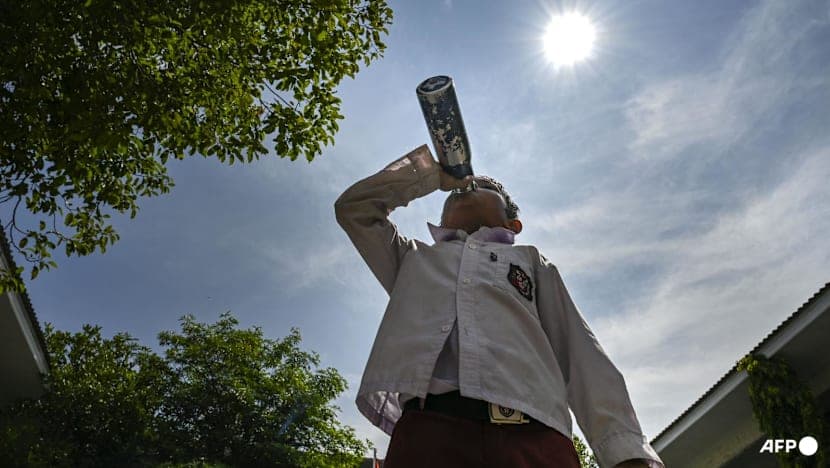
For 47-year-old delivery rider Mohd Safarin Jaafar, the recent weather in Malaysia’s Klang Valley has transformed his daily routine into a battle against the elements. “It isn’t like normal days,” he explained, describing how the midday sun now forces him to cut his working hours significantly. Where he once completed 20 to 25 delivery orders daily, he now manages only 15 to 18, with frequent breaks to avoid dizziness or fainting from dehydration.
- The Daily Struggle to Survive the Heat
- Water Reserves Dwindle as Drought Looms
- The Science Behind the Scorching Temperatures
- Businesses Adapt to Sizzling Conditions
- The Gathering Storm: Fire and Haze Risks
- A Regional Crisis: Heatwave Spreads Across Southeast Asia
- Vulnerable Populations Bear the Brunt
- What to Know
His experience reflects a growing crisis across Malaysia and Indonesia, where temperatures have soared above 37 degrees Celsius in multiple states. The Malaysian Meteorological Department (MetMalaysia) placed Kuala Lumpur under a Level 1 heatwave alert on March 23, triggered when daily maximum temperatures range between 35 and 37 degrees Celsius for at least three consecutive days. The health ministry has urged the public to avoid outdoor activities between 11am and 4pm, warning that heat-related illnesses can escalate from mild fatigue to life-threatening heatstroke.
In Jakarta, the mercury reached 35.6 degrees Celsius during the recent Hari Raya holiday week, with Indonesia’s Meteorology, Climatology and Geophysics Agency (BMKG) listing ultraviolet radiation levels as dangerous on March 17. The impact extends beyond physical health. Yee Ann Jee, a 21-year-old university student in Kuala Lumpur, finds concentration increasingly difficult during classes and has developed heat rash on her neck and arms. “I find myself sweating even in an air-conditioned classroom,” she said, noting the lethargy that now accompanies her daily routine.
The heatwave has already begun reshaping social and economic patterns throughout the region. Museum staff at Taman Mini Indonesia Indah in Jakarta report fewer visitors, while residents like 25-year-old Sharida Shahnaz Parayeel have adopted protective measures including UV-resistant jackets and constant sunscreen application. More concerning, medical observers note increased instances of respiratory illness and sore throats as the dry conditions persist.
Water Reserves Dwindle as Drought Looms
Beneath the blistering sun, a more insidious crisis is developing in Malaysia’s water infrastructure. Ten dams across the country have fallen to “cautionary” levels below 70 percent capacity, including the Muda Dam in Kedah, which serves as the second-largest reservoir in the state and supplies water to over a million households across Kedah, Perlis, and Penang. Recent images shared by Datuk Ismail Salleh, chairman of the agricultural development board for the Muda river basin (MADA), reveal parched ground and receding waterlines that threaten the nation’s largest rice-producing region.
The Muda river basin produces up to one million tonnes of padi annually, roughly one-third of Malaysia’s total rice production. With the dam currently at critically low levels, the agricultural sector faces potential devastation. Charles Santiago, a water governance advocate and former chairman of the National Water Services Commission, emphasized the urgent need for immediate conservation measures.
“While the problem is still localised to the northern states, all other places need to start preparing, as this will affect everybody,” Santiago stated, urging restrictions on non-essential water usage such as car washing, which can consume up to 600 litres per vehicle.
Across the strait, Indonesia confronts similar anxieties. Authorities have begun strengthening national food reserves ahead of what local media have dubbed the “Godzilla” El Niño, a potentially severe event that could combine with a positive Indian Ocean Dipole to create an extended dry season. The National Food Agency reports that rice reserves at state-owned enterprise Bulog currently stand at 4.08 million tonnes, up 77.8 percent from the previous year, with additional stocks of corn, cooking oil, sugar, and meat being secured to prevent supply disruptions.
The Science Behind the Scorching Temperatures
Multiple factors converge to create the current extreme conditions. According to Mohd Shahrul Mohd Nadzir, a senior lecturer at Universiti Kebangsaan Malaysia, the region currently sits in an inter-monsoon phase characterized by reduced cloud cover, weaker winds, and diminished rainfall. These conditions allow heat to accumulate rapidly, particularly when combined with residual effects from the recent El Niño event and long-term climate change.
Scientific analysis supports these observations. Research examining heatwave trends in Peninsular Malaysia from 1950 to 2022 reveals alarming patterns. Using daily temperature data and population mapping, scientists found that the heatwave-affected area has increased by 8.98 square kilometers per decade, with duration extending by 1.54 days per decade. The study indicates that three consecutive days with maximum temperatures exceeding the 97.5th percentile now best defines a heatwave in the region, a threshold that has been crossed with increasing frequency since 2000.
The El Niño-Southern Oscillation (ENSO) cycle plays a crucial role in these variations. This natural climate pattern, occurring every two to seven years, involves warming ocean surface temperatures in the central and eastern Pacific Ocean that typically raise regional temperatures by 0.5 to 2 degrees Celsius. The World Health Organization notes that during the 1997-1998 and 2015-2016 El Niño events, wildfires exacerbated air quality crises across Indonesia and Malaysia. The current event, which began developing in mid-2023 and remains active, has been ranked among the five strongest since 1950.
Climate change amplifies these natural cycles. Environmentalist Renard Siew, a climate adviser at Cent-GPS, explains that natural climate variability now builds upon an already elevated baseline temperature.
“The baseline has shifted, and future heatwaves will build on that elevated starting point,” Siew observed. This shift means that even when El Niño weakens, the region is unlikely to return to previously considered “normal” temperature ranges.
Businesses Adapt to Sizzling Conditions
Commercial enterprises throughout Malaysia have implemented emergency measures to maintain operations amid the heat. The Malaysia Shopping Malls Association reports that facilities are increasing ventilation in basement car parks, deploying portable air-coolers for al-fresco dining areas, and making regular public address announcements reminding visitors to stay hydrated. While malls report that foot traffic remains steady because of air-conditioned environments, operational costs have risen significantly.
Timothy Tiah, chief executive of Colony, which operates 16 co-working spaces in Kuala Lumpur, noted that patrons now arrive earlier and stay longer to avoid midday heat. “Spaces that are usually comfortable now require consistent air-conditioning from morning to evening, especially in glass-heavy areas,” he explained, reporting increased electricity bills as cooling becomes one of the largest cost drivers. Recently, air-conditioning systems failed at four of his centers simultaneously, a malfunction he suspects resulted from continuous high-demand usage during the heatwave.
Construction sites present particular challenges. Contractor Foo Ah Fook, 68, explained that while workers are encouraged to stay hydrated and slow their pace when possible, project deadlines often prevent meaningful work stoppages. “Projects run on fixed schedules,” he noted, highlighting the impossible choice between worker safety and economic imperatives. HC Chan, managing director of Sunway Malls, described refinements to airflow management, conversion of common areas into seating spaces, and the provision of special dry-fit uniforms for staff to ensure comfort during extended hot periods.
The Gathering Storm: Fire and Haze Risks
As vegetation dries and temperatures climb, the specter of transboundary haze looms over the region. In Indonesia’s Riau province, officials declared an emergency alert for forest and land fires on February 13, with 2,713 hectares burned between January 1 and March 24 alone, double the figure from the same period in 2025. The province, which lies geographically close to Singapore and Malaysia, historically contributes significantly to the smoke haze that chokes Southeast Asia during dry spells.
The 2015 El Niño event provides a sobering precedent. During that period, smoke-haze episodes caused by vegetation and peat fires in Indonesia severely affected Malaysia, with PM10 particulate matter concentrations reaching absolutely unhealthy levels of 415 micrograms per cubic meter in urban areas like Cheras, Kuala Lumpur. Research indicates that transboundary effects were pronounced during that event, with air masses carrying pollutants from Sumatra and Kalimantan across the Malacca Strait.
Health impacts from such events extend beyond respiratory irritation. Studies documented a 19 percent increase in mortality rates in Malaysia’s Klang Valley during haze periods between 2000 and 2007, with significant increases in lung cancer diagnoses and respiratory infections. The 2015 crisis caused an estimated 100,300 deaths across Indonesia, Malaysia, and Singapore combined, according to research cited in scientific literature.
Currently, the Malaysian Fire and Rescue Department reports responding to more than 400 fires daily nationwide, roughly four times the usual dry-season baseline. Between January and February 2026, the department handled 6,575 cases compared to 9,941 for the entirety of 2025. With the Fire and Rescue Department urging immediate cessation of open burning activities, authorities have deployed water-bombing helicopters and cloud-seeding aircraft over affected Indonesian provinces, though resources remain stretched thin.
A Regional Crisis: Heatwave Spreads Across Southeast Asia
The thermal emergency extends well beyond Malaysia and Indonesia. The ASEAN Specialised Meteorological Centre forecasts “above normal” temperatures across maritime and mainland Southeast Asia through May. Thailand recorded temperatures up to 40 degrees Celsius in northern, northeastern, and central regions, while northern and central Vietnam experienced highs of 38 degrees Celsius with predictions of further increases in early April.
Myanmar has faced unprecedented temperatures in several townships, with Cambodia experiencing its highest temperatures in 170 years at 43 degrees Celsius. In India, the longest heatwave on record began in mid-May, with northern regions exceeding 50 degrees Celsius. The Philippines saw authorities suspend in-person classes for millions of students as temperatures became dangerous for outdoor activity.
This regional pattern reflects broader climate dynamics. The 2023-2024 El Niño pushed global temperatures close to the critical 1.5 degrees Celsius threshold above pre-industrial levels, with 2024 declared the hottest year since records began in 1850. Experts warn that climate models predict extreme El Niño events could occur approximately every 10 years rather than every 20 because of global warming, doubling the frequency of associated droughts, fires, and heat-related health crises.
Vulnerable Populations Bear the Brunt
While the heatwave affects entire populations, specific groups face disproportionate risks. Research from UN Women highlights gendered impacts of heatwaves and drought in Asia and the Pacific, noting that discriminatory norms and structural inequalities increase risks for women, girls, and marginalized communities. Women engaged in agricultural labor face heightened susceptibility to heat-related illnesses, while increased care burdens during water scarcity fall disproportionately on female household members.
The elderly and those with pre-existing health conditions face elevated risks of heat stress complications, particularly in urban areas where the urban heat island effect can raise temperatures several degrees above surrounding rural areas. Concrete and asphalt surfaces retain heat, creating zones where ambient temperatures remain dangerously high even after sunset. Low-income communities, often residing in poorly insulated housing without adequate cooling infrastructure, experience the worst health outcomes while facing economic disruption from lost work hours in outdoor or non-climate-controlled employment.
MetMalaysia director-general Mohd Hisham Mohd Anip predicts the heatwave will persist until June, with temperatures potentially reaching 38 degrees Celsius, particularly in northern states. With the Southwest Monsoon expected to begin in June, some relief may come, but experts caution that clearer skies during the traditional dry season could allow maximum solar radiation, making conditions feel hotter and more humid through August and September.
What to Know
- Temperatures have exceeded 37 degrees Celsius in multiple Malaysian states and reached 35.6 degrees Celsius in Jakarta, with heatwave alerts active through June
- Ten Malaysian dams have fallen below 70 percent capacity, with the Muda Dam in Kedah at critically low levels, threatening the nation’s rice production
- The current El Niño event, combined with climate change and seasonal inter-monsoon conditions, drives the extreme temperatures, with scientific data showing heatwave frequency increasing by 4.2 days per decade in Southeast Asia
- Indonesia has declared emergency fire alerts in Riau province, with 2,713 hectares burned already in 2026, raising fears of transboundary haze similar to the 2015 crisis that caused over 100,000 regional deaths
- Health authorities warn of heatstroke, dehydration, and respiratory illness risks, with vulnerable populations including outdoor workers, the elderly, and women facing disproportionate impacts
- Businesses report increased operational costs for cooling, while delivery workers and construction laborers face reduced income and impossible choices between safety and economic survival
- Indonesia has stockpiled 4.08 million tonnes of rice and other food staples in preparation for a potential “Godzilla” El Niño drought