The Changing Face of Campuses in Taiwan
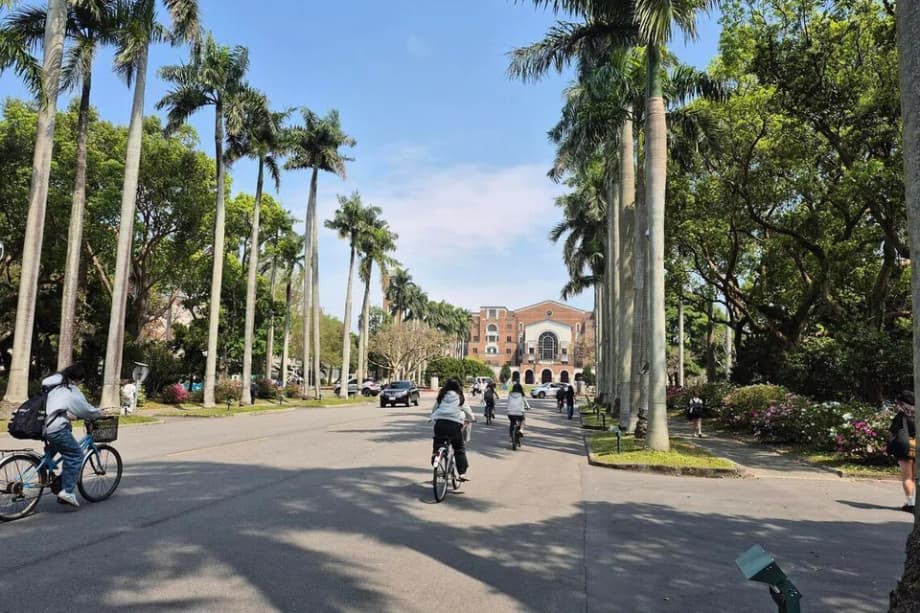
When Shuy Zhi Heng toured National Taiwan University during a 2023 holiday in Taipei, the beauty of the campus combined with the affordability of higher education convinced him to enroll. The 21-year-old Malaysian finance undergraduate now enjoys his studies so much that he persuaded his younger brother to follow the same path. Yet Mr Shuy represents a shrinking demographic. While Malaysia has historically been the top source of international students for Taiwan, numbers have declined sharply, falling below 10,000 for the first time in a decade to 9,686 in 2024.
- The Changing Face of Campuses in Taiwan
- Vietnamese Students Drive Enrollment Growth
- Malaysian Numbers Decline Amid Shifting Preferences
- Semiconductor Industry Demands Drive Technical Recruitment
- Strategic Pivot From Mainland China to Southeast Asia
- Global Competition for Southeast Asian Talent
- Balancing Enrollment Growth and Educational Quality
- Outreach Efforts and Future Trajectories
- The Essentials
In contrast, Vietnam has surged to become the leading source of tertiary students for the island nation. Vietnamese enrollment exploded from roughly 4,000 in 2015 to nearly 40,000 in 2024, representing 32.2% of all international students in Taiwan. This shift reflects broader geopolitical strategies, economic opportunities, and demographic realities reshaping higher education across Asia.
The transformation comes as Taiwan confronts one of the most severe demographic crises globally. The fertility rate in Taiwan is projected to drop below 0.8 in 2025, creating urgent pressure to fill university seats and address looming labor shortages. Taiwanese universities hosted 123,188 international students in 2024, approaching pre pandemic levels of 128,157, with Southeast Asian nations now dominating enrollment lists previously led by mainland China.
Vietnamese Students Drive Enrollment Growth
Le Tan Vinh, a 30-year-old process engineer from Vietnam, graduated from National Yang Ming Chiao Tung University in 2021 with a master’s degree in electrophysics. His decision to study in Taiwan was driven by practical considerations that appeal to many Vietnamese students.
Taiwan is much more developed than Vietnam, and there are good employment opportunities in the tech and engineering industries. I have been able to get a good job after graduation and stay on to work.
Mr Vinh currently works in Taichung, central Taiwan, where his studies were fully sponsored with a living stipend and no mandatory service bond.
The Taiwanese government has structured incentives to attract students like Mr Vinh. Generous scholarships often cover full tuition and provide living allowances without requiring compulsory service commitments upon graduation. According to the Ministry of Education, 76% of Vietnamese students in Taiwan enroll in full degree programs rather than short term exchanges, indicating a commitment to long term educational investment.
This trend aligns with the New Southbound Policy, introduced in 2016 by then President Tsai Ing-wen. The initiative targets 18 countries across Southeast Asia, South Asia, and Australasia, seeking to deepen economic and cultural engagement while reducing dependence on China. For Vietnamese students, the policy translates into tangible benefits including streamlined visa processes, work rights after graduation, and industry connections particularly in the booming semiconductor sector.
Malaysian Numbers Decline Amid Shifting Preferences
Several converging factors explain the declining representation of Malaysia in Taiwanese universities. The rise of China as an alternative study destination has fundamentally altered the competitive landscape. In 2025, China hosted more than 10,000 Malaysian students, surpassing the 2024 total of 9,686 for Taiwan. Television host Darren Ch’ng, a Malaysian alumnus of National Chengchi University, observed this shift in his own family. His younger cousin chose Beijing’s Communication University of China, influenced by years of consuming Chinese entertainment and social media content.
Emotionally and intellectually, he feels closer to China than to Taiwan.
Chew Ru Xuan, a 27-year-old Malaysian master’s student at National Chengchi University, points to communication barriers. Taiwanese universities have struggled to utilize social media platforms popular among Malaysian youth effectively.
Chinese, European and American universities attract students with strong campus content, but Taiwan has banned platforms like Xiaohongshu and TikTok, which are popular among Malaysian youth. How can it reach them?
This digital disconnect limits visibility among prospective students who spend significant time on these restricted platforms.
Domestic educational expansion has also reduced the pressure to study abroad. Since the 1990s, Malaysia has promoted private higher education institutions free from the racial quotas governing public universities. Enrollment surged from 35,600 in 1990 to 639,754 in 2024, creating viable local alternatives. Additionally, the growth of international schools in Kuala Lumpur provides direct pathways to English medium universities in Europe and the United States. The depreciation of the Malaysian ringgit has further increased the relative cost of overseas study, making Taiwanese affordability less compelling compared to previous decades.
Demographic shifts within Malaysia compound these challenges. The Malaysian Chinese community, which traditionally supplied most students to Taiwan, faces declining birth rates that reduce the college age population. Mr K.K. Chew, appointed director at a Chinese independent high school in Kuala Lumpur in 2019, found that 70% of graduates chose local institutions over overseas options. While most Malaysians in Taiwan still come from Chinese independent schools using the Unified Examination Certificate (recognized by Taiwanese universities), the pipeline is narrowing.
Semiconductor Industry Demands Drive Technical Recruitment
Beyond general education incentives, the world-leading semiconductor industry in Taiwan creates specific demand for Southeast Asian technical talent. The sector contributes approximately 15% of the gross domestic product of the island, with companies like TSMC (Taiwan Semiconductor Manufacturing Company) producing most of the cutting edge chips for global tech giants including Apple, Nvidia, and Qualcomm.
This industrial dominance generates acute labor needs. Taiwanese recruitment firm 104 Job Bank reported nearly 23,000 monthly job openings in the semiconductor industry during the second quarter of 2023. Local talent pools cannot meet this demand due to declining birth rates, reduced engineering enrollments, and waning interest among younger Taiwanese in fabrication facility work requiring constant availability.
Hans Juliano, a 23-year-old Indonesian student at National Yang Ming Chiao Tung University, represents this technical migration. He received a scholarship for semiconductor studies after connecting with professors through friends already studying in Taiwan.
It is quite easy to get a scholarship in Taiwan. You just need your English proficiency test.
The government now organizes recruiting missions to Southeast Asia specifically for chip companies, with six major firms including TSMC and MediaTek visiting Vietnam, Malaysia, Indonesia, the Philippines, and Singapore in recent years.
Strategic Pivot From Mainland China to Southeast Asia
The composition of the international student body in Taiwan has transformed dramatically since 2020. Before the COVID-19 pandemic, mainland Chinese students constituted the largest foreign presence. However, Beijing barred new students from starting studies in Taiwan beginning in 2020 amid geopolitical tensions. By 2024, only 3,489 Chinese students remained, all continuing studies begun before the ban, representing merely 2.8% of the international student population.
This vacuum accelerated the New Southbound Policy educational components. The Ministry of Education implemented flexible recruitment programs including the International Industrial Talents Education Special Program and the Recruitment of Hong Kong, Macau and Other Overseas Students for the Core Industries Program. These initiatives provide universities with expanded options for attracting and retaining international students.
The shift carries economic implications beyond education. Since 2014, the Ministry of Labor in Taiwan has operated a points based system easing work permit applications for international graduates, prioritizing those with local degrees. In 2024, Malaysian, Indonesian, and Vietnamese graduates accounted for 76% of international students holding valid employment permits in Taiwan. This policy creates a pathway from education to permanent skilled migration, addressing both labor shortages and demographic decline.
Global Competition for Southeast Asian Talent
Recruitment efforts in Taiwan occur within an increasingly crowded marketplace. Australia recently announced plans to raise its foreign student cap by 9% to 295,000 while prioritizing Southeast Asian applicants. Japan aims to host 400,000 foreign students by 2033, and South Korea targets 300,000 by 2027. These Asian democracies recognize that the young population of Southeast Asia represents a crucial talent pool as their own societies age.
European institutions also compete for this demographic, though financial constraints limit their capacity. A 2023 report by education consultancy Acumen found that Southeast Asia became the third-largest region globally for outbound student mobility in 2022, with 350,000 students studying overseas. However, European universities face chronic underfunding, with the German academic exchange service cutting 2,500 scholarships in February due to budget constraints and France reducing education spending by one billion euros.
The United States presents a complex picture. While American universities remain prestigious, political instability and visa restrictions under the current administration have created uncertainty. Thousands of international student visas have reportedly been revoked, and funding cuts to major research universities may redirect some Southeast Asian applicants toward Asian alternatives including Taiwan.
Balancing Enrollment Growth and Educational Quality
Despite enrollment successes, some academics warn that rapid expansion risks compromising educational standards. With universities under pressure to fill seats abandoned by domestic students, critics argue that recruitment quantity may supersede quality considerations. Reports indicate concerns that the internationalization drive in Taiwan might prioritize headcounts over academic rigor.
Language barriers present ongoing challenges. While English suffices for university admission, Mandarin proficiency often determines career success in the professional environment of Taiwan. Vietnamese student Le Thi Phuong Thao, studying at National Yang Ming Chiao Tung University, noted the competitive disadvantage.
It is very hard to compete for jobs because for most companies, you have to speak Mandarin.
Universities now offer free Mandarin classes to international students, but fluency requires years of study.
Retention rates vary by nationality and field. While 76% of Vietnamese students pursue full degrees, indicating strong commitment, some observers note that top tier Vietnamese students increasingly prefer American or European universities for cultural diversity. Taiwan must balance its role as an affordable, culturally familiar option with the need to attract high achieving students capable of contributing to advanced industries.
Outreach Efforts and Future Trajectories
Taiwanese educational authorities and alumni associations are adapting to these competitive pressures. The Federation of Alumni Association of Taiwan Universities, Malaysia, has launched aggressive outreach targeting smaller urban and rural areas where students have less exposure to international options. President Pang King Hoe described their systematic approach.
We have organised more than 80 showcases in secondary schools across Sarawak, Perlis, Kelantan and Pahang, targeting students in Form 3 and Form 4. We anticipate seeing results by 2027 or 2028, when these students complete their secondary school education.
The Ministry of Education continues subsidizing recruitment missions and expanding scholarship programs. For Malaysia specifically, the focus remains on Chinese independent high schools where the Unified Examination Certificate maintains recognition. However, the federation acknowledges that local private universities now offer competitive alternatives that did not exist three decades ago.
Looking ahead, the success in attracting Vietnamese and Indonesian students appears sustainable given continued semiconductor industry growth and demographic complementarity. The ability to reverse Malaysian declines depends on addressing digital outreach limitations, currency concerns, and the growing gravitational pull of mainland China. With 123,188 international students enrolled in 2024 and climbing, Taiwan has successfully pivoted from Chinese dependence to Southeast Asian diversification, though the long term stability of these trends depends on maintaining educational quality while meeting industrial labor demands.
The Essentials
- Vietnam has replaced Malaysia as the largest source of international students for Taiwan, with enrollment surging from approximately 4,000 in 2015 to 39,695 in 2024, representing 32.2% of all foreign students in the country.
- Malaysian student numbers in Taiwan fell below 10,000 for the first time in a decade to 9,686 in 2024, overtaken by China which now hosts over 10,000 Malaysian students.
- The New Southbound Policy, launched in 2016, drives recruitment from 18 Southeast and South Asian countries to reduce reliance on China and address demographic decline, with fertility rates in Taiwan projected below 0.8 in 2025.
- Generous scholarships, semiconductor industry opportunities, and post graduation work rights attract Vietnamese and Indonesian students, with 76% of Vietnamese enrollees pursuing full degrees rather than short term programs.
- Malaysia’s decline reflects expanded local private university options, ringgit depreciation, competition from China, and social media restrictions in Taiwan limiting outreach to Malaysian youth.
- International enrollment reached 123,188 in 2024, approaching pre pandemic levels, with mainland Chinese students dropping to 3,489 (2.8%) following the 2020 ban on new enrollments by Beijing.
- Some academics warn that rapid recruitment expansion may compromise educational quality, while language barriers remain challenges for graduates seeking employment in the Mandarin dominated professional environment of Taiwan.